
For investors, analysts, and even curious onlookers, the announcement of a company’s quarterly earnings is a pivotal event. For a titan like Tesla (TSLA), these reports transcend mere financial disclosures; they offer a profound glimpse into the future of electric vehicles, renewable energy, and disruptive technology. Knowing when TSLA reports earnings is not just about marking a calendar; it’s about preparing to analyze a company at the forefront of innovation, where every quarter can bring significant shifts in market perception and stock valuation.
Tesla’s earnings calls are highly anticipated spectacles, often leading to considerable market volatility. This article will delve into the critical importance of these reports, guide you on how to track their release dates, illuminate what key metrics to scrutinize, explore the market’s reaction, and offer strategies for navigating this high-stakes financial event.
Understanding the Significance of Tesla’s Earnings Reports
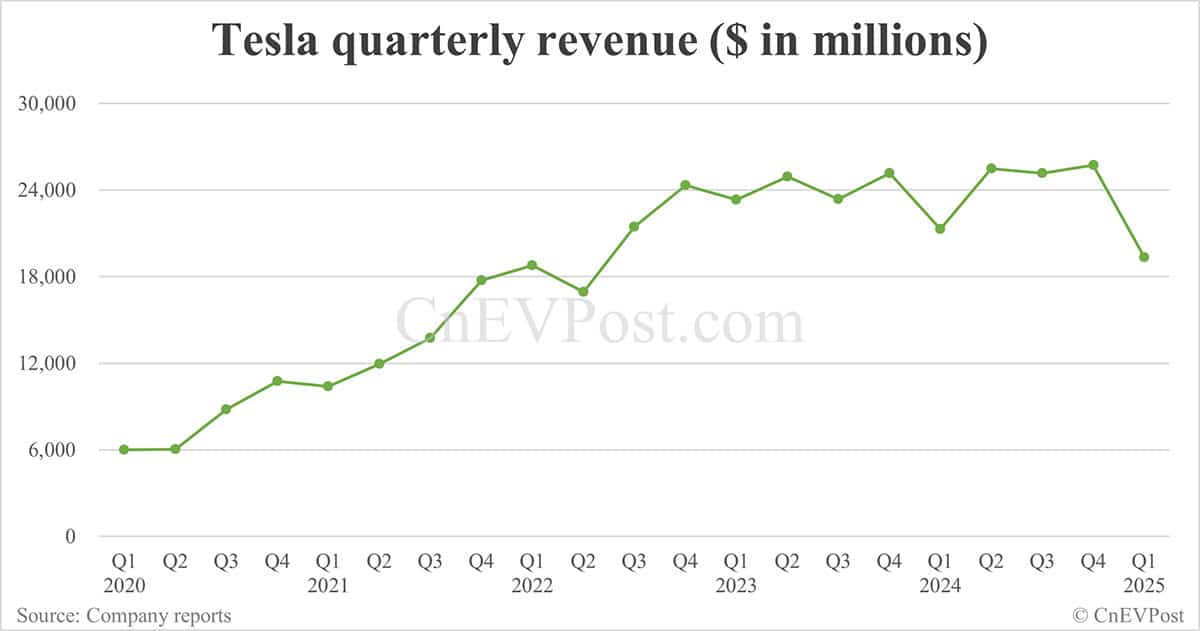
Earnings reports are the financial heartbeat of a publicly traded company. They provide a comprehensive overview of a company’s financial performance over a specific period, typically a quarter or a fiscal year. For Tesla, a company that operates at the intersection of high growth, technological advancement, and a fiercely competitive landscape, these reports carry an amplified significance.
More Than Just Numbers: A Window into Tesla’s Trajectory
An earnings report from Tesla is far more than a dry collection of numbers; it’s a narrative that shapes investor confidence and market sentiment regarding the company’s ambitious trajectory. These reports, usually consisting of a press release summarizing key financial figures, a detailed financial statement filing (such as a 10-Q or 10-K with the SEC), and an investor conference call with management, serve multiple crucial functions:
- Transparency and Accountability: They provide transparent disclosure of financial health, allowing shareholders to hold management accountable for their operational and strategic decisions.
- Performance Evaluation: Investors assess how well the company has performed against its own guidance and analyst expectations, offering insights into its operational efficiency and market execution.
- Future Outlook: The management’s commentary during the conference call, particularly regarding future guidance on production, deliveries, profitability, and capital expenditure, is instrumental in shaping long-term investment theses.
- Market Sentiment Indicator: Tesla’s reports often act as a bellwether for the broader EV sector and even the technology market, influencing investor confidence across related industries.
Given Tesla’s consistent push into new territories — from advanced battery technology and AI-driven autonomous driving to extensive energy storage solutions — each earnings report offers a fresh perspective on the execution of these bold visions. For a growth stock like TSLA, demonstrating consistent expansion, innovation, and eventually, sustainable profitability is paramount.
Key Metrics That Drive Investor Decisions
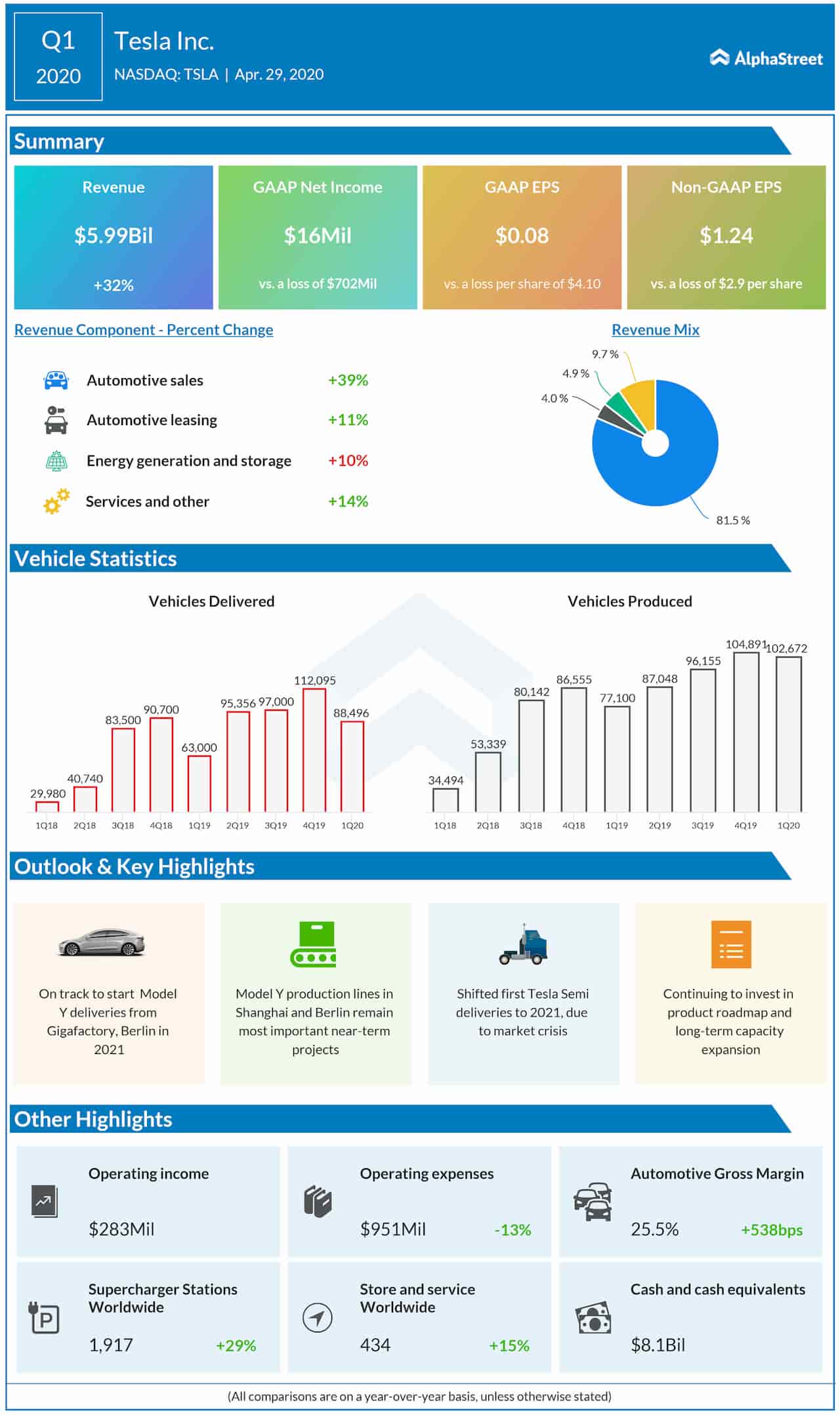
While traditional metrics like Earnings Per Share (EPS) and total Revenue are always central, Tesla’s unique business model requires a deeper dive into specific indicators:
- Vehicle Production and Deliveries: These are perhaps the most closely watched figures for Tesla, directly indicating manufacturing capacity, operational efficiency, and market demand for its core automotive products. Investors scrutinize quarter-over-quarter and year-over-year growth, and any deviations from expectations can significantly move the stock.
- Gross Margins (Automotive and Overall): Margins reveal how much profit Tesla makes from each vehicle sale after accounting for direct production costs. These are critical in assessing the company’s pricing power, cost control, and the impact of economies of scale. Factors like battery costs, raw material prices, and Gigafactory ramp-ups directly influence margins.
- Energy Generation and Storage Deployment: As Tesla expands its energy segment with Powerwall, Powerpack, and Megapack, the deployment figures and revenue from this division provide insight into its diversification strategy and a growing revenue stream beyond automotive.
- Regulatory Credits: Tesla earns and sells regulatory credits (e.g., ZEV credits) to other automakers who need to meet emission standards. While a legitimate revenue source, investors monitor its contribution to overall profitability to distinguish core automotive profitability.
- Free Cash Flow (FCF): FCF indicates the cash a company generates after accounting for cash outflows to support operations and maintain its capital assets. Strong FCF is vital for funding future expansion, R&D, and reducing debt, demonstrating financial strength and sustainability.
- Research & Development (R&D) Expenditure: For an innovation-driven company, R&D spending is a critical investment in future growth. Investors look for significant but efficient R&D to fund advancements in battery technology, AI for Full Self-Driving (FSD), and new product development.
Pinpointing the Date: How to Track TSLA’s Earnings Release
Identifying the exact date of Tesla’s earnings report is the first step for any astute investor. While the dates are generally predictable based on historical patterns, the official announcement can vary. Here’s how to reliably track it.
Official Sources: Tesla Investor Relations
The most authoritative source for Tesla’s earnings release dates and accompanying materials is the company’s official Investor Relations (IR) website.
- Navigation: Visit investor.tesla.com. Look for sections like “Events & Presentations,” “Financials,” or “Press Releases.” Tesla typically announces its earnings call schedule several weeks in advance through a press release and an update on this page.
- Accuracy: Relying on the company’s IR page ensures you have the most up-to-date and accurate information, directly from the source. This is also where you’ll find links to the live webcast of the earnings call, presentation slides, and the official earnings letter.
Financial Calendars and News Platforms
Beyond the official website, numerous financial news outlets and data providers aggregate earnings calendar information, offering convenient ways to track upcoming reports.
- Major Financial News Services: Websites like Bloomberg, Reuters, CNBC, Wall Street Journal, and Yahoo Finance all maintain comprehensive earnings calendars. Simply search for “Tesla earnings date” or “TSLA earnings calendar.”
- Stock Market Data Providers: Platforms such as Nasdaq.com, Seeking Alpha, Investing.com, and specific brokerage platforms (e.g., Fidelity, Schwab, E*TRADE) offer dedicated earnings calendars that can be filtered by ticker symbol.
- Setting Alerts: Many of these platforms allow users to set up email or mobile notifications for specific companies, ensuring you receive timely alerts when an earnings date is announced or approaching.
- Historical Patterns: While not a guarantee, earnings dates usually fall within a similar window each quarter (e.g., the third or fourth week of the month following the quarter’s end). Understanding these patterns can give you an approximate timeframe even before the official announcement.
Pre-Announcement Buzz and Analyst Estimates
Leading up to the earnings release, the financial community generates significant buzz. Wall Street analysts play a crucial role by publishing their revenue and EPS forecasts.
- Consensus Estimates: Financial data providers compile these individual analyst estimates into a “consensus estimate.” This consensus becomes the benchmark against which Tesla’s actual results are measured. A “beat” (actual results higher than consensus) or a “miss” (lower than consensus) often dictates the immediate stock price reaction.
- “Whisper Numbers”: Sometimes, informal or “whisper” numbers circulate, representing an unofficial expectation among institutional investors that might differ from the published consensus. These can also play a role in post-earnings volatility.
- Anticipation and Speculation: The period before an earnings report is often characterized by heightened speculation and increased trading volume as investors position themselves.
Deciphering Tesla’s Earnings: What to Look For Beyond the Headlines
When the earnings report drops, the immediate focus often gravitates to whether Tesla “beat” or “missed” analyst expectations on EPS and revenue. However, a truly insightful analysis requires delving much deeper into the underlying figures and management commentary.
Production and Delivery Figures: The Core Automotive Engine
Tesla’s identity is still largely rooted in its automotive division. Therefore, the production and delivery numbers are perhaps the most vital operational metrics.
- Growth Trajectory: Investors assess the quarter-over-quarter and year-over-year growth rates to confirm Tesla’s scalability and market penetration. Significant increases indicate successful Gigafactory ramp-ups and strong demand.
- Model Mix and Geographic Distribution: Details on which models (e.g., Model 3/Y vs. S/X, Cybertruck) are being delivered and in which regions (North America, Europe, China) can reveal shifts in strategy, pricing power, and market demand dynamics.
- Capacity Expansion: Management’s updates on new Gigafactory construction (e.g., Mexico, India) and existing factory expansions are critical for future growth projections. Delays or accelerations in these projects can significantly impact long-term outlook.
Profitability and Margins: Health of the Business Model
Beyond sheer volume, profitability metrics indicate the health and efficiency of Tesla’s operations.
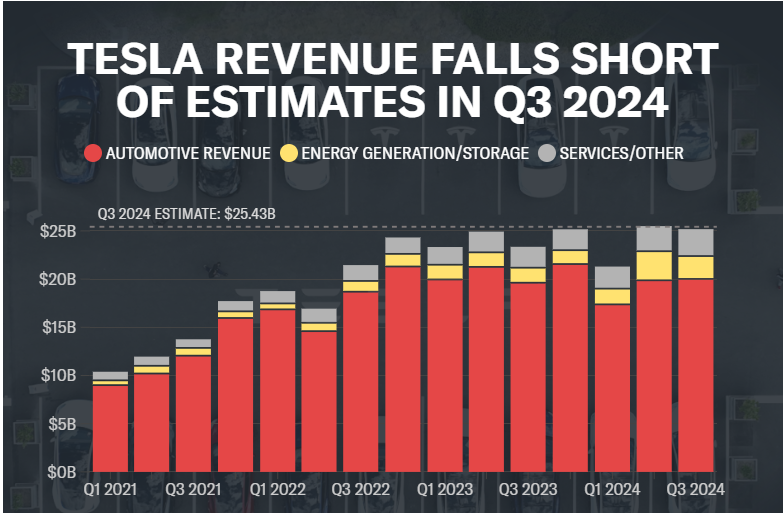
- Automotive Gross Margin: This is a key indicator of the profitability of each vehicle sold, net of production costs. Factors such as average selling price (ASP), raw material costs (especially for batteries), manufacturing efficiencies, and the product mix (more higher-margin vehicles) play a significant role.
- Operating Margin: This shows the profit generated from core operations before interest and taxes. It reflects how well Tesla controls its operating expenses relative to its revenue.
- Net Income: The “bottom line” profit, essential for overall financial health.
- Regulatory Credit Contribution: Scrutiny is applied to how much of the profit comes from selling regulatory credits, as this revenue stream can be less predictable and does not reflect core automotive profitability. A disproportionately high reliance might be a red flag.
The Future Outlook: Guidance and Capital Expenditure
Management’s forward-looking statements are often more impactful than past results, as they set expectations for future performance.
- Production and Delivery Guidance: Tesla’s projections for upcoming quarters and years, including new model launches and factory outputs, are crucial for analysts to update their financial models.
- Capital Expenditure (CapEx) Plans: Details on planned investments in new factories, equipment, and R&D are vital for assessing growth ambitions and potential cash burn.
- Profitability Targets: Any guidance on future margins, cost reductions, or long-term profitability goals helps investors understand the company’s financial discipline and strategic direction.
- Commentary on FSD and AI: Updates on the progress and potential monetization of Full Self-Driving software and other AI initiatives are critical for understanding future revenue streams and technological leadership.
Energy and Other Segments: Diversification and Growth Vectors
While automotive dominates, Tesla’s diversification into energy storage, solar, and services is increasingly important.
- Energy Storage Deployment: Growth in Megapack and Powerwall installations indicates the success of this segment and its contribution to overall revenue diversification.
- Services and Other Revenue: This segment includes service, Supercharging, and merchandise. Growth here can signify customer retention and ecosystem expansion.
- Future Initiatives: Any hints or updates on new ventures, such as humanoid robots or other AI applications, are closely watched for long-term potential.
Navigating Market Reactions and Investor Strategies
The stock market’s reaction to Tesla’s earnings reports can be swift and dramatic. Understanding these dynamics is crucial for investors.
Volatility and Short-Term Price Swings
Tesla’s stock is renowned for its volatility, and earnings reports often exacerbate this.
- Pre-Market and After-Hours Trading: Much of the immediate reaction happens in pre-market and after-hours trading sessions, following the official release.
- Analyst Upgrades/Downgrades: Post-earnings, analysts often revise their price targets and ratings, further influencing stock movement.
- Emotional Trading: Due to Tesla’s prominent public profile and passionate investor base, emotional reactions can amplify price swings, often detaching short-term movements from fundamental changes. A slight “miss” can trigger a sharp sell-off, while a “beat” can send the stock soaring.
Long-Term Investing vs. Short-Term Trading
The approach to earnings reports should align with an investor’s overall strategy.
- Long-Term Investors: For those focused on Tesla’s long-term growth story, a single quarter’s results are just one data point. They will typically look beyond immediate price fluctuations, focusing on the company’s long-term vision, execution against strategic goals, and sustainable competitive advantages. They might use earnings reports to confirm their thesis or identify any fundamental shifts that warrant re-evaluation.
- Short-Term Traders: Traders, including those using options, might attempt to capitalize on the anticipated volatility around earnings. This is a high-risk strategy, as predicting the market’s reaction is notoriously difficult, even if the actual numbers are known. The “news” (earnings) can be good, but the “trade” (market reaction) can still go against expectations.
Due Diligence Beyond the Earnings Call
An earnings report is a snapshot, not the whole movie. Comprehensive due diligence requires a broader perspective.
- Trend Analysis: Look at results over multiple quarters and years to identify trends, rather than focusing on a single quarter in isolation. Consistent improvements or deteriorating patterns are more telling.
- Macroeconomic Factors: Consider the broader economic environment, interest rates, inflation, and global supply chain health, which all influence Tesla’s operating conditions.
- Competitive Landscape: Evaluate Tesla’s performance in the context of its competitors in the EV, battery, and AI sectors. How is its market share evolving? Are new competitors posing significant threats?
- Regulatory and Geopolitical Risks: Keep an eye on government policies, incentives for EVs, trade relations, and any geopolitical tensions that could impact Tesla’s global manufacturing and sales.
Tesla’s Unique Context in the Financial Landscape
Tesla is not just another car company; it’s a technology and energy innovator with a unique financial narrative. This distinctiveness shapes how its earnings reports are perceived and their impact on the market.
Innovation as a Financial Driver
At its core, Tesla’s valuation often incorporates a significant premium for its perceived technological leadership and disruptive potential.
- Battery Technology: Advancements in battery chemistry, manufacturing (e.g., 4680 cells), and cost reduction are directly tied to future vehicle range, performance, and, crucially, profitability. Each earnings report offers clues on this progress.
- AI and FSD: Tesla’s ambition to develop full self-driving capabilities and potentially deploy AI in other domains represents a massive future revenue opportunity. Updates on FSD adoption, safety metrics, and regulatory progress are keenly observed. The transition from selling cars to potentially licensing AI and robotaxi services adds a significant layer of financial complexity and speculative value.
- Software Monetization: The potential for recurring revenue streams from FSD subscriptions, premium connectivity, and other software services is a key growth vector that differentiates Tesla from traditional automakers.
The “Musk Premium” and Investor Sentiment
Elon Musk’s influential presence and visionary leadership have an undeniable impact on Tesla’s stock. His pronouncements, whether on earnings calls, Twitter, or other public forums, frequently sway investor sentiment.
- Visionary Leadership: Musk’s ability to articulate a compelling long-term vision for sustainable energy and advanced technology can inspire confidence, even amid short-term challenges.
- Controversy and Volatility: However, his often unconventional communication style and involvement in other ventures can also introduce an element of unpredictability and risk, leading to periods of increased stock volatility. Investors often have to balance fundamental analysis with understanding the “Musk factor.”
Competitive Dynamics in the EV and Energy Sector
Tesla operates in dynamic and rapidly evolving markets, necessitating constant vigilance of the competitive landscape.
- EV Market Share: While Tesla was an early leader, traditional automakers (Ford, GM, Volkswagen) and new EV pure-plays (Rivian, Lucid, BYD) are aggressively expanding their EV offerings. Earnings reports help assess how Tesla is maintaining or defending its market share.
- Energy Sector Competition: In the energy storage and solar markets, Tesla faces competition from established players and emerging startups. Its financial results in this segment provide insight into its ability to compete on cost, technology, and deployment scale.
- Global Market Shifts: Geopolitical factors, regulatory changes (e.g., new government incentives or tariffs), and shifts in consumer preferences across different regions can significantly impact Tesla’s global sales and production strategies, all of which are reflected in the financial outcomes.
In conclusion, understanding “when does TSLA report earnings” is merely the starting point for a deeper, more sophisticated financial analysis. For investors in a company as innovative and influential as Tesla, earnings reports are a critical juncture for evaluating past performance, understanding current challenges, and, most importantly, gauging the potential for future growth and profitability in a rapidly changing world. Diligent research, a focus on key metrics beyond the headlines, and an appreciation for the company’s unique context are essential for making informed investment decisions.
aViewFromTheCave is a participant in the Amazon Services LLC Associates Program, an affiliate advertising program designed to provide a means for sites to earn advertising fees by advertising and linking to Amazon.com. Amazon, the Amazon logo, AmazonSupply, and the AmazonSupply logo are trademarks of Amazon.com, Inc. or its affiliates. As an Amazon Associate we earn affiliate commissions from qualifying purchases.