
For investors, traders, and anyone keen on the pulse of global finance, the seemingly simple question, “When does the stock market open today?” carries profound significance. It’s more than just a matter of clock-watching; it’s a gateway to understanding market dynamics, executing timely trades, and managing investment strategies. The opening bell signals the start of a day’s economic activity, unleashing a torrent of buy and sell orders that dictate the immediate direction of individual stocks and broader indices. Navigating the financial markets effectively requires not just an understanding of what to invest in, but also when to act, making knowledge of market hours a fundamental cornerstone of informed financial decision-making. This article delves into the intricacies of stock market operating hours, their global variations, and why this knowledge is indispensable for success in the investment world.
Understanding Standard Stock Market Hours
The concept of “the stock market” often refers to major exchanges where publicly traded companies list their shares. These exchanges operate within defined hours, influenced by local business traditions, banking holidays, and regulatory frameworks.
Major U.S. Exchanges: NYSE and NASDAQ
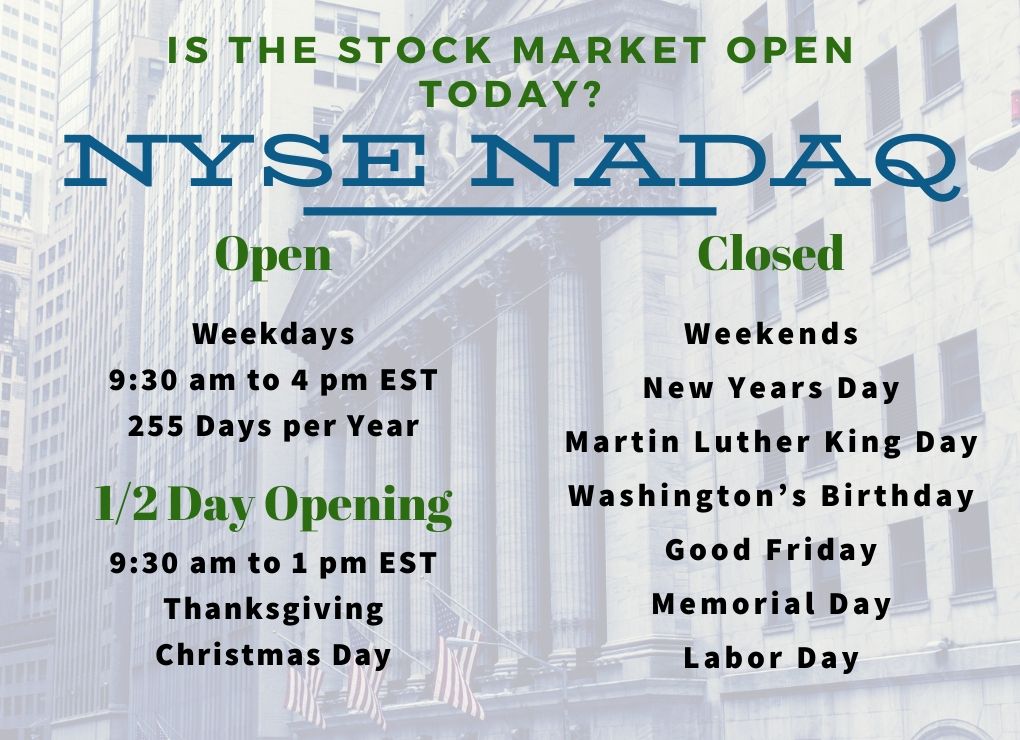
In the United States, the two most prominent stock exchanges are the New York Stock Exchange (NYSE) and the NASDAQ Stock Market. Both exchanges adhere to the same standard trading hours for their regular sessions:
- Opening Time: 9:30 AM Eastern Time (ET)
- Closing Time: 4:00 PM Eastern Time (ET)
This 6.5-hour window is when the majority of trading activity occurs, characterized by high liquidity and price discovery. Investors primarily focus on these hours for executing trades, as bids and offers are most competitive and price movements are generally most representative of market consensus. Understanding the Eastern Time zone is crucial, especially for investors living in different time zones across the U.S. or internationally, to accurately align with market open and close.
Global Market Overview: Time Zones and Trading Sessions
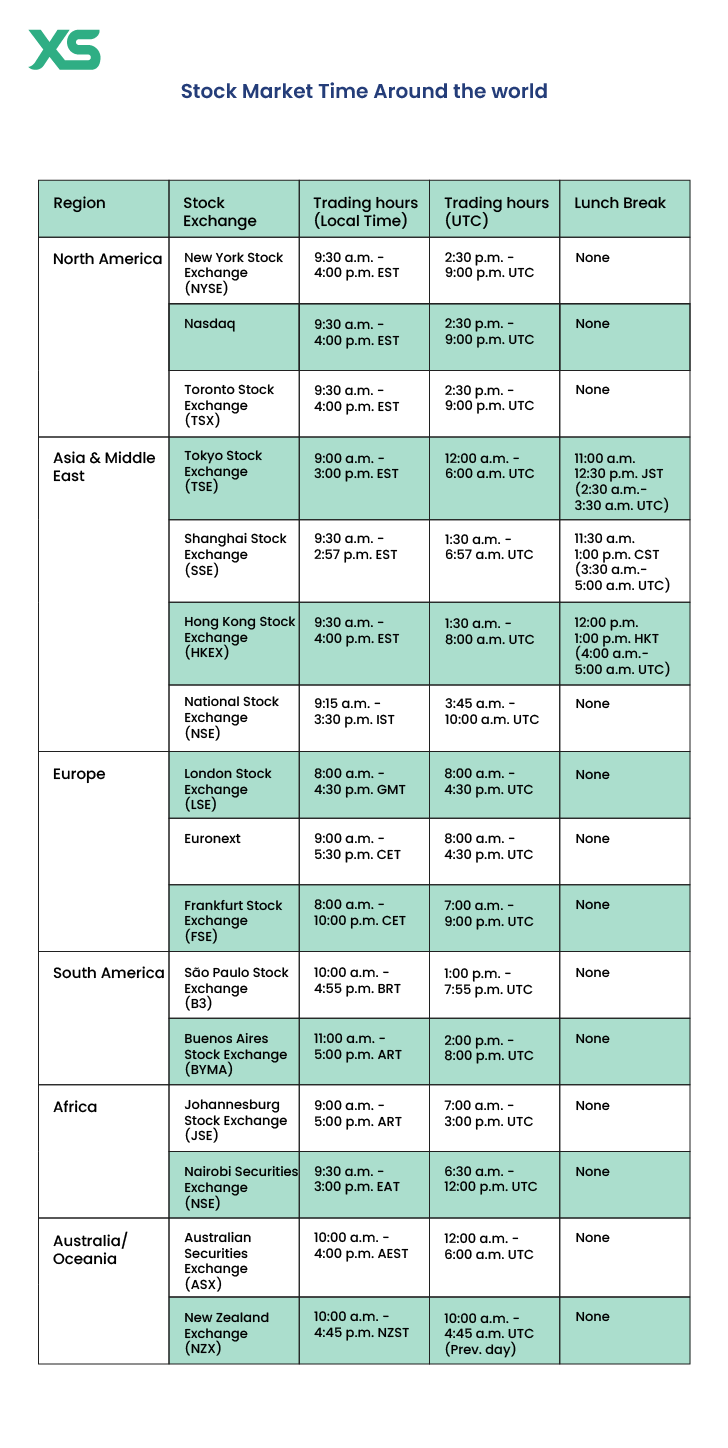
The world of finance operates on a 24-hour cycle, thanks to a network of global stock exchanges. While the U.S. market has its specific hours, other major financial centers open and close according to their local time zones, creating an overlapping, continuous flow of trading opportunities.
- Asia-Pacific Markets: Exchanges like the Tokyo Stock Exchange (TSE), Shanghai Stock Exchange (SSE), and Australian Securities Exchange (ASX) are typically the first to open their trading sessions each day, relative to the international date line. For instance, the TSE generally operates from 9:00 AM to 3:00 PM Japan Standard Time (JST), with a lunch break.
- European Markets: As Asian markets begin to close, European markets, including the London Stock Exchange (LSE), Euronext (covering exchanges in Paris, Amsterdam, Brussels, Lisbon), and the Frankfurt Stock Exchange (FWB), come online. The LSE, for example, trades from 8:00 AM to 4:30 PM Greenwich Mean Time (GMT).
- North American Markets: Following Europe, the U.S. and Canadian markets open, often overlapping with the later hours of European trading.
This global rotation means that news and economic data released in one region can influence market sentiment and asset prices across different continents as each market opens. Savvy investors often track these global movements to anticipate trends or react to significant events before their local market even opens.
Pre-Market and After-Hours Trading
The traditional 9:30 AM to 4:00 PM ET window doesn’t capture the entirety of trading activity for U.S. stocks. Electronic communication networks (ECNs) and brokerage platforms allow for trading outside these regular hours, known as pre-market and after-hours sessions.
- Pre-Market Trading: Typically runs from 4:00 AM ET to 9:30 AM ET.
- After-Hours Trading: Generally extends from 4:00 PM ET to 8:00 PM ET.
These extended hours are often characterized by lower liquidity and wider bid-ask spreads compared to the regular session. Price movements during these times can be highly volatile, often reacting to corporate earnings announcements, macroeconomic data releases, or significant news events that occur outside standard market hours. While they offer flexibility for investors to react quickly, they also present increased risks due to reduced trading volume and potentially less efficient pricing. Therefore, participants in pre-market and after-hours sessions need to exercise greater caution and have a firm understanding of the risks involved.
Factors Influencing Market Operating Hours
While standard hours provide a baseline, the stock market’s operating schedule is not immutable. Various factors can alter trading times, necessitating vigilance from investors.
Public Holidays and Market Closures
Stock exchanges observe a number of public holidays, during which they remain completely closed. In the U.S., these typically include federal holidays such as New Year’s Day, Martin Luther King, Jr. Day, Presidents’ Day, Good Friday, Memorial Day, Juneteenth National Independence Day, Independence Day, Labor Day, Thanksgiving Day, and Christmas Day. It’s important to note that if a holiday falls on a weekend, the market may observe it on the preceding Friday or following Monday. For instance, if Christmas Day falls on a Saturday, the market might close on Friday, December 24th. Globally, each country’s exchanges follow their own national holiday calendars, making it imperative for international investors to consult specific market schedules. These closures are well-documented in advance by exchanges and financial news outlets.
Early Closures and Special Trading Sessions
Beyond full-day holidays, exchanges occasionally schedule early closures or have modified trading hours. For example, in the U.S., the market often closes early on the day before Independence Day or on Black Friday (the day after Thanksgiving). These abbreviated sessions typically end at 1:00 PM ET. Such changes are usually announced far in advance and are part of the exchange’s operational schedule. Special trading sessions might also be organized in exceptional circumstances, though these are less common and typically relate to specific corporate actions or market events. Staying informed about these adjusted schedules is critical to avoid missing trading windows or being caught off-guard by an unexpected closure.
Regulatory and Economic Interventions
While not directly impacting daily open and close times in a regular sense, regulatory bodies and significant economic events can lead to extraordinary market interruptions. In extreme cases of market volatility or crisis, regulators might temporarily halt trading for specific stocks or even entire exchanges (circuit breakers). These interventions are designed to prevent panic selling, allow participants to absorb new information, and stabilize markets. While rare, understanding the mechanisms for such interventions is part of a comprehensive knowledge of market operations. Similarly, unforeseen geopolitical events, natural disasters, or unprecedented economic shocks can lead to emergency market closures or modified trading. These are, by definition, unpredictable, but their potential impact underscores the need for investors to stay abreast of global news.
The Strategic Importance of Knowing Market Hours
For both individual investors and institutional traders, understanding stock market hours is far more than an administrative detail; it’s a strategic imperative that influences decision-making, risk management, and overall investment success.
Maximizing Trading Opportunities
The opening and closing bells are often periods of heightened volatility and trading volume, creating unique opportunities. The initial minutes after the market opens can see prices swing dramatically as overnight news, economic reports, and pre-market trading activity are fully priced in. This “open rush” can be advantageous for day traders looking to capitalize on quick price movements. Conversely, the market close can also present opportunities, with some traders executing strategies based on end-of-day momentum or adjustments to portfolio positions. Knowing these peak activity times allows investors to strategically place orders, capitalize on intraday trends, or avoid trading during periods of unfavorable liquidity, depending on their trading style and risk tolerance.
Risk Management and Volatility
Trading outside of regular market hours, such as in pre-market or after-hours sessions, exposes investors to different risk profiles. As noted, these sessions typically have lower liquidity and wider bid-ask spreads. This means that executing trades can be more challenging, and even small orders can significantly move prices, leading to less favorable execution prices. Moreover, sudden news releases during these less liquid periods can cause dramatic price gaps, where a stock opens significantly higher or lower than its previous close, without active trading occurring in between. Understanding these characteristics helps investors manage risk by deciding whether to participate in extended hours trading, or to wait for the liquidity and stability of the regular session. It’s a crucial aspect of protecting capital and making informed decisions about exposure to market fluctuations.
Aligning with Personal Investment Goals
An investor’s personal schedule and investment goals should dictate their engagement with market hours. For long-term investors focused on fundamental analysis and holding assets for years, the exact opening and closing times might be less critical than for a day trader. However, even long-term investors need to be aware of market hours for tasks like rebalancing portfolios, executing dividend reinvestment plans, or reacting to major company news. Those with busy work schedules might find pre-market or after-hours trading more convenient, but must weigh the convenience against the increased risks. Understanding when the market is open allows investors to plan their research, execute trades, and monitor their portfolios in a way that aligns with their lifestyle and their specific investment strategy, whether it’s active trading or passive long-term growth.
Tools and Resources for Staying Informed
In today’s fast-paced financial world, staying up-to-date on market hours and any potential changes is easier than ever, thanks to a wealth of digital tools and resources. Leveraging these effectively ensures you’re never caught off guard.
Financial News Outlets and Websites
Major financial news websites and dedicated market data providers are invaluable sources for current market hours and holiday schedules. Websites like Bloomberg, Reuters, Wall Street Journal, Financial Times, CNBC, Yahoo Finance, and Google Finance consistently publish detailed market calendars. These platforms not only show standard opening and closing times but also highlight upcoming holidays, early closures, and any special trading sessions for major global exchanges. Many also offer breaking news alerts that could signal potential volatility around market open or close, making them essential for real-time awareness. Subscribing to their newsletters or setting up custom alerts can ensure you receive critical updates directly.
Brokerage Platforms and Apps
Your chosen brokerage platform is arguably the most direct and personalized resource for market hours. Most modern online brokerages provide clear displays of current market status (open/closed) and upcoming holiday schedules directly within their trading interface or mobile apps. Many also offer extended-hours trading capabilities, explicitly showing the available pre-market and after-hours windows. Some even provide customizable notifications for market open/close, or alerts for specific stocks you’re watching. Before executing a trade, especially outside of regular hours, always verify the trading status and available hours directly through your brokerage platform, as they will reflect the most accurate information for the assets you wish to trade.
Market Calendars and Alerts
Beyond general financial news, dedicated market calendar tools offer a comprehensive view of global trading schedules. These specialized calendars allow users to filter by exchange, region, and type of closure (holiday, early close). Many also integrate economic calendars, which display schedules for key economic data releases (e.g., CPI, GDP, interest rate decisions) that can significantly impact market behavior. Services that provide customizable alerts, via email or SMS, for market open, market close, or even specific stock movements, can be particularly useful for active traders. By proactively checking these resources, investors can plan their trading day, anticipate periods of increased activity or inactivity, and make sure their strategies are executed in accordance with the prevailing market schedule.
Beyond Opening Bell: What to Do Once the Market is Open
Knowing when the market opens is merely the first step. What an investor does once trading commences, and throughout the day, significantly impacts their success and ability to navigate the complexities of financial markets.
Monitoring Key Economic Indicators
Once the market is open, smart investors don’t just watch stock prices; they keep an eye on a broader range of economic indicators. Reports on inflation, employment, consumer confidence, manufacturing data, and central bank announcements can all influence market sentiment and sector performance. These indicators, often released at specific times during the trading day, can trigger immediate market reactions. For instance, a surprising inflation report might lead to a sell-off in growth stocks, while positive jobs data could boost overall market confidence. By monitoring these economic signals, investors can better understand the underlying forces driving market movements and adjust their strategies accordingly, rather than simply reacting to price changes in isolation.
Portfolio Review and Adjustment
The trading day offers an ideal opportunity to review your portfolio. This doesn’t necessarily mean making daily trades, especially for long-term investors, but rather checking in on the performance of your holdings relative to broader market trends. Are your stocks moving in line with their peers or the overall market? Are there any significant news items affecting the companies you own? The market being open allows for real-time assessment of your investments’ health. For active traders, this might involve making tactical adjustments based on intraday performance. For passive investors, it could mean noting opportunities for rebalancing, or researching potential new investments that align with their long-term goals. Regular portfolio review, even without immediate action, is a vital part of staying engaged and informed.
Continuous Learning and Adaptation
The stock market is a dynamic environment, constantly evolving with new technologies, economic shifts, and geopolitical developments. Therefore, the period when the market is open is also a time for continuous learning and adaptation. This involves staying abreast of industry news, reading analyst reports, understanding new financial products, and learning from market movements. Every trading day offers lessons in risk, opportunity, and human psychology. By actively engaging with the market, observing how different events trigger reactions, and reflecting on the outcomes of their own decisions, investors can refine their strategies, improve their financial literacy, and adapt to changing market conditions. This commitment to ongoing education is paramount for long-term success in the world of investing.
The question “When does the stock market open today?” serves as a fundamental inquiry that underpins nearly every aspect of investment. From understanding standard trading hours of major exchanges like the NYSE and NASDAQ, to navigating the complexities of global time zones and extended trading sessions, knowledge of market timing is critical. Investors must also remain vigilant about factors that can alter these schedules, such as public holidays and early closures. Ultimately, integrating this knowledge with strategic planning, risk management, and continuous learning allows individuals to make informed decisions, maximize opportunities, and effectively pursue their financial goals within the dynamic landscape of the stock market.
aViewFromTheCave is a participant in the Amazon Services LLC Associates Program, an affiliate advertising program designed to provide a means for sites to earn advertising fees by advertising and linking to Amazon.com. Amazon, the Amazon logo, AmazonSupply, and the AmazonSupply logo are trademarks of Amazon.com, Inc. or its affiliates. As an Amazon Associate we earn affiliate commissions from qualifying purchases.