
The concept of a “closing bell” is deeply ingrained in the public imagination, largely thanks to the iconic images of stock exchange floors. However, when it comes to the futures market, the idea of a definitive “close” is far more nuanced and complex. Unlike traditional equity markets that operate within well-defined business hours, futures trading embraces a near 24-hour, five-day-a-week schedule, reflecting its global nature and the continuous price discovery required for commodities, currencies, and indices. Yet, even this seemingly endless cycle has its specific pauses, settlement periods, and holiday observances that are crucial for any trader or investor to understand.
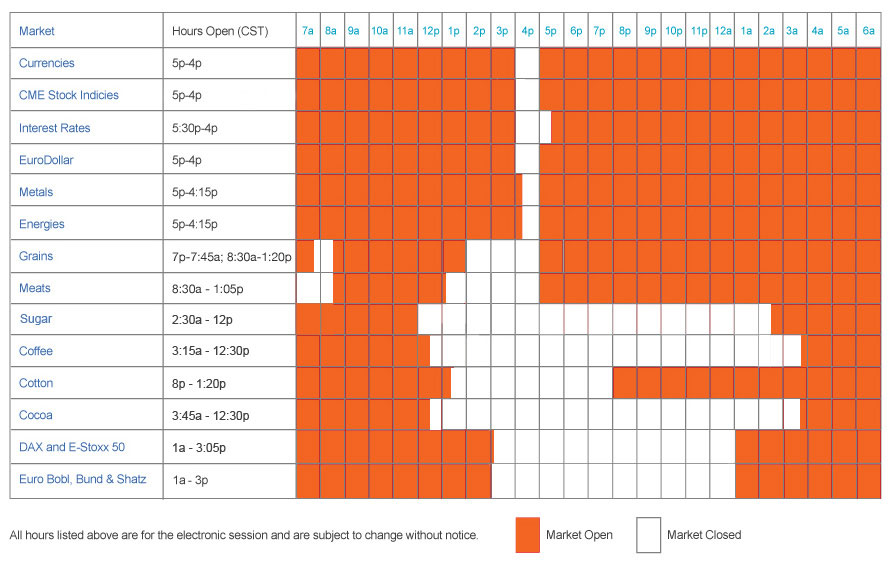
This article delves into the intricacies of futures market operating hours, dissecting what “closing” truly means in this dynamic environment. We’ll explore the daily rhythms, weekend and holiday shutdowns, and the critical implications these schedules have for risk management, trading strategies, and the very structure of the market itself.
The Near 24/5 Nature of Futures Trading
One of the defining characteristics of the futures market is its extended trading hours, which stand in stark contrast to the more limited schedules of stock markets. This continuous operation is not merely a convenience but a necessity born from the global reach and diverse underlying assets that futures contracts represent.
A Global, Continuous Market
Futures markets facilitate price discovery and risk management for a vast array of instruments, from agricultural commodities like corn and soybeans, to energy products such as crude oil and natural gas, financial instruments like interest rates and stock indices, and even cryptocurrencies. These underlying assets are traded, produced, consumed, or influenced by events occurring across all time zones. A major oil discovery in the Middle East, an interest rate decision in Europe, or an earnings report from an Asian tech giant can all impact futures prices, irrespective of the time of day in Chicago or New York.
To accommodate this global tapestry of activity, futures exchanges have designed systems that allow trading to continue almost uninterrupted. This ensures that market participants—from farmers hedging their crops to institutional investors managing portfolio risk across continents—have access to the market when they need it. The continuous flow of orders and price updates also contributes to greater market efficiency and liquidity, theoretically minimizing price gaps that might occur if trading were to cease for extended periods.
Key Trading Sessions
While the market is often described as “24-hour,” it’s more accurately a series of interconnected electronic sessions. The core trading hours are typically those associated with the primary exchange in its local time zone (e.g., CME Group based in Chicago), but electronic platforms extend access far beyond these conventional hours.
For many contracts, trading begins Sunday evening (US time), effectively restarting the global financial week, and continues until Friday afternoon. Within this period, there are often designated “regular trading hours” (RTH) which might correspond to the hours when the physical trading pits were active (even if most trading is now electronic), and “extended trading hours” (ETH) or “electronic trading hours.” These extended hours allow participants in Asia and Europe to trade during their local business day, providing continuous market access and immediate reactions to global economic news. A trader in London can execute a crude oil futures trade based on a geopolitical development in the Middle East in real-time, just as a trader in Tokyo can react to a Federal Reserve announcement.
The Concept of a “Trading Day”
In futures, a “trading day” doesn’t always align neatly with a calendar day. For instance, a futures trading day for many contracts might begin on Monday morning in Asia, continue through Europe, and conclude Monday afternoon in the Americas. This creates a fascinating dynamic where market activity spans multiple calendar days from a local perspective. Exchanges define a specific cutoff time, typically late afternoon or early evening in their local time zone, to delineate one trading day from the next for settlement and reporting purposes. This distinction is crucial for understanding daily margin calculations, open interest figures, and even how certain economic data releases are absorbed into market prices. For example, a US economic report released on a Tuesday morning will impact the “Tuesday’s trading day” even if some of that session technically started on Monday evening in a different time zone.
Specific Closing Times and Settlement Periods
Despite the “24-hour” moniker, the futures market does indeed have specific, albeit brief, periods when trading pauses. These are not arbitrary but serve critical functions related to market integrity, settlement processes, and operational maintenance.
Daily Settlement Cut-offs
Perhaps the most important “closing” event in the daily futures cycle is the daily settlement cut-off. This is the precise moment when the exchange calculates the daily settlement price for each contract. The settlement price is the official closing price for the day, used to mark-to-market all open positions. This process is fundamental to the futures market’s risk management framework.
Each day, every open position is revalued to the settlement price, and corresponding gains or losses are added to or subtracted from a trader’s margin account. If your position gained value, your account is credited; if it lost value, your account is debited. If your account falls below the maintenance margin level due to losses, you’ll receive a margin call, requiring you to deposit additional funds. This daily revaluation and settlement mechanism ensures that credit risk among participants is minimized and that the financial integrity of the market is maintained. The exact time for these cut-offs varies by exchange and contract but typically occurs in the late afternoon or early evening in the exchange’s local time zone.
Brief Daily Pauses/Maintenance Windows
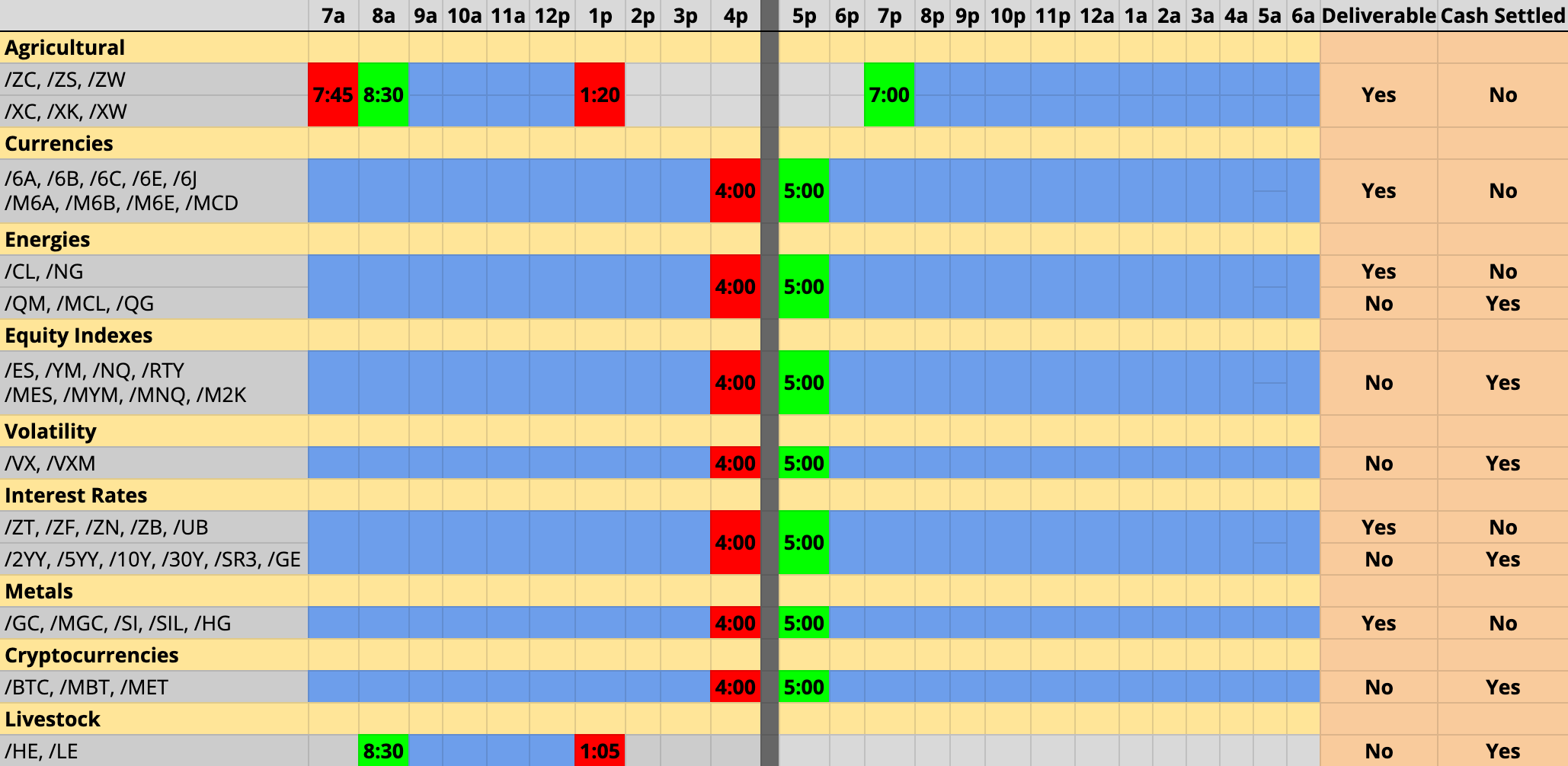
Most major futures exchanges, including those under the CME Group (which includes CBOT, NYMEX, COMEX, and CME), operate with a daily “maintenance window” or brief pause. For example, many equity index futures (like E-mini S&P 500) trade from Sunday evening until Friday afternoon, but they typically have a 60-minute daily break. For US-based equity futures, this often occurs in the late afternoon or early evening (e.g., 4:15 PM to 5:00 PM CT), during which no new trades can be executed.
These pauses are essential for several reasons:
- System Maintenance: Allowing exchange systems to perform routine maintenance, updates, and data backup.
- Data Processing: Finalizing the daily settlement, processing margin calls, and preparing for the next trading session.
- Liquidity Reset: Providing a brief period for market participants to reassess their positions, adjust strategies, and prepare for the next leg of trading, which often sees renewed liquidity.
These breaks are typically short, ranging from 15 minutes to an hour, and are clearly published by the respective exchanges. While minor in duration, they represent a true cessation of trading, differentiating the futures market from a truly continuous 24/7 market like some over-the-counter (OTC) foreign exchange markets.
Contract-Specific Schedules
It is critical to remember that there is no single “futures market closing time.” Trading hours are highly dependent on the specific contract and the exchange it trades on.
- CME Group: Hosts a vast array of financial, agricultural, and energy futures. Their schedules vary. For instance, E-mini S&P 500 futures trade nearly 23 hours a day, while certain agricultural contracts might have slightly shorter electronic trading windows or more pronounced breaks.
- ICE (Intercontinental Exchange): A global network of exchanges offering futures for commodities like Brent Crude, natural gas, and cotton. ICE also has its own specific trading schedules, which can differ from CME.
- Eurex: A major European futures and options exchange, primarily for European derivatives, will have trading hours aligned with European business hours, though often with extended electronic sessions.
Traders must consult the official websites of the relevant exchanges for the precise trading hours of the contracts they intend to trade. Relying on generalized information can lead to missed opportunities or, more critically, mismanaged risk.
Impact of Weekends and Holidays
While the daily rhythm of futures trading is almost continuous, the market does observe complete closures, primarily during weekends and major public holidays. These extended breaks have significant implications for market participants.
Weekend Closures
The vast majority of futures markets close for the weekend. Typically, trading ceases on Friday afternoon or evening (based on the exchange’s local time zone) and resumes on Sunday evening. For US-based exchanges, this means a roughly 48-hour pause in trading activity.
This weekend closure is a universal practice across most financial markets and serves multiple purposes:
- Rest and Reset: Provides a necessary break for traders, analysts, and market infrastructure.
- Regulatory Compliance: Aligns with standard business practices and regulatory frameworks.
- Data Aggregation: Allows exchanges and clearinghouses to finalize all weekly settlements, process data, and prepare for the upcoming week.

For traders, weekend closures introduce “weekend risk” or “gap risk.” Any significant geopolitical event, economic news, or natural disaster that occurs between Friday’s close and Sunday’s open can lead to substantial price gaps when the market reopens. A position held overnight through the weekend is exposed to this unpredictable risk, as there’s no opportunity to adjust or exit the trade until Sunday evening.
Holiday Schedules and Early Closures
Public holidays, particularly those in the country where the primary exchange is located, also impact futures trading hours. For example, US holidays like New Year’s Day, Memorial Day, Independence Day, Labor Day, Thanksgiving, and Christmas will typically see US-based futures markets closed entirely or operate on reduced hours (early closures).
- Full-Day Closures: On major holidays, markets will generally be closed for the entire calendar day.
- Early Closures: On days preceding or following a major holiday (e.g., the day before Thanksgiving or Christmas Eve), markets might close earlier than usual.
It’s crucial for traders to be aware of these holiday schedules well in advance. Exchanges publish their holiday trading hours months ahead of time. These closures can significantly impact liquidity. Even when markets are open on a holiday-affected day (e.g., if Europe is open but the US is not), liquidity can be much thinner, leading to wider bid-ask spreads and potentially more volatile price movements. Reduced trading activity during holiday periods can make it harder to enter or exit positions at desired prices.
Implications for Traders
The predictable nature of weekend and holiday closures, coupled with the unpredictable nature of news released during these periods, poses specific challenges for traders:
- Overnight Risk: Positions held through these closures are exposed to significant overnight or over-weekend risk.
- Liquidity Dry-ups: Reduced participation before, during, and after holidays can lead to illiquid markets, making large orders difficult to execute without price impact.
- Planning Adjustments: Traders must adjust their strategies, potentially closing positions before long breaks or hedging against potential gap risk.
Understanding Market Cycles and Rollovers
Beyond the daily, weekly, and holiday-related “closures,” another important aspect of how futures markets “close” relates to the finite lifespan of each contract. Unlike stocks, which can theoretically be held indefinitely, futures contracts have predetermined expiration dates.
Expiration and Rollover
Every futures contract specifies a delivery month or expiration date. For example, a “December Crude Oil futures contract” will expire in December. As this date approaches, market participants must decide whether to close their position (take profit or loss) or “roll over” their position. Rollover involves simultaneously closing out an expiring contract and opening a new position in a future contract month.
For instance, if a trader is long the December Crude Oil contract and wants to maintain their exposure beyond December, they would sell their December contract and simultaneously buy a January or February Crude Oil contract. This process maintains their market exposure without having to take or make physical delivery (for physically settled contracts) or cash settlement (for cash-settled contracts).
The period leading up to expiration is often characterized by increased volatility and shifting liquidity. As the “front month” (the nearest expiring contract) approaches its last trading day, liquidity tends to migrate to the next active contract month.
Last Trading Day
The “last trading day” is the final day on which a particular futures contract can be traded. After this day, the contract expires. Depending on the contract, expiration can result in:
- Physical Delivery: For commodities like crude oil or agricultural products, the holder of a long position might be obligated to take delivery of the underlying asset, and the holder of a short position might be obligated to deliver it. This is rare for retail traders who usually close their positions before this point.
- Cash Settlement: For financial futures (e.g., stock index futures), the contract settles to a cash value based on the underlying index’s value at expiration.
Failing to close out or roll over a futures position before its last trading day can lead to significant financial and logistical complications, especially for physically settled contracts. Brokerage firms typically issue warnings and often automatically force-liquidate positions that are approaching their last trading day to prevent clients from entering the delivery process.
Open Interest and Volume Shifts
As a futures contract approaches its expiration, trading volume and open interest (the total number of outstanding contracts) in that specific month typically decrease. Simultaneously, volume and open interest will increase in the “next active month” as traders roll their positions forward. This shift is a natural part of the futures market cycle and provides insights into market sentiment regarding future price expectations. Understanding these shifts is crucial for technical analysis and ensuring one is trading in the most liquid contract month.
Why Understanding Closing Times Matters for Traders
For anyone involved in the futures market, a comprehensive understanding of trading hours, settlement periods, and holiday schedules is not just administrative knowledge—it’s a critical component of effective risk management and strategic trading.
Risk Management
Knowing precisely when the market pauses, settles, or closes is fundamental to managing risk.
- Margin Calls: Understanding daily settlement times helps traders anticipate potential margin calls if their positions move unfavorably, allowing them to proactively manage their account equity.
- Gap Risk: Being aware of weekend and holiday closures is crucial for assessing and mitigating “gap risk.” Traders can decide whether to hold positions through extended breaks or close them out to avoid unpredictable price movements upon reopening.
- Overnight Exposure: Longer breaks mean extended periods of overnight exposure, during which unforeseen news can dramatically alter market sentiment before trading resumes.
Strategy Planning
Trading strategies must be calibrated to market hours.
- Day Traders: For day traders, who typically close all positions before the daily settlement, understanding the precise opening and closing times of specific electronic sessions is paramount for identifying peak liquidity periods and potential volatility spikes.
- Swing Traders and Position Traders: Those holding positions for days or weeks must factor in weekend and holiday closures, adjusting their entry and exit points or considering hedging strategies to manage risks during non-trading hours.
- Algorithm Development: Algorithmic traders and quantitative strategies must incorporate accurate market hours into their code to ensure trades are executed within valid windows and to manage data processing related to market closures.
Liquidity Considerations
Liquidity, or the ease with which an asset can be bought or sold without significantly affecting its price, is highly dependent on trading hours.
- Peak vs. Off-Peak Hours: Liquidity is typically highest during the overlap of major trading sessions (e.g., London and New York business hours) and lowest during late night/early morning hours (e.g., late US session transitioning to early Asian session).
- Holiday Impact: During holiday-affected sessions, even if the market is technically open, liquidity can be severely diminished, leading to wider bid-ask spreads and increased slippage on order execution. Traders must adjust their order sizes and execution strategies accordingly.
News and Event Impact
Major economic reports, corporate earnings, geopolitical events, or natural disasters that occur during market closures can have a profound impact when trading resumes. Prices can “gap” significantly up or down, making it impossible to manage a position during the actual news event. Traders often look to liquidate or reduce positions ahead of such known events if they are scheduled during market downtime. Understanding the interplay between market hours and news releases is a key component of robust risk management.
Conclusion
The question “When does the futures market close?” reveals a fascinating complexity far beyond a simple answer. It’s not about a single closing bell but rather a sophisticated system of daily settlement cut-offs, brief maintenance pauses, and extended weekend and holiday observances. Futures markets, by their very design, strive for near 24-hour connectivity to serve a global clientele and facilitate continuous price discovery.
For any participant in this dynamic environment, grasping these nuances is non-negotiable. It impacts everything from daily risk management and margin calculations to the fundamental design of trading strategies. Always remember that specific trading hours vary by contract and exchange. Therefore, the diligent trader consistently consults official exchange calendars and contract specifications to ensure they are fully informed about the precise operational rhythms of the markets they trade, navigating the futures landscape with precision and foresight.
aViewFromTheCave is a participant in the Amazon Services LLC Associates Program, an affiliate advertising program designed to provide a means for sites to earn advertising fees by advertising and linking to Amazon.com. Amazon, the Amazon logo, AmazonSupply, and the AmazonSupply logo are trademarks of Amazon.com, Inc. or its affiliates. As an Amazon Associate we earn affiliate commissions from qualifying purchases.