
For investors and traders residing on the West Coast, the rhythmic pulse of Wall Street begins long before the sun rises over the Pacific. While the financial capital of the world sits in the Eastern Time Zone, the globalization of finance ensures that the markets wait for no one. Understanding exactly when the stock market opens in Pacific Standard Time (PST) is more than a matter of simple clock-watching; it is a fundamental requirement for managing risk, executing timely trades, and maintaining a competitive edge in a landscape where seconds can translate into significant financial outcomes.
Understanding the Standard Trading Window in Pacific Standard Time
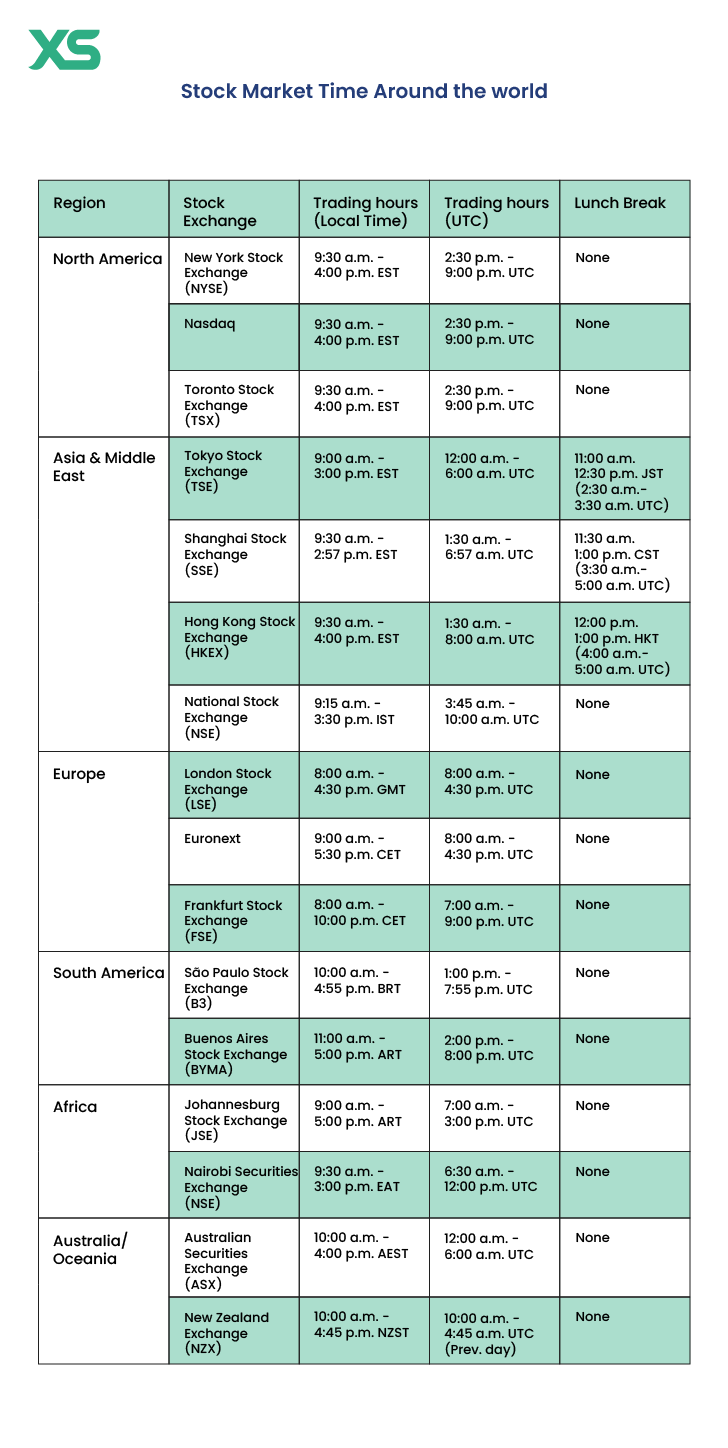
The two primary stock exchanges in the United States, the New York Stock Exchange (NYSE) and the Nasdaq, operate on a synchronized schedule. Their core trading hours are set from 9:30 AM to 4:00 PM Eastern Time (ET). For those in the Pacific Time Zone, this necessitates a significant adjustment to the daily routine.
The Opening Bell: 6:30 AM PST
The official start of the trading day occurs at 6:30 AM PST. This is the moment when the “opening cross” happens, liquidity floods into the market, and the price discovery process begins in earnest. For West Coast investors, this early start often means that the most volatile and opportunity-rich portion of the day occurs while many other professionals are just starting their first cup of coffee. The first 30 minutes of trading (6:30 AM to 7:00 AM PST) are typically characterized by high volume as the market reacts to overnight news, earnings reports, and international economic data.
The Closing Bell: 1:00 PM PST
While the East Coast works until late afternoon, the standard session for Pacific Time investors concludes at 1:00 PM PST. This early finish can be a double-edged sword. On one hand, it allows California, Oregon, and Washington-based traders to wrap up their primary financial activities by early afternoon, leaving the rest of the day for analysis, secondary business ventures, or personal time. On the other hand, it requires a condensed window of high-intensity focus, as the “Power Hour”—the final hour of trading where institutional rebalancing often occurs—takes place between 12:00 PM and 1:00 PM PST.
The Noon Slump and the Pacific Advantage
A notable phenomenon in the markets is the “lunchtime lull,” which typically occurs between 12:00 PM and 1:30 PM ET. For a PST investor, this corresponds to 9:00 AM to 10:30 AM. Interestingly, this means that just as a West Coast investor is hitting their mid-morning stride, the New York floor is thinning out. Savvy Pacific traders often use this period of lower volatility to perform deep-dive research or set limit orders for the afternoon session, effectively utilizing the New York lunch break to their strategic advantage.
Extended Hours Trading: The Pre-Market and After-Hours Sessions
The 6:30 AM to 1:00 PM PST window represents only the “regular” session. In the modern era of electronic communication networks (ECNs), trading occurs almost around the clock. For the disciplined investor, these extended sessions offer additional layers of strategy, albeit with increased risk.
Pre-Market Trading (1:00 AM – 6:30 AM PST)
The pre-market session officially begins as early as 4:00 AM ET, which is a staggering 1:00 AM PST. While few retail investors are active at 1:00 AM, the volume begins to pick up significantly around 5:00 AM PST (8:00 AM ET).
-
Why Trade Pre-Market? This session is crucial for reacting to “breaking” news that occurs after the previous day’s close or early in the morning, such as Bureau of Labor Statistics reports or unexpected geopolitical events.
-
The Risks: Liquidity is much lower during these hours. The “bid-ask spread”—the difference between what a buyer is willing to pay and what a seller is willing to accept—can be much wider, leading to higher transaction costs and price slippage.
After-Hours Trading (1:00 PM – 5:00 PM PST)
Once the closing bell rings at 1:00 PM PST, the after-hours session commences, running until 8:00 PM ET (5:00 PM PST). This period is vital for investors because the vast majority of public companies release their quarterly earnings reports immediately after the market closes.
-
Earnings Volatility: Between 1:00 PM and 1:30 PM PST, some of the most dramatic price movements of the quarter can occur. An investor who stops watching the ticker at the 1:00 PM PST close might wake up the next morning to find their portfolio significantly altered by an after-hours earnings miss.
-
Institutional Dominance: While retail traders can participate in after-hours sessions through most modern brokerages, the volume is often dominated by institutional players, making the environment highly sensitive to large blocks of trades.
Optimizing Investment Strategy for the West Coast Schedule
Living in the Pacific Time Zone requires a specific psychological and operational framework to succeed in the markets. The three-hour difference from the financial epicenter of New York creates a unique lifestyle that many professional traders actually prefer.

Developing an “Early Bird” Routine
Success for the PST investor starts the night before. Because the market opens at 6:30 AM, there is no time for leisurely morning research.
-
Preparation: Portfolio reviews and watchlist adjustments should be completed by 9:00 PM PST the prior evening.
-
The 6:00 AM Check-in: A successful trader is usually at their desk by 6:00 AM PST, thirty minutes before the bell. This time is used to check the S&P 500 futures, monitor the European markets (which are mid-day at this point), and see how the Asian markets closed.
-
Automation: Given the early hour, using “Limit Orders” instead of “Market Orders” is essential. This ensures that if a stock gaps up or down at the 6:30 AM open, you aren’t caught buying at an irrational price before you’ve had your first coffee.
Managing a Portfolio While Working a 9-to-5
For those who are not full-time traders but manage their own personal finance and retirement accounts, the PST schedule is actually quite favorable. Since the market closes at 1:00 PM PST, an office worker on the West Coast can spend their lunch break managing their trades during the final, most important hour of the market session. This allows for active management without the market “bleeding” into the late afternoon work hours.
The Role of Technology and Alerts
In the Pacific Time Zone, mobile alerts are an investor’s best friend. Setting price alerts that trigger on your phone or smartwatch allows you to stay informed of market movements during the 6:30 AM to 9:00 AM window when you might be commuting or preparing for your primary career. Modern fintech tools allow for sophisticated conditional orders (such as “stop-losses” or “trailing stops”) that manage risk automatically while you are away from the screen.
Market Holidays and Early Closures
Consistency is key in investing, but the market does take breaks. For the PST investor, holiday schedules are particularly important because they often result in “half-days” that end extremely early in the morning.
Standard Market Holidays
The NYSE and Nasdaq observe several federal holidays where the markets are closed entirely. These include:
-
New Year’s Day
-
Martin Luther King, Jr. Day
-
Presidents’ Day
-
Good Friday
-
Memorial Day
-
Juneteenth National Independence Day
-
Independence Day (July 4th)
-
Labor Day
-
Thanksgiving Day
-
Christmas Day
The 10:00 AM PST Early Close
On certain days—most notably the day after Thanksgiving (Black Friday) and sometimes Christmas Eve—the market undergoes an early closure at 1:00 PM ET. For West Coast investors, this means the market closes at 10:00 AM PST. These days are usually characterized by very thin trading volume and erratic price movements. Many professional investors choose to avoid trading on these shortened days entirely, as the lack of liquidity can make entering or exiting large positions difficult.
Global Market Connectivity and the 24-Hour Cycle
While the focus is often on the 6:30 AM PST opening of the NYSE and Nasdaq, the modern financial world is an interconnected 24-hour ecosystem. A move in the Hang Seng in Hong Kong or the DAX in Germany can dictate the “gap” at the US open.
The Influence of Futures
Stock market futures (such as E-mini S&P 500 futures) trade nearly 24 hours a day, five days a week. For a West Coast investor, checking the “Futures” at 8:00 PM PST on a Sunday night provides the first glimpse of how the market will open on Monday morning. If futures are “red” (down) on Sunday night, it prepares the investor for a potentially volatile 6:30 AM open.
The European Overlap
The European markets open around 12:00 AM or 1:00 AM PST. By the time the US market opens at 6:30 AM PST, the European markets are entering their final hours of trading. This overlap often creates a surge in global liquidity. Understanding this connection is vital for those trading multinational corporations or ETFs with heavy international exposure.

Summary of the Pacific Investor’s Clock
To thrive as an investor in the Pacific Time Zone, one must embrace the following schedule:
-
1:00 AM PST: Pre-market begins (Low volume, high risk).
-
5:00 AM PST: Pre-market volume increases; key economic data often released.
-
6:30 AM PST: The Regular Session begins (The “Open”).
-
1:00 PM PST: The Regular Session ends (The “Close”).
-
1:00 PM – 5:00 PM PST: After-hours trading (Earnings season focus).
By mastering this timeline, West Coast investors can turn the three-hour time difference into a strategic asset, utilizing the early close to perform the necessary due diligence for long-term wealth creation. Whether you are day trading tech stocks or managing a long-term retirement portfolio, the 6:30 AM PST opening bell is the most important milestone of the day.
aViewFromTheCave is a participant in the Amazon Services LLC Associates Program, an affiliate advertising program designed to provide a means for sites to earn advertising fees by advertising and linking to Amazon.com. Amazon, the Amazon logo, AmazonSupply, and the AmazonSupply logo are trademarks of Amazon.com, Inc. or its affiliates. As an Amazon Associate we earn affiliate commissions from qualifying purchases.