
For many investors, the stock market’s official opening bell at 9:30 AM EST marks the start of the trading day. However, for a growing number of sophisticated traders and institutional players, the action begins much earlier, sometimes even before sunrise. This period, known as premarket trading, offers a unique window into market sentiment and price discovery, providing both significant opportunities and distinct challenges. Understanding when premarket starts, how it operates, and what factors influence it is crucial for anyone looking to gain an edge in the fast-paced world of financial markets.
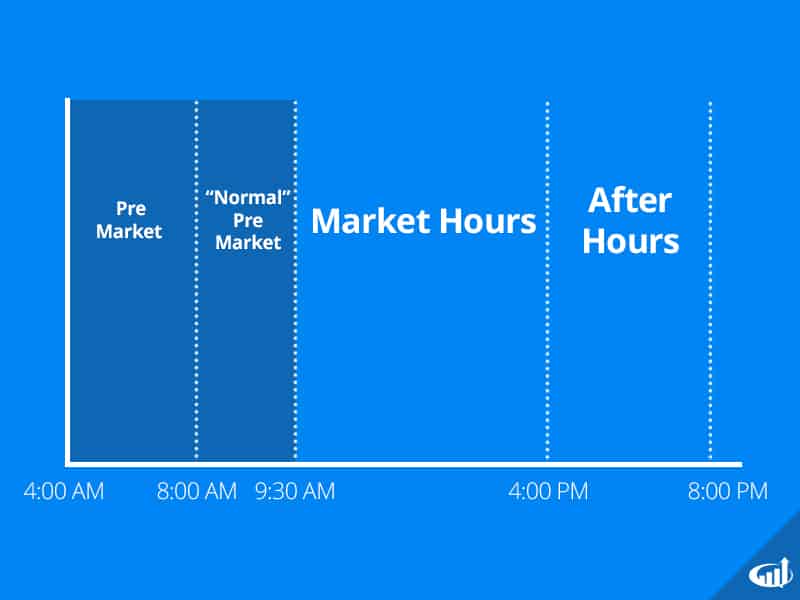
Premarket trading refers to the period after the previous day’s regular trading session closes and before the current day’s regular session begins. It’s an extension of the trading day, facilitated by electronic communication networks (ECNs) that allow orders to be placed, matched, and executed outside of traditional exchange hours. While often overlooked by casual investors, premarket activity can be a powerful indicator of how a stock or the broader market might perform once the main exchanges open. This early window is frequently characterized by lower liquidity, higher volatility, and swift reactions to breaking news, earnings reports, or macroeconomic data released overnight or in the early morning hours. Navigating this environment successfully requires a deep understanding of its mechanisms, risks, and strategic implications.
Understanding the Premarket Trading Window
The concept of a “premarket” window isn’t a single, universally defined period. Instead, it varies slightly depending on the brokerage, the type of security, and the underlying exchange’s operational schedule. However, there are general guidelines and common practices that define when this early trading period typically commences and concludes.
Standard Premarket Hours for Major U.S. Exchanges
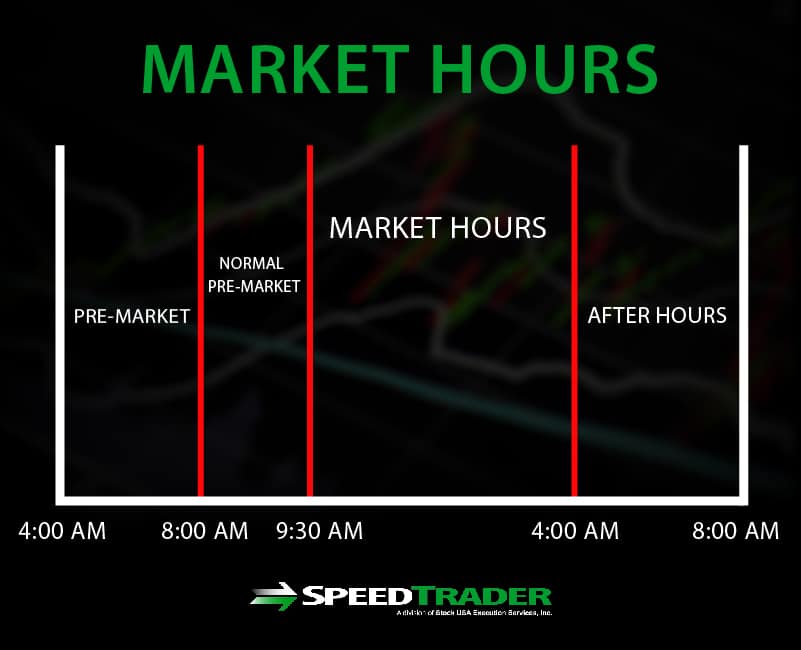
For the major U.S. stock exchanges like the New York Stock Exchange (NYSE) and NASDAQ, the official regular trading hours are from 9:30 AM to 4:00 PM Eastern Standard Time (EST). Premarket trading, however, generally starts significantly earlier than this. While some brokerages might offer access as early as 4:00 AM EST, a more common and widely accessible premarket window begins around 7:00 AM EST. This period then extends until the market officially opens at 9:30 AM EST.
It’s important to note that while trading technically can start at 4:00 AM EST, the volume and liquidity during the earliest hours (4:00 AM to 7:00 AM EST) are often extremely thin. Significant activity usually picks up closer to 7:00 AM EST as more institutional participants and professional traders begin their day, and more critical financial news is released. The period between 8:00 AM and 9:30 AM EST tends to be the most active part of the premarket, as traders finalize their positions ahead of the official opening.
The Role of Electronic Communication Networks (ECNs)
The existence of premarket trading is largely thanks to Electronic Communication Networks (ECNs). These automated systems facilitate trading by matching buy and sell orders electronically, bypassing the traditional floor-based exchanges. ECNs like Arca, Island, and BATS allow orders to be executed outside of regular market hours, providing the infrastructure for premarket and after-hours trading.
When you place a premarket order through your brokerage, it’s typically routed to one or more ECNs that are active during those extended hours. Unlike the regular market session where specialists or market makers play a crucial role in providing liquidity, ECNs simply match willing buyers and sellers. This direct matching mechanism is efficient but can also lead to wider bid-ask spreads if there isn’t sufficient order flow to facilitate tight pricing. The accessibility of ECNs through modern brokerage platforms has democratized premarket trading to some extent, allowing individual investors to participate, albeit with caveats.
Why Investors Engage in Premarket Trading
The decision to trade outside regular market hours is driven by several compelling reasons, ranging from the need to react swiftly to breaking news to the strategic positioning of portfolios. For active traders and institutional investors, the premarket session is not merely an optional extra but an integral part of their daily strategy.
Reacting to News and Earnings Reports
One of the primary drivers of premarket activity is the release of significant news. Companies often choose to release quarterly earnings reports, product announcements, merger and acquisition details, or other market-moving news either after the market closes (after-hours) or before the market opens (premarket). This timing allows them to disseminate information without disrupting live trading and gives investors time to digest the news.
Traders who participate in premarket trading can react to these announcements immediately. If a company reports unexpectedly strong earnings, its stock might surge in premarket trading as investors rush to buy shares. Conversely, negative news can lead to a sharp decline. This early reaction helps establish an initial price discovery for the stock, often setting the tone for its performance once the regular market opens. Being able to act on this information before the broader market can offer a significant advantage, allowing traders to enter or exit positions at prices that might not be available later in the day.
Capturing Early Price Movements
Beyond reacting to specific news, some traders engage in premarket activity simply to capitalize on early price movements. Due to lower liquidity and fewer participants, stocks can sometimes experience exaggerated moves on relatively low volume during the premarket. These movements might be driven by a small number of large orders or by a wave of retail traders reacting to headlines on social media or financial news outlets.
For skilled traders, these early swings present opportunities for quick profits through scalping or day trading strategies. Identifying stocks with high premarket volume and significant price changes can signal strong interest or underlying momentum that could carry into the regular trading session. However, these early movements can also be highly volatile and unpredictable, making them risky for inexperienced traders.
Managing Risk and Positioning Portfolios
Premarket trading also serves as a critical tool for risk management and portfolio adjustment. Institutional investors and fund managers might use the premarket to adjust their positions in response to overnight global market movements, changes in economic forecasts, or unexpected geopolitical events. If, for instance, a major global stock market experiences a significant downturn overnight, a fund manager might use the premarket to reduce exposure to certain assets before the U.S. market opens, attempting to mitigate potential losses.
Similarly, an investor who holds a significant position in a stock that has just released extremely negative news might want to sell shares immediately to limit further losses, rather than waiting for the market to open and risk an even larger price drop. Premarket trading provides the flexibility to respond dynamically to a constantly evolving financial landscape, allowing for proactive adjustments to investment portfolios.
The Mechanics and Risks of Premarket Trading
While enticing, participating in premarket trading requires a clear understanding of its operational mechanics and an acute awareness of the inherent risks that differentiate it from regular-hours trading. It’s not simply an earlier version of the same market; it operates under a different set of dynamics.
How to Access Premarket Trading
To participate in premarket trading, you’ll need a brokerage account that offers extended-hours trading. Most major online brokers provide this functionality, but it’s essential to check your specific broker’s policies, available hours, and any associated fees. You’ll typically need to select an “extended hours” or “premarket” option when placing your trade order.
Most premarket orders are limit orders. A limit order specifies the maximum price you’re willing to pay to buy or the minimum price you’re willing to accept to sell. Given the volatility and lower liquidity, using market orders (which execute at the best available price) during premarket hours is generally discouraged, as you could end up buying or selling at a significantly worse price than anticipated. Stop orders are also often not active during premarket hours, further emphasizing the need for manual oversight and specific order types.
Liquidity and Bid-Ask Spreads
Perhaps the most significant difference between premarket and regular-hours trading is liquidity. Premarket hours typically see much lower trading volume and fewer participants compared to the main trading session. This reduced liquidity means it can be harder to buy or sell shares quickly without impacting the price. A large order that would be easily absorbed during regular hours might cause a significant price swing in the premarket.
The consequence of lower liquidity is often wider bid-ask spreads. The bid price is the highest price a buyer is willing to pay, and the ask price is the lowest price a seller is willing to accept. During regular hours, competition among buyers and sellers, along with market makers, keeps these spreads tight (often just a few cents). In the premarket, with fewer orders, the gap between the bid and ask can widen considerably, meaning you might pay more to buy or receive less to sell than you would during regular hours. This wider spread effectively increases the cost of your trades.
Volatility and Information Asymmetry
Premarket trading is notorious for its higher volatility. A relatively small piece of news or a modest volume of trades can trigger dramatic price swings. This heightened sensitivity to information, combined with lower liquidity, creates an environment where prices can move rapidly and unpredictably. While this volatility can present opportunities for quick gains, it also exposes traders to increased risk of significant losses if the market moves against their position.
Another risk is information asymmetry. While major news outlets will report on earnings and other announcements, there’s always a possibility that some market participants have access to or are acting on information sooner than others. This is particularly relevant in the early, less liquid hours, where a few well-informed traders could potentially influence prices disproportionately. Individual retail investors may find themselves at a disadvantage compared to institutional traders with sophisticated data feeds and algorithms.
Strategies for Navigating Early Trading
Despite the inherent risks, premarket trading can be a valuable component of an overall investment strategy if approached with discipline and a clear understanding of its nuances. Successful premarket traders often employ specific strategies designed to capitalize on its unique characteristics while mitigating its dangers.
News-Driven Trading and Event Horizon
The most common and often most effective strategy for premarket trading is news-driven trading. This involves identifying stocks that have significant premarket news (e.g., earnings reports, FDA announcements, analyst upgrades/downgrades) and reacting swiftly to the market’s initial interpretation of that news. Traders will typically scan financial news wires, specialized platforms, and company investor relations pages from the early morning hours.
The key is to understand the market’s sentiment towards the news. Is it better or worse than expected? How is the stock reacting in the initial premarket hours? Traders look for stocks with high premarket volume and a clear directional move in response to the news. The goal is often to capture the initial surge or drop before the broader market opens and potentially consolidates the price. However, this strategy requires quick decision-making, a solid grasp of fundamental analysis, and the ability to distinguish between significant news and minor headlines.
Technical Analysis in a Low-Volume Environment
While technical indicators might behave differently in low-volume conditions, some traders still utilize basic technical analysis to identify potential entry and exit points. They might look for significant premarket highs and lows, which can act as resistance or support levels once the regular market opens. Chart patterns formed during premarket hours, especially on higher volume stocks, can sometimes provide clues about market direction.
However, caution is paramount. Because of lower liquidity, traditional technical indicators like moving averages or volume-weighted average price (VWAP) can be less reliable and more prone to “noise.” Price action in premarket can be gappy and less smooth. Traders often combine technical analysis with news analysis, using charts to confirm the momentum suggested by a news catalyst rather than solely relying on technical signals. Strict risk management, including predefined stop-loss levels, is crucial when trading based on technicals in this environment.

Implementing Robust Risk Management
Effective risk management is not just important but absolutely critical for premarket trading. Given the heightened volatility, wider spreads, and lower liquidity, the potential for rapid and substantial losses is amplified. Traders must go into each premarket trade with a well-defined plan.
This plan should include clear entry and exit points, a maximum acceptable loss per trade (stop-loss), and a target profit. Due to potential price gaps and fast movements, a stop-loss order placed at a specific price might not execute precisely, resulting in “slippage.” Therefore, traders must be prepared for the possibility of losses exceeding their intended stop-loss, especially during extremely volatile events. Position sizing is also key: trading smaller positions in the premarket compared to regular hours can help mitigate the impact of adverse price movements. Never risk more than a small percentage of your total trading capital on any single premarket trade.
In conclusion, premarket trading, commencing for many accessible hours around 7:00 AM EST and lasting until the 9:30 AM EST market open, offers a dynamic and often intense environment for investors. It’s a period defined by swift reactions to news, lower liquidity, higher volatility, and wider bid-ask spreads. While it presents unique opportunities for capturing early price movements and reacting to breaking information, these advantages come hand-in-hand with elevated risks. For those who choose to venture into this early trading window, a disciplined approach, a thorough understanding of market mechanics, robust risk management strategies, and continuous learning are not just beneficial but absolutely essential for long-term success.
aViewFromTheCave is a participant in the Amazon Services LLC Associates Program, an affiliate advertising program designed to provide a means for sites to earn advertising fees by advertising and linking to Amazon.com. Amazon, the Amazon logo, AmazonSupply, and the AmazonSupply logo are trademarks of Amazon.com, Inc. or its affiliates. As an Amazon Associate we earn affiliate commissions from qualifying purchases.