
The financial markets are often perceived as operating within a well-defined nine-to-five window, echoing traditional business hours. However, the reality for active traders and investors extends far beyond the conventional opening and closing bells. The pre-market session represents a crucial period of activity that can significantly influence the trading day, offering unique opportunities and challenges. Understanding when pre-market trading begins, what drives it, and how to navigate its complexities is essential for anyone looking to gain an edge or simply stay informed about the dynamic world of financial instruments.
This article delves into the intricacies of pre-market trading, demystifying its start times, outlining its operational mechanisms, and exploring the strategic implications for participants. From institutional investors reacting to breaking news to retail traders seeking early positions, the pre-market session is a vibrant, albeit often volatile, landscape that demands attention and a clear understanding of its distinct characteristics.
Unpacking the World of Pre-Market Trading
Before we pinpoint specific timings, it’s vital to grasp what pre-market trading entails and why it holds such significance in the broader market ecosystem. This period is not merely an early opening; it’s a distinct phase with its own rules, liquidity patterns, and participant demographics.
Defining Pre-Market Trading: Beyond the Opening Bell
Pre-market trading refers to the period of trading activity that occurs on an exchange before its official opening bell. During this time, investors can place buy and sell orders for securities, and these orders can be executed and matched, resulting in trades. Unlike the regular trading session, which typically has a robust order book and high liquidity, the pre-market is often characterized by thinner trading volumes and wider bid-ask spreads. It serves as a precursor to the main session, allowing market participants to react to overnight news, economic data releases, and corporate announcements before the full market officially begins trading.
This session is facilitated by Electronic Communication Networks (ECNs) and alternative trading systems (ATSs) rather than the traditional exchange floor. These electronic platforms match buy and sell orders, enabling transactions to occur outside standard market hours. The prices established during pre-market can act as an early indicator for where a stock might open during the regular session, though these initial indicators are not always reliable due to the session’s inherent characteristics.
The Rationale Behind Early Trading: Why Does It Exist?
The existence of pre-market trading is rooted in several practical and strategic considerations for market participants:
- Immediate Reaction to News: Many critical announcements – such as earnings reports, mergers and acquisitions, drug trial results, or significant economic data – are often released outside regular market hours. Pre-market trading allows investors to react to this information immediately, rather than waiting for the official market opening, potentially mitigating large price gaps at the open.
- Information Dissemination: It provides a window for price discovery based on fresh information, helping to absorb and reflect new data into asset prices before the main session. This can lead to a more orderly open once the regular session commences, as some of the initial shock or enthusiasm may have already been processed.
- Global Market Integration: With markets operating 24/7 across different time zones, pre-market trading in one region can reflect movements or sentiments from markets that have already opened or closed elsewhere. It helps link the various global trading sessions, creating a continuous flow of information and capital.
- Institutional Needs: Large institutional investors, such as hedge funds and mutual funds, often need to execute substantial trades that could significantly impact prices during regular hours. Pre-market allows them to begin accumulating or divesting positions with less immediate impact, managing their order flow more strategically.
- Risk Management: For some, pre-market trading offers an opportunity to adjust portfolios in response to unexpected events, acting as an early risk management tool.
Pinpointing Pre-Market Start Times: A Global Perspective
While the concept of pre-market trading is universal, the exact start times can vary significantly depending on the exchange, the specific trading platform or broker, and geographical location. Understanding these nuances is crucial for any trader operating in these early hours.
Major US Exchanges: NASDAQ and NYSE Schedules
For the vast majority of retail and institutional investors in the United States, attention is primarily focused on the two largest stock exchanges: the New York Stock Exchange (NYSE) and the NASDAQ Stock Market.
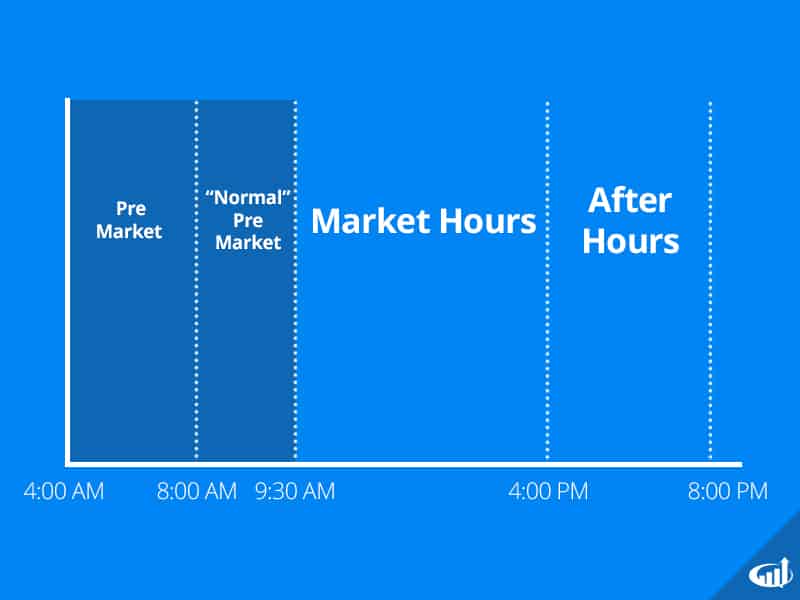
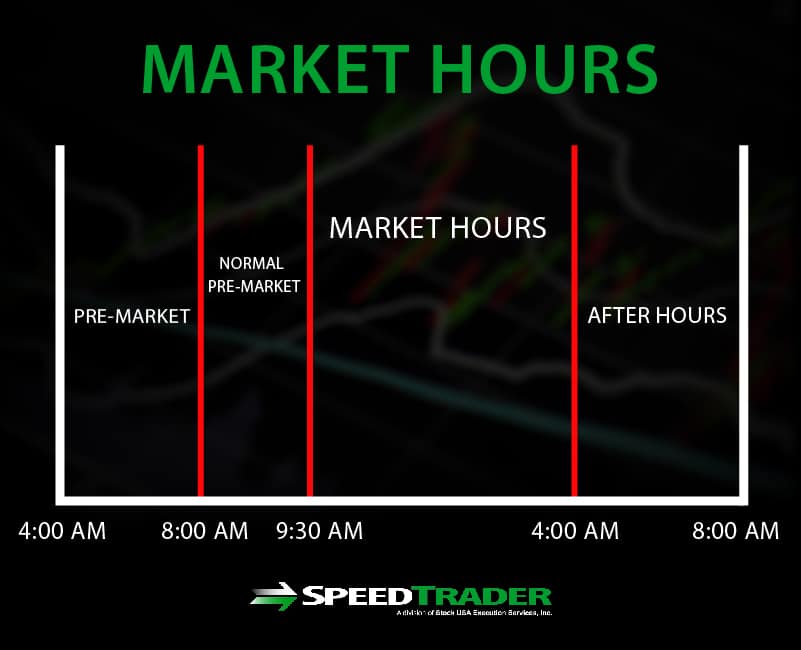
- Standard Pre-Market Hours: Generally, pre-market trading for both the NYSE and NASDAQ officially begins at 4:00 AM Eastern Time (ET) and runs until the market’s regular opening bell at 9:30 AM ET.
- Brokerage Access: It’s important to note that while the exchanges facilitate trading from 4:00 AM ET, not all brokerages offer their clients access for the entire duration. Many retail brokerages typically provide access starting from 7:00 AM ET or 8:00 AM ET. Some might offer earlier access, but this is less common for the average retail investor. Traders must verify their specific broker’s pre-market trading hours.
This nearly 5.5-hour window before the market officially opens provides ample time for significant price movements and volume surges, particularly in response to major news items released in the overnight or early morning hours.
Brokerage-Specific Access: Variations in Trading Platforms
The ability to participate in pre-market trading is not uniform across all brokerage platforms. The specific start time and the range of securities available for pre-market trading can differ widely:
- Early Access Brokers: Some advanced trading platforms and institutional brokers provide access to the full 4:00 AM ET to 9:30 AM ET window. These platforms often cater to professional traders who require maximum flexibility and speed.
- Limited Access Brokers: Many mainstream retail brokerages offer a more restricted pre-market window, often starting between 7:00 AM ET and 8:00 AM ET. This is partly due to lower liquidity and higher volatility in the earlier hours, which can pose greater risks for less experienced traders.
- Security Availability: Not all securities are tradable in the pre-market session. Typically, highly liquid stocks, particularly those in major indices like the S&P 500 or NASDAQ 100, are available. Less liquid stocks, penny stocks, or certain ETFs might not be accessible until regular market hours.
- Order Types: Some brokerages may limit the types of orders that can be placed during pre-market. For instance, market orders might be restricted due to volatility, favoring limit orders instead.
Always consult your specific brokerage’s terms and conditions, as well as their platform’s functionalities, to understand your access limitations and capabilities for pre-market trading.
International Markets: A Glimpse at Global Pre-Openings
While the focus often remains on US markets, similar pre-market or “pre-opening” sessions exist in exchanges around the globe, each with its own schedule and characteristics:
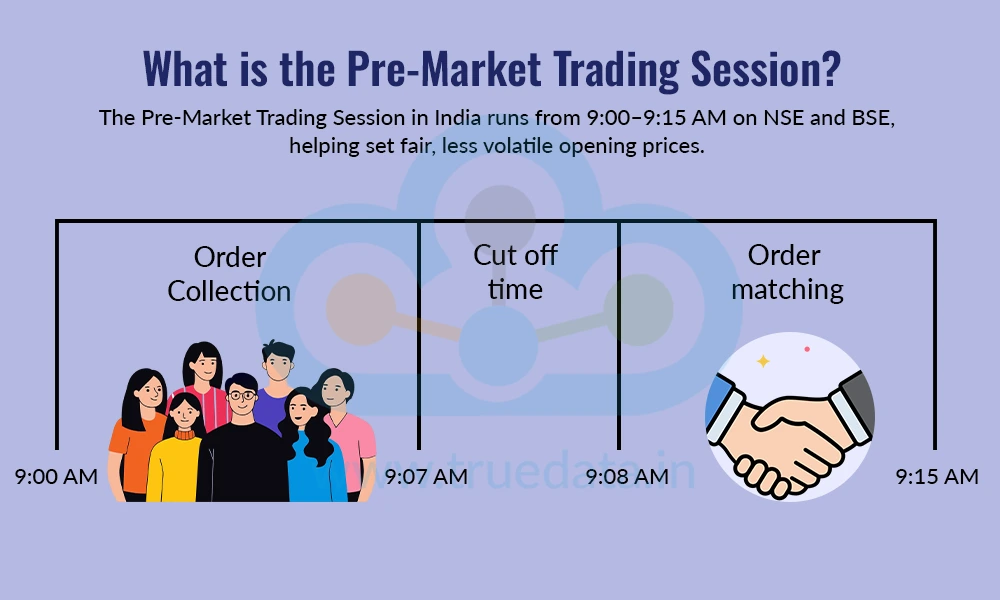
- Europe (e.g., London Stock Exchange, Euronext): Many European exchanges have a pre-opening phase that typically lasts for 30-60 minutes before the official open. During this phase, orders can be placed, amended, or canceled, but no trades are executed. It’s a price discovery phase where an indicative opening price is determined, and then all executable orders are matched at the official open. For example, the LSE’s SETS segment typically has a pre-market session from 7:15 AM GMT to 8:00 AM GMT.
- Asia (e.g., Tokyo Stock Exchange, Hong Kong Stock Exchange): Asian markets also utilize pre-opening sessions. The Tokyo Stock Exchange (TSE), for instance, has a “pre-open” period where orders are collected and matched to determine an opening price. The Hong Kong Stock Exchange (HKEX) has a “Pre-opening Session” where investors can input, amend, or cancel orders, and an “Order Matching Period” occurs just before the market officially opens at 9:30 AM HKT.
- Australia (ASX): The Australian Securities Exchange (ASX) has a “Pre-Open” period during which orders are accumulated and an opening price is determined.
These international pre-opening phases serve similar purposes: price discovery, reaction to overnight news, and an orderly transition into the main trading session. The exact start and end times, as well as the mechanisms (e.g., continuous trading versus single opening auction), vary by exchange.
Advantages and Disadvantages of Early Trading
Engaging in pre-market trading offers both compelling benefits and significant drawbacks. A balanced understanding of these aspects is crucial for making informed decisions.
Seizing Opportunities: Quick Reactions to News and Events
The primary advantage of pre-market trading lies in its ability to facilitate immediate reactions to new information. For investors, this means:
- Capturing Early Moves: If a company announces blockbuster earnings or a groundbreaking product launch before the market opens, pre-market traders can buy shares before the broader market has a chance to react, potentially locking in significant gains if the stock surges at the open.
- Avoiding Price Gaps: Conversely, if negative news breaks, pre-market selling allows investors to exit positions before potential steep declines at the opening bell, mitigating losses that might occur if they waited.
- Arbitrage Opportunities: Discrepancies between derivative prices (e.g., futures) and underlying assets can sometimes present arbitrage opportunities for sophisticated traders, though these are typically fleeting.
- Strategic Positioning: Large institutions can use the pre-market to begin building or reducing positions without causing as much immediate market impact as they might during regular hours, allowing them to execute trades more discreetly.
The Double-Edged Sword: Volatility, Liquidity, and Price Discovery
While offering opportunities, pre-market trading comes with inherent risks, primarily stemming from its operational characteristics:
- Lower Liquidity: Fewer participants typically mean fewer buyers and sellers, leading to thinner trading volumes. This makes it harder to execute large orders without significantly impacting the price, and can result in wider bid-ask spreads, making entry and exit more costly.
- Higher Volatility: The lower liquidity often amplifies price movements. A relatively small order can cause a stock’s price to swing dramatically, leading to rapid and unpredictable changes. This increased volatility can lead to larger gains but also larger losses in a shorter period.
- Inaccurate Price Discovery: Due to limited trading activity, the prices established in pre-market may not accurately reflect the stock’s true value or where it will ultimately open during the regular session. These prices can be manipulated more easily and are less reliable predictors than those formed with full market participation.
- Information Asymmetry: Retail traders may be at a disadvantage compared to institutional players who have access to faster data feeds, advanced algorithms, and deeper pockets, potentially leading to unfavorable executions.
Who Trades Pre-Market? Institutional vs. Retail Participation
The landscape of pre-market trading is populated by a diverse group of participants, with differing levels of influence and access:
- Institutional Investors: Hedge funds, mutual funds, proprietary trading firms, and market makers constitute a significant portion of pre-market activity. They often have dedicated teams and technology to monitor news, analyze data, and execute trades around the clock. Their large capital pools and sophisticated algorithms allow them to navigate the nuances of low liquidity and high volatility.
- High-Net-Worth Individuals: Experienced individual traders with substantial capital and advanced trading platforms may also participate, leveraging their expertise to react to market-moving news.
- Retail Investors: While many retail brokerages offer pre-market access, most casual investors do not actively participate in the earliest hours due to the perceived risks and complexity. Those who do engage are often more active traders, keenly following specific stocks or sectors. Retail participation typically increases as the pre-market session approaches the regular open, particularly after 7:00 AM ET when more brokers open access.
The disparity in resources and objectives between these groups underscores the importance of caution for retail traders considering pre-market engagement.
Strategies and Risks in the Pre-Market Session
For those considering venturing into the pre-market, a well-defined strategy and a robust understanding of risk management are paramount. The unique environment of early trading demands a different approach than the regular session.
Navigating the Landscape: Essential Tools and Considerations
Successful pre-market trading requires specific tools and a disciplined approach:
- Reliable News Sources: Access to real-time, high-quality news feeds is non-negotiable. Traders need to be among the first to receive and interpret breaking news that can move stock prices.
- Advanced Trading Platform: A brokerage platform that offers reliable pre-market access, accurate real-time data, comprehensive charting tools, and the ability to place various order types (especially limit orders) is essential.
- Level 2 Data: Access to Level 2 quotes provides a deeper insight into the order book, showing the various bid and ask prices and the number of shares available at each price level. This helps gauge liquidity and potential price resistance/support.
- Focus on Catalyst-Driven Stocks: Pre-market movers are almost always reacting to a specific catalyst (earnings, FDA approval, analyst upgrade/downgrade). Focus on stocks with clear news drivers rather than attempting to trade quiet stocks with no news.
- Small Position Sizes: Given the heightened volatility, it’s wise to start with smaller position sizes than you might use during regular hours. This limits potential losses if a trade moves against you rapidly.
Mitigating Risks: Managing Volatility and Thin Liquidity
The inherent risks of pre-market trading necessitate strict risk management practices:
- Always Use Limit Orders: Due to wide bid-ask spreads and sudden price swings, market orders can be executed at prices far worse than anticipated. Always use limit orders to control your entry and exit points, ensuring your trade is only executed at or better than your specified price.
- Define Your Stop-Loss: Before entering any pre-market trade, determine your maximum acceptable loss and set a mental or hard stop-loss order. Be prepared to exit quickly if the trade moves against your thesis.
- Understand Liquidity: Always check the volume and bid-ask spread of a stock before trading. If the spread is too wide or the volume too low, it’s often best to avoid the trade, as you may get stuck in an unfavorable position.
- Avoid Over-Trading: The temptation to chase volatile movers can be strong, but over-trading in a low-liquidity environment can quickly erode capital. Be selective and wait for high-conviction setups.
- Monitor the Overall Market: While individual stock news drives pre-market moves, the broader market sentiment (e.g., S&P 500 futures) can still influence individual stock behavior. Keep an eye on major index futures.
Beyond the Hype: Practical Approaches for Informed Decisions
Pre-market trading is not for every investor. For many, simply observing the pre-market can be beneficial without active participation:
- Watch for Opening Gaps: Pre-market activity often creates “gaps” – significant differences between a stock’s previous closing price and its pre-market indicative open. Observing these gaps can inform regular-session trading strategies.
- Identify Key Levels: Price action in the pre-market can establish early support and resistance levels that might be relevant during the regular trading day.
- Gauge Sentiment: The direction and strength of pre-market movers can provide an early indication of market sentiment for particular sectors or the market as a whole.
- Patience is Key: For retail investors, waiting for the regular market open often provides better liquidity, tighter spreads, and more reliable price discovery. The pre-market session is best used as an information-gathering period rather than a primary trading window, unless one has significant experience and the right tools.
In conclusion, understanding when pre-market trading starts – typically 4:00 AM ET for US exchanges, with varying brokerage access – is just the first step. A thorough grasp of its distinct environment, coupled with disciplined strategies and robust risk management, is essential for navigating these early hours effectively. While it presents opportunities for nimble traders, its inherent volatility and lower liquidity demand caution and an informed approach, ultimately serving as a fascinating prelude to the full spectacle of the trading day.
aViewFromTheCave is a participant in the Amazon Services LLC Associates Program, an affiliate advertising program designed to provide a means for sites to earn advertising fees by advertising and linking to Amazon.com. Amazon, the Amazon logo, AmazonSupply, and the AmazonSupply logo are trademarks of Amazon.com, Inc. or its affiliates. As an Amazon Associate we earn affiliate commissions from qualifying purchases.