
For anyone using PayPal to conduct business, sell goods, or provide services, the question of when and if a 1099 tax form will arrive is a perennial concern. The Form 1099-K, specifically, is a crucial document for reporting income to the IRS, and understanding its thresholds, timelines, and implications is vital for sound financial management and tax compliance. As digital payment platforms like PayPal have become ubiquitous in both the gig economy and traditional commerce, the rules surrounding their tax reporting obligations have evolved, sometimes leading to confusion among users.

This guide will demystify the process, explain the ever-changing IRS thresholds, clarify what types of income are reported, and outline what you need to know to stay on top of your tax responsibilities when using PayPal. From understanding the difference between goods and services payments versus personal transfers to knowing when to expect your form, we’ll cover the essential details to help you navigate tax season with confidence.
Understanding the IRS 1099-K Reporting Thresholds
The core of PayPal’s 1099-K reporting obligation lies with the Internal Revenue Service (IRS) thresholds for third-party payment network transactions. These thresholds have been subject to significant changes and delays in recent years, making it imperative for users to stay informed about the current rules. The 1099-K reports gross payments received from all sources through a payment network like PayPal.
The Historical Threshold and Its Resilience
For many years, the IRS threshold for issuing a Form 1099-K remained consistently high. A third-party payment network, such as PayPal, was only required to issue a 1099-K if a user received:
- More than $20,000 in gross payments for goods and services in a calendar year, AND
- More than 200 separate transactions in that same year.
Both conditions had to be met for the form to be issued. This higher threshold meant that many casual sellers or small businesses operating through platforms like PayPal might not have received a 1099-K, even if they were earning taxable income. This rule was designed to focus reporting on more substantial commercial activity rather than sporadic, low-volume transactions. Crucially, this was the threshold that remained in effect for the 2023 tax year due to subsequent legislative changes and IRS delays. Therefore, if your PayPal activity for 2023 did not exceed both $20,000 and 200 transactions, you would not have received a 1099-K from PayPal for that year.
The Short-Lived $600 Threshold and Its Suspension
In an effort to improve tax compliance and ensure fair reporting across all income sources, Congress passed the American Rescue Plan Act of 2021. This legislation drastically lowered the 1099-K reporting threshold for third-party payment networks to just $600 in gross payments for goods and services, with no minimum transaction count. This change was initially slated to take effect for the 2022 tax year, meaning that anyone receiving over $600 through PayPal for goods and services would expect a 1099-K.
However, due to widespread concerns about the significant increase in 1099-K forms and potential confusion for millions of individuals who might suddenly find themselves receiving these forms for relatively small amounts, the IRS announced a delay. They postponed the implementation of the $600 threshold for the 2022 tax year, reverting to the original $20,000 and 200 transaction threshold. This delay was extended again for the 2023 tax year. This meant that for both 2022 and 2023, the old, higher reporting thresholds remained in place, preventing a sudden deluge of 1099-Ks for lower-income sellers.
The Planned $5,000 Transitional Threshold for 2024 and Beyond
Recognizing the need for a smoother transition to the ultimately intended $600 threshold, the IRS announced a new plan. For the 2024 tax year, there will be a transitional threshold of $5,000 in gross payments for goods and services, with no minimum transaction count. This means that if you receive more than $5,000 through PayPal for goods and services in 2024, you can expect to receive a 1099-K.
The IRS intends to eventually implement the $600 threshold in subsequent years, after this transitional phase allows taxpayers and payment processors to adjust. This gradual approach aims to mitigate some of the administrative burdens and confusion associated with such a dramatic shift in reporting requirements. It’s crucial for users to be aware that these thresholds are dynamic, and future changes are possible, underscoring the importance of staying informed directly through IRS announcements or reliable financial news sources.
What Income is Reported on a 1099-K?
It’s important to understand that not all money received through PayPal counts toward the 1099-K threshold. The IRS specifically targets payments made for goods and services, which are indicative of commercial activity. PayPal categorizes these transactions, and only payments designated as such are included in the 1099-K calculation.
Distinguishing Goods & Services Payments from Friends & Family
The critical distinction in PayPal’s system, and for 1099-K reporting, is between payments for “Goods & Services” and payments made via “Friends & Family.”
- Goods & Services Payments: These are transactions where money is exchanged for an item, a service, or any commercial transaction. These payments typically involve seller protection and often incur a fee for the recipient. It is these payments that count towards the 1099-K threshold. Examples include selling items on eBay, receiving payment for freelance work, or accepting customer payments for a small business.
- Friends & Family Payments: These are personal transfers of money between individuals, intended as gifts, splitting bills, or sending money to loved ones. These transactions usually do not involve seller protection and often have no fees, especially if funded by a bank account or PayPal balance. Payments made using the “Friends & Family” option are generally not considered taxable income by the IRS and therefore do not count towards the 1099-K threshold. PayPal does not report these to the IRS.
Users must ensure they select the appropriate payment type when sending or receiving money. Mislabeling a commercial transaction as “Friends & Family” could lead to issues, as PayPal’s systems are designed to detect such discrepancies, and continuous misuse might flag an account for review.
Business Income vs. Personal Use of Payment Apps
The 1099-K is fundamentally an informational document for business income. While PayPal is widely used for personal transactions, the form itself is designed to report income derived from business or commercial activities.
- Business Income: This encompasses revenue from sales of goods (e.g., selling handmade crafts, reselling items, e-commerce sales), providing services (e.g., consulting, web design, lawn care, tutoring), or any activity where you are compensated for work or items. This is the income that is reportable to the IRS, regardless of whether a 1099-K is issued.
- Personal Use: This includes activities like splitting the cost of a dinner with a friend, repaying a loan, receiving birthday money, or contributing to a group gift. These are generally considered non-taxable events and do not factor into the 1099-K reporting.
It’s crucial for individuals to understand that even if their “business” income doesn’t meet the 1099-K threshold, it is still taxable. The 1099-K simply serves as a third-party report to the IRS. Taxpayers are legally obligated to report all taxable income, regardless of whether they receive a 1099-K or any other tax form. Maintaining meticulous records of all income and expenses related to any business activity, no matter how small, is a fundamental best practice for tax compliance.
When Can You Expect Your PayPal 1099-K?
For those who meet the applicable IRS thresholds, knowing when to expect your 1099-K from PayPal is important for timely tax preparation.
Standard Issuance Deadlines
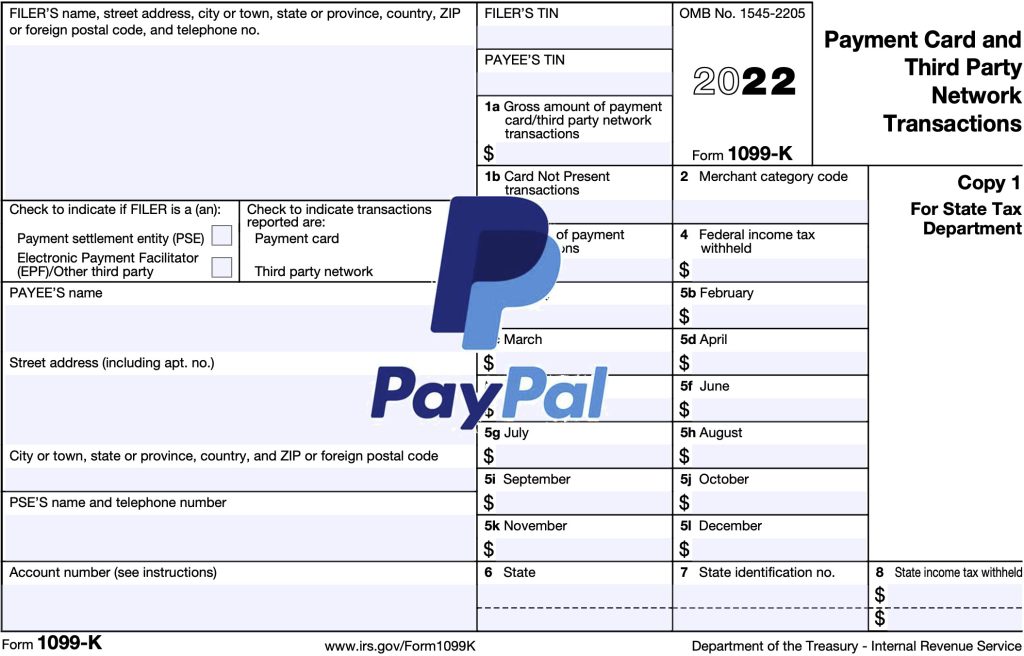
The IRS mandates that third-party payment networks like PayPal must mail or electronically provide Form 1099-K to recipients by January 31st of the year following the reporting year. For example, if you met the reporting threshold for 2023, you should have received your 1099-K by January 31, 2024. If January 31st falls on a weekend or holiday, the deadline is typically extended to the next business day.
While PayPal strives to meet this deadline, factors such as postal service delays for paper forms or high volume can sometimes cause slight variations. It’s advisable to allow a few extra days for delivery, especially for physical mail.
Accessing Your Form Electronically
PayPal offers the convenience of accessing your 1099-K form electronically, which is often faster and more reliable than waiting for a physical copy. If you’ve opted for electronic delivery or if it’s the default setting for your account:
- Log in to your PayPal account: Use the web interface, as the mobile app may have limited functionality for tax documents.
- Navigate to “Reports” or “Statements & Tax Documents”: The exact path may vary slightly but usually can be found under the “Activity,” “History,” or “Reports” section of your account.
- Select the relevant tax year: Choose the year for which you are seeking the 1099-K.
- Download the form: Your 1099-K (if issued) should be available for download as a PDF.
It’s a good practice to periodically check your PayPal account settings to ensure your contact information is up-to-date and to confirm your preference for electronic vs. paper statements and tax documents.
What to Do If You Don’t Receive a 1099-K (But Should Have) or Receive One Incorrectly
Even with clear thresholds and deadlines, issues can arise. You might expect a 1099-K but not receive it, or the form you receive might contain errors. Knowing how to proceed is crucial for accurate tax filing.
Verifying Your Transaction History
Before taking any action, first verify your own records against PayPal’s data.
- Generate a PayPal transaction report: Log in to your PayPal account and navigate to the “Activity” or “Reports” section. You can usually export a detailed report of all your transactions for the specific tax year. Filter these transactions to show only “Goods & Services” payments received.
- Manually calculate your totals: Sum up the gross payments for goods and services and count the number of transactions. Compare these totals against the applicable IRS threshold for that year (e.g., $20,000 and 200 transactions for 2023, or $5,000 for 2024).
- Confirm the payment type: Double-check that all included payments were indeed categorized as “Goods & Services” and not “Friends & Family.”
If your own calculations show that you clearly met the threshold, but you haven’t received a 1099-K by mid-February, then it’s time to take further steps.
Contacting PayPal Support
If you’ve verified that you should have received a 1099-K based on your transaction history and the IRS thresholds, but it’s missing or if the form you received contains errors (e.g., incorrect gross amount, wrong tax identification number), you should contact PayPal’s customer support.
- Have your account details ready: This includes your username, email, and any relevant transaction IDs.
- Clearly state your issue: Explain that you believe you met the 1099-K threshold but haven’t received the form, or that the form you received has errors.
- Request a corrected or reissued form: PayPal can typically investigate and, if necessary, re-issue a corrected 1099-K. This process may take some time, especially during peak tax season, so it’s best to address it as soon as possible.
- Keep records of your communication: Document the date, time, and content of your interactions with PayPal support.
Your Independent Reporting Obligation
It is paramount to remember that your legal obligation to report taxable income to the IRS exists independently of whether you receive a 1099-K. The 1099-K is an informational document sent by PayPal to both you and the IRS, but it doesn’t create your tax liability. If you earned income through PayPal for goods and services that is taxable, you must report it, even if you do not receive a 1099-K because you did not meet PayPal’s reporting threshold, or if there was an error and you didn’t receive one when you should have. Failing to report all taxable income can lead to penalties, interest, and audits from the IRS. Always err on the side of reporting accurately.
Implications for Taxpayers and Best Practices
Understanding PayPal’s 1099-K reporting is just one piece of the puzzle for tax compliance. Proactive financial management and diligent record-keeping are essential for anyone using digital payment platforms for income-generating activities.
Maintaining Accurate Records Beyond the 1099-K
While the 1099-K reports your gross income, it doesn’t tell the whole story of your business finances. It’s crucial to maintain comprehensive records for all income and, just as importantly, all expenses related to your business activities.
- Income Documentation: Keep detailed records of all payments received, including the date, amount, sender, and purpose. Your PayPal transaction history can be a good starting point, but consider supplementing it with your own ledgers or accounting software.
- Expense Tracking: Meticulously track all deductible business expenses. This could include PayPal fees, shipping costs, cost of goods sold, supplies, advertising expenses, home office deductions, and more. These expenses will reduce your taxable income.
- Receipts: Retain all receipts for your expenses. Digital copies are often sufficient and easier to manage.
Robust record-keeping is not just for tax season; it provides valuable insights into the health of your business and helps you make informed financial decisions throughout the year.
The Difference Between Gross Payments and Taxable Income
The amount reported on your 1099-K is the gross amount of payments you received for goods and services. This is not necessarily your taxable income. Your taxable income is derived after subtracting your eligible business expenses from your gross income.
- Gross Payments (from 1099-K): This is the total amount of money that flowed into your PayPal account for commercial transactions.
- Taxable Income: This is Gross Payments minus all legitimate business deductions (e.g., PayPal fees, returns/refunds, cost of goods sold, advertising, supplies, etc.).
For self-employed individuals, freelancers, and small business owners, this net taxable income is typically reported on Schedule C (Form 1040), Profit or Loss From Business. It’s vital to understand this distinction to avoid overpaying taxes. For example, if your 1099-K shows $10,000 in gross payments, but you had $3,000 in product costs, $500 in PayPal fees, and $200 in shipping, your actual taxable income would be $6,300 ($10,000 – $3,000 – $500 – $200).

Planning for Tax Season
Proactive planning can alleviate much of the stress associated with tax season.
- Set Aside Funds: If you’re earning income through PayPal, especially if it’s your primary source of income, it’s wise to set aside a portion of each payment for taxes. A common recommendation is 25-35% of your net income, but this can vary based on your total income and deductions.
- Estimated Taxes: If you expect to owe at least $1,000 in taxes for the year, the IRS generally requires you to pay estimated taxes quarterly. Failure to do so can result in penalties. Consult IRS Form 1040-ES for more information.
- Consult a Tax Professional: For complex financial situations or if you’re unsure about your tax obligations, seeking advice from a qualified tax professional (e.g., a CPA or Enrolled Agent) is highly recommended. They can help you navigate deductions, ensure compliance, and optimize your tax strategy.
In conclusion, while PayPal plays a crucial role in facilitating online transactions, understanding its role in tax reporting is your responsibility as a taxpayer. Staying informed about IRS thresholds, accurately categorizing your transactions, maintaining diligent records, and planning throughout the year are the cornerstones of responsible financial management when using platforms like PayPal for income generation. The tax landscape is ever-evolving, so continuous learning and proactive engagement with your financial health will serve you best.
aViewFromTheCave is a participant in the Amazon Services LLC Associates Program, an affiliate advertising program designed to provide a means for sites to earn advertising fees by advertising and linking to Amazon.com. Amazon, the Amazon logo, AmazonSupply, and the AmazonSupply logo are trademarks of Amazon.com, Inc. or its affiliates. As an Amazon Associate we earn affiliate commissions from qualifying purchases.