
For anyone navigating the complex world of finance, understanding the operating hours of major stock exchanges is fundamental. The New York Stock Exchange (NYSE) and NASDAQ, two of the world’s most prominent equity markets, dictate the rhythm of global trading, influencing countless investment decisions daily. Knowing precisely when these markets open, close, and observe holidays is not merely a logistical detail; it’s a critical piece of information that impacts liquidity, volatility, and overall investment strategy. This article delves into the standard trading schedule, explores the nuances of extended-hours trading, and highlights why these timings are paramount for both seasoned investors and curious newcomers alike, firmly rooted in the discipline of Money and Financial Markets.

The Core Trading Hours: NYSE and NASDAQ
The heartbeat of the U.S. stock market emanates from its established core trading hours, a period designed to concentrate liquidity and facilitate efficient price discovery. Understanding this standard schedule is the bedrock for any investor planning their market activities.
Standard Operating Schedule
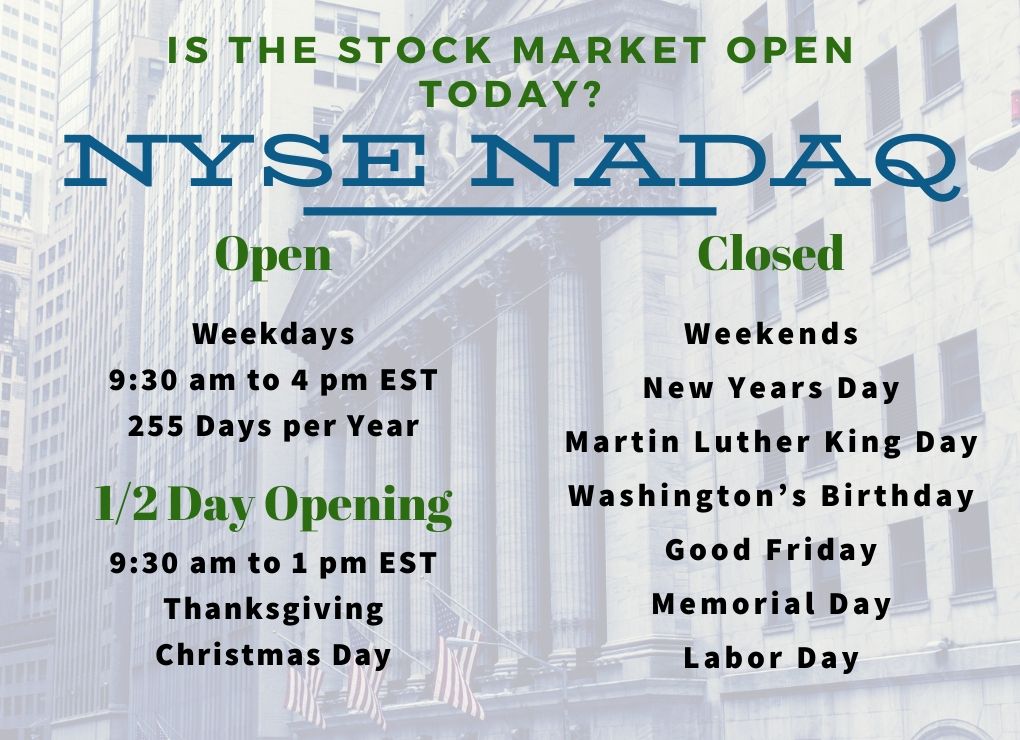
Both the New York Stock Exchange (NYSE) and the NASDAQ Stock Market adhere to a consistent schedule for their regular trading sessions. The market officially opens its doors to regular trading at 9:30 AM Eastern Time (ET) and concludes trading at 4:00 PM Eastern Time (ET) on weekdays. This seven-and-a-half-hour window is when the vast majority of stock transactions occur, characterized by high volumes and typically tighter bid-ask spreads, reflecting robust market participation.
During these hours, orders are executed, prices fluctuate in response to economic data, company news, and investor sentiment, and market makers ensure an orderly flow of transactions. This structured environment is crucial for maintaining market efficiency, allowing a broad spectrum of participants – from individual retail investors to large institutional funds – to engage simultaneously. The fixed opening and closing times have historical roots, originally accommodating the manual processes of early exchanges and evolving to concentrate trading activity, thereby maximizing liquidity and reducing price volatility that could result from fragmented trading across different time zones or unstructured hours. This concentrated period also provides a clearer benchmark for daily performance and reporting, simplifying analysis and comparison for financial professionals and media alike.
Time Zone Clarification (Eastern Time)
The “Eastern Time” designation is crucial and often a point of confusion for investors located outside the U.S. Eastern Seaboard. The 9:30 AM to 4:00 PM schedule is strictly observed in Eastern Time (ET), which refers to either Eastern Standard Time (EST) or Eastern Daylight Time (EDT), depending on the time of year. During Daylight Saving Time, the Eastern Time zone shifts to EDT.
For investors in other time zones, converting these hours correctly is essential to avoid missing the market open or close:
- Pacific Time (PT): 6:30 AM to 1:00 PM PT
- Central Time (CT): 8:30 AM to 3:00 PM CT
- Mountain Time (MT): 7:30 AM to 2:00 PM MT
- Greenwich Mean Time (GMT): 2:30 PM to 9:00 PM GMT (when ET is EST) or 1:30 PM to 8:00 PM GMT (when ET is EDT).
Incorrect time zone conversion can lead to missed trading opportunities, delayed reactions to critical news, or accidental engagement in less liquid extended-hours trading. Financial tools and brokerage platforms often display market hours according to the user’s local time zone, but it’s always prudent to double-check the underlying ET schedule.
The Rationale Behind Fixed Hours
The fixed operating hours of the NYSE and NASDAQ are not arbitrary; they are the result of centuries of market evolution and serve several key purposes in modern financial markets. Foremost among these is the concentration of liquidity. By limiting trading to specific hours, all market participants are funneled into the same window, leading to higher trading volumes and a greater number of buyers and sellers at any given moment. This high liquidity results in tighter bid-ask spreads, making it cheaper and easier to execute trades without significantly impacting prices.
Furthermore, fixed hours contribute to fairness and transparency. They ensure that all participants have access to the same market conditions and information flow during the official trading period. This structured approach helps in the efficient discovery of prices, as the collective wisdom of the market is brought to bear on asset valuations. Historically, these hours also provided a necessary pause for administrative tasks, trade reconciliation, and information dissemination, although technological advancements have streamlined many of these processes. While the idea of 24/7 trading is often debated, the current fixed schedule provides a predictable framework that market participants rely on for strategy development, risk management, and regulatory oversight, ensuring an orderly and equitable trading environment that underpins the trust in the financial system.
Understanding Pre-Market and After-Hours Trading
While the core 9:30 AM to 4:00 PM ET window defines regular trading, the markets are not entirely dormant outside these hours. Extended-hours trading, encompassing pre-market and after-hours sessions, offers investors the flexibility to react to news outside standard operations, albeit with distinct characteristics and risks.
What is Pre-Market Trading?
Pre-market trading refers to the period before the official market open at 9:30 AM ET. For many brokers and electronic communication networks (ECNs), pre-market trading can begin as early as 4:00 AM ET and runs up until the opening bell. This session allows participants, predominantly institutional investors and highly active traders, to place orders and execute trades based on news that breaks overnight or early in the morning, such as earnings reports released before the market opens, economic data, or global market movements.
Key characteristics of pre-market trading include:
- Lower Liquidity: Fewer participants mean lower trading volume compared to regular hours.
- Wider Spreads: The gap between bid and ask prices tends to be larger due to less competition.
- Higher Volatility: Lower liquidity can lead to more dramatic price swings on relatively small trading volumes.
- Institutional Participation: Many individual retail investors face limitations in terms of broker access or comfort level.
Investors engaging in pre-market trading often do so to get ahead of potential price movements or to quickly adjust positions in response to significant events before the broader market reacts. However, the limited participation and liquidity can make price discovery less efficient, potentially leading to prices that differ significantly from where the stock opens during regular hours.
Exploring After-Hours Trading
After-hours trading picks up immediately after the regular market close at 4:00 PM ET and can extend as late as 8:00 PM ET, depending on the brokerage firm and ECNs. This period serves a similar purpose to pre-market trading, allowing investors to react to company announcements, earnings releases, or late-breaking news that occurs after the close of the regular session.
Like pre-market, after-hours trading is characterized by:
- Reduced Liquidity: Trading volumes drop significantly compared to core hours.
- Wider Bid-Ask Spreads: Less competition among buyers and sellers.
- Increased Volatility: Prices can be more susceptible to large swings on relatively low volume.
- Limited Order Types: Typically, only limit orders are accepted, as market orders carry greater risk of unexpected execution prices in low-liquidity environments.
Many companies strategically release their quarterly earnings reports or other market-moving news after the close of regular trading hours. This gives the market time to digest the information before the next day’s open, but also presents opportunities for after-hours traders to respond immediately. However, the dynamics of this extended session demand a higher level of caution and understanding from investors due to the inherent risks.
Risks and Opportunities in Extended-Hours Trading
Extended-hours trading presents a double-edged sword for investors. While it offers unique opportunities, it also carries amplified risks that demand careful consideration.
Opportunities:
- Timely Reaction to News: Investors can immediately respond to overnight or late-day news, earnings reports, or economic data, potentially capitalizing on early price movements.
- Flexibility: For individuals with busy schedules during regular market hours, extended sessions provide an opportunity to manage their portfolios.
- Price Advantage: Savvy traders might identify temporary mispricings due to low liquidity and execute profitable trades.
Risks:
- Lower Liquidity: This is the most significant risk. Fewer participants mean it can be harder to buy or sell shares at desired prices, leading to wider bid-ask spreads and potentially significant price slippage.
- Higher Volatility: Small orders can have a disproportionate impact on stock prices due to thin trading volume, leading to unpredictable and rapid price swings.
- Uncertain Price Discovery: The prices achieved during extended hours may not accurately reflect the stock’s true value once regular trading resumes and liquidity increases. A stock that surges in after-hours might “gap down” at the open, and vice-versa.
- Competition with Professionals: Retail investors often compete against large institutional traders with superior information, resources, and speed, putting them at a disadvantage.
- Limited Order Types: The restriction to limit orders, while a safety measure, means trades may not execute if the price moves away from the specified limit.
For these reasons, most financial advisors recommend that inexperienced investors exercise extreme caution, if not outright avoidance, of extended-hours trading. It is a domain best suited for those who fully understand its mechanisms, associated risks, and are equipped with advanced trading tools and strategies.
Navigating Weekends, Holidays, and Special Closures
Beyond the daily open and close, understanding when the NYSE and NASDAQ are completely shuttered or operate on an abbreviated schedule is equally crucial for financial planning and avoiding unexpected delays in trading.
Standard Weekend Closures
The simplest and most consistent rule for U.S. stock markets is their closure on weekends. Both the NYSE and NASDAQ are closed on Saturdays and Sundays. This provides a necessary pause for market participants, allowing for reflection, planning, and rest from the intense daily trading activity. Operationally, it also provides a window for exchanges and clearinghouses to perform system maintenance, reconcile transactions, and prepare for the next trading week without disrupting live market activity. While individual investors might use the weekend to research, analyze portfolios, or develop strategies, no trading of exchange-listed equities occurs during these two days. This structured break reinforces the predictability of the market calendar and is universally understood by all participants.

Federal Holidays Observed by the Exchanges
The U.S. stock markets observe most federal holidays, ensuring that financial institutions and their employees can participate in national observances. When a holiday falls on a weekend, the market typically closes on the preceding Friday or the following Monday, a practice known as “holiday observance.”
Key holidays when the NYSE and NASDAQ are typically closed include:
- New Year’s Day (January 1)
- Martin Luther King, Jr. Day (Third Monday in January)
- Washington’s Birthday (Third Monday in February)
- Good Friday (Varies, typically March or April)
- Memorial Day (Last Monday in May)
- Juneteenth National Independence Day (June 19)
- Independence Day (July 4)
- Labor Day (First Monday in September)
- Thanksgiving Day (Fourth Thursday in November)
- Christmas Day (December 25)
It’s important to note that specific details, such as partial closures or the observance of a holiday on a different day if it falls on a weekend, are announced well in advance by the exchanges. Investors should consult the official calendars published by the NYSE and NASDAQ at the beginning of each year to confirm exact dates. These closures are distinct from “bank holidays,” as some banks may be closed on days when the stock market remains open, and vice versa.
Unexpected Closures and Early Closes
While rare, there are instances where the markets may close unexpectedly or operate on an abbreviated schedule outside of standard holidays. These situations typically arise from extraordinary circumstances or specific market events.
Unexpected Closures:
- National Tragedies or Emergencies: Historically, the markets have closed in response to national crises, such as the period following the September 11, 2001, attacks.
- Severe Weather: Extreme weather conditions, particularly impacting New York City, can occasionally lead to delayed openings or full-day closures if transportation and operational staff cannot safely reach the exchanges.
- Technical Issues: Although less common and usually quickly resolved, severe technical malfunctions that prevent orderly trading could lead to temporary closures.
Early Closes:
- Holiday Eves: The market often closes early, typically at 1:00 PM ET, on the day before or after certain holidays. A prominent example is the day after Thanksgiving (Black Friday), which usually has an early close. Christmas Eve is another common early closure day if it falls on a weekday. These early closes allow for reduced trading activity around major holidays while still providing some market access.
Staying informed about these potential changes is paramount. Investors should regularly check announcements from their brokerage firms, major financial news outlets, and the official websites of the NYSE and NASDAQ. These resources provide the most up-to-date information regarding market status and any deviations from the standard trading calendar, ensuring investors can plan their transactions accordingly.
Why Trading Hours Matter for Investors
The specific times the New York Stock Exchange and NASDAQ operate are far more than mere administrative details; they fundamentally shape market dynamics, investment strategies, and the flow of information that drives financial decisions.
Impact on Liquidity and Volatility
Trading hours directly correlate with market liquidity and volatility. During the core trading hours of 9:30 AM to 4:00 PM ET, millions of participants are actively buying and selling. This concentrated activity leads to high liquidity, meaning there’s a deep pool of buyers and sellers for most stocks. High liquidity translates to tighter bid-ask spreads, making it easier and cheaper for investors to execute trades at prices close to the last traded price. This environment ensures efficient price discovery, as a vast array of information and opinions are reflected in the stock’s valuation.
Conversely, during pre-market and after-hours sessions, liquidity significantly drops. Fewer participants mean that even relatively small orders can have a substantial impact on a stock’s price, leading to increased volatility. This heightened volatility can present opportunities for aggressive traders but also poses significant risks for less experienced investors, as prices can move dramatically and unpredictably, making accurate trade execution challenging and potentially leading to unexpected losses. Understanding these dynamics helps investors decide when to enter or exit positions, optimizing for either maximum liquidity or strategic, albeit riskier, timing.
Information Flow and Market Reaction
The timing of market hours also dictates the flow of critical information and how the market reacts to it. Most significant corporate announcements, such as quarterly earnings reports, mergers and acquisitions news, or critical economic data (e.g., inflation figures, employment reports), are strategically released either before the market opens or after the market closes. This practice allows the investing public and analysts time to digest and analyze the information without disrupting live trading.
When such news breaks outside regular hours, pre-market and after-hours trading sessions often become highly reactive. Stocks can “gap up” or “gap down” significantly at the market open, reflecting the accumulated sentiment and trading activity from the extended hours. For example, a company reporting much better-than-expected earnings after the close might see its stock price surge in after-hours trading, and this momentum could carry over into a higher opening price the next morning. Investors need to be aware of this pattern, as it can create immediate opportunities or risks depending on their existing positions and willingness to react to rapid movements.
Strategic Trading and Investment Decisions
The awareness of market hours is integral to forming effective trading and investment strategies.
- Day Traders rely heavily on the high liquidity and volatility of regular trading hours. Their strategies often involve frequent buying and selling to capitalize on small price movements, making the core trading session their primary operational window. The predictability of regular hours allows for structured approaches to identifying trends and executing rapid trades.
- Long-Term Investors, while less concerned with minute-by-minute price fluctuations, still need to consider market hours for their buy and sell decisions. Executing large orders during periods of low liquidity (e.g., extended hours) can lead to unfavorable prices due to wider spreads. They might also strategically place orders during regular hours to ensure optimal execution and to benefit from the broader market’s price discovery mechanism.
- Event-Driven Investors carefully time their trades around news releases. They might monitor pre-market activity to gauge initial market reaction to an earnings report before making a decision during regular hours, or they might engage in extended-hours trading to capture immediate price movements, understanding the associated risks.
Ultimately, aligning one’s trading strategy with an understanding of market hours is a fundamental aspect of risk management and maximizing investment returns. It allows investors to choose the most suitable environment for their trades, whether prioritizing liquidity, reacting to news, or simply ensuring optimal execution of long-term investment plans.
Global Implications and Staying Informed
The New York Stock Exchange and NASDAQ do not operate in a vacuum; they are integral components of a vast, interconnected global financial system. Understanding this global context and knowing how to stay informed are essential skills for any serious investor.
The Interconnectedness of Global Markets
While the U.S. stock markets have specific opening and closing times, global finance operates almost continuously around the clock. Major exchanges in Asia (e.g., Tokyo, Hong Kong), Europe (e.g., London, Frankfurt), and other regions open and close at different times relative to New York, creating a seamless, rolling 24-hour cycle of market activity.
The performance of Asian and European markets can significantly influence pre-market trading in New York. For instance, a major economic announcement or a crisis in Europe during the night can cause U.S. stock futures to move dramatically before the NYSE even opens. Similarly, U.S. market trends can influence the opening sentiment of Asian markets the following day. This interconnectedness means that even when the NYSE is closed, global events continue to shape investor sentiment and potential asset valuations. The foreign exchange (Forex) market, which trades currencies 24 hours a day, five days a week, is a prime example of continuous global financial activity, often reflecting these interconnected influences in real-time. Investors with international holdings or those monitoring global macroeconomic trends must grasp this continuous flow of information and its potential impact on their U.S.-based investments.
Tools and Resources for Tracking Market Hours
In today’s digital age, staying informed about market hours and any deviations is easier than ever. A variety of tools and resources are readily available to investors:
- Brokerage Platforms: Most online brokerage accounts prominently display the current market status (open, closed, pre-market, after-hours) and often provide alerts for market opening and closing. They also typically feature calendars with upcoming holidays and early closures.
- Financial News Websites: Major financial news outlets such as Bloomberg, Reuters, The Wall Street Journal, Financial Times, and Yahoo Finance offer comprehensive market coverage, including real-time market status, calendars of holidays, and breaking news that might impact trading hours.
- Official Exchange Websites: The websites of the NYSE (www.nyse.com) and NASDAQ (www.nasdaq.com) are the definitive sources for their respective trading calendars, official announcements, and any unexpected changes to their schedules. These are crucial resources for verifying information.
- Financial Apps and Alerts: Many smartphone applications and desktop widgets provide quick access to market status, news feeds, and customizable alerts for market open/close times, making it convenient to stay updated on the go.
Regularly consulting these resources ensures that investors are always aware of when they can trade and can react appropriately to any scheduled or unscheduled market closures.
The Future of Trading Hours and Market Access
The concept of fixed trading hours is increasingly being challenged by technological advancements and the continuous nature of global finance. Cryptocurrencies, for instance, trade 24/7, providing a glimpse into a potential future for equity markets. Discussions about extending or even moving to 24/7 equity trading often surface, driven by desires for greater investor flexibility and seamless reaction to global events.
Proponents argue that continuous trading could enhance liquidity, prevent “gap” openings, and allow investors to manage risk more effectively around the clock. However, significant hurdles remain, including regulatory frameworks, the logistical challenges of staffing and market surveillance, and the potential impact on market makers and individual investors who might face burnout or difficulty in competing in a non-stop environment. While a complete shift to 24/7 equity trading for major exchanges like the NYSE and NASDAQ is not imminent, the trend towards greater market access beyond traditional hours, facilitated by electronic trading and expanded extended-hours sessions, is undeniable. Future developments in technology and regulation will continue to shape how and when investors can access the world’s most influential stock markets, further empowering individuals within the Money niche.
Conclusion
Understanding when the NY Stock Exchange opens and closes is far more than a simple scheduling query; it’s a foundational element of effective investing and financial strategy. The standard trading hours from 9:30 AM to 4:00 PM Eastern Time are crucial for concentrated liquidity and efficient price discovery, while pre-market and after-hours sessions offer additional flexibility with amplified risks. Navigating weekends, federal holidays, and potential unexpected closures ensures that investors can plan their transactions without disruption.
For anyone involved in financial markets, whether a day trader or a long-term investor, recognizing the impact of these hours on liquidity, volatility, information flow, and strategic decision-making is paramount. Furthermore, appreciating the interconnectedness of global markets and leveraging available tools to stay informed about market status are indispensable practices. As technology continues to evolve, the dynamics of market access may shift, but the fundamental importance of knowing when and how to engage with the world’s premier stock exchanges will remain a cornerstone of successful financial planning and investing.
aViewFromTheCave is a participant in the Amazon Services LLC Associates Program, an affiliate advertising program designed to provide a means for sites to earn advertising fees by advertising and linking to Amazon.com. Amazon, the Amazon logo, AmazonSupply, and the AmazonSupply logo are trademarks of Amazon.com, Inc. or its affiliates. As an Amazon Associate we earn affiliate commissions from qualifying purchases.