
For active traders and investors worldwide, understanding the precise timing of global financial markets is not merely a matter of convenience; it is a critical strategic imperative. Among these various sessions, the New York trading session stands out as a colossal force, often dictating the rhythm and direction of major asset classes across the globe. As the U.S. market, home to the world’s largest economy and most influential financial institutions, springs to life, it injects unparalleled liquidity and volatility into the markets, creating both immense opportunities and heightened risks.

This article delves into the intricacies of the New York session, providing a definitive guide to its opening and closing times, exploring its unique characteristics, and offering insights into how discerning market participants can effectively navigate its dynamic landscape. From the nuances of currency trading to the pulsating activity on Wall Street, mastering the New York session is fundamental to developing a robust and informed trading strategy.
Understanding Global Trading Sessions and Their Critical Overlaps
The global financial market operates 24 hours a day, five days a week, thanks to a sequence of major trading sessions spanning different time zones. These sessions collectively form a continuous market cycle, with liquidity and activity shifting from one financial hub to another as the Earth rotates.
The Four Major Trading Sessions: A Global Relay
The financial world is typically divided into four primary trading sessions, each with its own characteristics and dominant currency pairs:
- Sydney Session (Australia): Often considered the first to open the trading week, it sets an initial tone but generally sees lower liquidity.
- Tokyo Session (Asia): Following Sydney, the Asian session is characterized by trading in JPY, AUD, and NZD. It can be a period of consolidation or trend initiation.
- London Session (Europe): The largest and most liquid of the European sessions, London significantly boosts market activity, especially for EUR, GBP, and CHF pairs. It’s known for its high volume and trend-setting potential.
- New York Session (North America): The focus of our discussion, this session is the grand finale of the trading day for many, bringing the immense capital of North America to bear on global markets.
The Critical London-New York Overlap: A Period of Peak Activity
While each session has its importance, the period when two major sessions overlap often presents the highest liquidity and volatility. The most significant overlap occurs between the London and New York sessions. This crucial window, typically from 8:00 AM to 12:00 PM Eastern Time (ET), is when both European and American financial institutions are fully operational.
During this four-hour overlap, forex pairs involving the USD, EUR, and GBP experience their highest trading volumes, tightest spreads, and most significant price movements. This is often when major economic data releases from both Europe and the United States occur, further amplifying market reactions. For traders seeking swift entries and exits, or those looking to capitalize on strong trends, this overlap is often considered the most opportune time.
Adjusting for Daylight Saving Time (DST): A Crucial Consideration
A common point of confusion for international traders is the impact of Daylight Saving Time (DST). While many countries observe DST, their start and end dates can vary. This means that the actual GMT or UTC offset for cities like London and New York changes twice a year, which in turn shifts the “clock time” for session openings and closings relative to a static GMT/UTC reference.
For example, when the U.S. shifts to DST, its offset from GMT changes from GMT-5 (Eastern Standard Time, EST) to GMT-4 (Eastern Daylight Time, EDT). Similarly, the UK observes British Summer Time (BST), which is GMT+1. Traders must always be aware of the current time settings in each financial center to accurately calculate their local opening and closing times. Most reputable trading platforms and financial news sites provide market hours adjusted for DST, but it is always wise to double-check.
Exact Opening and Closing Times of the New York Session
Pinpointing the exact start and end times for the New York session depends on whether you’re looking at the broader forex market, which operates almost continuously, or specific exchanges like the New York Stock Exchange (NYSE) for equities.
Forex Market Hours (Eastern Time / GMT)
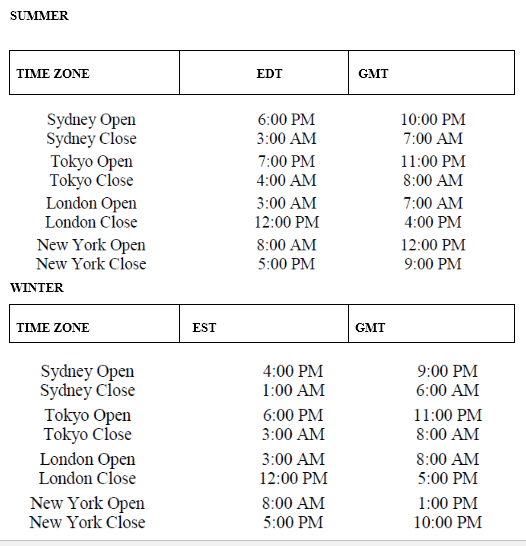
The New York session for the forex market, which trades currencies, typically opens at 8:00 AM ET (Eastern Time) and closes at 5:00 PM ET.
- During Eastern Standard Time (EST):
- Opens: 8:00 AM EST (GMT-5)
- Closes: 5:00 PM EST (GMT-5)
- During Eastern Daylight Time (EDT):
- Opens: 8:00 AM EDT (GMT-4)
- Closes: 5:00 PM EDT (GMT-4)
It’s crucial to remember that while the “New York session” refers to this active period, forex trading continues beyond these hours, simply with lower liquidity as the focus shifts back to the Asian markets. The 5:00 PM ET closing is significant as it often marks the official end of the forex trading day for many brokers, leading to potential spread widening as liquidity dries up.
New York Stock Exchange (NYSE) and NASDAQ Hours
For equity traders, the opening of the New York session means the opening bell of the NYSE and NASDAQ. These exchanges have very specific hours, unlike the 24-hour nature of forex.
- Standard Trading Hours: Both the NYSE and NASDAQ operate from 9:30 AM ET to 4:00 PM ET on weekdays.
- Opening Bell: 9:30 AM ET
- Closing Bell: 4:00 PM ET
- Pre-Market Trading: Many stocks on these exchanges can be traded in a pre-market session, typically from 4:00 AM ET to 9:30 AM ET.
- After-Hours Trading: Trading can also extend into an after-hours session, usually from 4:00 PM ET to 8:00 PM ET.
While pre-market and after-hours trading offer flexibility, they typically involve lower liquidity and wider spreads compared to standard trading hours. The core “New York session” for equities is firmly within the 9:30 AM to 4:00 PM window.
Futures and Commodities Markets
Futures contracts for various commodities (e.g., crude oil, gold, silver) and financial instruments (e.g., S&P 500 futures) trade on exchanges like the CME Group (Chicago Mercantile Exchange). While Chicago is the physical location, their trading hours are deeply integrated with the broader North American financial schedule.
Many futures contracts have electronic trading nearly 24 hours a day, but there are specific high-volume periods coinciding with the New York session. For instance, crude oil (WTI) futures see peak activity during the main New York forex and equity trading hours, especially when weekly inventory reports are released. Gold and silver, while traded globally, also experience significant movements during this session. It’s essential for futures traders to consult the specific contract specifications for exact exchange hours and major liquidity periods.
Why the New York Session Matters: Characteristics and Opportunities
The New York trading session isn’t just another slot on the global market clock; it’s a period defined by unique characteristics that profoundly impact trading dynamics.
Unparalleled Liquidity and Volume
The United States is home to the largest financial market in the world, with immense capital pools from institutional investors, hedge funds, banks, and retail traders. When New York opens, this vast liquidity is unleashed, leading to:
- Tighter Spreads: High volume means more buyers and sellers, resulting in smaller bid-ask spreads for most currency pairs and other instruments. This reduces transaction costs for traders.
- Efficient Order Execution: Larger order sizes can be filled more easily without significant price impact, benefiting institutional traders.
- Reduced Slippage: For retail traders, tighter spreads and higher liquidity generally mean less slippage, especially during volatile movements.
Volatility and Price Action
While high liquidity can temper extreme price swings, the sheer volume and constant flow of news often lead to significant volatility and strong price action during the New York session, particularly during the London overlap.
- Strong Trending Movements: New York can initiate or continue strong trends, especially when reacting to major economic data or geopolitical events.
- Reversals and Consolidations: After a trend established in London, the New York session might see a continuation, a reversal as U.S. participants take opposing positions, or a consolidation before the next move.
- Breakouts: Many technical analysts look for breakouts from established ranges during the New York session, as the increased momentum can push prices past key support or resistance levels.
Impact of Economic Data Releases
The U.S. Dollar (USD) is the world’s primary reserve currency, and U.S. economic data has a disproportionate impact on global markets. Most of these critical reports are released during the early hours of the New York session, typically at 8:30 AM ET or 10:00 AM ET. Key data points include:
- Non-Farm Payrolls (NFP): Released on the first Friday of each month, this is perhaps the most anticipated economic report, often causing massive volatility across all asset classes.
- Consumer Price Index (CPI): A key inflation gauge.
- Federal Open Market Committee (FOMC) Statements and Interest Rate Decisions: The Federal Reserve’s policy decisions have profound implications.
- Gross Domestic Product (GDP): The broadest measure of economic activity.
- Retail Sales, Durable Goods Orders, Housing Data: These reports provide further insights into economic health.
Traders must pay close attention to the economic calendar and understand the potential impact of these releases, as they can lead to abrupt and significant price movements.
Major Currency Pairs and Instruments
While virtually all financial instruments trade during the New York session, certain assets see heightened activity:
- Major Forex Pairs: EUR/USD, GBP/USD, USD/JPY, USD/CHF, USD/CAD. These pairs, involving the U.S. dollar, naturally experience peak trading volume.
- Cross Currency Pairs: Pairs like EUR/JPY or GBP/JPY also see substantial action due to the London-New York overlap.
- Equities: U.S. stocks, indices like the S&P 500, Dow Jones Industrial Average, and NASDAQ Composite.
- Commodities: Gold, silver, crude oil, and natural gas.
- Bonds: U.S. Treasury bonds and other fixed-income instruments.
Strategic Trading During the New York Session
Successfully navigating the New York session requires a strategic approach that accounts for its unique characteristics.
Leveraging the London-New York Overlap
This period is prime time for aggressive traders. Strategies include:
- Trend Following: Identifying and riding established trends from the London session or new trends initiated by U.S. data.
- Breakout Trading: Capitalizing on prices pushing past key technical levels with increased momentum.
- News Trading: Preparing for and reacting swiftly to major economic data releases, though this carries high risk.
- Scalping/Day Trading: The high liquidity and volatility make it suitable for short-term strategies aimed at capturing small price movements.
Managing Risk Around News Events
Trading during news releases requires extreme caution. Volatility spikes can lead to wide spreads, slippage, and sudden reversals.
- Avoid Trading Directly: Many cautious traders choose to stay out of the market 15-30 minutes before and after major news releases.
- Tight Stop Losses: For those who do trade, using very tight stop losses is crucial to limit potential losses.
- Understanding Volatility: Recognize that seemingly “safe” positions can be wiped out in seconds by a surprise data print.
- Post-News Analysis: Wait for the initial knee-jerk reaction to subside and for a clearer trend or direction to emerge before entering a trade.
Identifying Key Support and Resistance Levels
Technical analysis remains vital during the New York session. High liquidity can make established support and resistance levels more robust, but the increased volatility can also lead to more decisive breakouts.
- Daily Pivots: Utilizing daily pivot points, often calculated based on the previous day’s trading, can help identify potential turning points.
- Previous Day’s High/Low: These levels often act as significant psychological and technical barriers.
- Fibonacci Retracements/Extensions: These tools can help project potential support/resistance based on prior price swings.
- Volume Analysis: Pay attention to volume patterns, especially on equity markets, as higher volume accompanying a price move can confirm its strength.
Post-Overlap Trading: The Latter Half of the Session
After the London session closes at 12:00 PM ET, the market can change character.
- Reduced Volatility: With one major financial center (London) exiting the stage, overall market volatility often decreases.
- Trend Continuation or Consolidation: Trends established earlier in the New York session might continue, or the market could enter a period of consolidation as traders await the next catalysts.
- U.S. Specific News: While fewer major reports are released in the afternoon, any late-breaking U.S. news or corporate announcements can still spark activity.
- Preparation for Close: Towards the end of the session, especially in the last hour, liquidity may diminish, and spreads can widen as traders square off positions before the daily close.
Tools and Best Practices for Navigating Market Hours
Staying organized and informed is paramount for successful trading during the New York session.
Reliable Market Clock Tools
- Online World Clocks: Websites like WorldTimeServer or TimeAndDate.com allow you to track multiple time zones simultaneously.
- Trading Platform Features: Most advanced trading platforms (e.g., MetaTrader, cTrader, NinjaTrader) include built-in market session indicators or allow for custom indicators to display session times directly on charts.
- Dedicated Forex Market Hours Apps: Numerous mobile applications are designed specifically to show the open/close times of major sessions, often with countdown timers.
Staying Informed on Economic Calendars
- ForexFactory, Investing.com, DailyFX: These and similar financial news portals offer comprehensive economic calendars that list upcoming data releases, their forecast impact, and historical results.
- Real-time News Feeds: Subscribing to reputable financial news services can provide instant alerts for breaking news and economic data.
- Central Bank Announcements: Keep track of scheduled speeches or press conferences from Federal Reserve officials, as these can significantly move markets.
Developing a Trading Plan
A well-defined trading plan is essential for consistency and discipline, especially during volatile periods like the New York session.
- Define Your Strategy: Will you be a trend-follower, breakout trader, news trader, or something else?
- Risk Management: Clearly outline your risk per trade, stop-loss levels, and profit targets.
- Preferred Instruments: Focus on a few pairs or instruments you understand well.
- Trading Hours: Specify which parts of the New York session you plan to trade.
- Post-Trade Analysis: Regularly review your trades to identify strengths and weaknesses.
Adapting to Global Events
Beyond scheduled data releases, global geopolitical developments, unexpected news, or even comments from influential figures can trigger market movements during the New York session. Staying aware of the broader economic and political landscape is crucial for contextualizing price action and making informed decisions.

Conclusion
The New York trading session is undeniably the epicenter of global financial activity for a significant portion of the trading day. Its opening hours mark a period of heightened liquidity, substantial volume, and often dramatic price movements, fueled by the sheer scale of the U.S. economy and the steady stream of economic data.
Understanding when the New York session opens, particularly in conjunction with the powerful London overlap, is the first step towards harnessing its potential. By recognizing its unique characteristics – from unparalleled liquidity to the profound impact of U.S. economic reports – and by employing strategic trading practices coupled with robust risk management, traders and investors can position themselves to navigate this vibrant market segment successfully. As the financial world looks to the U.S. for direction, mastering the New York session remains an invaluable skill for anyone serious about engaging with the global markets.
aViewFromTheCave is a participant in the Amazon Services LLC Associates Program, an affiliate advertising program designed to provide a means for sites to earn advertising fees by advertising and linking to Amazon.com. Amazon, the Amazon logo, AmazonSupply, and the AmazonSupply logo are trademarks of Amazon.com, Inc. or its affiliates. As an Amazon Associate we earn affiliate commissions from qualifying purchases.