
For investors living on the West Coast, the rhythm of the financial world is dictated by a clock that starts significantly earlier than the typical workday. Navigating the New York Stock Exchange (NYSE) and the Nasdaq from the Pacific Standard Time (PST) zone requires a specialized understanding of timing, liquidity, and global market shifts. While the “closing bell” is a cultural icon of American capitalism, the reality for a trader in Los Angeles, San Francisco, or Seattle is that the primary action concludes long before the traditional dinner hour.

Understanding when the market closes in PST is not merely about knowing the time on the clock; it is about mastering the mechanics of the closing auction, navigating extended-hours volatility, and aligning one’s personal lifestyle with the relentless pace of global finance.
Understanding the Primary Trading Session in Pacific Time
The core of the American financial system revolves around the standard operating hours of the major exchanges in New York. Because these institutions operate on Eastern Standard Time (EST), West Coast investors must adjust their expectations by three hours.
The 1:00 PM PST Finish Line
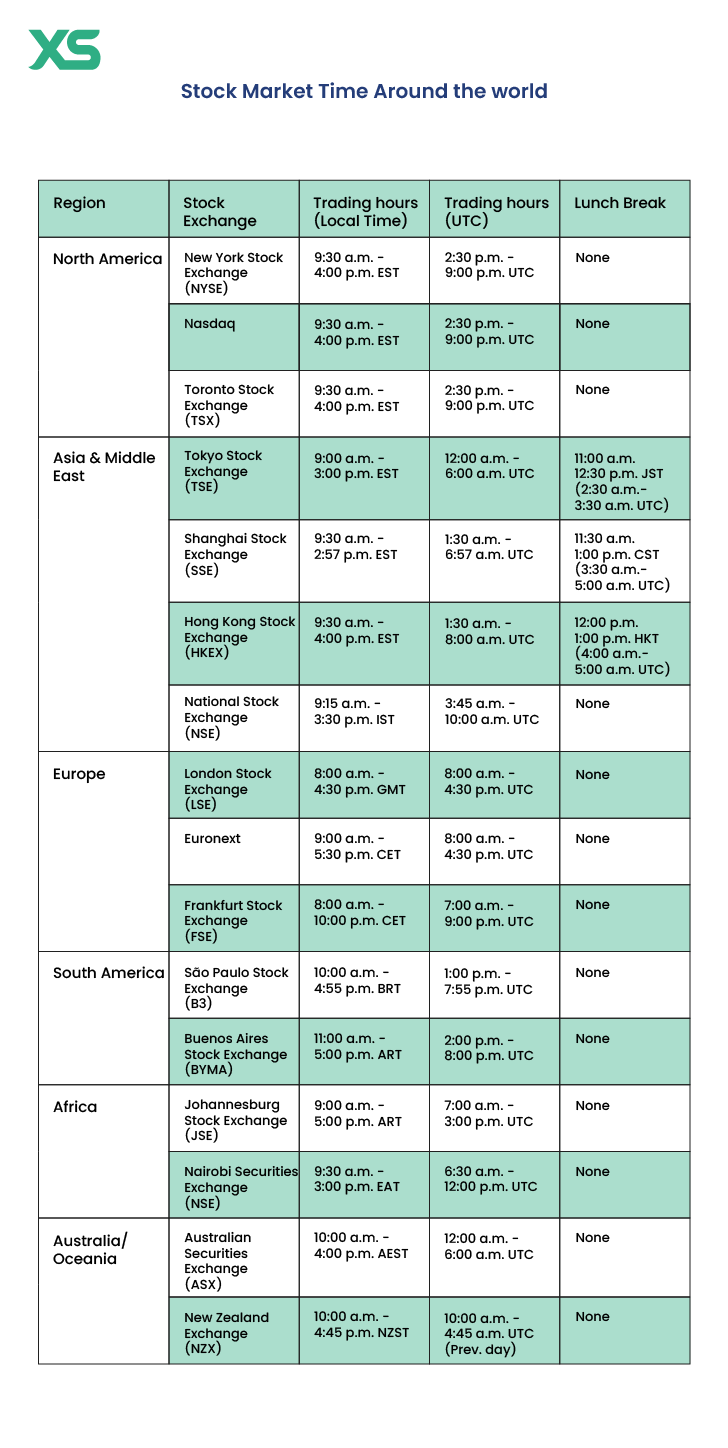
The standard trading session for the NYSE and the Nasdaq begins at 9:30 AM EST and concludes at 4:00 PM EST. For those on the West Coast, this translates to an opening bell at 6:30 AM PST and a closing bell at 1:00 PM PST.
This 1:00 PM PST cutoff is the most critical moment of the day for equity traders. It marks the end of “regular” trading hours, the point at which the majority of retail and institutional volume ceases, and the moment when the official closing price for a security is established. For many professional traders in California or Washington, the 1:00 PM close marks the beginning of the “post-game” analysis, even though the sun is still high in the sky.
Early Closures and Holiday Schedules
It is equally important to account for “half-day” sessions, which typically occur around major holidays like the day before Independence Day, the day after Thanksgiving, or Christmas Eve. On these shortened trading days, the market closes at 1:00 PM EST, which means West Coast investors see the session end at a swift 10:00 AM PST. Staying abreast of the holiday calendar is essential to avoid being caught in “thin” markets where liquidity is low and price swings can be disproportionately large.
The Mechanics of the Market Close: Why 1:00 PM PST is Critical
The final minutes leading up to the 1:00 PM PST close are often the most volatile and high-volume periods of the trading day. This is not a coincidence; it is the result of structural mechanisms designed to ensure an orderly end to the session.
The Closing Auction and the “Closing Cross”
Both the NYSE and the Nasdaq utilize a specialized “closing auction” (or Closing Cross) to determine the final price of a stock. As 1:00 PM PST approaches, market participants submit “Market-on-Close” (MOC) and “Limit-on-Close” (LOC) orders. These orders are not executed immediately but are pooled together to find a single price that clears the maximum number of shares.
For the investor, this means that the price you see at 12:59 PM PST may differ slightly from the official “close” reported five minutes later. Institutional investors—such as mutual funds and ETFs—rely heavily on this closing auction to ensure they are buying or selling at the benchmark price used for Net Asset Value (NAV) calculations.
Liquidity and Volatility
The final 30 minutes of trading (12:30 PM to 1:00 PM PST) often see a massive surge in volume. This is when day traders square their positions to avoid overnight risk and when algorithmic systems execute complex rebalancing strategies. For a West Coast investor, this “power hour” requires peak focus. If you are looking to enter or exit a large position, the liquidity available just before 1:00 PM PST often provides the best execution prices of the day. Conversely, the high volatility during this window can lead to “slippage” if orders are not managed with precision.
Beyond the Bell: Extended Hours Trading for West Coast Investors
The market does not truly “go dark” at 1:00 PM PST. Electronic Communication Networks (ECNs) allow for trading to continue long after the physical floor of the exchange has cleared.
Post-Market Trading (1:00 PM to 5:00 PM PST)
The after-hours session typically runs until 8:00 PM EST, or 5:00 PM PST. This period is particularly relevant for investors reacting to corporate earnings announcements. Most major public companies wait until after the 1:00 PM PST close to release their quarterly results to ensure that the news can be digested without causing an immediate halt in regular trading.
Trading during these hours is a double-edged sword. While it allows West Coast investors to react to news in real-time, the “spread”—the difference between the bid and ask price—is usually much wider due to lower volume. This makes after-hours trading riskier for retail investors who may not have access to the same level of institutional data.
Pre-Market Trading (1:00 AM to 6:30 AM PST)
For the truly dedicated (or the sleep-deprived), pre-market trading begins as early as 4:00 AM EST, which is a staggering 1:00 AM PST. While few retail investors are active at this hour, this is when the U.S. markets begin to react to the developments in the European sessions. By the time most West Coast investors are waking up at 5:30 AM or 6:00 AM PST, the “pre-market” has already established a trend that often dictates how the 6:30 AM PST opening bell will behave.
Global Considerations: Trading Around the World from the West Coast
The 1:00 PM PST close is just one milestone in a 24-hour global financial cycle. Because of the West Coast’s unique geographic position, investors have an interesting window into international markets.
The European Overlap
The major European markets, such as the London Stock Exchange (LSE) and the Frankfurt Bourse (DAX), are typically in their final hours of trading just as the U.S. market opens at 6:30 AM PST. The “overlap” period between 6:30 AM and roughly 8:30 AM PST is often characterized by the highest global liquidity, as both European and American desks are active simultaneously.
The Asian Session and the Evening Routine
For an investor in California, the Asian markets (Tokyo, Hong Kong, Shanghai) begin their sessions in the evening. The Tokyo Stock Exchange, for example, opens at 9:00 AM local time, which is 4:00 PM or 5:00 PM PST (depending on Daylight Saving Time). This allows West Coast investors to monitor the start of the global trading day in real-time before they go to bed, providing a unique perspective on how global sentiment is shifting before the U.S. pre-market even begins.
Futures and Cryptocurrency: The 24-Hour Reality
While the stock market has a definitive 1:00 PM PST close, other asset classes do not. Index futures (like the S&P 500 E-minis) trade nearly 24 hours a day, five days a week, pausing only briefly in the afternoon. Cryptocurrency markets, of course, never close, trading 24/7/365. For the modern investor, the “close” is more of a pause in the primary equity lane rather than a full stop of the financial engine.
Optimizing Your Investment Routine for the Pacific Time Zone
Living in a time zone that is three hours behind the financial capital of the world requires a disciplined approach to time management and strategy.
The Early Bird Advantage
The most successful West Coast traders treat the 6:30 AM PST open as their mid-morning. This often means being at a desk by 5:30 AM PST to review overnight news from Europe, check futures prices, and analyze pre-market gaps. While the early start is a challenge, it offers a significant advantage: by 1:00 PM PST, the workday for the market is over, leaving the entire afternoon for research, strategy development, or other professional pursuits.
Risk Management and “The Gap”
One of the primary risks for PST investors is the “overnight gap.” Since the market is closed for 17.5 hours between the 1:00 PM PST close and the 6:30 AM PST open, news that breaks during the evening or early morning can cause the market to “gap” up or down significantly. Managing this risk requires the use of stop-loss orders and a keen awareness of global events. For those who cannot be at their screens at 6:30 AM PST, utilizing limit orders is essential to ensure that trades are not executed at unfavorable prices during the opening volatility.

Utilizing Technology and Alerts
Because the 1:00 PM PST close happens during what is often the middle of the lunch hour or a standard workday for non-finance professionals, automation is key. Setting price alerts and using sophisticated trading platforms that allow for “bracket orders” (simultaneous stop-loss and profit-taker orders) can help West Coast investors manage their portfolios without needing to be glued to a monitor during the final minutes of the session.
The 1:00 PM PST closing bell is more than just a timestamp; it is a pivot point for liquidity, a benchmark for valuation, and a transition into the world of extended-hours trading. By aligning your strategy with these hours, you can turn the geographic distance from Wall Street into a strategic advantage, leveraging the early close to maintain a balanced and insightful approach to wealth management. Regardless of where you are located, the market waits for no one—but for those in the Pacific time zone, it at least lets you finish your trading day in time for lunch.
aViewFromTheCave is a participant in the Amazon Services LLC Associates Program, an affiliate advertising program designed to provide a means for sites to earn advertising fees by advertising and linking to Amazon.com. Amazon, the Amazon logo, AmazonSupply, and the AmazonSupply logo are trademarks of Amazon.com, Inc. or its affiliates. As an Amazon Associate we earn affiliate commissions from qualifying purchases.