
The final weeks of the calendar year are often characterized by a unique blend of festive spirit and strategic financial maneuvering. For investors, the holiday season is not merely a time for reflection and celebration but a critical window for portfolio rebalancing, tax-loss harvesting, and capital gains management. Understanding the specific operating hours of global financial exchanges during this period is essential for maintaining a disciplined investment strategy.
One of the most frequently asked questions during the latter half of December is: “When does the market close on Christmas Eve?” While it might seem like a simple logistical query, the answer has significant implications for liquidity, volatility, and execution strategy. Navigating the abbreviated trading session on December 24th requires a nuanced understanding of exchange rules, historical market behavior, and the broader economic landscape.

The Logistics of the Christmas Eve Early Close
In the United States, the primary stock exchanges—the New York Stock Exchange (NYSE) and the Nasdaq—typically observe an abbreviated trading schedule on Christmas Eve, provided the holiday falls on a business day. This tradition is designed to allow market participants, from floor traders to institutional analysts, time to transition into the holiday break.
Standard Operating Hours for U.S. Equities
Under normal circumstances, when Christmas Eve falls on a Monday through Friday, the major U.S. stock exchanges close early at 1:00 PM Eastern Time (ET). This is a significant departure from the standard 4:00 PM ET close. Pre-market sessions usually function as normal, but the late-trading sessions are often curtailed or canceled entirely.
It is important to note that if Christmas Eve falls on a Saturday, the market is closed as it would be on any other weekend. However, if Christmas Day falls on a Saturday, the preceding Friday (December 24) is typically observed as the holiday, resulting in a full-day market closure. Conversely, if Christmas Day falls on a Sunday, the following Monday (December 26) is usually when the market closes in observance of the holiday.
Bond Markets and Fixed Income
The bond market, overseen by the Securities Industry and Financial Markets Association (SIFMA), follows a slightly different cadence. On Christmas Eve, SIFMA typically recommends a 2:00 PM ET close for the trading of U.S. dollar-denominated fixed-income securities. This extra hour of liquidity compared to the equity markets can be crucial for institutional investors managing large debt portfolios or balancing cash positions before the long weekend.
Commodities and Derivatives
The Chicago Mercantile Exchange (CME) and other derivatives platforms also modify their schedules. Trading in energy, metals, and agricultural futures often sees staggered closing times, frequently ending around midday. For retail traders involved in options or futures, it is vital to check the specific “holiday hours” posted by their respective brokers, as margin requirements and settlement times can be impacted by the shortened window.
Market Dynamics: Liquidity, Volatility, and Volume
Trading on a half-day like Christmas Eve is fundamentally different from a standard Tuesday in mid-October. The “holiday effect” introduces specific anomalies into market mechanics that every savvy investor should recognize.
The Challenge of Low Liquidity
On Christmas Eve, trading volume is historically some of the lowest of the year. Many institutional “whales”—the pension funds, hedge funds, and mutual funds that drive the bulk of daily activity—have already squared their books or moved to the sidelines for the year.
When volume is low, liquidity thins out. This means that the “bid-ask spread”—the difference between the highest price a buyer is willing to pay and the lowest price a seller is willing to accept—tends to widen. For the individual investor, this can lead to “slippage,” where a market order is filled at a price significantly different from the last quoted price.
Heightened Sensitivity to News
Because the order book is thin, the market becomes more susceptible to “outsized moves.” In a high-volume environment, it takes a massive trade to move the needle on a blue-chip stock. On a quiet Christmas Eve, even a moderately sized trade can trigger a sharp price swing. Similarly, if unexpected economic data or geopolitical news breaks during these hours, the lack of counter-orders can lead to spikes in volatility that would not occur during a standard session.
The Psychology of the Holiday Session
There is also a psychological element to the Christmas Eve session. The traders who remain at their desks are often managing passive flows or responding to automated triggers. There is a general “pro-risk” sentiment that often pervades the end of the year, sometimes referred to as the “holiday bias,” where the remaining participants are less inclined to initiate aggressive short positions, leading to a drift toward the upside if no negative catalysts are present.
Strategic Financial Planning for the Year-End
Beyond the simple timing of the closing bell, Christmas Eve serves as a critical milestone for several financial strategies. Whether you are managing a personal brokerage account or a business treasury, the shortened session is the “final call” for several key actions.
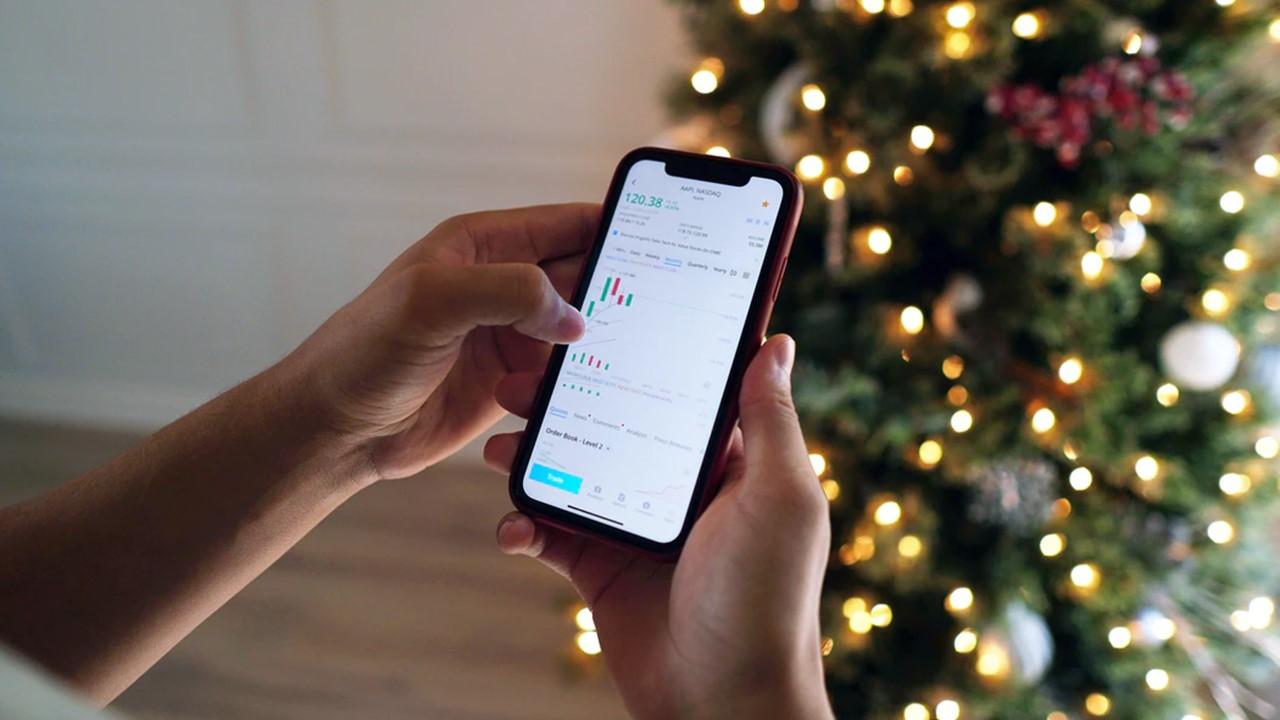
Tax-Loss Harvesting Deadlines
For many investors, the primary goal in December is tax efficiency. Tax-loss harvesting involves selling securities at a loss to offset capital gains tax liabilities. While the technical deadline for most tax-year transactions is December 31, waiting until the final days of the year is risky. The 1:00 PM close on Christmas Eve represents one of the last high-certainty windows to execute these trades. Investors must also be mindful of the “wash-sale rule,” which prevents them from claiming a loss if they purchase a “substantially identical” security within 30 days before or after the sale.
Portfolio Rebalancing
As asset classes perform differently throughout the year, a portfolio can become “tilted” away from its original risk profile. For instance, a strong year for tech stocks might leave an investor over-exposed to equities and under-exposed to bonds. Christmas Eve is a common time for investors to review these allocations. However, due to the low liquidity mentioned earlier, large rebalancing trades are often better executed in the weeks leading up to the holidays to avoid unnecessary transaction costs.
The Santa Claus Rally
The period surrounding Christmas is famous in financial circles for the “Santa Claus Rally.” Historically, the stock market has shown a tendency to rise during the last five trading days of December and the first two trading days of January.
Several theories attempt to explain this:
-
Tax Considerations: Investors reinvesting year-end bonuses or moving money back into the market after tax-loss harvesting.
-
Institutional Absence: The absence of “sophisticated” short-sellers who are on vacation.
-
General Optimism: A seasonal boost in consumer spending and investor sentiment.
While the rally is not guaranteed, the Christmas Eve session often acts as the “opening act” for this trend. Investors looking to capitalize on this seasonal anomaly often ensure their positions are set before the 1:00 PM early close.
Global Perspectives: International Market Closures
Investing is a global endeavor, and the Christmas Eve schedule varies significantly across international borders. If you hold ADRs (American Depositary Receipts) or trade on foreign bourses, your calendar looks quite different.
The United Kingdom and Europe
The London Stock Exchange (LSE) also typically observes an early close on Christmas Eve, often around 12:30 PM local time. However, many continental European markets, such as the Frankfurt Stock Exchange (DAX) in Germany or the Borsa Italiana, are closed entirely on December 24th in observance of Christmas Eve as a full public holiday. This discrepancy can create “arbitrage gaps” where European stocks do not trade for a full 48 to 72 hours, while their U.S.-listed counterparts continue to fluctuate during the early session in New York.
The Asian Markets
In Asia, the observance is mixed. The Tokyo Stock Exchange (Japan) and the Shanghai Composite (China) generally do not observe Christmas as a public holiday, and thus often maintain regular trading hours unless the date falls on a weekend. In contrast, markets in Hong Kong and Singapore usually follow the Western tradition of abbreviated hours or full closures, reflecting their history as international financial hubs.
Impact on Forex and Crypto
The foreign exchange (Forex) market is the only truly 24-hour market, but even it succumbs to the holiday lull. While the market technically remains open as long as a single bank is trading, liquidity effectively dries up by the afternoon of December 24th.
Conversely, the cryptocurrency market never closes. Bitcoin, Ethereum, and other digital assets trade 24/7/365. Interestingly, crypto often sees increased activity during the Christmas Eve window as retail investors, away from their traditional desks, turn to mobile apps to manage their digital portfolios.
Practical Advice for Managing Your Trades
To navigate the Christmas Eve session successfully, investors should shift their focus from aggressive trading to cautious management.
Use Limit Orders, Not Market Orders
Given the thin liquidity and wide spreads, “market orders” are dangerous on Christmas Eve. A market order instructs the broker to buy or sell immediately at the best available price. In a thin market, that “best price” could be several percentage points away from the fair market value. Using “limit orders”—which specify the exact price at which you are willing to trade—protects you from the volatility inherent in holiday sessions.
Verify Settlement Dates
Standard settlement for most stock trades is “T+1” (transaction day plus one business day). However, because Christmas Day (December 25) is a federal holiday and a bank holiday, it does not count as a business day. This means a trade executed on Christmas Eve may not settle until the middle of the following week. For those needing to move cash for year-end obligations, this delay is a crucial factor to consider.
Automation and Alerts
Technology has made it easier to step away from the screen. If you have specific price targets for year-end rebalancing, set automated alerts or “good ’til canceled” (GTC) orders. This allows you to enjoy the holiday without the need to monitor the 1:00 PM closing bell manually.
Look Toward the New Year
Finally, the Christmas Eve close marks the beginning of the “reflection phase.” With the market quiet and the year nearly over, it is the ideal time to move from “tactical” thinking to “strategic” thinking. Use the downtime to review your performance against benchmarks, adjust your side hustle income goals, and prepare for the “January Effect”—another seasonal trend where small-cap stocks historically outperform.
The early close on Christmas Eve is more than just a footnote on a calendar; it is a unique trading environment that requires a specialized approach. By respecting the nuances of early closures, low liquidity, and tax deadlines, investors can ensure that their holiday season is defined by financial peace of mind rather than market stress. Whether the “Santa Claus Rally” arrives or not, the prepared investor is already positioned for the year ahead.
aViewFromTheCave is a participant in the Amazon Services LLC Associates Program, an affiliate advertising program designed to provide a means for sites to earn advertising fees by advertising and linking to Amazon.com. Amazon, the Amazon logo, AmazonSupply, and the AmazonSupply logo are trademarks of Amazon.com, Inc. or its affiliates. As an Amazon Associate we earn affiliate commissions from qualifying purchases.