
For seasoned investors and newcomers alike, the pulse of the American economy is often measured by the movement of the Dow Jones Industrial Average (DJIA). Often referred to simply as “the Dow,” this price-weighted index tracks 30 prominent companies listed on stock exchanges in the United States. However, the Dow is not a physical entity you can trade directly; rather, it reflects the activity of its constituent stocks. To answer the question “When does the Dow Jones open?” one must look at the operational hours of the major US exchanges—primarily the New York Stock Exchange (NYSE) and the NASDAQ.

Understanding these hours is more than a matter of scheduling; it is a fundamental component of financial literacy and strategic capital management. In the world of high-stakes investing, timing can be just as important as the asset itself.
Understanding Market Hours and the Opening Bell
The heartbeat of the US financial system follows a strict schedule. While the digital age has made “24/7” access a common expectation, the institutional frameworks of the stock market still adhere to traditional windows that facilitate liquidity, price discovery, and regulatory oversight.
Standard Trading Hours: The Core Window
The standard trading session for the Dow Jones components begins at 9:30 AM Eastern Time (ET) and concludes at 4:00 PM ET. This six-and-a-half-hour window is when the vast majority of trading volume occurs. During these hours, individual investors, institutional fund managers, and high-frequency trading algorithms interact to determine the value of the blue-chip stocks that comprise the index.
For investors located outside the Eastern Time zone, it is crucial to adjust accordingly. For instance, the market opens at 8:30 AM Central, 7:30 AM Mountain, and 6:30 AM Pacific. Internationally, the London open precedes New York, while Asian markets have often already closed by the time the NYSE bell rings, creating a global relay race of capital.
The Significance of 9:30 AM ET
The “Opening Bell” is more than a ceremonial tradition. At 9:30 AM sharp, the “opening auction” takes place. This is a complex process where buy and sell orders that have accumulated overnight are matched to establish an opening price for each stock. This moment is typically characterized by a surge in volatility and volume. For the Dow Jones, the opening minutes are a period of intense price discovery where the market reacts to news, earnings reports, or geopolitical events that occurred while the physical exchange was closed.
Time Zone Differences and Global Synchronization
In our interconnected global economy, the opening of the Dow Jones is a landmark event for international markets. Many European traders use the US open to adjust their afternoon positions, while traders in Tokyo and Hong Kong often look at the Dow’s performance to predict how their local markets might open the following morning. Understanding the ET schedule is mandatory for anyone managing a global portfolio, as major economic data—such as the Consumer Price Index (CPI) or employment reports—are typically released at 8:30 AM ET, exactly one hour before the opening bell.
Beyond the Bell: Extended Hours Trading
In the modern financial landscape, the 9:30 AM to 4:00 PM window is only part of the story. Electronic Communication Networks (ECNs) allow for “extended hours trading,” which provides opportunities for investors to react to news outside of the core session.
Pre-Market Trading: The Early Indicators
Pre-market trading in the US typically begins as early as 4:00 AM ET and runs until the official open at 9:30 AM ET. While this session allows for early reactions to overnight news, it is important for investors to understand its limitations. The volume in pre-market sessions is significantly lower than during standard hours. This lack of liquidity often leads to wider “bid-ask spreads,” meaning it can be more expensive to enter or exit a position.
For those monitoring the Dow Jones, pre-market “futures” are often used to gauge how the index will open. If Dow Futures are up by 200 points at 7:00 AM, it suggests a positive sentiment among early-morning participants.
After-Hours Trading: Reacting to News
Once the closing bell rings at 4:00 PM ET, the after-hours session begins, typically lasting until 8:00 PM ET. This is perhaps the most critical time for corporate news. Most companies listed in the Dow Jones index release their quarterly earnings reports shortly after 4:00 PM to ensure all investors have equal access to the information outside of the volatile standard session.
Investors who trade in the after-hours must be cautious. A stock may swing 5% on an earnings miss in the after-hours session on very low volume, only to see that move partially reversed when the “big money” enters at 9:30 AM the next day.
Risks and Rewards of Extended Hours
The primary advantage of extended hours is the ability to act immediately on news. If a Dow component announces a major merger at 5:00 PM, you don’t have to wait until the next morning to buy or sell. However, the risks include:
- Lower Liquidity: Fewer participants mean it’s harder to execute large trades.
- Price Volatility: Small trades can cause large price swings.
- Technical Constraints: Some brokerage firms limit the types of orders (e.g., only limit orders) that can be placed during these sessions.
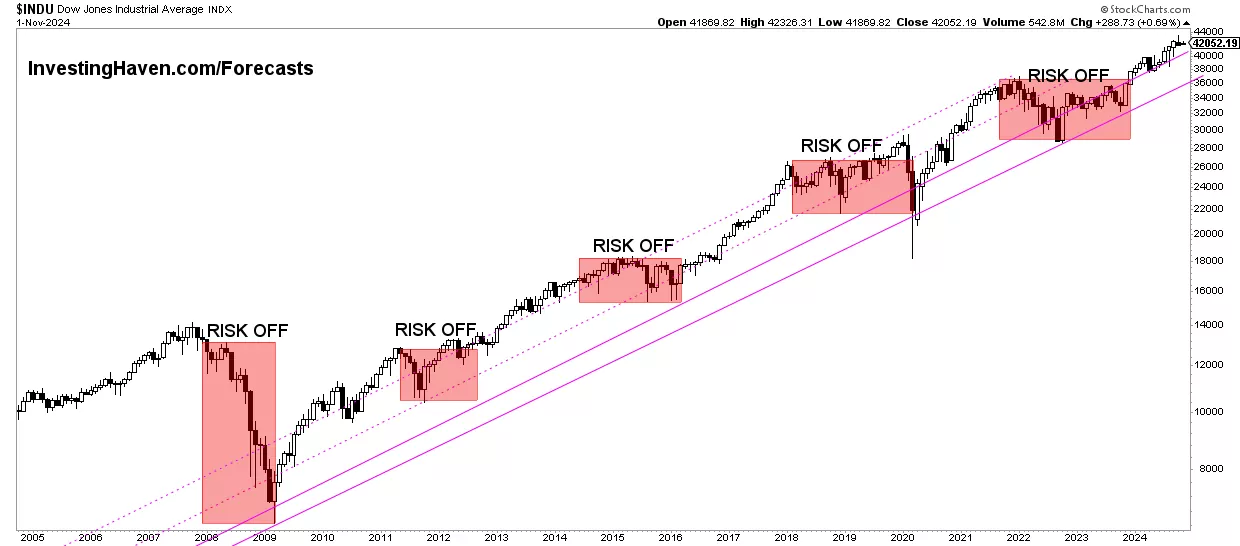
The Dow Jones Industrial Average (DJIA) and the NYSE Relationship
While people often ask when “the Dow” opens, they are technically asking when the New York Stock Exchange and the NASDAQ open. The Dow Jones is a mathematical index, but its health is inextricably linked to the mechanics of these exchanges.
How the Dow Differs from Individual Stock Exchanges
The Dow Jones is an index of 30 “blue-chip” companies. While most of these are traded on the NYSE, several prominent members (like Apple, Microsoft, and Intel) are traded on the NASDAQ. Therefore, the Dow “opens” when both of these major exchanges begin their standard sessions. Unlike the S&P 500, which is market-cap weighted, the Dow is price-weighted. This means that companies with higher stock prices have a greater influence on the index’s daily point moves, regardless of the company’s total size.
The Role of Market Makers at the Open
In the minutes leading up to 9:30 AM, “Designated Market Makers” (DMMs) at the NYSE and “Electronic Market Makers” on the NASDAQ are working to ensure a smooth opening. They absorb imbalances in buy and sell orders to prevent extreme, irrational price gaps. This institutional involvement is why the standard session is generally considered “safer” for retail investors than the wild west of the pre-market.
Volatility Patterns During the First Hour
Experienced traders often refer to the first 30 to 60 minutes of the trading day as the “Amateur Hour”—though this is a bit of a misnomer. It is a period where retail orders placed overnight hit the tape, and institutional algorithms battle for position. For a “Money” focused strategy, observing the Dow during this first hour provides clues about the day’s trend. If the Dow opens high but fails to sustain those gains by 10:30 AM, it often signals a “reversal” day.
Holidays and Special Trading Schedules
The Dow Jones does not operate every day. To manage capital effectively, investors must be aware of the federal holidays and special “early close” days that punctuate the financial calendar.
Major US Market Holidays
The US stock markets are closed on the following holidays:
- New Year’s Day
- Martin Luther King, Jr. Day
- Washington’s Birthday (Presidents’ Day)
- Good Friday
- Memorial Day
- Juneteenth National Independence Day
- Independence Day (July 4th)
- Labor Day
- Thanksgiving Day
- Christmas Day
When these holidays fall on a weekend, the market usually closes on the preceding Friday or the following Monday. Trading on the days immediately preceding or following a major holiday often sees “thin” volume, as many institutional traders take time off.
Early Closures and Modified Hours
There are specific days when the Dow Jones “closes early” at 1:00 PM ET. This typically occurs on the day after Thanksgiving (Black Friday) and sometimes on Christmas Eve, depending on which day of the week it falls. During these shortened sessions, liquidity is often very low, and the market tends to drift. For many professional investors, these are days to avoid making significant strategic shifts.
Planning Your Yearly Trading Calendar
From a personal finance perspective, knowing the holiday schedule is vital for cash flow management. If you need to liquidate a position to fund a purchase, you must account for “T+1” (Trade date plus one day) settlement. If the market is closed for a holiday, your access to those funds is delayed. Successful investing involves managing the calendar as much as the capital.
Strategic Approaches to the Market Opening
Now that we have established when the Dow Jones opens, the final piece of the puzzle is how to trade it. The open is the most opportunistic and dangerous time of the trading day.
The “Opening Range” Strategy
Many professional investors utilize the “opening range breakout” strategy. They observe the high and low prices of the Dow components during the first 15 or 30 minutes of trading. A break above the 15-minute high often signals a bullish trend for the day, while a break below the low suggests bearish momentum. By waiting for the initial volatility of the 9:30 AM open to settle, investors can make more informed decisions based on the established trend.
Managing Risk in High-Volatility Environments
For the average retail investor, the best advice for the 9:30 AM open is often to do nothing. Prices are most erratic in the first few minutes as the market absorbs the news. Using “Market Orders” during the open can be risky, as you might get “filled” at a price significantly different from what you saw on your screen a second ago. Instead, using “Limit Orders”—which specify the maximum price you are willing to pay—is a more prudent way to manage your money during the opening rush.
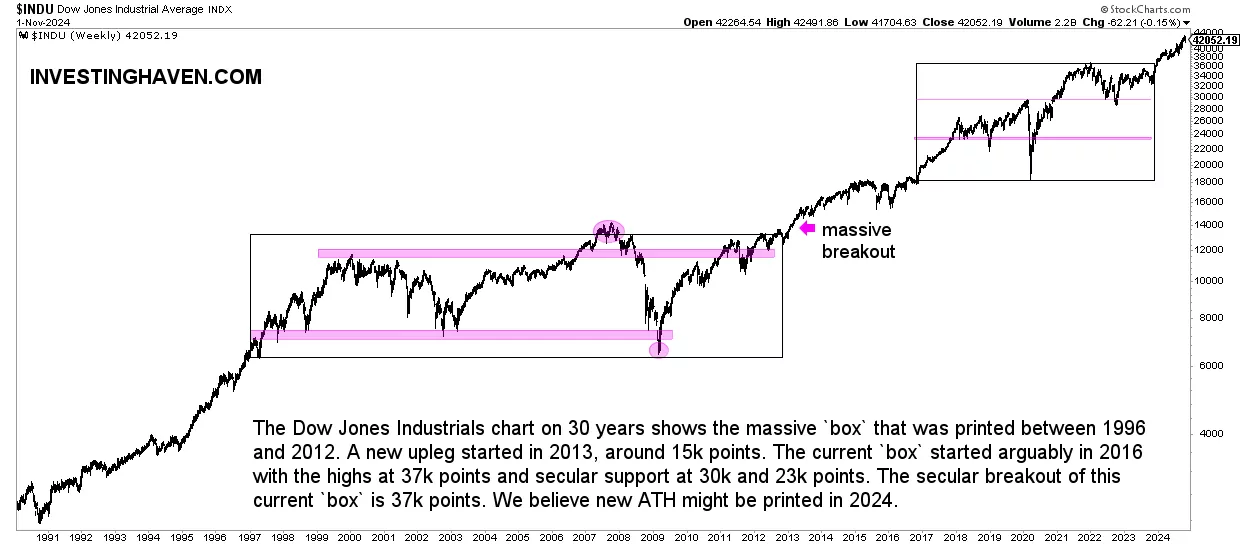
Tools for Monitoring Real-Time Dow Data
To navigate the open effectively, investors should use professional-grade tools. While standard news apps provide delayed data, brokerage platforms offer real-time “Level 2” quotes that show the depth of the market. Monitoring the “Tick Index” or the “TRIN” (Trading Index) at the open can also tell you if the broader market is buying or selling alongside the 30 stocks in the Dow.
In conclusion, knowing when the Dow Jones opens is the baseline for participating in the American financial story. By mastering the nuances of standard hours, extended sessions, and holiday schedules, you position yourself to manage your wealth with precision and confidence. Whether you are a long-term “buy and hold” investor or an active trader, the 9:30 AM ET opening bell remains the most important moment of the financial day.
aViewFromTheCave is a participant in the Amazon Services LLC Associates Program, an affiliate advertising program designed to provide a means for sites to earn advertising fees by advertising and linking to Amazon.com. Amazon, the Amazon logo, AmazonSupply, and the AmazonSupply logo are trademarks of Amazon.com, Inc. or its affiliates. As an Amazon Associate we earn affiliate commissions from qualifying purchases.