
For the modern investor, understanding the rhythm of the financial markets is as crucial as analyzing a balance sheet or tracking a technical indicator. The question of “when do stock markets close” may seem elementary, but the answer is layered with complexities involving time zones, extended sessions, and global economic cycles. In the world of finance, timing isn’t just a logistical detail—it is a strategic variable that dictates liquidity, volatility, and the ultimate success of a trade.
Whether you are a retail investor managing a retirement portfolio or a day trader looking for the high-intensity “power hour,” knowing when the closing bell rings—and what happens after it does—is fundamental to navigating the global economy.
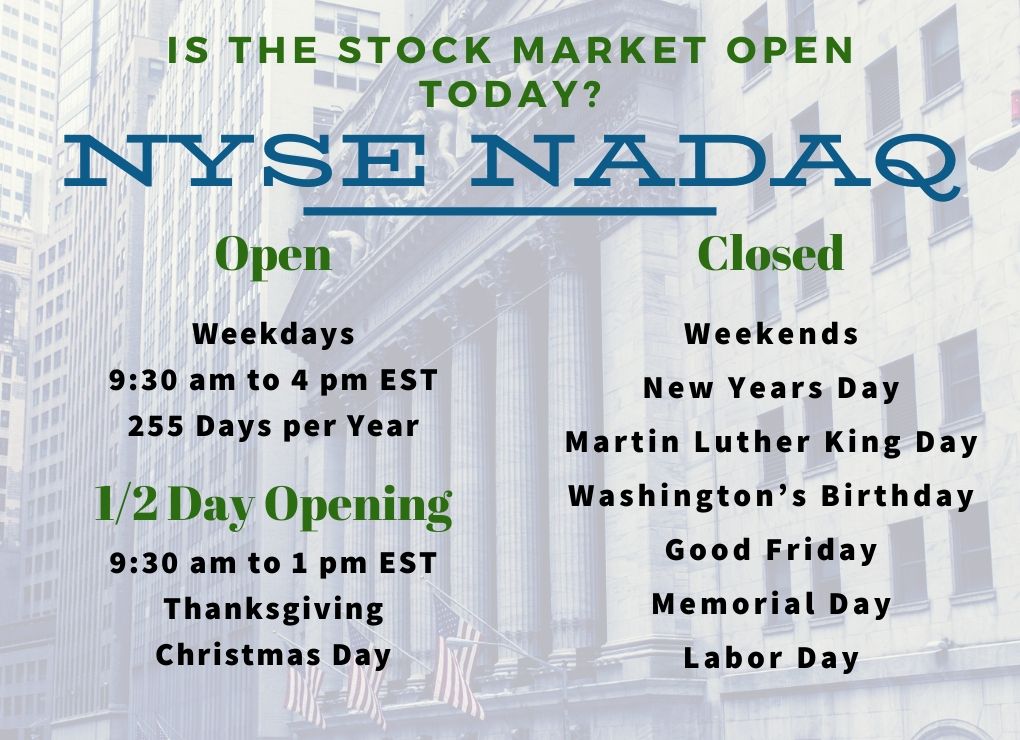
The Standard Trading Day: The Core of the American Financial Machine
In the United States, the primary theater for equity trading revolves around two main stages: the New York Stock Exchange (NYSE) and the NASDAQ. Both of these institutions follow a standardized schedule that has defined American capitalism for decades.
The NYSE and NASDAQ Operating Hours
For both the NYSE and NASDAQ, the regular trading session begins at 9:30 AM Eastern Time (ET) and concludes at 4:00 PM ET. This six-and-a-half-hour window is when the vast majority of trading volume occurs. Unlike some international exchanges in Asia, U.S. markets do not close for a lunch break. The “continuous” nature of this session ensures that capital flows freely throughout the day, providing the liquidity necessary for large institutional trades and small retail orders alike.
The Significance of the Closing Bell
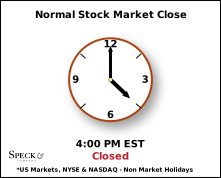
The 4:00 PM ET “Closing Bell” is more than just a ceremonial tradition. It represents the “Closing Print,” a final price point that serves as the official benchmark for mutual funds, ETFs, and index calculations. For many passive investors, the closing price is the only one that matters, as it determines the net asset value (NAV) of their holdings. From a technical standpoint, the final minutes of trading are often the most volatile, as institutional “market-on-close” (MOC) orders are executed, often resulting in significant price swings as the market seeks equilibrium before the day ends.
Why the 4:00 PM Cutoff Exists
Historically, the market close was dictated by the physical limitations of floor traders who needed time to clear paperwork. In the digital age, while technology allows for 24/7 trading, the 4:00 PM cutoff remains. This window provides a necessary “cooling-off” period. It allows companies to release sensitive news—such as quarterly earnings or executive changes—after the bell, giving investors time to digest the information before the next day’s opening.
Beyond the Bell: Pre-Market and After-Hours Trading
While the regular session ends at 4:00 PM ET, the digital nature of modern finance means the “lights never truly go out.” Electronic Communication Networks (ECNs) allow for trading outside of standard hours, creating what is known as extended-hours trading.
Pre-Market Trading Sessions
Pre-market trading in the U.S. can begin as early as 4:00 AM ET, though the bulk of the activity occurs between 8:00 AM and 9:30 AM ET. This session is primarily used by professional traders and institutional investors to react to overnight news, such as economic data releases from Europe or geopolitical events in Asia. For the average investor, pre-market trading offers a glimpse into how the market might open, but it comes with distinct challenges.
After-Hours Trading Sessions
The after-hours session runs from 4:00 PM ET to 8:00 PM ET. This is perhaps the most critical time for active investors, as most publicly traded companies release their earnings reports shortly after the 4:00 PM close. A stock can move 10% or 20% in minutes during the after-hours session based on an earnings beat or miss. If you are only monitoring the market during standard hours, you might wake up to a massive “gap” in price that occurred while you were away from your screen.
The Risks of Extended-Hours Trading
While the ability to trade until 8:00 PM provides flexibility, it is not without risk. The primary concern is low liquidity. With fewer participants in the market, the “bid-ask spread”—the difference between what a buyer is willing to pay and what a seller is willing to accept—widens significantly. This can lead to “slippage,” where you end up buying a stock for much more than its fair market value. Consequently, most experts recommend using “limit orders” rather than “market orders” when trading after the markets close.
Global Perspectives: When the Sun Never Sets on Finance
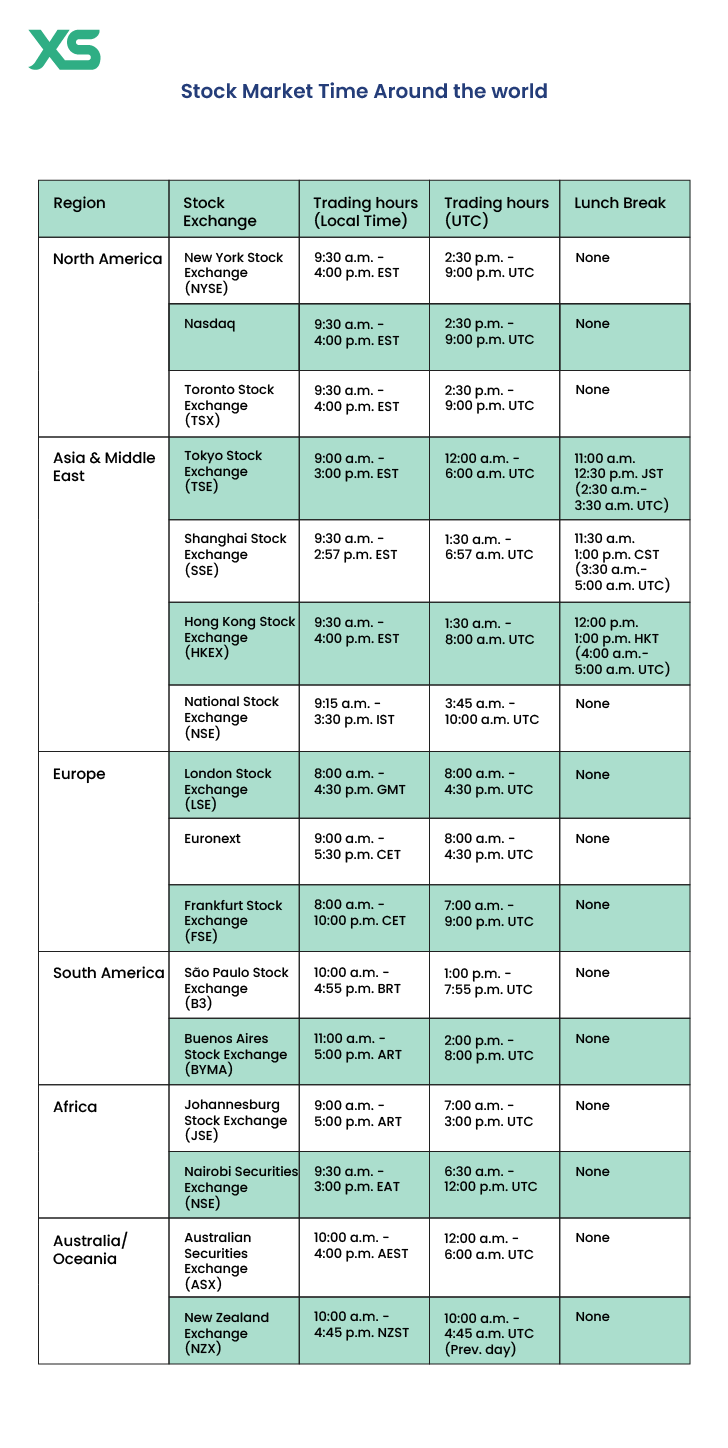
The U.S. market is the largest, but it is part of a global relay race. As the New York markets close, investors often look toward Asia and Europe to gauge the next day’s momentum. Understanding when international stock markets close is vital for anyone holding international ETFs or ADRs (American Depositary Receipts).
The European Markets (LSE and Euronext)
The London Stock Exchange (LSE), one of the oldest and most influential in the world, typically operates from 8:00 AM to 4:30 PM Greenwich Mean Time (GMT). Because of the time difference, there is a significant overlap between the end of the European trading day and the beginning of the U.S. trading day (roughly 9:30 AM to 11:30 AM ET). This overlap period is often characterized by the highest global liquidity, as both European and American desks are active simultaneously.
The Asian Powerhouses (Tokyo, Hong Kong, and Shanghai)
The Asian markets operate while the Western world sleeps. The Tokyo Stock Exchange (TSE) runs from 9:00 AM to 3:00 PM local time, but notably, it includes a lunch break from 11:30 AM to 12:30 PM. Similarly, the Hong Kong Stock Exchange and the Shanghai Stock Exchange have mid-day breaks. For a U.S.-based investor, the closing of the Tokyo market at 2:00 AM ET often sets the tone for the European open, which in turn influences the U.S. pre-market.
The 24-Hour Financial Cycle
In the modern economy, “closing time” is relative. While specific exchanges have hard stops, the flow of capital is continuous. If a major event happens at 11:00 PM in New York, the S&P 500 futures market—which trades almost 24 hours a day—will reflect that impact long before the NYSE opens the following morning. For the serious investor, the “close” is simply a transition from one regional theater to another.
Market Holidays and Early Closures: The Exceptions to the Rule
It is a common mistake for novice investors to assume that if the bank is open, the stock market is open. This is not always the case. The stock market follows its own calendar, which includes specific holidays and early closure dates that can catch the unprepared off guard.
Federal Holidays vs. Market Holidays
In the U.S., the markets are closed on major federal holidays such as New Year’s Day, Martin Luther King Jr. Day, President’s Day, Memorial Day, Juneteenth, Independence Day, Labor Day, Thanksgiving, and Christmas. However, the market does not always close for “bank holidays” like Veterans Day or Columbus Day/Indigenous Peoples’ Day. During these “half-open” days, the bond market might be closed while the stock market remains open, often leading to lower-than-average trading volume and “sideways” price action.
Early Closure Days
There are specific days in the year when the market closes early, typically at 1:00 PM ET. The most notable examples are the day after Thanksgiving (Black Friday) and sometimes Christmas Eve or July 3rd, depending on which day of the week the holiday falls. These shortened sessions are usually low-volume affairs, as many institutional traders take the day off. For the retail investor, these days can be dangerous due to “thin” markets where small trades can cause disproportionately large price movements.
The Impact of “Circuit Breakers”
While not a scheduled closure, it is important to understand “Circuit Breakers.” These are regulatory hurdles designed to stop trading temporarily during periods of extreme volatility. In the U.S., if the S&P 500 drops 7% (Level 1) or 13% (Level 2) from the previous day’s close, trading is halted for 15 minutes. If it drops 20% (Level 3), the market closes for the remainder of the day. Knowing these rules can help maintain composure during a market crash.
Strategic Timing: Making the Clock Work for Your Portfolio
Understanding when markets close is not just about knowing when you can trade, but when you should trade. Professional investors categorize the trading day into segments, each with its own personality and risk profile.
The “Power Hour” and the Closing Cross
The final hour of trading, from 3:00 PM to 4:00 PM ET, is colloquially known as the “Power Hour.” This is when volatility spikes as day traders close out their positions to avoid “overnight risk” and institutional managers rebalance their portfolios. For an investor looking for price action, this is the most exciting time. However, for a long-term investor looking to minimize costs, placing a trade in the middle of the afternoon (the “Lunchtime Lull”) might result in a more stable, though less exciting, execution.
Weekend Risk and the Monday Open
The market close on Friday at 4:00 PM ET marks the beginning of “Weekend Risk.” Because the markets are closed for 48 hours (excluding futures), any geopolitical event or economic disaster that occurs over the weekend cannot be acted upon until Monday morning. This often results in a “gap up” or “gap down” on Monday at 9:30 AM. Investors must decide whether to hold a volatile position over the weekend or “flat” their position on Friday afternoon to protect their capital.
Conclusion: Time as a Financial Tool
In the realm of money and investing, the clock is just as important as the ticker symbol. Knowing when the stock markets close allows you to manage your risk, take advantage of after-hours opportunities, and understand the global interconnectedness of wealth. By mastering the schedule of the NYSE, the nuances of the after-hours session, and the rhythms of global exchanges, you transform from a passive participant into a strategic investor. Remember, the market may close at 4:00 PM, but the opportunity to build wealth never truly sleeps.
aViewFromTheCave is a participant in the Amazon Services LLC Associates Program, an affiliate advertising program designed to provide a means for sites to earn advertising fees by advertising and linking to Amazon.com. Amazon, the Amazon logo, AmazonSupply, and the AmazonSupply logo are trademarks of Amazon.com, Inc. or its affiliates. As an Amazon Associate we earn affiliate commissions from qualifying purchases.