
In the fast-paced world of global finance, the futures market stands as a titan of liquidity and opportunity. Unlike the traditional equity markets, which adhere to strict daylight hours, the futures market is often perceived as an “always-on” machine. However, the reality is more nuanced. While futures offer nearly 24-hour access to global assets, they do have specific closing times, maintenance breaks, and weekend pauses that every serious investor must understand. Navigating these windows is not merely a matter of administrative curiosity; it is a fundamental component of risk management and strategic execution.

Understanding the 24/5 Nature of Futures Trading
The most significant distinction between the stock market and the futures market is the duration of the trading session. While the New York Stock Exchange (NYSE) operates from 9:30 AM to 4:00 PM ET, the futures markets operate on a nearly continuous basis from Sunday evening through Friday afternoon. This extended schedule allows traders to react to geopolitical events, economic data releases, and shifts in sentiment that occur outside of traditional business hours.
The Role of the Electronic Trading System
The transition from physical “open outcry” pits to electronic trading platforms has been the primary driver of extended hours. Platforms like the CME Globex system allow participants from around the world—be they in London, Tokyo, or Chicago—to trade the same contracts simultaneously. This globalization means that the market only truly “closes” for a brief period each day to allow for technical maintenance and clearing house processing.
The Daily Maintenance Break
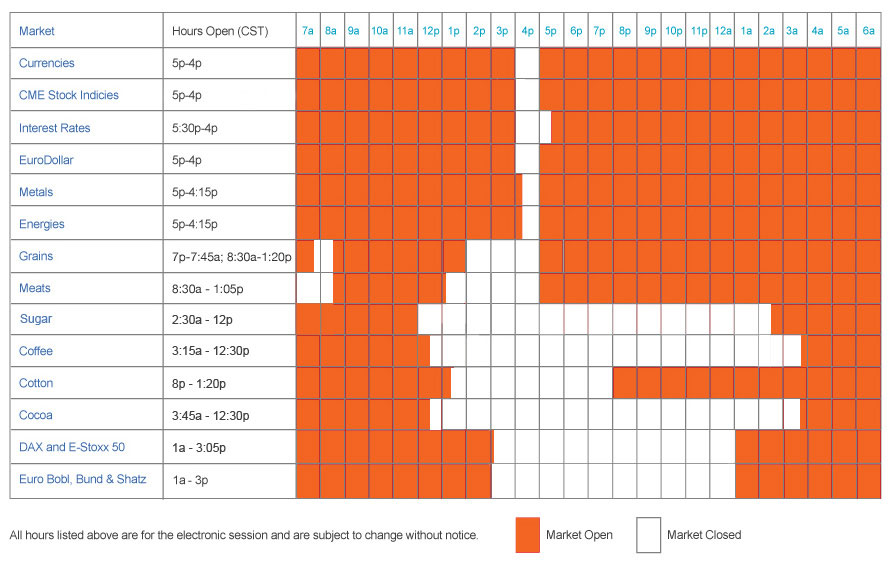
Most major futures exchanges, such as the Chicago Mercantile Exchange (CME Group), implement a daily pause in trading. For many asset classes, including equity indices and currencies, this break typically occurs between 5:00 PM and 6:00 PM ET. During this hour, the market is effectively closed. Orders cannot be executed, and price discovery is paused. This interval is critical for clearing houses to settle the day’s trades, calculate margin requirements, and reset the systems for the next trading day’s session.
The Weekend Hiatus
While the market operates throughout the night during the workweek, it does close for the weekend. Most futures markets close on Friday afternoon (usually at 5:00 PM ET) and remain dark until Sunday evening (typically 6:00 PM ET). This weekend gap is one of the most significant risks for swing traders, as major news events occurring on Saturday can lead to “gaps” in price when the market reopens on Sunday.
Key Trading Sessions and Sector-Specific Hours
Not all futures contracts follow the same schedule. The closing times can vary significantly depending on the underlying asset—whether it be a stock index, a commodity like crude oil, or an agricultural product like corn. Understanding these sector-specific nuances is vital for portfolio diversification.
Equity Index Futures
Equity index futures, such as the E-mini S&P 500 (ES) and the E-mini Nasdaq 100 (NQ), are among the most liquid instruments in the world. Their trading schedule is the benchmark for the “24/5” model. They open on Sunday at 6:00 PM ET and trade continuously until Friday at 5:00 PM ET, with a daily maintenance break from 5:00 PM to 6:00 PM ET. However, it is important to note that liquidity peaks during the “RTH” (Regular Trading Hours) session, which aligns with the 9:30 AM to 4:00 PM ET window of the cash stock market.
Energy and Metal Futures
Commodities like WTI Crude Oil and Gold (GC) follow a similar electronic schedule to equity indices but are influenced by different global sessions. For instance, gold often sees significant volume during the London session (around 3:00 AM ET) and again during the New York open. While these markets also close daily at 5:00 PM ET for an hour, the intraday “closes” of physical delivery hubs can sometimes cause temporary dips in liquidity.
Agricultural Futures
Agricultural products, such as corn, soybeans, and wheat, have some of the most unique trading hours. Historically, these markets had significant “mid-day” breaks. While electronic trading has expanded their hours, many agricultural contracts still have more restricted windows than financials. For example, some grain futures may have a pause in the late morning or early afternoon, reflecting the traditional operational hours of the grain elevators and physical markets. It is essential for commodity traders to check the specific “Contract Specs” on the exchange website to avoid being caught in a low-liquidity window.
Why Timing Matters: Liquidity, Volatility, and Risk
The closing and opening times of the futures market dictate the environment in which a trade is executed. A professional investor knows that a market “open” or “close” is not just a timestamp; it is a catalyst for volatility.

The Volatility of the Sunday Open
The Sunday evening open at 6:00 PM ET is often characterized by high volatility and lower liquidity. If a major geopolitical event occurred over the weekend—such as a surprise election result or a conflict in a major oil-producing region—the market may “gap” up or down. A gap occurs when the opening price on Sunday is significantly different from Friday’s closing price, bypassing any stop-loss orders placed in between. For this reason, many conservative traders reduce their position sizes before the Friday close.
The “Closing Cross” and Settlement Prices
The final minutes before the daily 5:00 PM ET break are crucial because they determine the “Settlement Price.” This price is not necessarily the last trade price; rather, it is a weighted average calculated by the exchange to determine the official value of the contract for margin purposes. If you are holding a position that is close to a margin call, the settlement price at the daily close will dictate whether your broker requires more capital.
Trading the “Witching” Hours
The periods immediately following the open and preceding the close of the regular NYSE session (9:30 AM and 4:00 PM ET) are known for massive volume spikes. Large institutional players use these windows to rebalance portfolios. For a retail trader, trying to execute a large order right at the 4:00 PM ET “stock market close” can be difficult due to rapid price fluctuations, even though the futures market itself will stay open for another hour.
Global Exchange Variations
While the CME Group in Chicago is the largest futures exchange, the global nature of finance means traders must be aware of hours in other jurisdictions.
The Intercontinental Exchange (ICE)
ICE is the home of the Brent Crude Oil contract and many influential interest rate products. While ICE follows a similar electronic model to the CME, specific contracts may have different “Pre-Open” periods where orders can be entered but not executed. This can create a “synthetic” price movement before the official trading session begins.
European and Asian Markets
For those trading the DAX (German Stock Index) or the Nikkei 225, the primary closing times align with the business hours of Frankfurt and Tokyo, respectively. Eurex, the leading European derivatives exchange, has extended its hours to capture more of the US trading session, but the bulk of the volume still occurs during the European business day. Investors looking for “around the clock” opportunities must synchronize their clocks with these international hubs.
Strategies for Managing Market Closures
Successful futures trading requires a logistical strategy that accounts for the hours the market is dark. Managing a portfolio when you cannot exit a position requires foresight and the right financial tools.
1. Position Sizing and the Weekend Gap
The most effective way to manage the risk of a weekend closure is through position sizing. Because you cannot react to news on a Saturday, carrying a maximum-leverage position over the weekend is often viewed as gambling rather than investing. Many professionals reduce their exposure by 50% or more before the Friday close to ensure that a Sunday gap does not result in a catastrophic loss.
2. Using “GTC” vs. “Day” Orders
Understanding order types is critical when markets close. A “Day Order” will automatically expire when the market closes for its daily maintenance break at 5:00 PM ET. If you want an order to remain active when the market reopens at 6:00 PM ET or on Sunday evening, you must use a “Good ‘Til Canceled” (GTC) order. Failing to distinguish between these can lead to missed entries or, worse, unprotected positions if a stop-loss order expires while the trade is still live.
3. Monitoring the Economic Calendar
Market closures are also impacted by holidays. It is important to distinguish between a “Bank Holiday” and an “Exchange Holiday.” On days like Labor Day or Memorial Day in the United States, the futures markets often have a “short session,” closing early at 1:00 PM ET rather than the usual 5:00 PM ET. Trading during these holiday sessions is often discouraged due to extremely thin liquidity, which can lead to “slippage”—where your order is filled at a price much worse than expected.
Final Thoughts on Market Timing
The question of “when do futures markets close” is at the heart of professional market participation. While the allure of the futures market lies in its near-constant availability, the disciplined investor treats the breaks, closes, and opens as high-stakes boundaries. By respecting the daily maintenance hour, preparing for the Sunday open, and understanding the liquidity shifts between global sessions, you can transform the market’s schedule from a logistical hurdle into a strategic advantage.
In the world of finance, time is as much a factor as price. Mastering the clock is the first step toward mastering the trade. Whether you are hedging a corporate energy risk or speculating on the next move of the S&P 500, knowing exactly when the “lights go out”—and when they flicker back on—is essential for long-term capital preservation and growth.
aViewFromTheCave is a participant in the Amazon Services LLC Associates Program, an affiliate advertising program designed to provide a means for sites to earn advertising fees by advertising and linking to Amazon.com. Amazon, the Amazon logo, AmazonSupply, and the AmazonSupply logo are trademarks of Amazon.com, Inc. or its affiliates. As an Amazon Associate we earn affiliate commissions from qualifying purchases.