
The question “when did Teslas come out?” is rarely satisfied by a single date. To understand the emergence of Tesla is to understand a rolling timeline of technological disruption that began in 2003 and continues to redefine the boundaries of software, energy, and artificial intelligence today. Tesla did not just release a car; it released a paradigm shift in how we perceive hardware-software integration in the automotive sector.
From the first silent hum of the original Roadster to the complex neural networks driving the latest Full Self-Driving (FSD) beta, Tesla’s history is a map of engineering milestones. This article explores the chronological and technological evolution of Tesla, categorizing its growth through the lens of hardware engineering, software innovation, and the future of autonomous systems.

The Genesis of the Modern EV: The Roadster Era (2008)
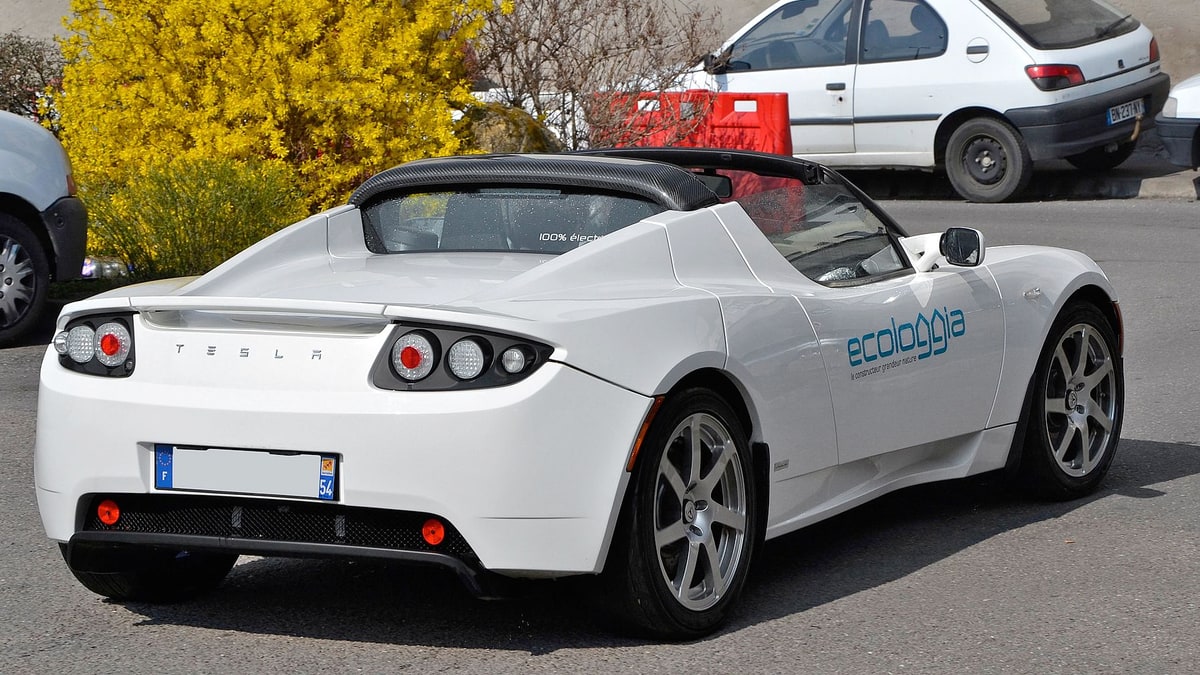
While Tesla Motors was founded in 2003 by Martin Eberhard and Marc Tarpenning (with Elon Musk joining shortly after as the lead investor), the world did not see a tangible product until the delivery of the first Tesla Roadster in 2008. This was the moment the “Tech” world realized that electric vehicles (EVs) didn’t have to be glorified golf carts.
The Lithium-Ion Pioneer
Before the Roadster, most experimental EVs utilized lead-acid or nickel-metal hydride batteries. Tesla’s first major technological contribution was the successful integration of thousands of small-form-factor lithium-ion cells—specifically the 18650 cells commonly found in laptops—into a cohesive battery pack. This provided the energy density required for a range of over 200 miles, a feat previously thought impossible for a production electric car.
AC Propulsion and the Silicon Valley Approach
The Roadster was built on the chassis of a Lotus Elise, but its “brain” was entirely new. Tesla utilized an AC induction motor, a design tracing back to Nikola Tesla’s original patents, but refined with modern power electronics. By treating the car as a high-performance gadget rather than a traditional mechanical machine, Tesla established the “Silicon Valley approach” to automotive manufacturing: prioritize the battery management system (BMS) and the power inverter as the core components of the vehicle.
Scaling the Silicon Valley Car: Model S and the Software-Defined Vehicle (2012)
If the Roadster proved that EVs could be fast, the Model S, released in 2012, proved they could be superior to internal combustion engines (ICE) in every functional category. This period marked the transition from “startup project” to “technology platform.”
Over-the-Air (OTA) Updates: The Ultimate Tech Disruptor
Perhaps the most significant technological “first” for the Model S was the implementation of robust Over-the-Air (OTA) updates. Before Tesla, if a car had a braking issue or needed a dashboard UI update, the owner had to visit a dealership. Tesla changed the vehicle into a “living” product. In 2012, the idea that your car could receive a software patch overnight to increase its horsepower or improve its thermal management was revolutionary. This shifted the automotive industry toward a “Software-Defined Vehicle” (SDV) architecture, where the hardware is secondary to the code that controls it.
Vertical Integration of Power: The Supercharger Network
In late 2012, Tesla began rolling out the Supercharger network. From a tech perspective, this wasn’t just about putting plugs in the ground; it was about the communication protocol between the car and the stall. Tesla developed a proprietary charging handshake that allowed the vehicle to communicate directly with the grid, optimizing charge speeds and managing heat. This vertical integration—where the company owns the car, the software, and the fueling infrastructure—remains a cornerstone of their technological dominance.
The Model X and Engineering Complexity (2015)
The release of the Model X in 2015 introduced “Falcon Wing” doors and a panoramic windshield, but its true tech contribution was the “Bioweapon Defense Mode.” This utilized a HEPA filtration system capable of cleaning the air inside the cabin to hospital-grade standards. It was a clear signal that Tesla was looking at “cabin tech” as a primary feature, not an afterthought.
Mass Market Revolution: Model 3, Model Y, and Hardware 3.0 (2017–2020)
To reach the mass market, Tesla had to innovate in manufacturing technology. The Model 3 (2017) and Model Y (2020) represented a shift from low-volume luxury to high-volume precision engineering.
The Shift to Custom Silicon: The FSD Computer
Until 2019, Tesla relied on third-party hardware (like Nvidia) for its Autopilot processing. However, realizing that general-purpose GPUs weren’t efficient enough for real-time vision processing, Tesla designed its own “FSD Chip” (Hardware 3.0). This was a pivotal “Tech” moment: an automaker designing its own high-performance AI silicon. The chip was optimized specifically for neural networks, allowing the car to process 2,300 frames per second—a 21x improvement over the previous generation.
Structural Battery Packs and Megacasting
With the Model Y, Tesla introduced “Megacasting.” By using massive casting machines (the Giga Press), Tesla could replace 70 different metal parts with a single rear-underbody casting. This reduced weight, improved safety, and simplified the robot-led assembly process. Furthermore, the transition toward structural battery packs—where the battery cells themselves act as a stressed member of the car’s frame—marked a significant leap in structural engineering, reducing the vehicle’s mass and increasing its efficiency.
Battery Chemistry Evolution: LFP and 4680 Cells
Tesla’s tech journey is also a story of chemistry. To lower costs, they began utilizing Lithium Iron Phosphate (LFP) batteries for standard-range models. LFP cells are more durable and do not require cobalt, making them more sustainable. Meanwhile, the development of the 4680 cell (a larger, tabless cylindrical cell) aimed to increase range by 16% while drastically reducing the cost per kilowatt-hour.
The Future Frontier: Cybertruck, AI, and Robotics (2023 and Beyond)
When the Cybertruck finally reached customers in late 2023, it was less a pickup truck and more a showcase for experimental technology. It signaled Tesla’s move toward “Exoskeleton” design and 48-volt architecture.
48-Volt Architecture and Steer-by-Wire
Traditional cars have operated on 12-volt systems for decades. The Cybertruck jumped to a 48-volt system, which reduces the current needed and allows for much thinner, lighter wiring throughout the vehicle. Coupled with “Steer-by-Wire” technology—where there is no physical mechanical link between the steering wheel and the tires—the Cybertruck represents the most digitally advanced steering system in a production vehicle. The steering is handled entirely by redundant motors and sensors, allowing the car to adjust steering ratios based on speed.
The Pivot to Artificial General Intelligence (AGI)
Tesla’s recent technological focus has shifted from being a “car company” to an “AI and robotics company.” This is best exemplified by:
- Dojo Supercomputer: A custom-built supercomputer designed specifically to train the neural networks that power FSD. By processing millions of miles of video data from the global Tesla fleet, Dojo is pushing the boundaries of machine learning.
- Optimus (Tesla Bot): Tesla is applying the same vision-based AI and battery technology used in its cars to a humanoid robot. Optimus uses the same FSD computer and “eyes” (cameras) to navigate the world, proving that Tesla’s core technology is transferable beyond the realm of transportation.

Conclusion: A Legacy of Iterative Innovation
When we look back at when Teslas “came out,” we see a timeline defined by the systematic replacement of mechanical parts with digital solutions.
- 2008 proved the viability of high-performance electric powertrains.
- 2012 introduced the concept of the car as a software platform via OTA updates.
- 2017 brought high-performance AI silicon to the consumer market.
- 2023 pushed the boundaries of electrical architecture and robotics.
Tesla’s journey is not merely about releasing new models; it is about the constant iteration of technology. From the 18650 cells of the original Roadster to the humanoid robots of the future, Tesla has consistently prioritized the “Tech” in “Clean Tech.” As they move toward a future of autonomous Robotaxis and AI-driven labor, the question of when their products came out will likely be eclipsed by the question of what those products will be able to do next. In the world of Tesla, the hardware is just the vessel; the technology is the soul.
aViewFromTheCave is a participant in the Amazon Services LLC Associates Program, an affiliate advertising program designed to provide a means for sites to earn advertising fees by advertising and linking to Amazon.com. Amazon, the Amazon logo, AmazonSupply, and the AmazonSupply logo are trademarks of Amazon.com, Inc. or its affiliates. As an Amazon Associate we earn affiliate commissions from qualifying purchases.