
The question “when did Tesla cars come out?” often arises not just from curiosity about a particular automotive brand, but from a deeper interest in the pivotal moments that reshaped the technology landscape of transportation. Tesla, Inc. stands as more than just a car manufacturer; it represents a significant technological disruption, a catalyst that accelerated the world’s transition from internal combustion engines to electric propulsion. Its story is one of audacious vision, relentless engineering, and a profound impact on how we perceive and develop automotive technology. Understanding its origins is crucial to appreciating the current state and future trajectory of electric vehicles (EVs) and related innovations.

Tesla’s journey isn’t a single “big bang” event but a series of calculated product launches, each building upon the last, progressively pushing the boundaries of battery technology, software integration, manufacturing processes, and autonomous driving. From its very inception, the company aimed to prove that electric cars could be better, faster, and more exciting than their gasoline counterparts, challenging decades of automotive conventional wisdom through sheer technological prowess.
The Spark: From Vision to First Roadster (2003-2008)
The foundation of Tesla Motors (as it was originally known) was laid long before its first vehicle hit the road. The initial concept wasn’t just to build an electric car, but to build an electric car that defied the prevailing perception of EVs as slow, unattractive, and limited in range.
Founding Principles and Early Ambitions
Tesla Motors was officially incorporated in July 2003 by Martin Eberhard and Marc Tarpenning. Their core idea was to commercialize an electric sports car, utilizing readily available laptop battery cells and a high-efficiency AC motor. This approach was revolutionary at a time when most electric vehicle endeavors focused on expensive, purpose-built battery packs and niche applications. Elon Musk joined the company as a key investor in 2004, leading the Series A funding round and becoming chairman of the board. He later assumed the title of CEO in 2008. Musk’s vision amplified Tesla’s initial ambition: to prove that electric vehicles could outperform gasoline cars, then use the profits from high-end cars to fund the development of more affordable mass-market EVs. This multi-stage plan was fundamentally a technological roadmap, designed to overcome engineering hurdles step by step. The initial challenge was immense: creating a reliable, high-performance battery system and an efficient electric powertrain from scratch.
The Tesla Roadster: A Breakthrough Prototype
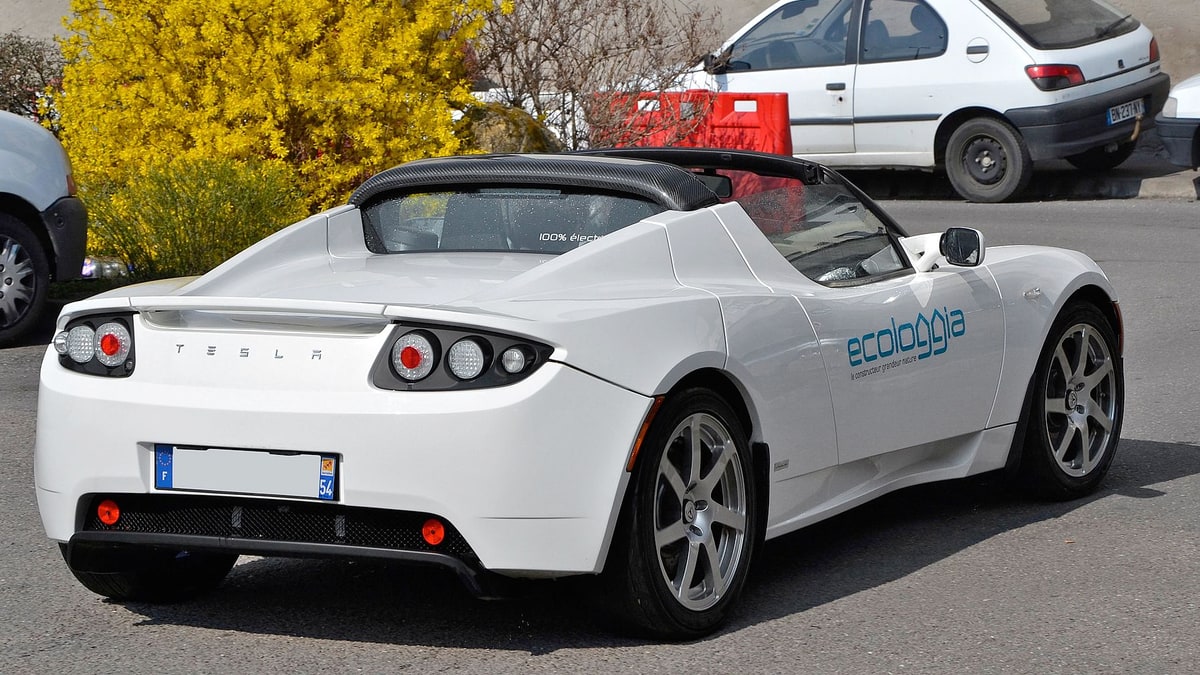
The world first truly took notice with the unveiling of the Tesla Roadster in July 2006, and its subsequent market release in March 2008. This marked the official debut of a Tesla vehicle for customers. Built on the chassis of a Lotus Elise, but heavily re-engineered, the Roadster was a technological marvel for its time. It was the first production electric vehicle to use lithium-ion battery cells, a technology previously confined to consumer electronics. Its 6,831 individual battery cells, packaged into a sophisticated battery pack, provided a groundbreaking range of over 245 miles (EPA estimated) on a single charge.
More importantly, the Roadster delivered electrifying performance, capable of accelerating from 0 to 60 mph in under four seconds. This performance was critical. It shattered the stereotype of electric cars as sluggish golf carts, instead presenting them as legitimate contenders in the high-performance sports car segment. Technologically, it demonstrated the viability of high-density battery packs, advanced power electronics, and efficient electric motors in a consumer product, paving the way for future EV development. The Roadster, despite its niche market and limited production, served as a crucial proof-of-concept, validating Tesla’s engineering capabilities and laying the groundwork for its subsequent, more ambitious projects.
Scaling Up: The Model S Era and Mainstream Adoption (2008-2012)
With the Roadster proving the concept, Tesla’s next monumental step was to transition from a specialized sports car manufacturer to a producer of luxury sedans with mass-market appeal. This move required a significant leap in engineering, design, and manufacturing capabilities.
Ambition Beyond the Niche: The Birth of the Model S
Following the Roadster’s success, Tesla set its sights on a larger, more practical vehicle that could appeal to a broader audience. The Tesla Model S was first unveiled as a concept in March 2009, generating immense anticipation. Its delivery to customers began in June 2012, marking a profound turning point for both Tesla and the entire automotive industry. The Model S was designed from the ground up as an electric vehicle, allowing for a unique architecture that optimized space, handling, and safety.
At its core, the Model S introduced a suite of technological innovations that redefined the modern car. Its large, centrally mounted 17-inch touchscreen became an industry benchmark, integrating vehicle controls, navigation, and infotainment into a seamless digital interface. More critically, the Model S was designed to receive over-the-air (OTA) software updates, a feature common in smartphones but unheard of in vehicles at the time. This allowed Tesla to continuously improve car features, add new functionalities, and fix bugs remotely, keeping the vehicle technologically current long after purchase. This software-defined vehicle approach was a radical departure from traditional automotive engineering.
Redefining Automotive Technology
The Model S wasn’t just about a fancy screen; it was a technological powerhouse. Its sophisticated battery architecture, integrated into the vehicle’s floor, provided a low center of gravity, enhancing handling and safety. The electric powertrain offered instant torque, delivering exhilarating acceleration that rivaled high-performance sports cars. Early versions boasted impressive range, further assuaging range anxiety that plagued early EV perceptions.
The Model S also laid the groundwork for Tesla’s ambitious autonomous driving aspirations. While not fully autonomous at launch, it featured the necessary hardware for future Autopilot capabilities, including cameras, radar, and ultrasonic sensors. The seamless integration of these sensors with the vehicle’s software system demonstrated Tesla’s commitment to continuous technological evolution, setting a new benchmark for what consumers could expect from a modern vehicle. Its release was not merely a new car launch; it was the debut of a new computing platform on wheels.
Expanding the Fleet: Democratizing EV Technology (2012-Present)
With the Model S establishing Tesla as a serious contender, the company embarked on an ambitious expansion of its product line, aiming to make EV technology accessible to a wider demographic.
Model X: SUV Innovation and Falcon Wing Doors
The Tesla Model X, an all-electric SUV, was first delivered in September 2015. It expanded Tesla’s portfolio into a highly popular market segment while introducing several unique technological features. Most notably, its “Falcon Wing” doors, which articulate upwards, solved the challenge of easy access to rear seats in tight parking spaces, albeit with complex engineering. The Model X also emphasized safety, receiving top ratings across categories, partly due to its unique electric architecture and robust battery structure. It further refined Tesla’s infotainment system and showcased advanced climate control with a HEPA air filtration system, demonstrating the company’s focus on integrating comprehensive user experience features.
Model 3 & Y: Mass-Market Revolution
The true turning point for EV accessibility came with the Tesla Model 3, which began deliveries in July 2017. Pitched as Tesla’s mass-market vehicle, the Model 3 was designed to be significantly more affordable while retaining Tesla’s core technological advantages. Its simplified interior design, often described as minimalist, further streamlined the user interface, consolidating most functions onto the central touchscreen. The Model 3 quickly became one of the best-selling EVs globally, proving that compelling electric vehicles could be produced at a more accessible price point.
Building on the Model 3’s platform, the Tesla Model Y, a compact SUV, commenced deliveries in March 2020. The Model Y offered the practicality and versatility of an SUV with the efficiency and performance of an EV, further broadening Tesla’s appeal. Both the Model 3 and Model Y represented a triumph of manufacturing and supply chain technology, as Tesla had to rapidly scale production to meet unprecedented demand, overcoming significant “production hell” challenges. Their success underscored the viability of EVs as everyday vehicles for millions.
Future Frontiers: Cybertruck, Semi, and Beyond
Tesla continues to push the boundaries of automotive technology with its upcoming vehicles. The Cybertruck, unveiled in November 2019 (with deliveries expected to start in late 2023), represents a radical departure in design and construction, featuring an exoskeleton made of ultra-hard stainless steel and armored glass. Its unique body structure and advanced materials promise unprecedented durability and performance in the pickup truck segment. The Tesla Semi, revealed in November 2017 (with limited deliveries beginning in December 2022), aims to revolutionize the commercial trucking industry with long-range electric capabilities and impressive torque, significantly reducing operational costs and emissions for freight transport. These ventures highlight Tesla’s commitment to extending its technological innovations across various vehicle categories, from personal transport to heavy-duty logistics.
Tesla’s Enduring Technological Legacy and Future Outlook
Tesla’s market entry and subsequent product releases have left an indelible mark on the automotive world, far beyond just the sales numbers of its own vehicles. Its impact is fundamentally technological, driving innovation across multiple facets of the industry.
Beyond the Car: Software, AI, and Charging Infrastructure
Tesla’s influence extends beyond the physical cars themselves. Its investment in software and artificial intelligence, particularly with its Autopilot and Full Self-Driving (FSD) initiatives, has set an aggressive pace for autonomous vehicle development globally. The company’s unique approach to data collection and neural network training for vision-based autonomy is a significant technological differentiator. Furthermore, the development of the Supercharger network, Tesla’s proprietary fast-charging infrastructure, was a crucial strategic move. By building out a reliable and extensive charging network concurrently with its vehicle launches, Tesla addressed one of the biggest technological barriers to widespread EV adoption: range anxiety and charging accessibility. This integrated ecosystem approach—vehicle, software, and infrastructure—has been a cornerstone of its technological strategy.
The Pervasive Influence on Automotive Technology
The competitive pressure from Tesla’s technological advancements forced legacy automakers to fundamentally rethink their strategies. Companies that were once slow to embrace EVs have now committed billions to developing their own electric platforms, with many adopting elements pioneered by Tesla, such as large touchscreens, OTA updates, and integrated software experiences. Tesla didn’t just build electric cars; it demonstrated a new paradigm for vehicle development and ownership, emphasizing technology as a core differentiator and continuous improvement through software. Its manufacturing innovations, including Gigafactories and attempts at highly automated production lines, have also spurred a re-evaluation of automotive production processes.
The Road Ahead for EV Technology
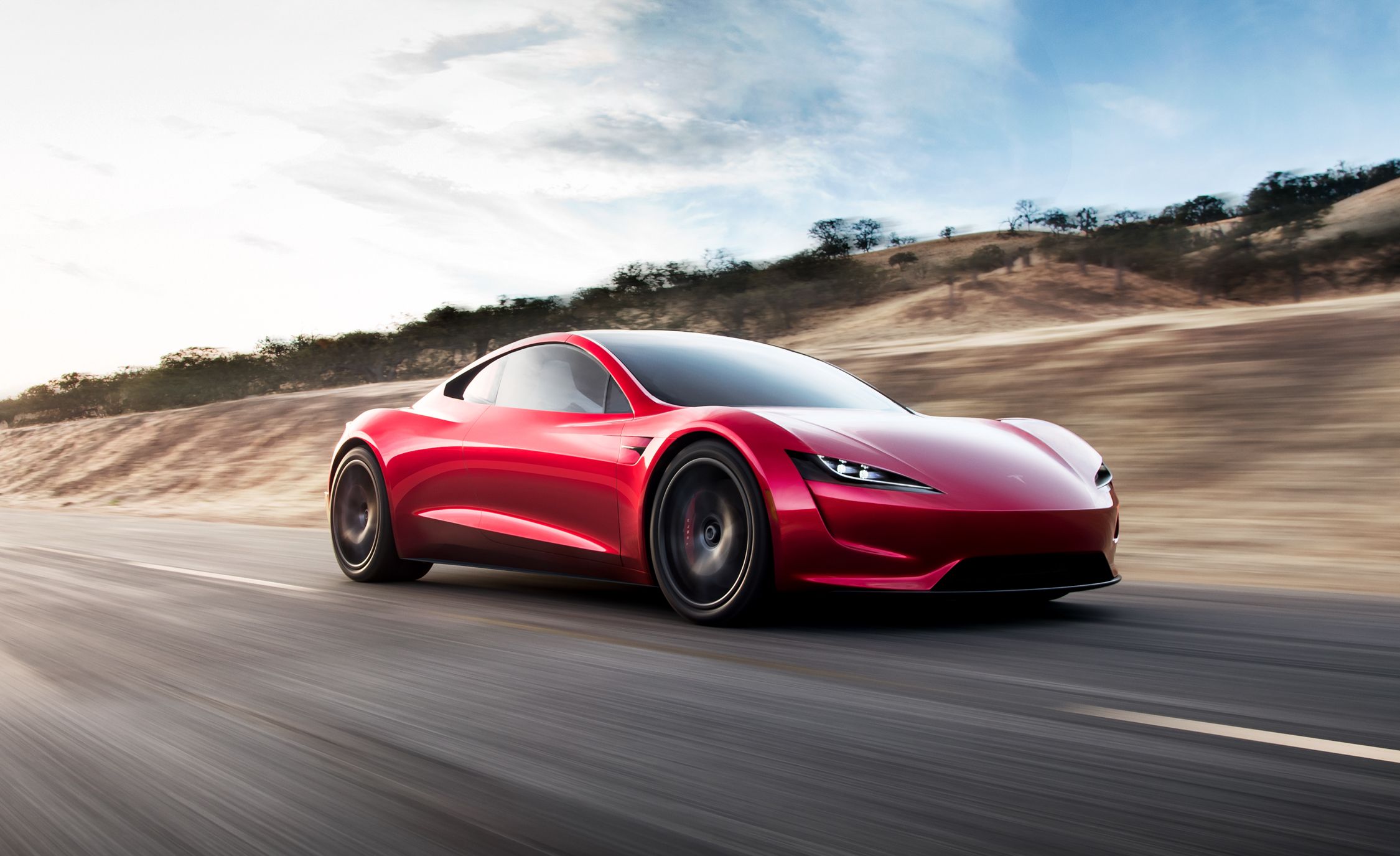
Looking forward, Tesla continues to be at the forefront of EV technology. Its relentless pursuit of battery cost reduction and energy density improvements (e.g., 4680 cells), advancements in AI for autonomous driving, and expansion into energy storage and solar solutions position it as a key player in the broader sustainable energy transition. The question “when did Tesla cars come out” thus opens a window into a remarkable technological journey, one that began with a groundbreaking sports car in 2008 and has since evolved into a comprehensive effort to accelerate the world’s shift to sustainable energy through cutting-edge automotive and energy innovations. Tesla’s history is a testament to the power of technological vision to disrupt established industries and redefine what is possible on the road.
aViewFromTheCave is a participant in the Amazon Services LLC Associates Program, an affiliate advertising program designed to provide a means for sites to earn advertising fees by advertising and linking to Amazon.com. Amazon, the Amazon logo, AmazonSupply, and the AmazonSupply logo are trademarks of Amazon.com, Inc. or its affiliates. As an Amazon Associate we earn affiliate commissions from qualifying purchases.