
The history of the modern computing landscape cannot be written without a central focus on Microsoft. Founded during the dawn of the microcomputer revolution, Microsoft evolved from a two-man operation into a multi-trillion-dollar entity that dictates the standard for software, cloud infrastructure, and artificial intelligence. To understand when Microsoft started is to look back at April 4, 1975—a pivotal moment in Albuquerque, New Mexico, that would eventually redefine how humans interact with technology.
The 1975 Genesis: From Albuquerque to the Altair 8800
Microsoft’s journey began not in a high-tech laboratory, but in the shared vision of two childhood friends, Bill Gates and Paul Allen. The catalyst for the company’s formation was the January 1975 issue of Popular Electronics, which featured the MITS Altair 8800, the world’s first commercially successful microcomputer. Allen and Gates recognized that while the hardware was a breakthrough, it lacked the software necessary to make it functional for anything beyond hobbyist experimentation.
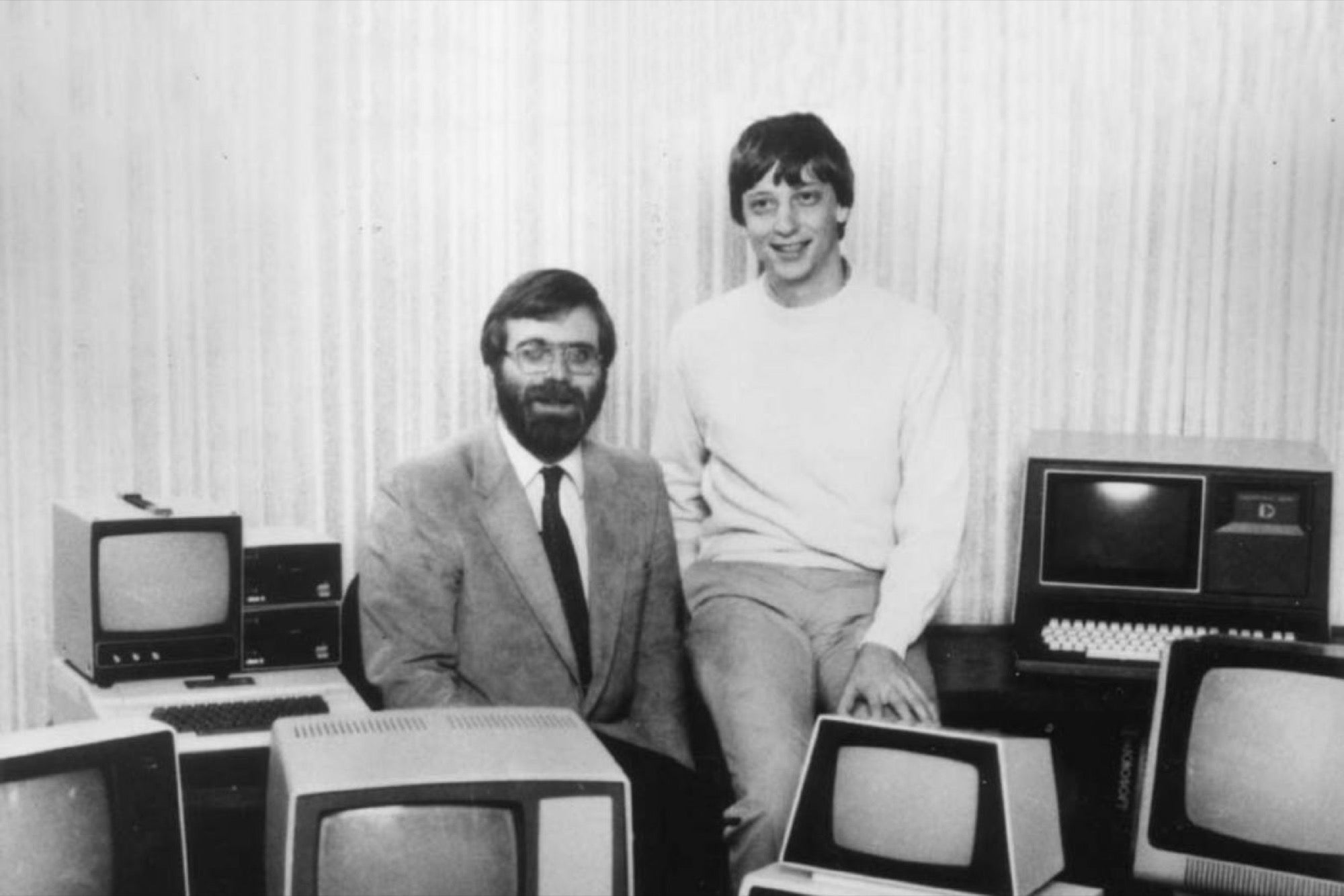
They reached out to Ed Roberts, the creator of the Altair, claiming they had developed a BASIC (Beginners’ All-purpose Symbolic Instruction Code) interpreter for the system. In reality, they hadn’t written a single line of code for the Altair yet. After a frantic period of development using a PDP-10 simulator, the duo successfully demonstrated their software. This success led to the official formation of “Micro-Soft”—a portmanteau of microcomputer and software—on April 4, 1975.
The Move to Washington and the Early Software Market
In its infancy, Microsoft focused primarily on programming languages. By 1979, the company moved its headquarters from Albuquerque to Bellevue, Washington, to be closer to a larger talent pool and to establish itself as a professional software house. During this era, Microsoft wasn’t just a BASIC provider; they were developing versions of FORTRAN and COBOL, establishing a technical foundation that made them indispensable to the burgeoning hardware industry. Their business model was revolutionary for the time: instead of selling hardware, they licensed their software to various manufacturers, ensuring that their code lived on as many different machines as possible.
The Operating System Revolution: MS-DOS and the IBM Partnership
While programming languages provided the initial revenue, the true technological explosion occurred in the early 1980s. In 1980, IBM approached Microsoft to provide an operating system for their upcoming personal computer (the IBM PC). At the time, Microsoft did not actually own an operating system. In a legendary move of technical and business maneuvering, Microsoft purchased the rights to QDOS (Quick and Dirty Operating System) from Seattle Computer Products for $50,000.
The Architecture of MS-DOS
Microsoft refined QDOS into MS-DOS (Microsoft Disk Operating System). Unlike modern graphical interfaces, MS-DOS was a command-line environment. However, its importance lay in its architecture and its licensing agreement. Gates insisted that Microsoft retain the right to license MS-DOS to other hardware manufacturers. This decision was the single most important moment in the history of the personal computer. As “IBM clones” flooded the market, Microsoft’s OS became the de facto standard, creating a unified software ecosystem that allowed developers to write programs for a single platform rather than dozens of proprietary ones.
Transitioning to 16-bit Computing
MS-DOS facilitated the transition from 8-bit to 16-bit computing, allowing for more complex memory management and faster processing. By providing a stable layer between the hardware and the software applications, Microsoft enabled the rise of early productivity tools like Word and Excel (then known as Multiplan). This period solidified Microsoft’s role not just as a developer of tools, but as the architect of the digital environment.
The Windows Era: Defining the Modern User Interface
The late 1980s and early 1990s marked Microsoft’s shift from text-based computing to the Graphical User Interface (GUI). While Apple had popularized the GUI with the Macintosh, Microsoft’s challenge was to bring this visual experience to the massive, fragmented world of PC hardware.
Windows 3.0 and the 32-bit Shift
Released in 1990, Windows 3.0 was the first version of the software to gain significant commercial traction. It introduced better icons, improved performance, and the ability to run multiple programs simultaneously (multitasking) in a way that felt intuitive. However, it was the release of Windows 95 that changed everything. Windows 95 was a massive leap forward, introducing the “Start” button, the taskbar, and a significant shift from a 16-bit to a 32-bit architecture. This allowed for much more stable performance and the support of “Plug and Play” hardware, which simplified the process of adding peripherals like printers and scanners.
The Dominance of the Office Suite
Parallel to the operating system’s growth was the development of the Microsoft Office suite. By integrating Word, Excel, and PowerPoint into a cohesive package, Microsoft created a technological moat. The proprietary file formats (.doc, .xls) became the universal language of business. This period demonstrated Microsoft’s ability to create a “sticky” ecosystem where the software was as essential as the hardware it ran on.
Diversification and the Cloud: The Shift to Azure and SaaS
As the new millennium dawned, Microsoft faced new technological challenges: the rise of the internet, the mobile revolution, and the eventual transition from local computing to the cloud. While the company struggled initially with the mobile market, its pivot to cloud computing under the leadership of Satya Nadella (who took over as CEO in 2014) represents one of the most successful technological transformations in history.
The Birth of Azure
Microsoft Azure, launched in 2010, marked the company’s entry into the infrastructure-as-a-service (IaaS) and platform-as-a-service (PaaS) markets. This moved Microsoft away from selling “shrink-wrapped” software toward a subscription-based model. Azure allowed businesses to offload their server needs to Microsoft’s global data centers, providing scalable computing power, storage, and networking. Today, Azure is the backbone of millions of applications, ranging from small startups to global financial institutions.
Software as a Service (SaaS) and Office 365
The transition to the cloud also redefined the Office suite. Microsoft transformed its traditional software model into Office 365 (now Microsoft 365). By moving to a SaaS model, Microsoft ensured that users always had the latest security patches and features without needing to manually reinstall software. This shift also integrated cloud storage (OneDrive) and collaboration tools (Teams), making the suite a decentralized, real-time productivity hub.
The Future of Tech: Generative AI and the Copilot Frontier
As of the current era, Microsoft is once again at the forefront of a technological paradigm shift: Artificial Intelligence. By making significant investments in OpenAI and integrating Large Language Models (LLMs) into its existing tech stack, Microsoft is redefining the concept of the “Personal Computer.”
The Integration of Generative AI
Microsoft’s “Copilot” initiative is the most significant overhaul of its software interface since the introduction of the GUI. By embedding AI into Windows, Bing, and the Office apps, Microsoft is moving toward an “intent-based” computing model. Instead of users manually navigating menus or writing complex formulas in Excel, they can simply describe their desired outcome in natural language. This is powered by massive neural networks running on Azure’s high-performance computing clusters, representing the ultimate synergy of Microsoft’s software history and its cloud future.

Edge Computing and the Intelligent Cloud
Looking forward, Microsoft is focusing on “the intelligent edge and the intelligent cloud.” This involves bringing AI processing closer to where the data is generated—on IoT devices, factory floors, and mobile hardware—while maintaining a seamless connection to the centralized cloud. From the humble beginnings of a BASIC interpreter for a hobbyist machine in 1975 to the current era of generative AI, Microsoft’s history is a testament to the power of technological adaptability. By consistently identifying the next major platform—be it the PC, the GUI, the Cloud, or AI—Microsoft has remained the foundational architect of the digital world.
aViewFromTheCave is a participant in the Amazon Services LLC Associates Program, an affiliate advertising program designed to provide a means for sites to earn advertising fees by advertising and linking to Amazon.com. Amazon, the Amazon logo, AmazonSupply, and the AmazonSupply logo are trademarks of Amazon.com, Inc. or its affiliates. As an Amazon Associate we earn affiliate commissions from qualifying purchases.