
The question “When did Microsoft begin?” marks not just the founding of a company, but a pivotal moment in the history of technology that would forever alter the landscape of computing. Born from the ambitious vision of two young innovators, Microsoft’s inception laid the groundwork for the ubiquity of personal computers and the software that powers them. Its origins tell a compelling story of foresight, risk-taking, and relentless dedication to bringing complex technology to the masses. Understanding Microsoft’s genesis is to understand a significant chapter in the evolution of modern tech itself, defining how we interact with digital tools today.
The Formative Years: Humble Beginnings and Bold Visions
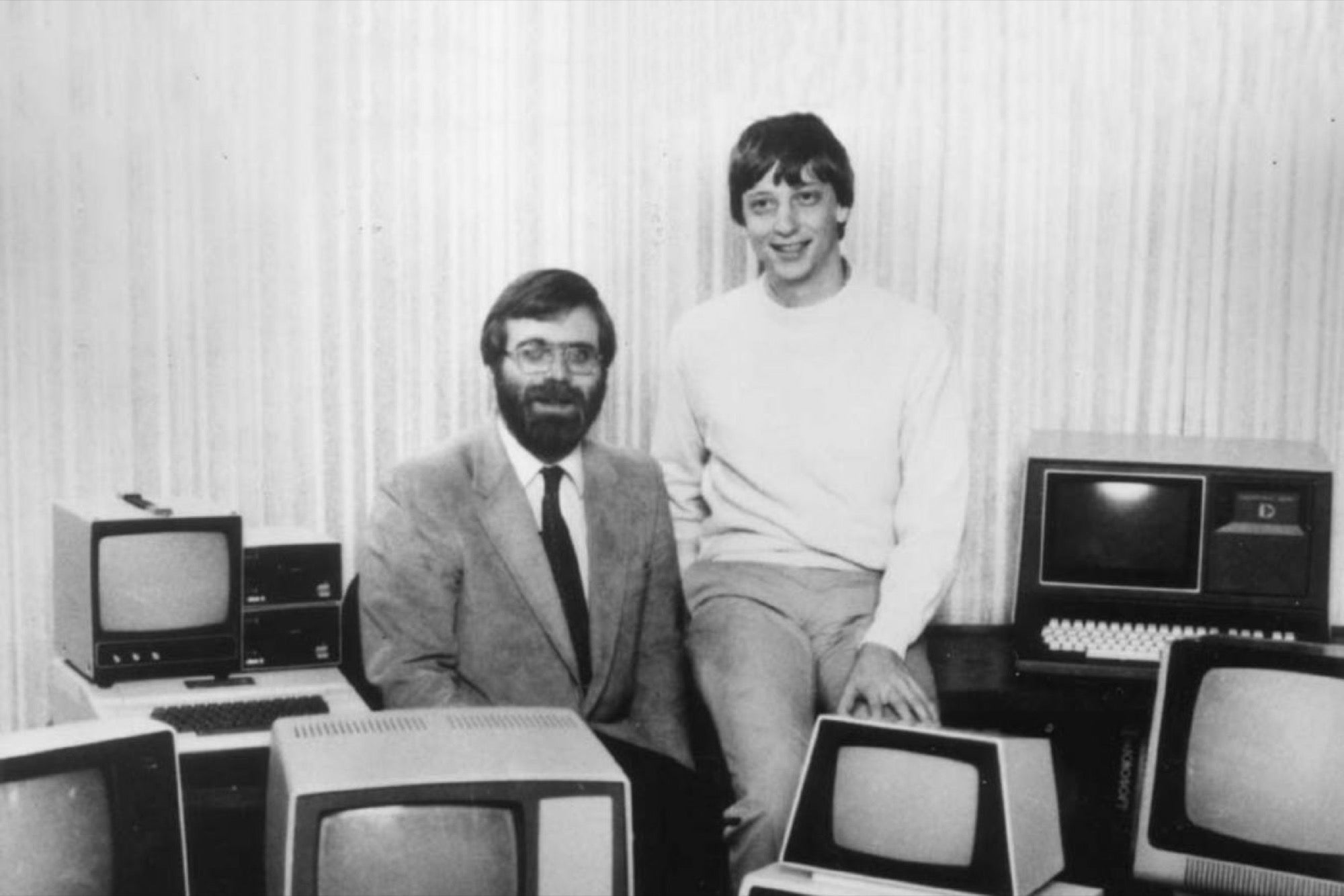
The story of Microsoft officially begins in 1975, but its roots stretch back to the shared passion and intellectual curiosity of its co-founders, Bill Gates and Paul Allen. Their early partnership and an audacious claim to solve a pressing technological challenge catalyzed what would become one of the world’s most influential companies.
A Partnership Forged in Code: Gates, Allen, and the Altair BASIC
Bill Gates and Paul Allen met as teenagers at Lakeside School in Seattle, bonding over their mutual fascination with computers and programming. They spent countless hours exploring the nascent world of computing, often “hacking” into school computers to learn and experiment. This period cultivated not only their technical prowess but also a profound understanding of the potential of personal computing – a potential largely untapped by the sophisticated, expensive mainframe systems of the era.
The catalyst for Microsoft’s formation came in December 1974 with the release of the Altair 8800 by Micro Instrumentation and Telemetry Systems (MITS). Featured on the cover of Popular Electronics magazine in January 1975, the Altair was one of the first truly affordable personal computers, sparking immense excitement among hobbyists. However, the machine was raw; it lacked software, particularly a user-friendly programming language. Programmers had to input code manually using front-panel switches, a tedious and error-prone process.
Gates and Allen immediately recognized this critical void. They saw the Altair not just as a fascinating gadget but as a platform waiting for accessible software. Despite not owning an Altair and having no access to MITS’ specifications, Allen flew to Albuquerque, New Mexico, where MITS was based, claiming to have developed a BASIC interpreter for the machine. In reality, they had been furiously working on one, adapting a language they had written for a different microcomputer, using an Intel 8080 emulator running on a PDP-10 mainframe at Harvard. Their bluff paid off. Allen successfully demonstrated their Altair BASIC interpreter to MITS, impressing company founder Ed Roberts. This functional software transformed the Altair from a complex hobbyist kit into a programmable computer accessible to a broader audience. It was a groundbreaking achievement, showing that powerful software could run on small, inexpensive hardware.
Following this success, Gates dropped out of Harvard, and Allen left his job at Honeywell. In April 1975, they officially founded “Micro-soft” (hyphenated initially) in Albuquerque, New Mexico, to develop and sell BASIC interpreters for the Altair. Their vision was clear: to make computing accessible by providing the foundational software.
Early Software Innovations and Market Penetration
The initial success of Altair BASIC paved the way for Microsoft’s growth. The company’s primary business model revolved around licensing its BASIC interpreter to other hardware manufacturers who were rapidly entering the burgeoning microcomputer market. This strategic decision was crucial; instead of building their own hardware, Gates and Allen focused on the software layer, making their products ubiquitous across different machines. This approach allowed them to scale rapidly without the significant capital investment required for hardware manufacturing.
Microsoft’s BASIC was adapted for a multitude of early personal computer platforms, including the Apple II, Commodore PET, and TRS-80. Each adaptation required meticulous coding and optimization to fit the unique architectures of these diverse machines. This period also saw Microsoft develop other programming languages, such as FORTRAN and COBOL, further solidifying its reputation as a leading developer of fundamental software tools. The company’s focus on developer tools and programming languages was a testament to their understanding that the underlying technology enabling software creation would be key to unlocking the potential of personal computing. The business was growing steadily, and in 1979, Microsoft relocated its operations from Albuquerque to Bellevue, Washington, closer to Seattle and the burgeoning tech scene of the Pacific Northwest. This move marked another step in their journey, positioning them for even greater expansion and influence.
The IBM Partnership: A Pivotal Moment and the Rise of DOS
While Microsoft had established itself as a reputable software provider, a single, monumental deal with IBM in the early 1980s catapulted the company into an entirely new stratosphere, setting the stage for its eventual dominance.
Seizing the Opportunity: A Bold Bet on Operating Systems
In 1980, IBM, the undisputed titan of mainframe computing, decided to enter the personal computer market. Their project, codenamed “Project Chess,” aimed to quickly develop and release a personal computer (which would become the IBM PC) to counter the rising popularity of machines from Apple, Commodore, and Tandy. Crucially, IBM decided to outsource much of the PC’s components and software to speed up development. One of their most critical needs was an operating system (OS) – the foundational software that manages a computer’s hardware and software resources.
IBM initially approached Gary Kildall of Digital Research, creator of the widely popular CP/M operating system. However, negotiations stalled over licensing terms. In a twist of fate, IBM then turned to Microsoft, primarily known for its programming languages, not operating systems. Bill Gates, sensing an unprecedented opportunity, seized it with remarkable entrepreneurial acumen. Despite not having an OS of their own ready for immediate deployment, Gates assured IBM that Microsoft could deliver.
The solution came from an astute acquisition. In 1981, Microsoft purchased 86-DOS (later renamed PC-DOS and MS-DOS) from Seattle Computer Products (SCP) for a mere $50,000. 86-DOS was created by Tim Paterson and was largely a clone of CP/M, designed for Intel’s 8086 processor. This acquisition was a stroke of genius, providing Microsoft with the core technology needed to fulfill IBM’s request.
MS-DOS: The Engine of Early PCs
The deal struck between Microsoft and IBM for the operating system, which would become known as MS-DOS (Microsoft Disk Operating System) and PC-DOS (Personal Computer Disk Operating System when sold by IBM), was revolutionary. Unlike typical software agreements where the developer sold exclusive rights, Microsoft retained the right to license MS-DOS to other hardware manufacturers. This seemingly minor clause would have colossal implications.
When the IBM PC launched in August 1981, it came bundled with PC-DOS. The IBM PC was an immediate and resounding success, quickly establishing itself as the industry standard. Crucially, the open architecture of the IBM PC led to the proliferation of “IBM PC compatible” machines from various manufacturers. Because Microsoft had retained the licensing rights, it could sell MS-DOS to all these “clone” makers.
This strategy transformed MS-DOS into the de facto standard operating system for the entire personal computer industry. Developers began writing applications specifically for MS-DOS, creating an expanding ecosystem of software. From word processors like WordStar and WordPerfect to spreadsheets like Lotus 1-2-3, these applications solidified MS-DOS’s position as the essential software layer. This widespread adoption not only generated immense revenue for Microsoft but also cemented its central role in the personal computing revolution, laying the technical foundation upon which countless innovations would be built.
Paving the Way for Windows: Shifting Paradigms
While MS-DOS was undeniably successful, its text-based, command-line interface presented significant usability challenges, hinting at the next major technological leap Microsoft would spearhead: the graphical user interface.
Beyond the Command Line: The Vision for Graphical User Interfaces (GUIs)
The command-line interface of MS-DOS, while powerful for those who mastered it, was intimidating and inefficient for the average user. Tasks required memorizing commands and typing them precisely, a significant barrier to broader adoption of personal computers. Even with the success of MS-DOS, Microsoft’s leaders, particularly Bill Gates, understood that to truly bring “a computer on every desk and in every home,” a more intuitive interaction model was necessary.
The concept of a graphical user interface (GUI) was not new. Pioneering work at Xerox PARC in the 1970s had demonstrated the power of icons, menus, and a mouse-driven interface. Apple Computer had famously commercialized these ideas with its Lisa in 1983 and, more successfully, with the Macintosh in 1984. The Macintosh, with its user-friendly desktop metaphor, proved that computers could be accessible and even enjoyable for non-technical users. This innovation highlighted the limitations of DOS and fueled Microsoft’s ambition to develop its own GUI environment.
Microsoft began development on what it called “Interface Manager” in 1981, envisioning it as a graphical shell that would run on top of DOS. The project was ambitious, aiming to provide a consistent visual environment where users could interact with applications using a mouse and graphical elements, rather than cryptic commands. The technical challenges were immense, given the limited memory and processing power of early PCs. The goal was to create an extensible platform that developers could target, allowing applications to share a common look and feel.
The Launch of Windows and Its Evolutionary Path
After several years of intense development, public announcements, and a significant amount of hype, Microsoft officially launched Windows 1.0 on November 20, 1985. It was a 16-bit graphical desktop operating environment that ran on top of MS-DOS. Windows 1.0 offered features like drop-down menus, tiled windows (not overlapping, a limitation of the time), a mouse cursor, and applications like Paint, Notepad, a calendar, and a simple word processor called Write.
Initial reception to Windows 1.0 was lukewarm. Critics found it clunky, slow, and resource-intensive for the hardware of the era. Its multitasking capabilities were limited, and it faced stiff competition from other GUI environments like Quarterdeck DESQview and IBM’s TopView. Furthermore, the absence of compelling applications designed specifically for Windows hindered its adoption. Most users continued to run their DOS applications, often launching them from within the Windows environment.
Despite the initial challenges, Windows 1.0 was a crucial first step. It represented Microsoft’s unwavering commitment to the GUI paradigm and laid the essential technical foundation for future iterations. The company continued to pour resources into its development, learning from user feedback and technical limitations. Subsequent versions, particularly Windows 2.0 (1987) and the wildly successful Windows 3.0 (1990), began to overcome these early hurdles. Windows 3.0, with its improved memory management, better performance, and a growing ecosystem of Windows-specific applications, finally achieved widespread mainstream acceptance, setting the stage for the explosive success of Windows 95 and Microsoft’s eventual software empire.
Microsoft’s Enduring Legacy in Tech Innovation
The journey from a tiny Albuquerque startup to a global technology powerhouse is deeply rooted in Microsoft’s foundational approach to software and its strategic market vision. The “beginning” of Microsoft was not merely a date but the origin point of a philosophy that has profoundly shaped the tech industry.
Core Principles That Defined Early Microsoft
From its earliest days, Microsoft operated on several core principles that underpinned its technological trajectory. Firstly, its unwavering focus on software over hardware was a defining characteristic. Unlike companies like Apple, which controlled both the hardware and software experience, Microsoft excelled by providing the essential software layer that could run on a multitude of machines. This strategy maximized market reach and established MS-DOS, and later Windows, as pervasive industry standards.
Secondly, the licensing model adopted for Altair BASIC and critically for MS-DOS was a stroke of genius. By retaining the right to license its software to multiple hardware vendors, Microsoft ensured widespread adoption and created an immense network effect. The more machines that ran Microsoft software, the more appealing it became for developers to write applications for that platform, further entrenching Microsoft’s products.
Finally, the founders’ bold vision for “a computer on every desk and in every home” was not just a catchy slogan; it was a technological imperative that guided their product development. This vision drove Microsoft to create software that made computers more accessible, affordable, and useful to a non-expert audience, transforming a niche hobbyist tool into an indispensable part of modern life.
From Foundational Software to Ecosystem Giant
The technological decisions and strategies forged in Microsoft’s early years laid the groundwork for its subsequent evolution into an ecosystem giant. The initial focus on programming languages and operating systems provided the essential building blocks for almost all subsequent software development. This foundation enabled Microsoft to expand into productivity applications (like Microsoft Office), server operating systems (Windows Server), development tools (Visual Studio), and eventually, enterprise solutions.
The technical heritage of DOS and early Windows also informed Microsoft’s long-term commitment to backward compatibility, ensuring that new versions of their operating systems could largely run older applications. This principle, while sometimes leading to design compromises, fostered immense stability and loyalty within their user and developer base. As technology progressed, Microsoft successfully leveraged its foundational position to adapt to new paradigms, from the internet boom of the late 1990s to the cloud computing era of today with Azure. Each step, though distinct, can trace its lineage back to the initial technical bets made in 1975.
In conclusion, “When did Microsoft begin?” is answered with April 4, 1975, a date that represents the inception of a company whose technological innovations would profoundly impact global computing. From the audacious delivery of Altair BASIC to the strategic establishment of MS-DOS as the industry standard and the arduous but ultimately successful journey with Windows, Microsoft’s early years are a testament to how visionary software development can define an era. The core principles established then—a focus on software, broad licensing, and a commitment to accessibility—not only propelled Microsoft to unprecedented success but also irrevocably shaped the technological landscape, setting the stage for the digital world we inhabit today.
aViewFromTheCave is a participant in the Amazon Services LLC Associates Program, an affiliate advertising program designed to provide a means for sites to earn advertising fees by advertising and linking to Amazon.com. Amazon, the Amazon logo, AmazonSupply, and the AmazonSupply logo are trademarks of Amazon.com, Inc. or its affiliates. As an Amazon Associate we earn affiliate commissions from qualifying purchases.