
The story of Tesla is often framed as a tale of technological innovation, but at its core, it is one of the most significant venture capital and business finance case studies of the 21st century. While many believe Elon Musk founded the company in a garage, the reality is a complex narrative of early-stage investing, strategic capital infusion, and high-stakes financial risk. To understand when and how Elon Musk “bought” Tesla is to understand the mechanics of Series A funding and the transformation of a niche startup into a trillion-dollar asset.
The Series A Investment: From Venture Capital to Majority Stake
Tesla Motors was officially incorporated in July 2003 by Martin Eberhard and Marc Tarpenning. At its inception, the company was a lean operation with a bold vision but zero capital. The pivotal moment for the company’s financial trajectory occurred in February 2004, which marks the answer to when Elon Musk effectively “bought” his way into the company’s future.
The Initial $6.5 Million Bet
In early 2004, Tesla was seeking its first major round of institutional investment, known as Series A. Elon Musk, fresh from the $1.5 billion sale of PayPal to eBay, was looking for high-impact opportunities to deploy his personal capital. Musk led the Series A round, contributing $6.5 million of the $7.5 million raised.
This was not merely a passive investment; it was a move that granted him the position of Chairman of the Board. From a business finance perspective, this investment gave Musk a controlling interest and the primary voice in the company’s strategic direction. While he was not the “founder” in the chronological sense, his capital was the lifeblood that allowed the company to move from a conceptual business plan to physical prototyping.
The Valuation of Early-Stage Disruptors
Investing $6.5 million into an electric vehicle startup in 2004 was an extraordinary financial risk. At the time, the infrastructure for EVs was non-existent, and battery technology was prohibitively expensive. Musk’s entry into Tesla is a masterclass in “high-conviction investing.” He valued the company not based on its current assets—which were negligible—but on the total addressable market (TAM) of the global automotive industry. This stage of Tesla’s history highlights the importance of capital allocation in the early days of a “hard tech” company, where the “burn rate” is high and the “time to market” is long.
Navigating the Brink of Bankruptcy: The 2008 Financial Crisis
The most critical period in Musk’s financial history with Tesla occurred during the global financial meltdown of 2008. If the 2004 investment was the “buy-in,” the 2008 intervention was the “double down” that saved the company from liquidation.
The $40 Million Last-Minute Infusion
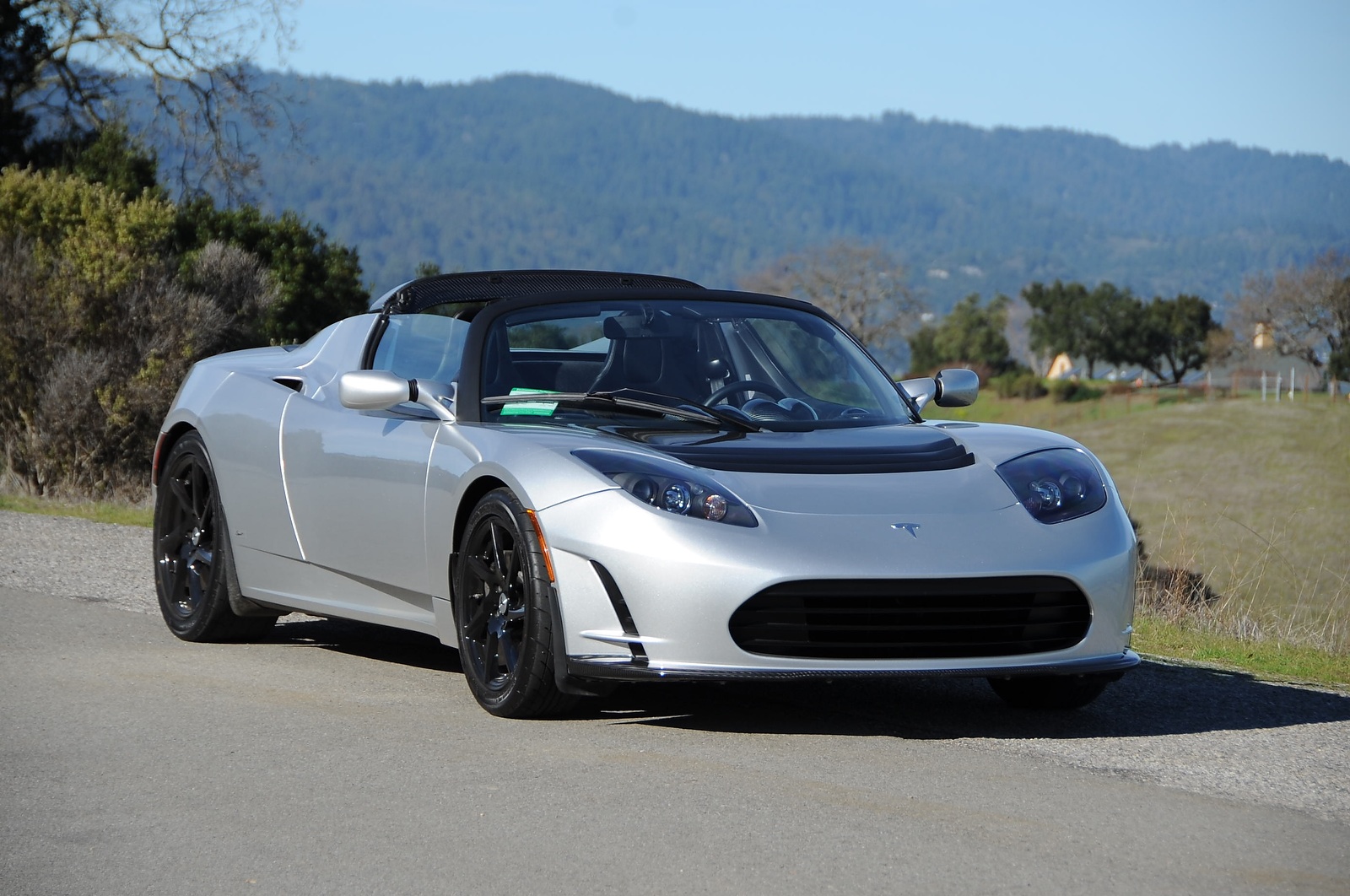
By late 2008, Tesla was hemorrhaging cash. The development of the Roadster had faced numerous delays and cost overruns. With the credit markets frozen and traditional venture capital firms retreating, Tesla was days away from bankruptcy. Elon Musk faced a brutal financial choice: allow the company to fail or exhaust his remaining personal fortune.
In a move that is now legendary in investment circles, Musk invested his last $40 million—the remainder of his proceeds from the PayPal sale—into Tesla. He also facilitated a bridge loan to keep operations running. This wasn’t just a corporate rescue; it was a total consolidation of financial risk. By putting his own net worth on the line, he signaled to other investors that the company had a floor, eventually convincing Daimler AG to purchase a 10% stake for $50 million in 2009, which provided the necessary liquidity to survive.
The Strategic Shift in Financial Leadership
During this era, the relationship between the original founders and Musk reached a breaking point. Through successive funding rounds (Series B and C), the equity structure of the company shifted. As Musk continued to provide the lion’s share of capital during periods of extreme volatility, his equity increased while the founders’ stakes were diluted. This is a common phenomenon in venture-backed companies where the “capital provider” eventually assumes the role of “executive leader.” By late 2008, Musk had transitioned from Chairman to CEO, solidifying his role as the financial and operational architect of the brand.

The 2010 IPO: Transitioning to Public Markets
The transition from a privately held startup to a publicly traded entity is the ultimate goal of any major investment strategy. For Tesla, the Initial Public Offering (IPO) on June 29, 2010, was a watershed moment that validated Musk’s early-stage investment and opened the floodgates for institutional capital.
The Mechanics of the Offering
Tesla debuted on the NASDAQ under the ticker TSLA, priced at $17.00 per share. The offering raised approximately $226 million. From a business finance perspective, this was a defensive move as much as an offensive one. The company needed massive amounts of capital to build out its Fremont factory and develop the Model S.
The IPO allowed early investors, including Musk, to establish a market value for their holdings. For Musk, who had invested roughly $70 million of his own money across various rounds prior to the IPO, the public offering represented the beginning of an unprecedented wealth-creation cycle. It was the moment Tesla moved from a speculative venture to a legitimate player in the global financial markets.
Scaling via Debt and Secondary Offerings
One of the most overlooked aspects of Musk’s financial management of Tesla is his adept use of secondary offerings and convertible debt. In the years following the IPO, Tesla frequently returned to the capital markets to raise billions of dollars. Unlike many CEOs who fear dilution, Musk understood that in a capital-intensive industry like automotive manufacturing, “cash is king.” By raising money when the stock price was high, he was able to fund the massive R&D required for the Model 3 and Model Y without compromising the company’s solvency.
A Masterclass in Asset Appreciation and ROI
When looking back at when Elon Musk bought Tesla, the most staggering metric is the Return on Investment (ROI). What started as a $6.5 million investment in a struggling startup has evolved into a stake worth hundreds of billions of dollars, making Musk the wealthiest individual in the world at various points over the last decade.
The Power of Compound Growth in Valuation
Tesla’s valuation journey from a $200 million company at its IPO to a $1 trillion market cap in 2021 is a testament to the “winner-takes-all” dynamic of modern tech investing. Musk’s financial strategy focused on a “Master Plan” that reinvested every dollar of profit (and much borrowed capital) back into scaling production. This aggressive reinvestment strategy is a hallmark of high-growth companies that prioritize market share over short-term dividends.
For investors, Tesla became a proxy for the future of energy and transportation. The “Musk Premium”—the added value investors place on a company because of his leadership—became a tangible financial asset. This premium allowed Tesla to maintain a high Price-to-Earnings (P/E) ratio, giving the company a lower cost of capital compared to legacy automakers like Ford or GM.
Diversification and Capital Recycling
The acquisition of Tesla also serves as a case study in “capital recycling.” Musk took the capital he earned from a software exit (PayPal), moved it into a hardware/energy play (Tesla), and later leveraged his Tesla equity to fund other ventures like SpaceX and the acquisition of X (formerly Twitter). This cycle of using the appreciation of one asset to fund the acquisition or growth of another is a sophisticated form of personal and corporate finance that few have executed on such a global scale.

Conclusion: The Long-Term Value of Strategic Ownership
Elon Musk did not “buy” Tesla in a single transaction like one might buy a house or a pre-existing franchise. Instead, he acquired the company through a series of calculated financial maneuvers over several years. It began with the $6.5 million Series A lead in 2004, was solidified during the 2008 “all-in” rescue mission, and was eventually institutionalized through the 2010 IPO.
From a money and investment perspective, the Tesla story proves that the timing of an entry is only half the battle; the ability to provide follow-on capital during downturns and the strategic use of public markets are what define a successful acquisition. Musk’s involvement in Tesla remains one of the most lucrative “buy-ins” in history, transforming a nearly bankrupt concept into a cornerstone of the global economy. For any student of finance, the takeaway is clear: true wealth is created not just by having a vision, but by having the financial fortitude to back that vision when the rest of the market is looking the other way.
aViewFromTheCave is a participant in the Amazon Services LLC Associates Program, an affiliate advertising program designed to provide a means for sites to earn advertising fees by advertising and linking to Amazon.com. Amazon, the Amazon logo, AmazonSupply, and the AmazonSupply logo are trademarks of Amazon.com, Inc. or its affiliates. As an Amazon Associate we earn affiliate commissions from qualifying purchases.