
The inception of cryptocurrency marks a pivotal moment in the history of finance, challenging traditional monetary systems and laying the groundwork for a new digital economy. While the world largely became aware of cryptocurrencies with the rise of Bitcoin, the underlying concepts and technological precursors had been brewing for decades. Understanding its origins is crucial for grasping its current trajectory and future potential as a financial force.
The Precursors: Early Concepts of Digital Cash
Before Bitcoin’s groundbreaking arrival, the notion of digital money, secured by cryptographic principles and operating independently of central banks, was a theoretical pursuit for cryptographers and computer scientists. These early explorations laid the intellectual and technical foundation for what would eventually become the cryptocurrency revolution.

Cryptography’s Role in Monetary Security
The fundamental building block of cryptocurrency is cryptography – the practice and study of techniques for secure communication in the presence of third parties. From the early 1980s, cryptographers began to explore how these techniques could be applied not just to communication, but to create unforgeable and secure digital assets. The concept of a digital signature, allowing a user to “sign” a digital message in a way that proves its authenticity and prevents tampering, was a critical development. This enabled the idea of secure digital transactions without a central trusted intermediary. Financial privacy, a growing concern in an increasingly digital world, also fueled these early explorations, with many pioneers seeking ways to enable anonymous digital transactions similar to physical cash.
Failed Attempts and Academic Explorations
Several projects in the late 20th and early 21st centuries attempted to create forms of digital cash, often facing significant technical and adoption hurdles.
- DigiCash (1990s): Founded by cryptographer David Chaum, DigiCash developed an “ecash” system that aimed to provide privacy-preserving digital payments. While technically sound and pioneering in its use of blinding signatures for anonymity, it struggled with commercial adoption and ultimately filed for bankruptcy in 1998. It highlighted the challenges of integrating new digital payment systems with existing financial infrastructure and gaining user trust.
- B-money (1998): Wei Dai, an anonymous contributor to the cypherpunk mailing list, described “b-money,” an anonymous, distributed electronic cash system. It outlined concepts like proof-of-work for transaction validation and a distributed ledger, echoing many ideas later found in Bitcoin. Although never fully implemented, b-money was a significant conceptual step towards decentralized digital currency.
- Bit Gold (2000s): Nick Szabo proposed Bit Gold, an “unforgeable collectible” created by requiring participants to commit computational effort. It aimed to be a scarce, decentralized digital currency, addressing issues of trust and monetary policy. Like b-money, Bit Gold remained a theoretical construct but contributed crucial ideas about scarcity, proof-of-work, and decentralized issuance that would be central to Bitcoin.
These early endeavors, while ultimately unsuccessful in achieving widespread adoption, proved invaluable. They demonstrated the technical feasibility of secure digital cash, highlighted the need for a robust mechanism to prevent “double-spending” (where a digital currency could be spent twice), and underscored the desire for financial systems free from central control.
The Genesis: Bitcoin’s Emergence
The stage was set for a true breakthrough, and it arrived in the aftermath of the 2008 global financial crisis – a period ripe for questioning traditional financial institutions. The solution emerged from an enigmatic entity known only as Satoshi Nakamoto.
Satoshi Nakamoto and the Whitepaper
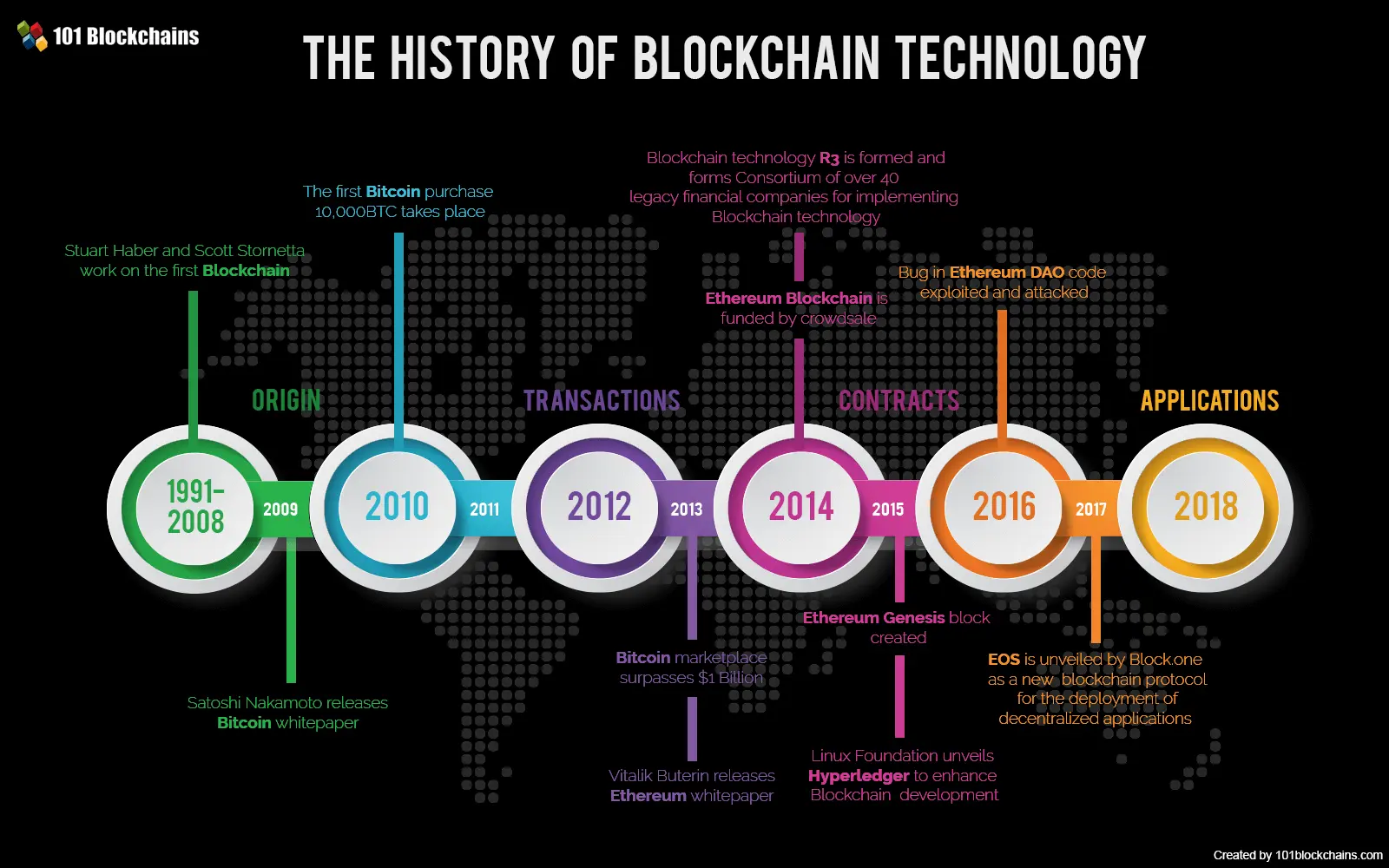
On October 31, 2008, a paper titled “Bitcoin: A Peer-to-Peer Electronic Cash System” was posted to a cryptography mailing list by Satoshi Nakamoto. This whitepaper introduced a revolutionary approach to digital money. It directly addressed the “double-spending” problem inherent in digital assets by proposing a decentralized network that would timestamp transactions into an unbroken chain of cryptographic proofs – the blockchain.
The core financial problem Bitcoin aimed to solve was the need for a trusted third party (like a bank) to mediate electronic transactions. This reliance led to fees, delays, and a lack of privacy, and concentrated power in a single entity. Bitcoin offered an alternative: a system where participants could transact directly with each other, verified by the network itself, eliminating intermediaries and reducing transaction costs. It envisioned a system where monetary policy was algorithmically predetermined and transparent, free from human discretion or political influence.
The First Block and the Genesis Block
Just over two months after the whitepaper’s publication, on January 3, 2009, the Bitcoin network officially launched with the mining of the “genesis block” (Block 0). This block contained a hidden message embedded by Nakamoto: “The Times 03/Jan/2009 Chancellor on brink of second bailout for banks.” This message was a powerful statement, clearly linking Bitcoin’s creation to the financial instability of the time and highlighting its ambition as an alternative to a failing traditional banking system.
The genesis block also included the first 50 Bitcoins, marking the official creation of this new digital asset class. From this moment, Bitcoin began to exist as a verifiable, scarce digital commodity, albeit one with no market value yet assigned. Its initial purpose was purely as a proof-of-concept for a decentralized electronic cash system.
Early Financial Value and Transactions
For its first year, Bitcoin held no inherent monetary value in the traditional sense, trading more as a novelty among a small group of enthusiasts. Mining new blocks was relatively easy, and the rewards (50 BTC per block) were seen more as points than actual money.
The first real-world transaction involving Bitcoin occurred on May 22, 2010, when Laszlo Hanyecz, a programmer from Florida, paid 10,000 Bitcoins for two pizzas. At the time, this amounted to approximately $41. This event, now famously known as “Bitcoin Pizza Day,” was a momentous occasion, demonstrating Bitcoin’s nascent utility as a medium of exchange for goods and services. It was the first instance where a real-world value was attributed to Bitcoin, however small. This marked Bitcoin’s transition from a cryptographic experiment to a functional, albeit niche, digital currency with a tangible, albeit fluctuating, financial dimension.
The Sprouting Ecosystem: Altcoins and Decentralized Finance

Bitcoin’s success quickly inspired a new wave of innovation, leading to the creation of thousands of alternative cryptocurrencies (“altcoins”) and the development of entirely new financial paradigms built on blockchain technology.
Beyond Bitcoin: Litecoin, Namecoin, Peercoin
The open-source nature of Bitcoin meant that anyone could take its code, modify it, and launch their own version. Early altcoins emerged with the aim of improving upon Bitcoin’s perceived shortcomings or offering different features.
- Litecoin (2011): Created by Charlie Lee, a former Google engineer, Litecoin aimed to be “silver to Bitcoin’s gold.” It distinguished itself with faster block generation times (2.5 minutes vs. Bitcoin’s 10 minutes), allowing for quicker transaction confirmations. It also used a different mining algorithm (Scrypt), which initially made it more accessible for GPU miners. From a financial perspective, Litecoin offered a vision of a complementary digital currency, potentially better suited for smaller, everyday transactions.
- Namecoin (2011): Namecoin was the first fork of Bitcoin and introduced the concept of a decentralized domain name system (DNS). Financially, it demonstrated that blockchain technology could be used for more than just money – it could secure unique digital identities and property rights, offering an alternative to traditional certificate authorities and domain registrars.
- Peercoin (2012): Peercoin pioneered the “Proof of Stake” (PoS) consensus mechanism alongside “Proof of Work” (PoW). Instead of solely relying on computational power, PoS allowed users to “stake” their coins to validate transactions, offering a more energy-efficient and potentially scalable alternative. This innovation was a significant financial development, proposing a different model for coin issuance and network security, with implications for investor incentives and the distribution of wealth within a decentralized network.
These early altcoins expanded the financial imagination, showing that blockchain could be customized for different economic applications and introduce varied monetary policies and incentive structures.
Ethereum’s Innovation: Smart Contracts and Programmable Money
While early altcoins largely focused on variations of digital cash, Ethereum, launched in 2015 by Vitalik Buterin, represented a paradigm shift. Ethereum introduced the concept of “smart contracts” – self-executing contracts with the terms of the agreement directly written into lines of code.
This innovation transformed the financial landscape by allowing developers to build decentralized applications (dApps) on the Ethereum blockchain. It introduced the idea of “programmable money,” where financial logic could be automated without intermediaries. This paved the way for:
- Decentralized Finance (DeFi): Financial services like lending, borrowing, trading, and insurance could operate autonomously on the blockchain, eliminating traditional banks and financial institutions. This drastically reduced costs and increased accessibility for a global user base.
- Tokens and ICOs: Ethereum’s ERC-20 token standard made it easy to create new digital assets. This led to Initial Coin Offerings (ICOs), a new, albeit often unregulated, method for startups to raise capital by issuing their own tokens to investors. ICOs allowed a broader range of investors to participate in early-stage projects, bypassing traditional venture capital.
Ethereum moved cryptocurrency beyond merely being an alternative to fiat currency, establishing it as a foundational technology for a vast ecosystem of financial services.
ICOs and Early Investment Mania
The period around 2017 saw an explosion in Initial Coin Offerings (ICOs), primarily driven by the ease of launching tokens on the Ethereum network. Companies, often with little more than a whitepaper and a promise, could raise millions of dollars from investors worldwide. This was a direct manifestation of blockchain technology’s power to democratize fundraising and investment.
From a financial perspective, ICOs offered unprecedented opportunities for retail investors to get in on the ground floor of potentially disruptive projects. However, the lack of regulation also led to widespread speculation, scams, and projects with unsustainable business models, resulting in significant investor losses when the market subsequently corrected. Despite the volatility and risks, the ICO boom demonstrated the immense financial appetite for decentralized innovation and the disruptive potential of blockchain-based fundraising, forcing regulators worldwide to take notice of this new, rapidly evolving financial asset class.
Maturation and Mainstream Financial Integration
From its humble beginnings, cryptocurrency has evolved from a fringe technology to a significant, albeit still volatile, component of the global financial conversation. This maturation involves increased institutional engagement and an evolving regulatory landscape.
Institutional Adoption and Investment Vehicles
Initially dismissed by traditional finance, cryptocurrencies, particularly Bitcoin, have increasingly attracted institutional interest. Major corporations, asset managers, and even some sovereign wealth funds have begun to allocate portions of their portfolios to digital assets. This shift is driven by a recognition of cryptocurrencies as a new asset class with unique diversification benefits and potential for significant returns.
Key developments include:
- Exchange-Traded Funds (ETFs): The approval of Bitcoin spot ETFs in various jurisdictions has provided traditional investors with regulated and accessible avenues to gain exposure to Bitcoin without directly holding the asset. These vehicles integrate cryptocurrency into established financial markets, making it easier for financial advisors and institutional investors to participate.
- Corporate Balance Sheets: Companies like MicroStrategy have made substantial investments in Bitcoin, holding it as a treasury asset. This signals a growing belief in Bitcoin as a store of value and an inflation hedge, akin to digital gold.
- Custodial Services: Traditional financial giants have launched or acquired cryptocurrency custody solutions, providing the secure storage and management of digital assets for institutional clients, addressing a critical concern for large-scale investors.
This institutional embrace marks a significant step towards legitimizing cryptocurrency as a serious financial instrument, moving it beyond individual speculation into structured investment strategies.
Regulatory Scrutiny and Consumer Protection
As the cryptocurrency market has grown in size and complexity, so has the attention of global regulators. Governments and financial authorities are grappling with how to classify, regulate, and oversee this new asset class. The goal is often multi-faceted: to protect consumers and investors, prevent illicit activities (like money laundering and terrorist financing), maintain financial stability, and foster innovation responsibly.
Regulatory responses vary widely across jurisdictions, ranging from outright bans in some countries to comprehensive regulatory frameworks in others. Key areas of focus include:
- Classification: Determining whether cryptocurrencies are commodities, securities, or currencies influences which existing laws apply.
- Taxation: Governments are establishing clear guidelines for the taxation of cryptocurrency transactions, capital gains, and income.
- Licensing: Requiring cryptocurrency exchanges and service providers to obtain licenses and adhere to anti-money laundering (AML) and know-your-customer (KYC) regulations.
- Stablecoins: Increased scrutiny on stablecoins, digital assets pegged to fiat currencies, due to their potential systemic financial impact.
The evolving regulatory landscape is crucial for the long-term stability and integration of cryptocurrencies into the global financial system, aiming to strike a balance between innovation and risk mitigation.
The Future of Money: DeFi, CBDCs, and Beyond
The journey that began with Bitcoin’s whitepaper has profoundly reshaped the dialogue around the future of money. Decentralized Finance (DeFi) continues to push the boundaries of financial innovation, creating transparent, permissionless, and efficient alternatives to traditional banking services. This rapidly growing sector of over $100 billion in total value locked demonstrates the immense potential for financial disintermediation.
Simultaneously, the rise of cryptocurrencies has prompted central banks worldwide to explore Central Bank Digital Currencies (CBDCs). While distinct from decentralized cryptocurrencies, CBDCs represent central banks’ recognition of the shift towards digital payments and the need to modernize national monetary systems. These will be centrally controlled digital versions of national currencies, aiming to combine the efficiency of digital payments with the stability and trust of fiat money.
From a single whitepaper in 2008, cryptocurrency has evolved into a multifaceted financial ecosystem, influencing payment systems, investment strategies, and monetary policy globally. Its origins were rooted in a desire for financial autonomy and trustlessness, principles that continue to drive its ongoing development and its profound impact on the future of global finance.