
The simple question, “When did Costco first open?” serves as an intriguing gateway into the foundational story of one of the world’s most successful and distinctive retail brands. Far from being a mere historical footnote, the origin story of Costco Wholesale is a masterclass in brand building, strategic positioning, and the cultivation of an enduring corporate identity. Understanding its inception, the key figures involved, and the early decisions made reveals how a brand, now synonymous with bulk value and a unique shopping experience, meticulously crafted its DNA from day one. This deep dive into Costco’s genesis is not just about a date on a calendar; it’s about the deliberate choices that forged a brand known for its unwavering commitment to its members, its employees, and its distinct value proposition.

The Formative Years: Unpacking Costco’s Original Brand Vision
Every iconic brand has a beginning, a moment when its core identity is first sketched out. For Costco, this period was characterized by a clear vision to disrupt traditional retail and establish a new paradigm rooted in efficiency and membership-driven value. The brand wasn’t merely born; it was strategically conceived to offer something different.
The Seattle Roots: Costco Wholesale’s Inception
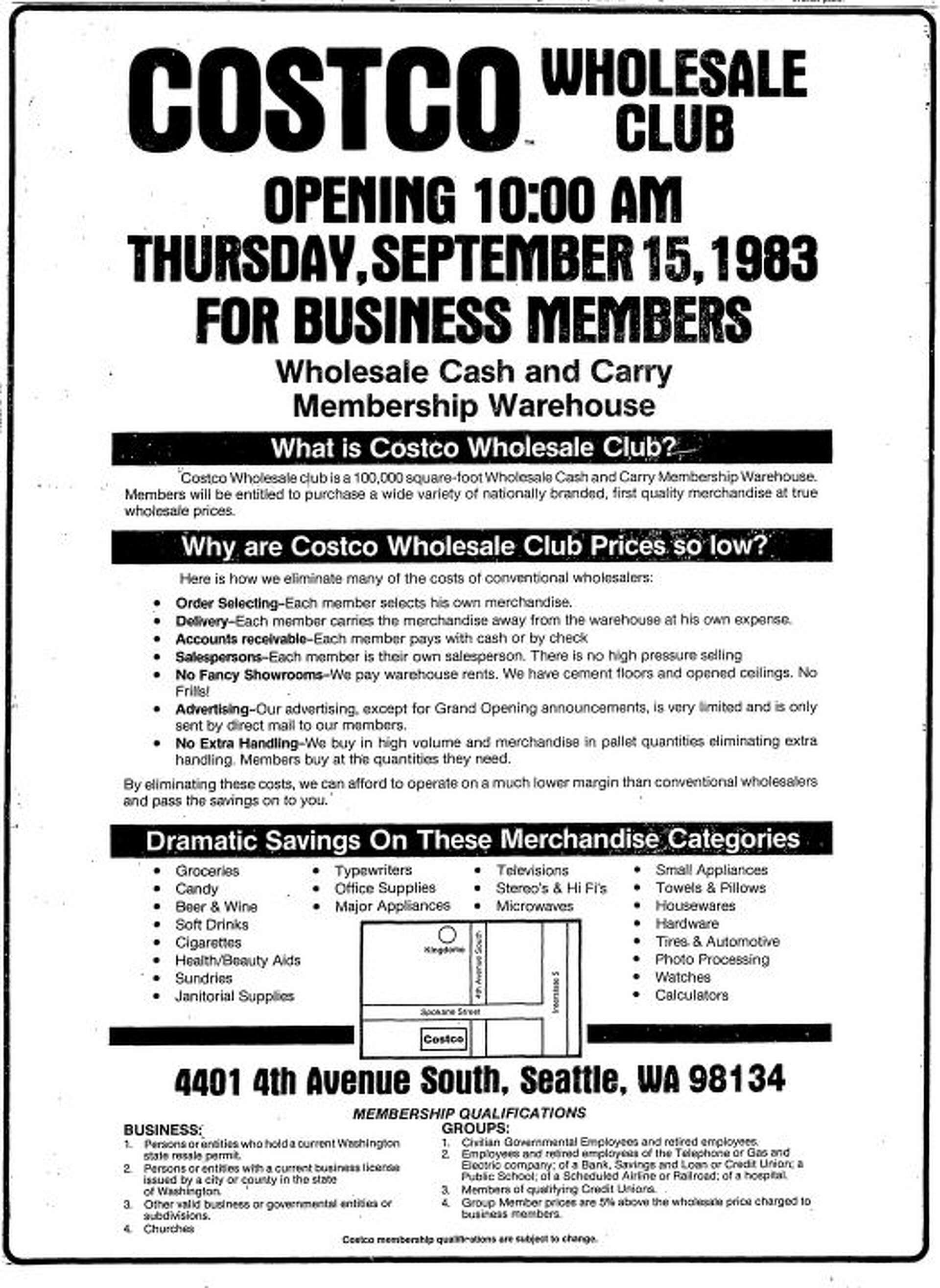
Costco Wholesale Corporation officially opened its first warehouse in Seattle, Washington, on September 15, 1983. This was not a random opening but a deliberate launch spearheaded by founders James Sinegal and Jeffrey Brotman. From this initial location, the brand began to articulate its distinct identity. The decision to open in Seattle, a hub of innovation and a burgeoning market, spoke to an ambition to quickly establish a strong regional presence before contemplating broader expansion. The very architecture and layout of that first warehouse—sparse, industrial, focused on product rather than aesthetics—was itself a brand statement, signaling an emphasis on utility and cost-efficiency that would become a hallmark of the Costco experience. The brand sought to communicate, even in its physical form, that every effort was made to minimize overhead and pass savings directly to the customer.
Pioneering a Membership Model: Early Brand Differentiators
From its inception, Costco’s brand strategy was predicated on a revolutionary concept: the membership model. Unlike conventional retailers, Costco didn’t just invite customers; it enrolled members. This wasn’t merely a transactional detail; it was a foundational element of the brand’s identity and its unique relationship with its clientele. The annual membership fee created an immediate barrier to entry but, more importantly, fostered a sense of exclusivity and belonging. It implied a covenant: in exchange for this fee, members were guaranteed access to unparalleled value, high-quality products, and a curated shopping experience. This model served several strategic brand purposes. It built a loyal customer base, generated a predictable revenue stream independent of sales, and reinforced the brand’s commitment to its “members-only” promise, distinguishing it sharply from competitors. The membership card became a symbol of smart shopping and access to a premium, yet value-driven, club.
The Mastermind Duo: Sinegal and Brotman’s Strategic Acumen
The brand DNA of Costco is inextricably linked to its co-founders, James Sinegal and Jeffrey Brotman. Their combined vision and leadership were instrumental in shaping the early brand strategy and ethos. Sinegal, with his extensive background in wholesale and retail, brought operational expertise and an unyielding focus on value and efficiency. He famously championed a philosophy of low markups, a restricted product selection (SKUs), and a relentless pursuit of quality, believing that these principles would ultimately build customer trust and loyalty. Brotman, a savvy businessman and attorney, provided the strategic framework and legal grounding necessary to build a robust corporate entity. Their synergy ensured that the brand’s promises—quality, value, and a superior shopping experience—were not just marketing slogans but deeply embedded operational directives. The founders’ commitment to fair employee wages and benefits also became a silent, yet powerful, aspect of the Costco brand, contributing to a positive internal culture that radiated outwards to its customer service and overall brand perception.
The Precursor and the Paradigm Shift: Price Club’s Brand Legacy
While Costco’s 1983 opening is its specific birthdate, its brand story cannot be fully told without acknowledging its influential predecessor, Price Club. This earlier venture laid much of the groundwork for the warehouse club model, significantly shaping the strategic landscape into which Costco would emerge and eventually merge.
Sol Price: The Architect of the Warehouse Club Concept
The true pioneer of the warehouse club concept was Sol Price, who founded Price Club in San Diego, California, in 1976. Price Club was revolutionary, daring to challenge conventional retail wisdom by offering bulk products at deeply discounted prices to businesses and, later, to select consumers who paid a membership fee. Sol Price’s brand vision was one of unadulterated value and efficiency, stripping away the frills of traditional retail to focus solely on getting goods to customers at the lowest possible cost. His approach to merchandising, inventory management, and even store design—raw, warehouse-like environments—was a bold brand statement that prioritized function over form. He demonstrated that there was a massive market for a brand that delivered uncompromising value, even if it meant foregoing the perceived comforts of a typical supermarket or department store.
Innovating Value: Price Club’s Contribution to Retail Branding
Price Club’s innovation wasn’t just in its operational model; it was in its creation of a new value proposition that redefined retail branding. It successfully branded “bulk buying” and “membership” as pathways to significant savings, cultivating a perception of savvy shopping among its members. The brand built trust by consistently delivering on its promise of low prices for quality goods, often bypassing traditional distributors to buy directly from manufacturers. This direct-to-consumer approach, albeit through a membership club, became a powerful brand differentiator. Price Club showed that a strong brand could be built on utility, trust, and undeniable savings, rather than just aspirational marketing or premium aesthetics. It effectively carved out a new niche, proving that consumers were willing to pay for access to a brand that genuinely prioritized their financial benefit.
Setting the Stage for Consolidation: A Shared Brand Philosophy
The success of Price Club not only validated the warehouse club model but also created a competitive landscape where similar brands began to emerge. Costco, founded seven years later, adopted many of Price Club’s core tenets, including the membership structure, bulk sales, and a focus on efficiency. This shared philosophical foundation meant that while they were initially competitors, their brand identities were remarkably aligned in their commitment to value. This alignment would ultimately make their future merger not just financially logical but also a brand-harmonious move. Both brands, in their early stages, built reputations for disrupting the status quo and empowering consumers with greater purchasing power, setting the stage for a powerful consolidation of shared brand principles.
A Strategic Merger: Forging the Modern Costco Brand Identity
The individual journeys of Costco Wholesale and Price Club culminated in one of retail’s most significant mergers, an event that profoundly shaped the modern Costco brand and cemented its place as a global leader. This was more than a business deal; it was a strategic consolidation of brand strengths and values.
The 1993 Unification: Price/Costco’s Joint Brand Strength

In 1993, Costco Wholesale and Price Club merged to form Price/Costco. This union was a pivotal moment, combining the strengths of the two largest and most successful warehouse club brands. From a brand perspective, the merger created an immediate synergy. Price Club brought its pioneering legacy and an established customer base in California, while Costco contributed its strong presence in the Pacific Northwest and a rapidly expanding footprint. The combined entity, though initially bearing both names, immediately projected an image of market dominance and unparalleled reach in the warehouse club sector. The ‘Price/Costco’ brand signified not just size, but also the best practices from both organizations—a brand promising the pioneering spirit of Sol Price combined with the refined operational excellence of James Sinegal. This dual branding was a testament to respecting the individual legacies while signaling a unified, stronger future.
Re-establishing the Identity: The Evolution to Costco Wholesale Corporation
While Price/Costco represented a formidable force, the brand eventually streamlined its identity. In 1997, the company officially rebranded as Costco Wholesale Corporation, divesting its Price Club retail operations (which were sold to Smart & Final) and fully embracing the Costco name. This re-establishment was a critical branding decision. It simplified the corporate identity, reducing potential confusion and allowing for a singular, cohesive global brand message. The transition wasn’t about erasing Price Club’s legacy but about consolidating all the successful strategies and values under a single, strong banner that was already well-recognized and respected. The Costco brand, by this point, had cultivated a reputation for consistency, quality, and exceptional value, making it a natural choice for the unified entity’s future. This move allowed the company to speak with one voice to its members, investors, and the broader market.
Consolidating Core Values: Membership, Quality, and Value as Brand Pillars
The merger and subsequent rebranding solidified the core brand pillars that define Costco today. The membership model, inherited from both companies, became an even more entrenched part of the brand’s identity, symbolizing access to an exclusive club of smart shoppers. The brand’s unwavering commitment to quality was reinforced through rigorous product selection and the introduction of its private label. And the promise of unparalleled value, often highlighted by low markups and competitive pricing, became the bedrock of its marketing and customer loyalty efforts. These three pillars—membership, quality, and value—were not just business strategies; they became the ethical and operational standards that defined the Costco brand, differentiating it from traditional retailers and earning the trust and allegiance of millions worldwide. The brand consciously chose to stand for these principles, making them non-negotiable aspects of its identity.
Beyond the Opening Date: How Founding Principles Shaped an Enduring Brand
The story of Costco’s opening is merely the prologue to a much larger narrative of brand endurance and strategic evolution. The principles established in its early days, and solidified through its growth and mergers, continue to influence its brand strategy and global impact.
The Kirkland Signature: A Cornerstone of Brand Trust
Perhaps one of the most powerful manifestations of Costco’s commitment to quality and value is its private label, Kirkland Signature. Launched in 1995 (after the merger, but reflecting the foundational principles), Kirkland Signature isn’t just a house brand; it’s a sub-brand that has achieved an almost iconic status, often rivaling or even surpassing national brands in perceived quality and value. Its name pays homage to Costco’s original corporate headquarters in Kirkland, Washington, subtly connecting the brand’s heritage to its ongoing promise. The success of Kirkland Signature lies in its ability to instill immense trust; members associate it with stringent quality controls and superior performance at a fraction of the cost of premium brands. This private label reinforces the broader Costco brand message: that the company is so confident in its standards that it puts its own name on a vast range of products, from olive oil to clothing, effectively becoming a brand within a brand that underpins overall credibility.
Operational Excellence and Employee Welfare: Internal Brand Ambassadors
Costco’s brand strength isn’t solely built on external marketing; it’s deeply rooted in its internal culture and operational philosophy. The founders’ early commitment to employee welfare, including competitive wages, generous benefits, and opportunities for advancement, has cultivated a highly motivated and loyal workforce. These employees, in turn, become invaluable brand ambassadors. Their positive interactions with members, their pride in the company, and their efficiency in operations directly contribute to the overall member experience. A brand that treats its employees well often garners respect from its customers, and Costco has leveraged this principle masterfully. The low employee turnover and high morale translate into consistent, high-quality service, which is a critical, albeit often unseen, component of the Costco brand promise. This internal brand consistency ensures that the external brand image of quality and value is consistently delivered at every touchpoint.
Cultivating Customer Loyalty: The Membership Brand Experience
Ultimately, Costco’s founding principles have culminated in an unparalleled level of customer loyalty, a testament to its successful brand strategy. The membership model, initially a differentiator, has evolved into a sophisticated mechanism for fostering deep engagement. Members don’t just shop at Costco; they are part of a community. The brand consistently delivers “treasure hunt” experiences, surprising members with unexpected high-value items, and maintains a famously lenient return policy, all of which reinforce trust and satisfaction. The annual renewal rate, consistently in the high 80s, speaks volumes about the brand’s ability to continually meet and exceed member expectations. This loyalty isn’t accidental; it’s the direct result of a brand that consistently delivers on its promises of quality, value, and a unique shopping experience, proving that a strong brand relationship is built on consistent delivery and mutual benefit.
The Global Reach: Exporting a Distinctive Brand Strategy
From its single warehouse opening in Seattle, the Costco brand has grown into a global retail behemoth, demonstrating the universal appeal and adaptability of its core brand strategy. The story of its expansion is one of careful consideration and consistent adherence to its foundational identity.
Adapting the Model: International Brand Expansion
Costco’s global expansion began just years after its founding and gained significant momentum post-merger. The brand’s entry into diverse international markets, from Canada and Mexico to the UK, Japan, Korea, Australia, and now China, required a nuanced approach to branding. While the core tenets of membership, bulk value, and limited SKUs remained constant, the brand strategically adapted to local tastes and regulatory environments. For instance, product assortments were tweaked to include local favorites, and marketing communications were culturally tailored. However, the fundamental brand promise of “warehouse club for smart shoppers” remained universal. This global strategy proved that a strong brand identity, built on clear value propositions, can transcend cultural boundaries when executed with sensitivity and intelligence, demonstrating the robustness of Costco’s initial brand design.
Maintaining Brand Consistency: Global Recognition and Trust
Despite its vast international footprint, Costco has meticulously maintained a consistent brand identity across its global operations. The look and feel of a Costco warehouse, the layout of its aisles, the selection of products, and even the “treasure hunt” experience are remarkably similar whether you’re in Seattle, Seoul, or Sydney. This global consistency is a cornerstone of its brand strength, fostering immediate recognition and trust among international travelers and expatriates, and conveying a dependable quality standard to local populations. The Kirkland Signature brand, too, has become a global emblem of value, reinforcing a unified brand message worldwide. This unwavering consistency in delivering its brand promise has been crucial in building a universally recognized and respected retail brand.
The Future of a Foundational Brand: Innovation and Adaptation
As Costco looks to the future, its brand strategy remains rooted in the foundational principles established when it first opened in 1983. The question of “when” it opened is less about a static date and more about the dynamic legacy it initiated. The brand continues to innovate, exploring e-commerce integration, expanding its services (like optical and pharmacy), and refining its product selection, all while staying true to its core identity of membership value. The challenge for Costco, like all enduring brands, is to adapt to evolving consumer behaviors and market dynamics without diluting the very essence that made it successful. By consistently referencing its origins—its commitment to members, quality, and unparalleled value—Costco is poised to sustain its powerful brand identity for generations to come, proving that a strong foundation is the ultimate predictor of enduring brand success.
aViewFromTheCave is a participant in the Amazon Services LLC Associates Program, an affiliate advertising program designed to provide a means for sites to earn advertising fees by advertising and linking to Amazon.com. Amazon, the Amazon logo, AmazonSupply, and the AmazonSupply logo are trademarks of Amazon.com, Inc. or its affiliates. As an Amazon Associate we earn affiliate commissions from qualifying purchases.