
For much of its early existence, Bitcoin was a niche interest relegated to cryptography mailing lists and obscure internet forums. To the traditional financial world, it was an experiment—or worse, a toy. However, the trajectory of Bitcoin from a zero-value digital curiosity to a multi-trillion-dollar asset class is marked by several distinct “explosions.” When people ask when Bitcoin “blew up,” they are usually referring to one of three specific eras: the retail frenzy of 2017, the institutional adoption of 2021, or the early speculative peak of 2013.
Understanding these milestones is essential for any modern investor. Bitcoin did not blow up once; it has undergone a series of rhythmic expansions, each driven by different economic catalysts, market participants, and global financial conditions.
1. The 2013 Genesis: The First Taste of Four-Digit Value
Before 2013, Bitcoin was largely unknown to the general public. It was a period characterized by “early adopters”—tech enthusiasts and libertarians who saw it as a theoretical alternative to central banking. However, 2013 was the year that Bitcoin first proved it could achieve significant financial scale.
The Rise to $1,000
In early 2013, Bitcoin was trading at roughly $13. By April, it had surged to over $260 before experiencing a violent crash. But the true “blow up” occurred in the final months of the year. Driven by increased media attention and the growth of the Mt. Gox exchange, Bitcoin’s price skyrocketed, crossing the $1,000 mark for the first time in November 2013. This was the moment the financial world realized that decentralized digital currency could carry actual purchasing power.
The Role of Market Scarcity
The 2013 surge taught investors the first major lesson in Bitcoin economics: the power of a capped supply. With only a few million coins in circulation at the time, even a small influx of capital caused an exponential move in price. While the subsequent “crypto winter” of 2014–2015 saw prices drop by over 80%, the precedent had been set. Bitcoin was no longer a hobby; it was a speculative financial asset.
2. The 2017 Retail Mania: Bitcoin Becomes a Household Name
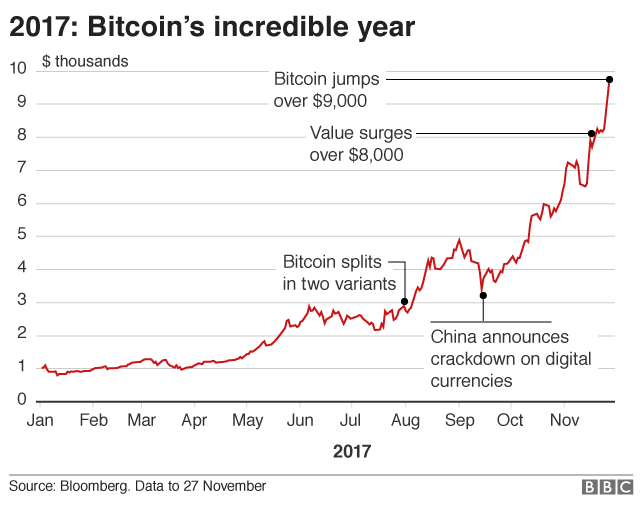
If 2013 was the proof of concept, 2017 was the year Bitcoin entered the cultural zeitgeist. This is the period most people remember as the definitive “blow up.” It was the era of the retail investor, fueled by FOMO (Fear Of Missing Out) and the accessibility of mobile trading apps like Coinbase.
From $1,000 to $20,000
Bitcoin began 2017 at approximately $900. What followed was an unprecedented 2,000% rally that culminated in a peak near $20,000 in December. This growth was not driven by banks or hedge funds, but by ordinary people. Thanksgiving dinner tables across the globe were dominated by conversations about digital gold. This “blow up” was significant because it forced regulators and traditional financial institutions to acknowledge that Bitcoin wasn’t going away.
The ICO Craze and Altcoin Correlation
During this period, Bitcoin acted as the “reserve currency” for the burgeoning Initial Coin Offering (ICO) market. Investors bought Bitcoin to trade for other speculative tokens, creating a massive liquidity loop that pumped the entire crypto market cap to then-unseen heights. This era established Bitcoin as the “macro” indicator for the entire digital asset industry—a role it still plays today. When Bitcoin blew up in 2017, it dragged the rest of the financial world’s curiosity along with it.
3. The 2020–2021 Institutional Era: Bitcoin as “Digital Gold”
The most recent and perhaps most significant “blow up” occurred during the global economic shift of the COVID-19 pandemic. Unlike 2017, which was driven by retail speculation, the 2021 rally was characterized by institutional validation and a shift in the underlying investment thesis.

The Inflation Hedge Narrative
As central banks around the world engaged in unprecedented quantitative easing and stimulus spending, the “Money” niche saw a shift in how Bitcoin was perceived. It was no longer just a speculative tech play; it was being marketed as “Digital Gold”—a hedge against the debasement of fiat currency. In late 2020, Bitcoin broke its previous all-time high of $20,000, eventually soaring to nearly $65,000 in April 2021 and $69,000 in November 2021.
Corporate Balance Sheets and ETFs
This era saw the entry of major players. MicroStrategy began buying billions of dollars worth of Bitcoin as a primary treasury reserve asset. Tesla briefly accepted it as payment and added it to its balance sheet. Perhaps most importantly, the financial infrastructure matured with the launch of the first Bitcoin futures ETFs (Exchange Traded Funds) in the United States. This “blow up” was structural, moving Bitcoin from the fringes of the internet to the balance sheets of publicly traded companies and the portfolios of conservative institutional investors.
4. Why Bitcoin Blows Up: The Mechanics of the Halving Cycle
To understand when Bitcoin blows up, one must understand why it happens in cycles. Bitcoin’s “monetary policy” is written into its code, creating a predictable supply-and-demand squeeze roughly every four years.
The Halving Phenomenon
Every 210,000 blocks (roughly four years), the reward given to Bitcoin miners is cut in half. This “Halving” reduces the daily production of new Bitcoin, creating a supply shock. Historically, Bitcoin has “blown up” in the 12 to 18 months following a halving event.
- The 2012 Halving led to the 2013 peak.
- The 2016 Halving led to the 2017 peak.
- The 2020 Halving led to the 2021 peak.
Behavioral Finance and Market Sentiment
Beyond the code, the “blow up” phases are psychological. In the world of finance, Bitcoin is a high-beta asset, meaning it moves more aggressively than the broader market. When liquidity is high and interest rates are low, investors seek high-growth opportunities. Bitcoin’s volatility, often seen as a risk, becomes its greatest feature during these periods, allowing for the massive, parabolic price moves that capture the world’s attention.
5. Investing Strategy: Managing the Aftermath of a Blow-Up
For those looking at Bitcoin through the lens of personal finance, the “blow up” is a double-edged sword. While the upward moves create life-changing wealth, they are invariably followed by “drawdowns”—periods where the price can drop 50% to 80%.
Dollar-Cost Averaging (DCA) vs. Timing the Market
Because Bitcoin’s explosions are so rapid and often unpredictable, many financial advisors suggest a Dollar-Cost Averaging (DCA) strategy. By investing a fixed amount of money at regular intervals, an investor avoids the psychological trap of “buying the top” during a blow-up phase. This approach focuses on long-term accumulation rather than short-term speculation.
Risk Management in a High-Volatility Niche
Bitcoin has matured significantly, but it remains a volatile asset. A professional approach to “Money” management suggests that Bitcoin should be viewed as a component of a diversified portfolio. The goal for most investors is not necessarily to catch the exact moment Bitcoin blows up, but to have exposure to the asset class so they can benefit from its long-term deflationary properties and its increasing role in the global financial system.
Conclusion: A History of Successive Explosions
If you are looking for a single date when Bitcoin “blew up,” there isn’t one. Instead, Bitcoin has blown up repeatedly, each time reaching a higher plateau of price, adoption, and legitimacy. It blew up in 2013 when it first hit $1,000 and proved it had value. It blew up in 2017 when it hit $20,000 and became a retail phenomenon. And it blew up in 2021 when it reached nearly $70,000 and earned a spot on corporate balance sheets.
For the modern investor, the question isn’t just “when did it blow up,” but rather “what drives the next cycle?” As the bridge between traditional finance and digital assets continues to strengthen, Bitcoin’s history of explosive growth suggests that while the volatility is far from over, its role as a fundamental pillar of the digital-age financial system is only just beginning.
aViewFromTheCave is a participant in the Amazon Services LLC Associates Program, an affiliate advertising program designed to provide a means for sites to earn advertising fees by advertising and linking to Amazon.com. Amazon, the Amazon logo, AmazonSupply, and the AmazonSupply logo are trademarks of Amazon.com, Inc. or its affiliates. As an Amazon Associate we earn affiliate commissions from qualifying purchases.