
Amazon (AMZN) stands as a colossus in the modern economy, a company that has not only revolutionized retail but also profoundly impacted cloud computing, digital advertising, and entertainment. For individual and institutional investors alike, its stock performance has been a subject of intense scrutiny and often, significant gains. As its share price soared over decades, questions about its accessibility and market dynamics inevitably led to discussions around stock splits. Understanding when and why AMZN undertook these corporate actions is crucial for comprehending its stock’s historical journey and what these events signify for investors.
A stock split is a corporate action in which a company divides its existing shares into multiple shares. While the number of shares increases, the total value of shares held by any investor remains the same because the price per share is reduced proportionally. Companies typically execute stock splits to make their shares more attractive to a broader base of investors, particularly retail investors, by lowering the per-share price. It also enhances liquidity, making it easier to buy and sell shares. Amazon, despite its phenomenal growth, has a unique history with stock splits, characterized by an early flurry followed by a long hiatus, and a recent, highly anticipated event.
A Historical Look at AMZN’s Stock Splits
Amazon’s journey from an online bookstore to a global diversified conglomerate is mirrored in the trajectory of its stock. Its early years were marked by rapid expansion, investor excitement, and multiple adjustments to its share structure to maintain accessibility.
The Early Years: Rapid Growth and Initial Splits (1998-1999)
Amazon went public on May 15, 1997, at an initial public offering (IPO) price of $18.00 per share. The company’s stock quickly became a darling of the dot-com boom, experiencing meteoric growth as the internet gained traction and e-commerce started to reshape consumer habits. This rapid appreciation in share price quickly made the stock appear expensive to many individual investors, prompting a series of splits in its formative years.
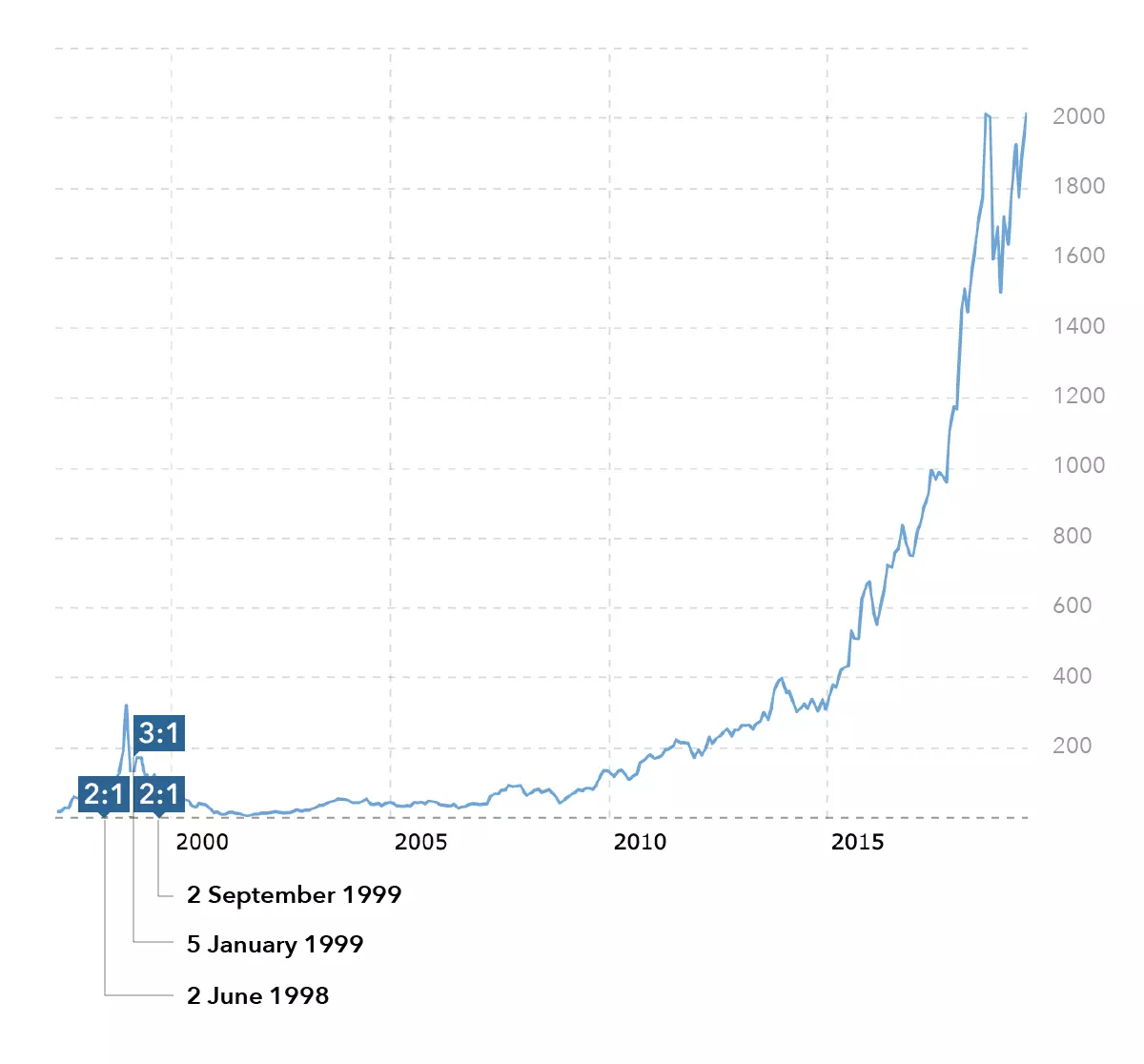
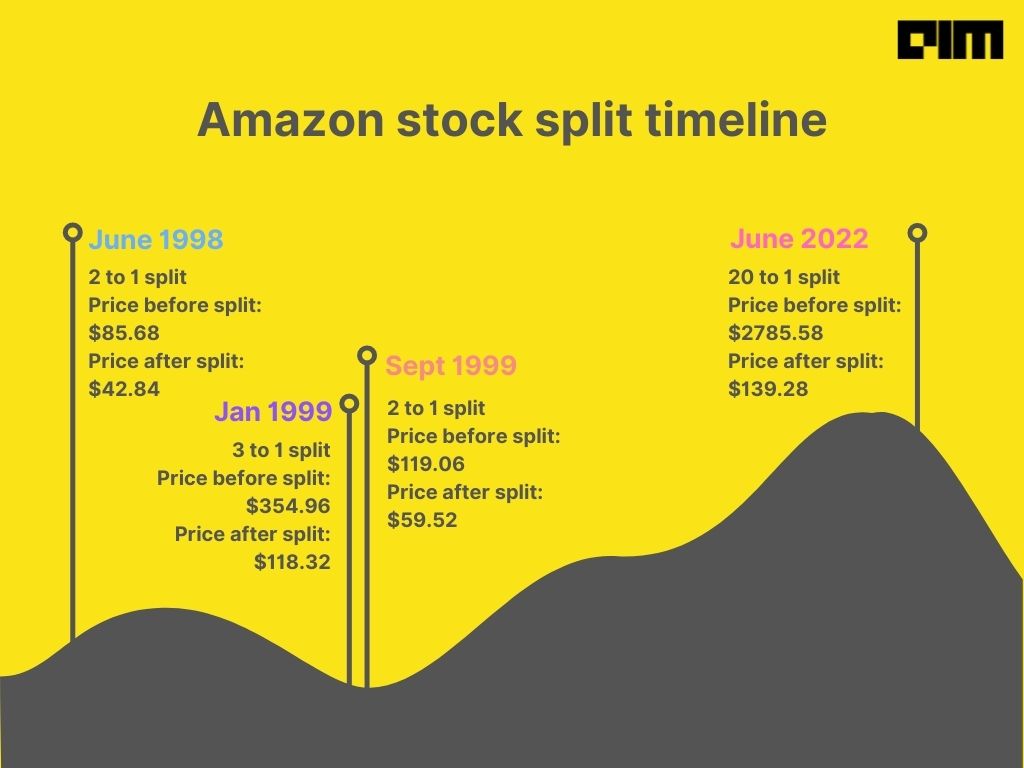
The first instance of AMZN undergoing a stock split occurred on June 2, 1998. This was a 2-for-1 split, meaning that for every one share an investor owned, they received an additional share, effectively doubling their share count while halving the price per share. If, for example, a share was trading at $100 before the split, it would trade at $50 immediately after. This move was intended to make the stock more affordable and liquid, appealing to a wider range of potential shareholders.
Less than a year later, as Amazon’s growth trajectory continued its steep ascent, the company executed another split. On January 5, 1999, Amazon announced a 3-for-1 stock split. This was a more aggressive move, tripling the number of shares outstanding and dividing the share price by three. The rationale remained consistent: continued strong performance had driven the stock price up once more, and another split was deemed necessary to maintain its appeal and accessibility in the burgeoning internet market.
Remarkably, within the same calendar year, Amazon decided on yet another split. On September 1, 1999, a second 2-for-1 stock split took effect. This demonstrated the explosive growth and investor enthusiasm surrounding Amazon during the late 1990s. With three splits in just over a year, Amazon’s management was clearly keen on keeping its stock price within a range perceived as “affordable” and attractive for both retail investors and employee stock option programs. These early splits had a significant cumulative effect, turning each initial share into 12 shares (2x3x2=12), drastically reducing the per-share cost from its pre-split levels and democratizing access to the company’s ownership.
The Long Hiatus: Two Decades Without a Split (1999-2022)
Following the flurry of activity in 1998 and 1999, Amazon entered an extended period of over two decades without any further stock splits. This was a remarkable phenomenon, especially considering the company’s unprecedented growth during this time. Amazon expanded far beyond books, establishing dominance in e-commerce, pioneering cloud computing with Amazon Web Services (AWS), entering digital advertising, and building a vast logistics network. Its share price soared from tens of dollars to thousands, making it one of the most expensive individual stocks on major exchanges.
Several factors contributed to this long hiatus. Firstly, some companies and investors began to embrace the idea of a high-priced stock as a badge of prestige and a signal of success. A high per-share price could, in some views, attract a more serious, long-term investor base rather than short-term traders. Secondly, the financial landscape evolved significantly. The advent of fractional share trading, offered by many brokerages, allowed retail investors to buy portions of expensive shares, mitigating the accessibility issue that traditionally drove stock splits. An investor could, for instance, buy $500 worth of Amazon stock, even if a full share cost several thousand dollars. This innovation reduced the urgency for companies like Amazon to split their stock purely for accessibility reasons. Despite these trends, the sheer magnitude of Amazon’s share price – which at its peak before the 2022 split approached $3,500 – still presented psychological and practical barriers for many investors and for aspects of employee compensation planning.
The Groundbreaking 2022 Stock Split
After more than 22 years, Amazon finally announced its fourth stock split, a move that captured significant attention across the financial world. This decision signaled a shift in strategy and a recognition of changing market dynamics.
The Rationale Behind the 2022 Split
On March 9, 2022, Amazon’s Board of Directors approved a 20-for-1 forward stock split, which was subsequently approved by shareholders at the annual meeting on May 25, 2022. The company clearly articulated its reasons for the split, echoing the historical drivers but updated for the modern context. The primary stated goal was to make AMZN shares more accessible to a broader base of investors. At nearly $3,500 per share, Amazon’s stock was prohibitively expensive for many retail investors to buy even a single share, despite the availability of fractional shares. By reducing the per-share price significantly, the company aimed to increase its appeal and allow more individuals to participate in its ownership.
Another key motivation was to facilitate employee stock compensation. A lower per-share price provides greater flexibility in awarding equity compensation to employees, as it allows for more granular allocation of shares without resorting to complex fractional calculations. This is particularly important for a company of Amazon’s size, which relies heavily on stock-based compensation to attract and retain top talent. The decision also came at a time when other tech giants, such as Apple, Tesla, and Alphabet (Google’s parent company), had also recently undertaken stock splits, suggesting a broader trend among high-growth, high-value companies to address their elevated share prices.
Details of the 2022 20-for-1 Split
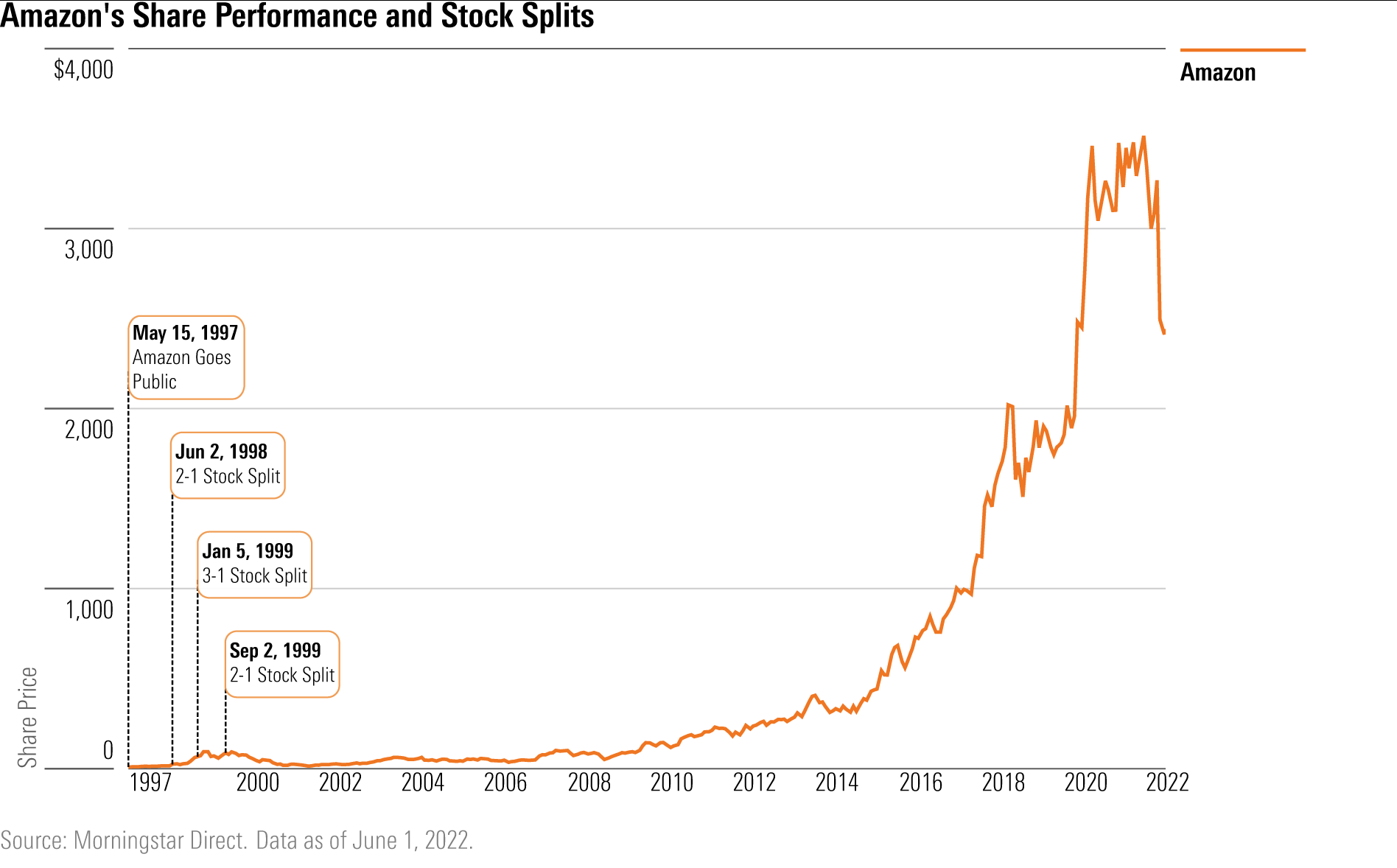
The 2022 split was a substantial 20-for-1 forward stock split. This meant that for every single share of Amazon stock an investor held, they received 19 additional shares. The shares began trading on a post-split basis at the new, lower price on June 6, 2022. The record date for shareholders entitled to receive the split shares was May 27, 2022.
The impact was immediate and dramatic. If, for instance, AMZN stock closed at $3,000 per share on the trading day before the split, it would open at approximately $150 per share ($3,000 / 20) on June 6, 2022. An investor who owned 10 shares worth $30,000 before the split would now own 200 shares, still worth $30,000. The number of outstanding shares increased twentyfold, while the earnings per share and dividends per share (if Amazon paid them) would decrease proportionally. This adjustment also applied to options contracts, where the number of contracts would increase by a factor of 20, and the strike price would be divided by 20. The proportional adjustment ensured that the total value of an investor’s holding in Amazon, and the fundamental value of the company, remained precisely the same.
The Implications and Investor Perspective
Stock splits, while purely cosmetic from an accounting perspective, carry significant psychological and practical implications for investors and the broader market.
Psychological and Accessibility Benefits
The most immediate benefit of a stock split, especially one as large as Amazon’s 20-for-1, is the dramatic reduction in per-share price. This makes the stock appear “cheaper” and more attainable to a wider audience, particularly individual retail investors who might be deterred by a four-figure share price. Psychologically, owning more shares, even if each share is worth less, can feel more substantial to some investors. Increased accessibility can lead to greater trading liquidity, as more market participants are able to buy and sell shares more easily. This can, in turn, potentially lead to increased trading volume, which is often seen as a positive market indicator.
Furthermore, a lower share price could make AMZN eligible for inclusion in certain stock market indices like the Dow Jones Industrial Average (DJIA). The DJIA is a price-weighted index, meaning stocks with higher prices have a greater influence on the index’s value. Historically, companies with very high share prices have been excluded because their inclusion would disproportionately skew the index. While Amazon is not currently a component of the DJIA, the split removed one significant barrier to its potential inclusion in the future.
The Non-Impact on Fundamental Value
It is critical for investors to understand that a stock split, despite the buzz it generates, does not fundamentally change the value of the company or an investor’s stake in it. A stock split is akin to cutting a pizza into more slices. Whether you cut a pizza into 8 slices or 16 slices, you still have the same amount of pizza. Similarly, if an investor owns 1% of Amazon before a 20-for-1 split, they still own 1% of Amazon afterward; they just own 20 times more shares, each worth one-twentieth of its previous value.
The company’s market capitalization (the total value of all its outstanding shares) remains unchanged. Its underlying business operations, revenue, profits, debt, and future growth prospects are all unaffected by a stock split. Therefore, a stock split should not be a primary reason to buy or sell a stock. Savvy investors look beyond such cosmetic adjustments to the core financial health and future potential of the business.
Dividend Considerations
For companies that pay dividends, a stock split will proportionally reduce the dividend per share. For example, a 2-for-1 split would halve the dividend per share. However, the total dividend income an investor receives remains the same. Amazon, notably, has never paid a dividend to its shareholders. Instead, it has historically reinvested all its profits back into the business to fuel its aggressive growth initiatives. Therefore, the stock splits have had no direct impact on dividend payments for AMZN shareholders.
Beyond the Split: What Investors Should Consider
While the timing and details of AMZN’s stock splits are interesting historical facts, investors should always prioritize the company’s fundamentals and their own financial strategy.
Amazon’s Business Fundamentals
A stock split is a corporate finance mechanism; it does not alter Amazon’s vast and complex business empire. When considering an investment in AMZN, individuals should focus on its diverse revenue streams: the dominant e-commerce platform, the highly profitable Amazon Web Services (AWS) cloud computing division, its rapidly growing advertising business, and its expanding subscription services (Amazon Prime). Investors should analyze Amazon’s market position, competitive landscape, innovation pipeline, profitability margins, and management’s strategic vision. These are the true drivers of long-term shareholder value, far more than any stock split.
Long-Term Investing Strategy
Investing solely based on the occurrence of a stock split is generally not a sound strategy. While splits can occasionally lead to a short-term bump in stock price due to increased retail interest, this effect is often temporary. A robust investing strategy involves understanding personal financial goals, risk tolerance, and investment horizon. For a company like Amazon, which has demonstrated immense long-term growth potential, a buy-and-hold strategy, potentially employing dollar-cost averaging, may be more appropriate for many investors. Diversification across various asset classes and industries also remains a cornerstone of prudent financial planning.
In conclusion, Amazon’s stock has undergone four splits in its history: three quick ones in its early growth phase in 1998 and 1999, and a highly anticipated 20-for-1 split in 2022 after a long hiatus. Each split was a strategic move aimed at enhancing stock accessibility and liquidity. While these events have made AMZN shares more affordable for individual investors, they are ultimately accounting adjustments that do not alter the fundamental value of the company. Astute investors will continue to focus on Amazon’s robust business model, its innovative spirit, and its long-term growth prospects as the primary determinants of its investment appeal.
aViewFromTheCave is a participant in the Amazon Services LLC Associates Program, an affiliate advertising program designed to provide a means for sites to earn advertising fees by advertising and linking to Amazon.com. Amazon, the Amazon logo, AmazonSupply, and the AmazonSupply logo are trademarks of Amazon.com, Inc. or its affiliates. As an Amazon Associate we earn affiliate commissions from qualifying purchases.