
Amazon (AMZN) stands as a titan in the global economy, a company that has redefined e-commerce, cloud computing, and digital entertainment. Its journey from an online bookstore to a multinational conglomerate has been marked by phenomenal growth, attracting a vast investor base. For many, investing in Amazon has been a pathway to significant wealth creation. However, as a company’s stock price soars, its accessibility to individual investors can diminish. This is where the strategic financial maneuver of a stock split comes into play. Understanding when Amazon stock split and, more importantly, why these events occurred provides crucial insights into corporate financial strategy, market dynamics, and investor psychology.
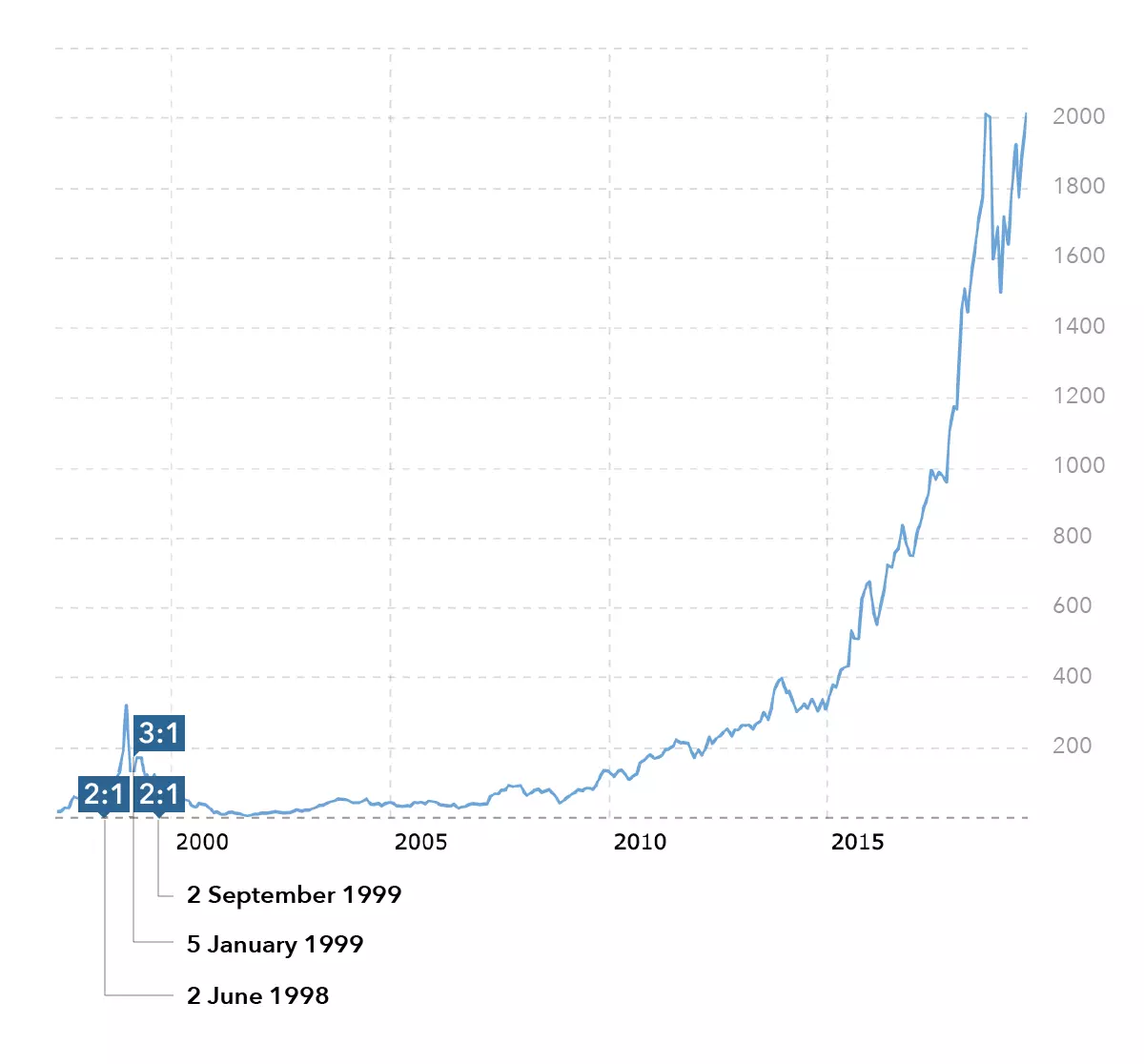
Amazon has executed a total of four stock splits throughout its public history. The first three occurred rapidly during the company’s nascent stages in the late 1990s, a period of explosive growth for the nascent internet giant. After a long hiatus of nearly 23 years, Amazon once again announced a significant stock split in 2022, signaling a new chapter in its financial accessibility. These events, though seemingly simple adjustments of share counts and prices, carry deeper implications for market liquidity, investor perception, and a company’s strategic positioning within the financial landscape.
Understanding Stock Splits: The Mechanics Behind Share Adjustments
Before delving into Amazon’s specific history, it’s essential to grasp the fundamental nature of a stock split. Often misunderstood by novice investors, a stock split is not an event that inherently changes the fundamental value of a company but rather a re-division of its existing equity.
What is a Stock Split?
A stock split is a corporate action in which a company divides its existing shares into multiple shares. For instance, in a 2-for-1 split, each shareholder who previously owned one share will now own two shares. Crucially, while the number of shares doubles, the price per share is simultaneously halved. If a stock traded at $100 before a 2-for-1 split, it would trade at $50 after the split. This adjustment ensures that the total market capitalization (the total value of all outstanding shares) of the company remains unchanged immediately after the split. Shareholders receive more shares, but each share is worth proportionally less, maintaining the same total value of their investment. The underlying ownership percentage of the company also remains identical.
Why Do Companies Execute Stock Splits?
The primary motivation behind a stock split is often to make shares more affordable and accessible to a broader base of investors, particularly retail investors. When a stock price climbs to hundreds or even thousands of dollars per share, it can become prohibitive for individuals with smaller investment budgets to purchase even a single share. By lowering the per-share price, a split can increase the stock’s liquidity and broaden its appeal, potentially leading to increased trading volume and a more diverse shareholder base.
Beyond accessibility, other strategic reasons include:
- Enhanced Liquidity: A lower share price can encourage more active trading, making it easier for investors to buy and sell shares.
- Psychological Appeal: A stock trading at $100 might feel more “affordable” or “attractive” to some investors than one trading at $1000, even if the underlying company value is the same.
- Employee Compensation: For companies that frequently award stock options or restricted stock units (RSUs) to employees, a lower share price can make these compensation packages more flexible and divisible, allowing for more granular grants.
- Potential Index Inclusion: For mega-cap companies, a lower share price could make them more viable candidates for inclusion in price-weighted indices like the Dow Jones Industrial Average (DJIA), where high individual stock prices can disproportionately skew the index’s movements.
Investor Implications: Perception vs. Value
For seasoned investors, a stock split is often seen as a neutral event in terms of intrinsic value. It’s akin to exchanging a $100 bill for two $50 bills – the total value hasn’t changed. However, the psychological impact can be significant. The perception of affordability can indeed draw in new investors, leading to increased demand and potentially driving up the stock price over the long term, assuming the company’s fundamentals remain strong. It can also signal management’s confidence in future growth, as splits are typically undertaken by companies whose stock has performed exceptionally well. Nevertheless, investors must always remember that a split does not alter the company’s earnings, assets, liabilities, or market capitalization; it’s purely an accounting adjustment of the share structure.
Amazon’s Stock Split History: Key Dates and Ratios
Amazon’s journey through the stock market has included four distinct stock splits, each occurring at pivotal moments in the company’s growth trajectory.
The Early Splits: Establishing Accessibility (1998, 1999)
Amazon executed its first three stock splits within a remarkably short period during the dot-com boom, reflecting the intense and rapid appreciation of its shares in its early years as a public company.
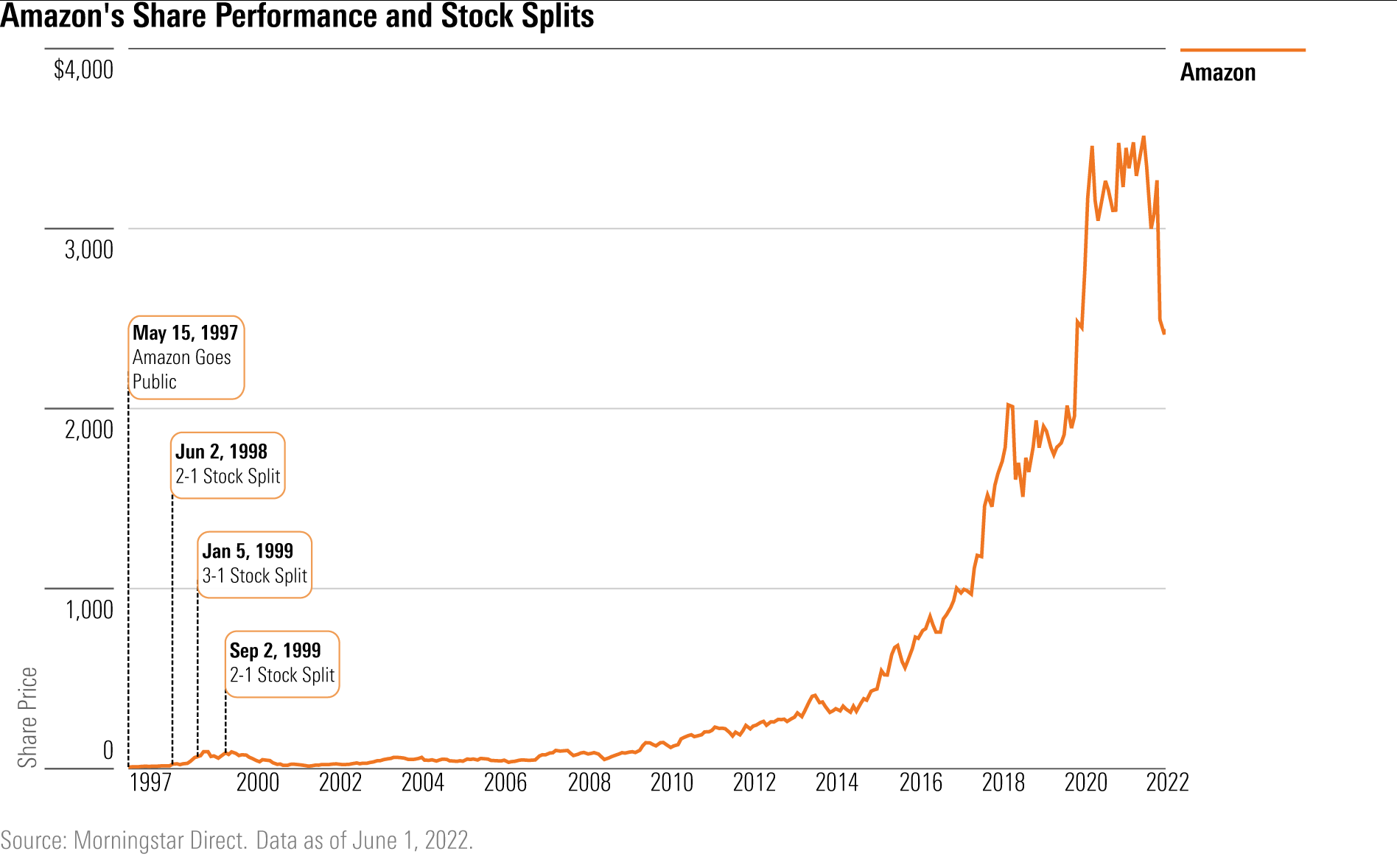
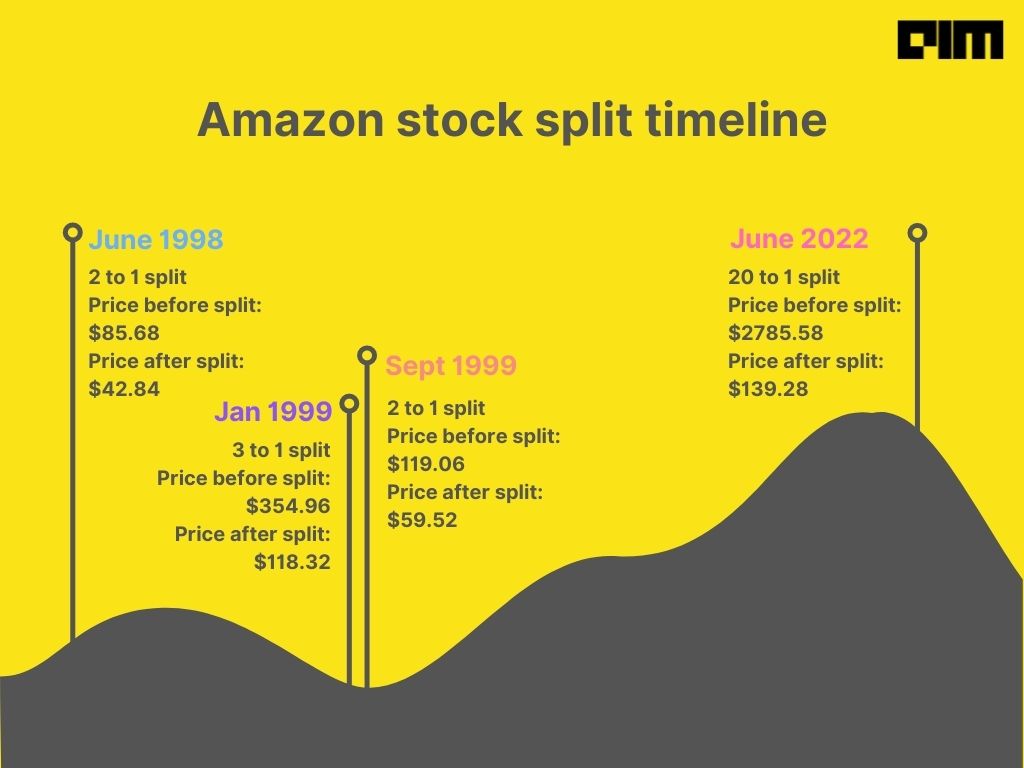
- June 2, 1998: 2-for-1 Split. Just a year after its IPO in May 1997, Amazon’s stock price had surged. This first split aimed to make the shares more approachable as the company began to solidify its position in the burgeoning e-commerce landscape.
- January 5, 1999: 3-for-1 Split. Less than a year later, Amazon’s growth continued unabated, pushing its stock price higher once more. This more substantial split further broadened access to the company’s equity during a period of feverish investor interest in internet stocks.
- September 1, 1999: 2-for-1 Split. The final split of the 20th century for Amazon again quickly followed, underscoring the extraordinary momentum and investor demand for AMZN stock as the millennium approached. These three early splits were instrumental in bringing Amazon’s stock within reach of a wider investor base, fueling its liquidity and establishing its presence among retail investors.
The Long Hiatus: Growth Without Division (1999-2022)
Following the flurry of splits in the late 1990s, Amazon entered a prolonged period of nearly 23 years without any further share adjustments. During this time, the company’s stock price steadily climbed from tens of dollars to eventually over $3,000 per share. This era saw Amazon expand far beyond books, dominating e-commerce, launching Amazon Web Services (AWS) to revolutionize cloud computing, entering digital streaming with Prime Video, and developing groundbreaking technologies like Alexa.
The decision not to split during this long period was likely a strategic choice, potentially to project an image of a high-value, premium stock, or perhaps because the per-share price, while high, wasn’t seen as a significant barrier for institutional investors or for existing shareholders who were comfortable with the accumulating value of their fewer, higher-priced shares. However, by the early 2020s, with its share price consistently hovering well above $3,000, the argument for increased accessibility began to gain traction once more.
The Recent 2022 Split: A New Era of Retail Investment
- June 6, 2022: 20-for-1 Split. After more than two decades, Amazon announced and executed its fourth and most significant stock split to date. This 20-for-1 split drastically reduced the per-share price from around $2,400 to approximately $120 (based on prices leading up to the split). This move was widely anticipated by market observers and met with a largely positive reaction from the investment community. It represented a clear strategic shift, aiming to re-engage with retail investors and potentially unlock new avenues for employee compensation and index inclusion.
The Rationale Behind Amazon’s 2022 Stock Split
The 2022 stock split by Amazon was a meticulously planned corporate action, driven by several strategic objectives, primarily focused on democratizing access to its shares and enhancing its financial flexibility.
Enhancing Retail Investor Accessibility
The most prominent reason cited for the 2022 split was to make Amazon’s stock more affordable for individual investors. When a single share costs thousands of dollars, it creates a psychological and practical barrier for many retail traders and long-term individual investors, particularly those building diversified portfolios with limited capital. By bringing the share price down to a more “normal” range (around $120 post-split), Amazon aimed to invite a wider pool of smaller investors to participate in its growth story. This increased accessibility can lead to greater liquidity and potentially broader market interest. While fractional share investing has mitigated some of this barrier, a full share at a lower price still holds a certain appeal.
Facilitating Employee Compensation
Amazon, like many tech giants, heavily relies on equity-based compensation, primarily through Restricted Stock Units (RSUs), to attract and retain top talent. When the stock price is extremely high, granting a meaningful number of RSUs can become challenging or result in very small, indivisible units. A lower per-share price allows for more flexible and granular grants of stock awards to employees, making the compensation structure more efficient and motivational. This is particularly relevant for a company like Amazon with hundreds of thousands of employees globally.
Potential Inclusion in the Dow Jones Industrial Average
While not explicitly stated as the primary reason, a common speculation surrounding Amazon’s 2022 split was its potential to pave the way for inclusion in the Dow Jones Industrial Average (DJIA). The DJIA is a price-weighted index, meaning stocks with higher per-share prices have a greater influence on the index’s movements. Prior to the split, Amazon’s stock price was prohibitively high for Dow inclusion, as it would have disproportionately dominated the index. By lowering its share price, Amazon became a more suitable candidate, offering the possibility of greater institutional visibility and potentially attracting investment from funds benchmarked against the DJIA. While inclusion is not guaranteed, the split removed a significant hurdle.
Impact and Analysis of Amazon’s Stock Splits
The effects of a stock split, especially for a company of Amazon’s magnitude, can ripple through various aspects of the market, influencing trading patterns, investor sentiment, and even broader market dynamics.
Short-Term Market Reaction and Volatility
In the immediate aftermath of a stock split announcement and execution, it’s common to observe increased trading volume. The anticipation of the split, followed by the actual adjustment, often generates heightened interest. Historically, stocks tend to see a short-term price bump after a split, driven by the increased accessibility and positive investor sentiment. However, this is largely a psychological phenomenon rather than a fundamental change in value. Any sustained price appreciation post-split is ultimately driven by the company’s underlying financial performance and future growth prospects, not the split itself. Market volatility around the split date can also be observed as investors adjust their positions or new investors enter the market.
Long-Term Growth Trajectory and Investor Sentiment
For long-term investors, the impact of a stock split is often neutral or mildly positive. It facilitates greater liquidity and can attract a wider investor base, which might contribute to a more stable stock performance over time. The fact that a company is splitting its stock after significant appreciation is often interpreted as a sign of management’s confidence in continued growth and a positive outlook for the business. This can bolster investor sentiment and reinforce the perception of the company as a strong, enduring investment. Amazon’s splits, especially the 2022 one, align with this narrative, signaling continued ambition for market leadership across its diverse segments.
Beyond the Split: Amazon’s Enduring Value Proposition
While stock splits are interesting financial events, they are ultimately a mechanism to adjust share price, not a driver of fundamental value. The true value proposition of Amazon for investors remains anchored in its core businesses: the dominance of Amazon Web Services (AWS) in cloud computing, the unparalleled scale of its e-commerce operations, the growth of its advertising business, and its ventures into new technologies and markets. Investors should look beyond the per-share price and focus on Amazon’s financial health, innovation pipeline, competitive advantages, and long-term growth strategy when making investment decisions. The splits are merely tools to facilitate investment in an enterprise built on innovation and market capture.
Investing in High-Value Stocks Post-Split
For investors considering Amazon or other high-value stocks that have undergone splits, there are several key considerations and strategies rooted in sound financial principles.
Fractional Shares: An Alternative to Splits
Even before Amazon’s 2022 split, the rise of fractional share investing offered a partial solution to the high per-share price problem. Many brokerages now allow investors to buy a portion of a share rather than a whole share. For instance, an investor could buy $100 worth of Amazon stock, regardless of its per-share price. This democratizes investing by allowing individuals with smaller budgets to participate in high-priced stocks without waiting for a split. While a split makes whole shares more affordable, fractional shares offer continuous accessibility, making the “affordability” argument for splits somewhat less urgent than in previous decades.
Due Diligence: Evaluating Fundamentals Over Share Price
The most crucial advice for any investor is to conduct thorough due diligence. A stock split might change the per-share price, but it does not change the company’s intrinsic value, earnings per share (on a split-adjusted basis), or future prospects. Investors should always evaluate a company based on its financial statements, growth potential, competitive landscape, management quality, and valuation metrics (like P/E ratio, price-to-sales, free cash flow). Don’t be swayed by a lower share price alone; focus on whether the company’s fundamentals justify the investment at any price. For Amazon, this means analyzing AWS’s profitability, the trajectory of e-commerce sales, advertising revenue growth, and capital expenditure efficiency.
The Broader Market Context for Growth Stocks
Amazon’s stock splits are part of a broader trend among successful growth companies. Historically, companies like Apple, Tesla, and Alphabet have also executed significant stock splits to enhance accessibility. These moves often occur during periods of sustained growth and market leadership, reflecting a company’s confidence in its continued expansion. For investors, understanding this context means recognizing that a split can be a positive signal, but it should be viewed as one data point among many. The decision to invest should always be anchored in a comprehensive understanding of the company’s position within its industry, its economic moat, and its potential for long-term value creation in the dynamic global economy.
In conclusion, Amazon’s stock splits, particularly the most recent 20-for-1 adjustment in 2022, represent strategic financial maneuvers aimed at increasing accessibility, enhancing liquidity, and potentially positioning the company for greater index inclusion. While these events are significant for market structure and investor psychology, they serve as a reminder that the true enduring value of a company like Amazon lies in its innovative spirit, market dominance, and consistent ability to generate robust financial performance, factors that savvy investors prioritize above all else.
aViewFromTheCave is a participant in the Amazon Services LLC Associates Program, an affiliate advertising program designed to provide a means for sites to earn advertising fees by advertising and linking to Amazon.com. Amazon, the Amazon logo, AmazonSupply, and the AmazonSupply logo are trademarks of Amazon.com, Inc. or its affiliates. As an Amazon Associate we earn affiliate commissions from qualifying purchases.