
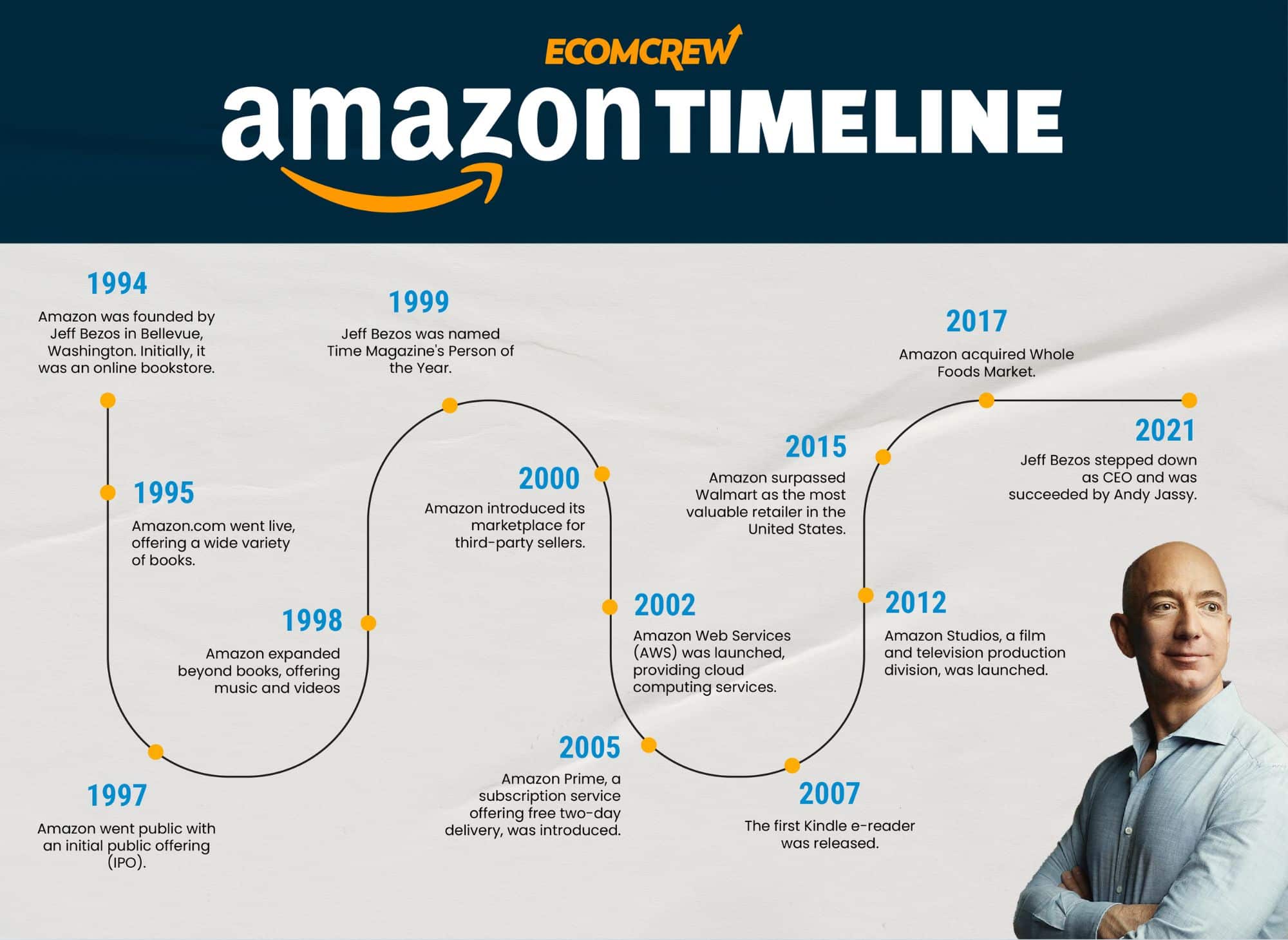
When we ask, “When did Amazon start?” the chronological answer is straightforward: July 5, 1994. However, from a technological perspective, the answer is far more complex. Amazon’s inception wasn’t merely the opening of an online bookstore; it was the birth of a new paradigm in software engineering, data management, and scalable infrastructure. Founded by Jeff Bezos in a garage in Bellevue, Washington, Amazon began as a disruptor of physical retail, but it quickly evolved into the backbone of the modern internet.
To understand Amazon’s journey is to understand the evolution of the web itself. From its early days as a collection of basic scripts to its current status as a pioneer in generative AI and cloud computing, Amazon’s timeline is a masterclass in technological adaptation.
The Inception: Reimagining Commerce through the World Wide Web
In 1994, the internet was a fledgling landscape populated by hobbyists and academics. Bezos, a former Wall Street executive, recognized a staggering statistic: web usage was growing at 2,300% per year. The decision to start with books was a calculated technological choice rather than a literary one. Books were easy to catalog, durable to ship, and represented a massive database of individual SKUs that no physical store could ever house.
The 1994 Framework: Cadabra and the Digital Bookstore
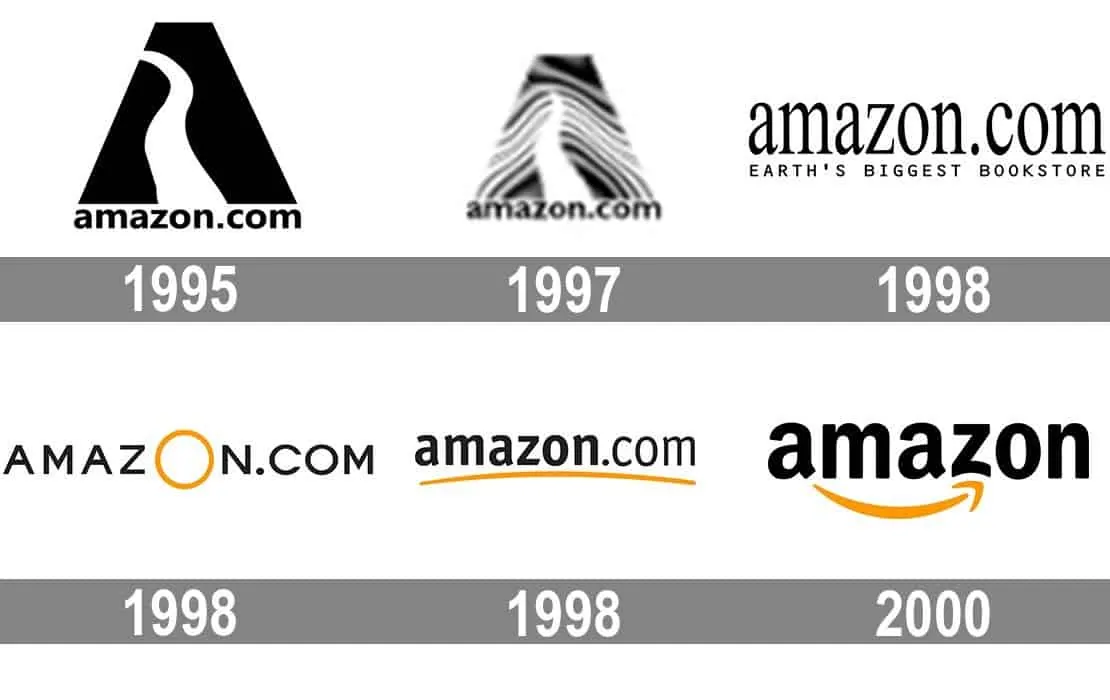
Originally incorporated as “Cadabra, Inc.,” the company was rebranded to Amazon—named after the world’s largest river—to reflect a vision of vastness. The early technology stack was rudimentary by today’s standards but revolutionary for the time. Running on servers that would now be outperformed by a modern smartphone, Amazon’s first website was built using C, C++, and Perl. These languages allowed the team to create a dynamic interface that could query a database of titles and process orders in real-time, a feat that felt like science fiction to consumers accustomed to mail-order catalogs.
Building the First Scalable E-commerce Architecture
One of the primary technological hurdles in 1995, when the site officially went live, was the “Relational Database Management System” (RDBMS). As Amazon grew, the sheer volume of customer data and inventory began to strain traditional database structures. The engineers had to pioneer ways to handle massive transactional loads while maintaining “ACID” (Atomicity, Consistency, Isolation, Durability) compliance. This early struggle with scale laid the groundwork for Amazon’s future innovations in distributed systems and NoSQL databases.
The Infrastructure Revolution: From Logistics to AWS
By the early 2000s, Amazon faced a crisis of its own making. Its monolithic software architecture—a giant, tangled mess of code—was preventing developers from moving quickly. To survive, the company had to undergo a radical technological transformation. This pivot did more than just save Amazon; it created the modern cloud.
Solving the Scaling Crisis: The Birth of Service-Oriented Architecture (SOA)
Around 2002, Jeff Bezos issued a famous mandate: all teams were required to expose their data and functionality through service interfaces (APIs). This transition to a Service-Oriented Architecture (SOA) meant that different parts of the website—the shopping cart, the search bar, the recommendation engine—became independent “microservices.” This decoupled architecture allowed Amazon to scale its tech stack horizontally, meaning they could add more servers rather than just bigger ones. This was the moment Amazon stopped being a “website” and started becoming a “platform.”
Externalizing the Backend: How AWS Changed the Software Industry
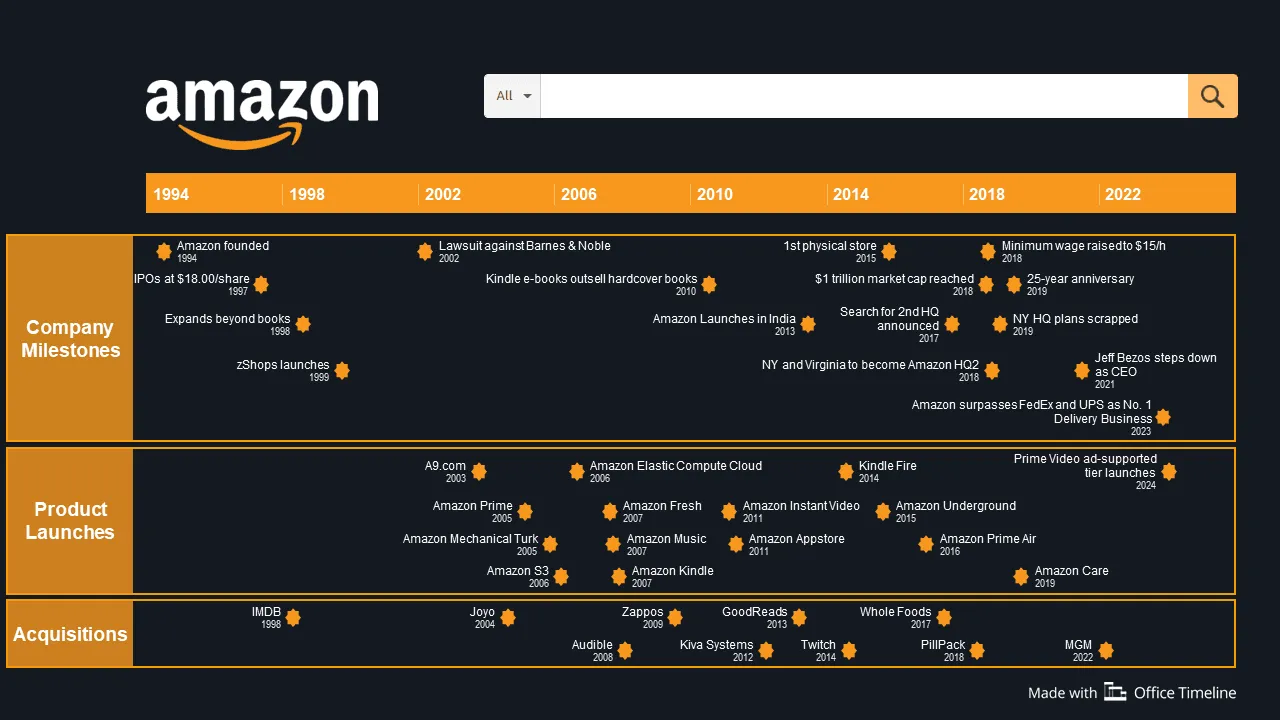
In 2006, Amazon realized that the robust, scalable infrastructure they had built to run their own retail business could be sold to others. This led to the launch of Amazon Web Services (AWS), starting with Simple Storage Service (S3) and Elastic Compute Cloud (EC2).
For the tech world, this was a “Big Bang” moment. It democratized high-level computing power. Startups no longer needed to buy expensive physical servers; they could rent them from Amazon by the hour. Today, AWS powers a significant portion of the internet, from Netflix to government agencies, proving that the technology Amazon built to sell books was its most valuable product all along.
Hardware and Ecosystem Integration: Kindle, Fire, and Echo
As Amazon mastered the cloud, it turned its attention to the physical interface between the user and the digital world. The company’s foray into hardware was not about selling gadgets; it was about creating a seamless technological ecosystem that integrated software, services, and physical devices.
The Kindle Disruption: Digitizing the Printed Word
Launched in 2007, the Kindle was a significant technological gamble. It utilized E-ink technology to mimic the appearance of paper, which required a completely different display driver logic compared to LCD screens. More importantly, the Kindle was the first device to feature “Whispernet”—a free 3G cellular connection that allowed users to download books in under 60 seconds without a computer or a Wi-Fi hotspot. This integration of hardware and ubiquitous connectivity redefined the publishing industry and set the stage for Amazon’s hardware dominance.
Ambient Intelligence: Alexa and the Evolution of Voice UI
In 2014, Amazon introduced the Echo, powered by the Alexa Voice Service. This represented a massive leap in Natural Language Processing (NLP) and Far-Field Voice Recognition. Alexa was a software achievement disguised as a speaker. By using “Beamforming” technology and sophisticated noise-reduction algorithms, Amazon’s engineers solved the problem of hearing a human voice over background music or cross-room chatter. The Echo shifted the tech industry’s focus toward “Ambient Intelligence,” where the computer is no longer a device you hold, but an invisible layer within your environment.
The AI-First Era: Logistics and Generative Horizons
Today, Amazon is no longer just an e-commerce or cloud company; it is an AI company. Artificial intelligence and machine learning (ML) are woven into every aspect of its operations, from the robots in its warehouses to the algorithms that predict what you want to buy before you know it yourself.
Machine Learning in the Fulfillment Center
The modern Amazon fulfillment center is a marvel of robotics and computer vision. Following the acquisition of Kiva Systems in 2012, Amazon deployed thousands of autonomous mobile robots that move entire shelving units to human pickers. These robots use sophisticated mapping algorithms and sensor fusion to navigate crowded floors with centimeter-level precision. This technological integration has reduced order processing times from hours to minutes, enabling the “Prime” delivery speeds that have become a global standard.
Bedrock and the Future of Enterprise AI
In the current landscape of Generative AI, Amazon is positioning itself as the foundational layer for businesses. Through Amazon Bedrock, part of AWS, the company provides developers with access to High-Performing Foundation Models (FMs) from leading AI startups and Amazon’s own Titan models. Rather than just building a chatbot, Amazon is building the “foundry” where other companies build their AI applications. This reflects the same strategy used with AWS: take a complex, expensive technology and turn it into a scalable, accessible utility.
Looking Ahead: The Next Frontier of Amazon’s Tech Stack
When we reflect on when Amazon started, we see a trajectory of constant reinvention. What began as a Perl-scripted bookstore has become a pioneer in quantum computing, satellite internet (Project Kuiper), and autonomous delivery drones.
The technological future of Amazon lies in the convergence of these fields. Project Kuiper aims to deploy a constellation of 3,236 satellites in low Earth orbit to provide high-speed broadband to unserved communities, effectively expanding the addressable market for the entire internet. Meanwhile, in the realm of quantum computing, “Amazon Braket” is already allowing researchers to experiment with quantum algorithms on AWS, preparing for a world where traditional silicon reaches its physical limits.
Amazon’s history is a testament to the power of “Long-term Thinking,” one of the company’s core leadership principles. By consistently reinvesting its profits into research and development, Amazon has ensured that it doesn’t just participate in tech trends—it defines them. From the garage in 1994 to the cutting edge of AI and space tech, Amazon remains a company that is, in the words of its founder, “always on Day 1.”
aViewFromTheCave is a participant in the Amazon Services LLC Associates Program, an affiliate advertising program designed to provide a means for sites to earn advertising fees by advertising and linking to Amazon.com. Amazon, the Amazon logo, AmazonSupply, and the AmazonSupply logo are trademarks of Amazon.com, Inc. or its affiliates. As an Amazon Associate we earn affiliate commissions from qualifying purchases.