
The simple act of calculation, once a laborious manual task, has been profoundly transformed by technology. The question “When calculator?” isn’t merely about a specific point in history, but rather a journey through human ingenuity, marked by milestones that redefined our relationship with numbers and data. From rudimentary counting aids to sophisticated artificial intelligence, the calculator, in its myriad forms, has been a cornerstone of technological advancement, driving innovation across every domain. This exploration delves into the technological lineage of calculation, examining its past, present, and the horizon of its future, all within the expansive realm of technology.

The Dawn of Calculation: From Ancient Roots to Mechanical Wonders
The human need to quantify, measure, and predict is as old as civilization itself. Before the advent of electronics, the concept of a “calculator” manifested in vastly different forms, each representing the cutting edge of its era. Understanding “when calculator” truly began requires a look back at these foundational innovations.
Ancient Roots: The Abacus and Early Mechanical Marvels
For millennia, the abacus stood as the preeminent tool for arithmetic. Originating independently in various cultures, including Mesopotamia, China, and Mesoamerica, the abacus enabled complex calculations through the manipulation of beads or counters on rods or grooves. It was a tangible, manual device that extended human mental capacity, allowing for calculations far beyond what could be reliably held in short-term memory. Its enduring legacy lies in demonstrating the power of a structured system to simplify complex numerical operations.
The quest for automation in calculation gained momentum in the 17th century. Visionaries like Wilhelm Schickard, Blaise Pascal, and Gottfried Wilhelm Leibniz independently conceived and built mechanical calculators. Pascal’s “Pascaline” (1642), designed to aid his tax-collector father, could perform addition and subtraction through a series of interlocking gears. Leibniz’s “Stepped Reckoner” (late 17th century) further refined this, capable of multiplication and division using a cylindrical stepped drum, a design element that would influence calculators for centuries. These early machines were intricate clockwork marvels, limited by the precision of their manufacturing but boundless in their conceptual significance. They marked the first definitive step towards automating the calculation process, laying the groundwork for more complex machines.
The Analytical Engine and Early Computing Visions
The 19th century brought forth perhaps the most profound leap in the theoretical foundation of computation: Charles Babbage’s Difference Engine and, more significantly, the Analytical Engine. Though largely conceptual during his lifetime, the Analytical Engine (conceived in the 1830s) was a truly revolutionary design, possessing features uncannily similar to modern computers: a “mill” (CPU) for performing arithmetic, a “store” (memory) for holding numbers, an input mechanism using punched cards, and a printer for output. It was programmable, capable of performing any calculation based on a sequence of instructions.
Babbage’s collaborator, Ada Lovelace, is often credited as the world’s first computer programmer for her insights into the Analytical Engine’s potential, recognizing that it could do more than just pure calculation; it could manipulate symbols according to rules, foreshadowing the vast capabilities of general-purpose computing. While neither of Babbage’s engines was fully realized in his lifetime due to technological and funding limitations, their theoretical elegance provided the architectural blueprint for the digital age, proving that complex sequences of operations could be automated. This visionary work firmly established “when calculator” meant not just a device for sums, but a machine capable of following logic and executing algorithms.
The Digital Revolution: From Desktop to Pocket
The 20th century witnessed the most dramatic acceleration in the evolution of the calculator, propelled by advancements in electronics. The shift from mechanical gears to electronic circuits ushered in an era of unprecedented speed, compactness, and affordability, democratizing computational power.
Transistors and the Birth of Electronic Calculators
The invention of the transistor in 1947 by Bell Labs was a watershed moment. Replacing bulky, heat-generating vacuum tubes, transistors enabled the creation of smaller, more reliable, and energy-efficient electronic devices. This paved the way for the first truly electronic calculators in the 1960s. Early models, like the ANITA Mark VII (1961), were still desktop behemoths, using Nixie tubes for display and operating with discrete transistors. They were expensive and primarily used in scientific and engineering contexts.
However, the rapid development of integrated circuits (ICs) in the 1960s drastically reduced size and cost. By the early 1970s, the first truly portable electronic calculators appeared. Companies like Sharp, Texas Instruments, and Casio became pioneers, bringing handheld devices that could perform basic arithmetic into widespread use. The Intel 4004 microprocessor, originally designed for Busicom’s 1971 calculator, showcased the power of a single chip to handle complex logic, an innovation that would soon power the personal computer revolution. “When calculator” became synonymous with instant, accurate, and personal computation.
Programmable Powerhouses: Scientific and Graphing Calculators
As microelectronics advanced, so did the capabilities of handheld calculators. The mid-1970s saw the introduction of scientific calculators, such as the HP-35 (1972) and Texas Instruments SR-50 (1974). These devices brought trigonometric functions, logarithms, and exponential calculations to students, engineers, and scientists, freeing them from slide rules and cumbersome tables. Their specialized function keys and memory registers marked a significant step beyond basic arithmetic, becoming indispensable tools in education and professional fields.
The 1980s heralded the era of graphing calculators, pioneered by companies like Casio (fx-7000G, 1985) and Texas Instruments (TI-81, 1990). These gadgets could plot equations, perform matrix operations, and even execute simple programs. Graphing calculators transformed mathematics and science education, allowing students to visualize complex concepts and explore “what-if” scenarios dynamically. They were essentially dedicated, portable computers designed specifically for numerical and symbolic manipulation, further expanding the answer to “when calculator” to include advanced data visualization and programming.
Ubiquitous Utility: Calculators in the Palm of Your Hand
Today, the dedicated physical calculator, while still present in classrooms and specialized fields, has largely been integrated into other devices. “When calculator” is now practically “always” because our smartphones, tablets, and computers contain highly sophisticated calculator apps. From the default calculator app on iOS and Android to advanced symbolic manipulation software like Wolfram Alpha or Maple, computation is literally at our fingertips.
These software calculators leverage the immense processing power and connectivity of modern gadgets. They can switch between basic, scientific, and programmer modes, convert units, calculate tips, and even integrate with cloud services for more complex computations. The accessibility and versatility of these apps have made computational power utterly ubiquitous, blurring the lines between a mere calculator and a full-fledged software utility, often enhanced by features like voice input, haptic feedback, and custom interfaces.
Beyond Basic Arithmetic: Specialized Computational Tools
The evolution of the calculator has not just been about miniaturization and ubiquity, but also about specialization. As technology advanced, the underlying principles of calculation were applied to create highly specialized tools addressing specific needs across diverse industries.
Engineering and Scientific Simulations
In engineering and scientific research, calculators transcend simple number crunching. Software tools like MATLAB, Mathematica, and Octave are powerful computational environments that enable complex simulations, data analysis, and algorithm development. Engineers use these platforms to model physical systems, design structures, analyze fluid dynamics, and simulate electronic circuits. Scientists rely on them for processing experimental data, running statistical analyses, and visualizing abstract concepts. These applications push the boundaries of “when calculator” by transforming raw data into actionable insights and predictive models, crucial for innovation in fields from aerospace to biotechnology.
The underlying software algorithms in these tools are far more complex than simple arithmetic. They involve numerical methods, differential equations, finite element analysis, and signal processing, executed at speeds unthinkable just decades ago. These computational tools are not just calculating answers but are integral to the discovery process itself, allowing researchers to explore hypotheses and design solutions virtually before costly physical experimentation.
Financial Modeling and Business Analytics

The financial world, in particular, has been revolutionized by specialized computational tools. From simple interest calculators to sophisticated financial modeling software (like Excel with its vast array of functions, or specialized financial analytics platforms), calculation is at the heart of economic decision-making. Investors use tools to calculate returns on investment, assess risk, and project future earnings. Businesses rely on financial calculators for budgeting, forecasting, cash flow analysis, and valuation.
The advent of fintech apps has further democratized access to these powerful calculators. Users can instantly calculate mortgage payments, retirement savings projections, loan amortizations, and investment growth scenarios directly from their mobile devices. These tools are crucial for personal finance management, allowing individuals to make informed decisions about their money. “When calculator” here translates to “when intelligent financial insight is needed,” providing a clear picture of complex financial landscapes.
Data Science and Statistical Software
The explosion of big data has propelled statistical software and data science platforms to the forefront of computational tools. Programs like R, Python with libraries like NumPy and Pandas, and specialized statistical packages like SPSS or SAS are essentially hyper-advanced calculators for data. They perform complex statistical analyses, regression modeling, hypothesis testing, and machine learning algorithms on massive datasets.
These tools allow data scientists to uncover patterns, make predictions, and extract valuable insights from seemingly disparate information. Whether it’s predicting consumer behavior, optimizing logistics, or identifying disease outbreaks, the computational power behind these platforms far exceeds basic arithmetic. They exemplify how the “calculator” concept has evolved to encompass sophisticated analytical engines capable of transforming raw data into strategic intelligence, making them indispensable in almost every industry today.
The AI Frontier: Calculators Evolving with Intelligence
The ongoing revolution in artificial intelligence and machine learning is fundamentally reshaping the future of computation, pushing the boundaries of what a “calculator” can be. The answer to “when calculator” is increasingly merging with “when intelligent agent.”
Predictive Analytics and Machine Learning Integration
Modern computational tools are no longer just performing calculations based on explicit instructions; they are learning and adapting. Machine learning algorithms are integrated into platforms that predict market trends, forecast weather patterns, diagnose medical conditions, and optimize supply chains. These “calculators” analyze vast amounts of historical data to identify complex patterns and make highly accurate predictions, far beyond the scope of traditional statistical methods.
For instance, an AI-powered financial tool might not just calculate a loan’s interest, but also assess the borrower’s creditworthiness based on millions of data points, dynamically adjusting rates and terms. In manufacturing, predictive maintenance software calculates the likelihood of equipment failure based on sensor data, preventing costly downtime. This integration of intelligence means “when calculator” extends to “when predictive insights are required,” transforming reactive calculation into proactive foresight.
Natural Language Processing for Complex Queries
Another significant development is the ability of computational tools to understand and process natural language. AI models, powered by Natural Language Processing (NLP), can now interpret complex queries, extract relevant information, and perform calculations based on verbal or written input. Virtual assistants like Siri, Google Assistant, and Alexa are prime examples; you can ask them to calculate tips, convert units, or solve equations, and they will respond verbally.
More advanced NLP applications are being integrated into data analysis platforms, allowing users to query complex datasets using plain English, rather than specialized programming languages. This makes powerful computational resources accessible to a much wider audience, democratizing data analysis and removing technical barriers. The calculator is evolving into a conversational partner, making “when calculator” as simple as “when you speak a question.”
The Quantum Leap: Future of Calculation
Looking further into the future, quantum computing promises to redefine the very nature of calculation. Unlike classical computers that store information as bits (0s or 1s), quantum computers use qubits, which can exist in multiple states simultaneously. This allows them to perform certain types of calculations at exponentially faster rates than even the most powerful supercomputers, tackling problems currently considered intractable.
While still in its nascent stages, quantum computing has the potential to revolutionize fields like cryptography, drug discovery, materials science, and complex optimization problems. Imagine a “calculator” that can simulate every possible molecular interaction to design a new drug in minutes, or break complex encryption in seconds. “When calculator” in the quantum era will signify a paradigm shift in our ability to process information and solve humanity’s most challenging problems, pushing the boundaries of computational power into entirely new dimensions.
The Human-Calculator Interface: Accessibility and Ethical Considerations
As computational tools become more powerful and pervasive, the interface between humans and these “calculators” becomes crucial, raising questions of design, dependency, and responsibility.
Designing for Intuition and Efficiency
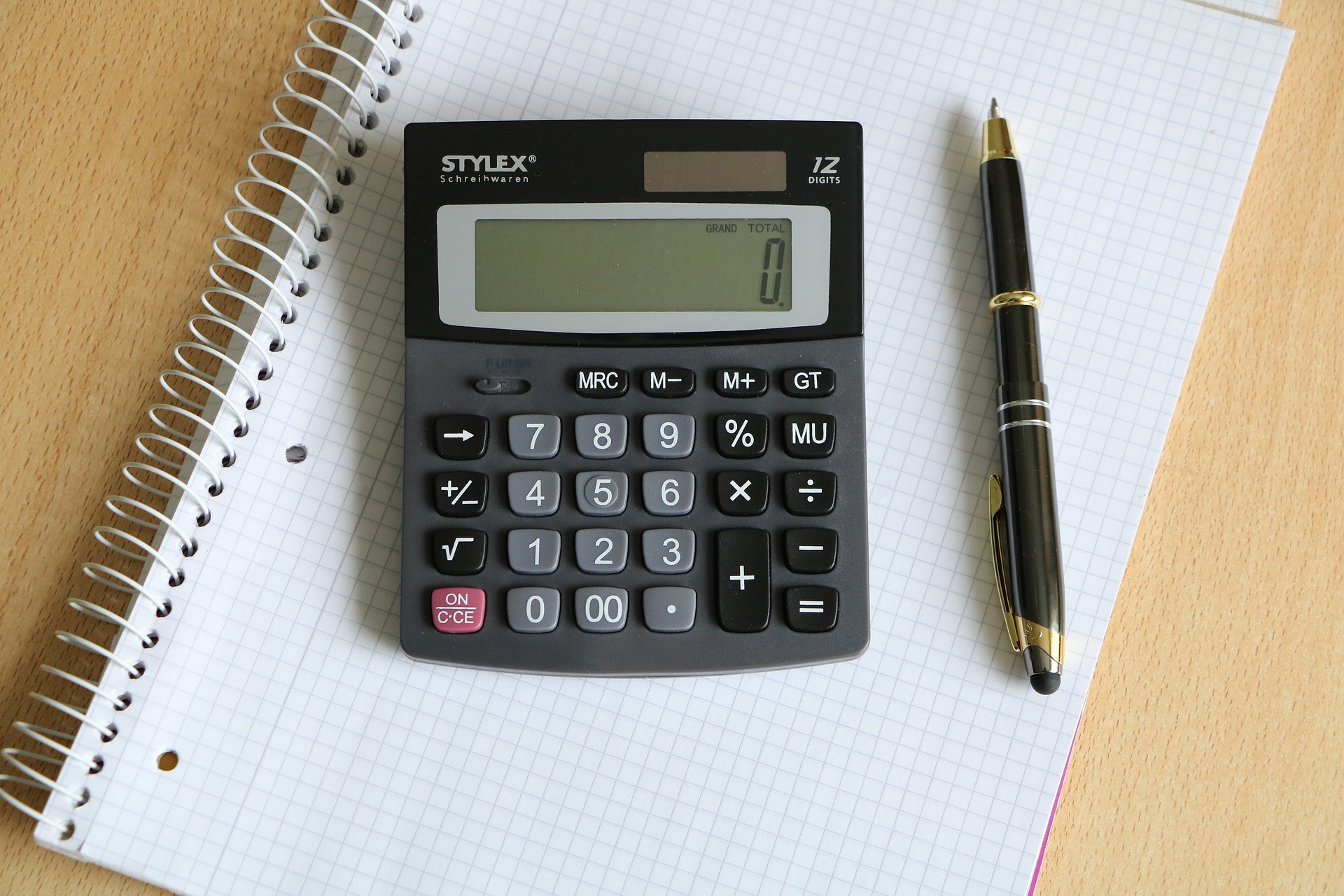
The design of calculator interfaces, whether physical buttons or digital displays, plays a critical role in their usability. From the tactile feedback of a physical key to the intuitive layout of a smartphone app, good design enhances efficiency and reduces errors. User experience (UX) research continually strives to make complex calculations accessible and understandable. This includes features like clear visual feedback, logical grouping of functions, and personalized settings.
The shift towards adaptive interfaces, where the calculator anticipates user needs or learns from past interactions, is also a growing trend. This focus ensures that as computational power grows, it remains a tool that augments human intellect rather than overwhelms it, making “when calculator” a seamless and empowering experience.
The Debate: Over-reliance vs. Enhanced Capabilities
The omnipresence of calculators has ignited debates about potential over-reliance. Concerns are often raised, particularly in educational settings, that students might lose fundamental arithmetic skills if they always depend on a calculator. While a valid point, the prevailing view is that calculators, when used judiciously, serve as powerful tools for learning and problem-solving, allowing focus on higher-order thinking rather than rote computation.
Calculators free up mental resources to tackle complex problems, explore patterns, and understand concepts that would otherwise be obscured by tedious manual calculation. They enhance capabilities, enabling precision and speed in professional contexts where errors can have significant consequences. The question is not whether to use a calculator, but “when calculator” is the most appropriate tool to advance understanding and efficiency, balancing fundamental skill development with technological augmentation.
Digital Security and Data Integrity in Computational Tools
As calculators move into cloud-based platforms, AI systems, and handle sensitive data (financial, medical, scientific), digital security and data integrity become paramount. Protecting the input data, the computational process, and the output results from unauthorized access, manipulation, or error is critical. This involves robust encryption, secure protocols, verifiable algorithms, and rigorous testing of software.
The reliability of a calculator’s output is only as good as the integrity of its underlying code and the security of its operating environment. Especially in fields like financial modeling or medical diagnostics, ensuring that the “calculator” provides accurate and untampered results is not just a technical challenge but an ethical imperative. Therefore, “when calculator” is used with sensitive information, it implicitly means “when robust digital security and data integrity can be guaranteed.”
In conclusion, the journey of the calculator is a microcosm of technological advancement itself. From ancient counting boards to quantum machines, it has continually evolved to meet and exceed humanity’s computational needs. The question “when calculator” is no longer about a specific time or device, but about the continuous expansion of our ability to process information, predict the future, and push the boundaries of knowledge, cementing its role as an indispensable companion on our technological odyssey.
aViewFromTheCave is a participant in the Amazon Services LLC Associates Program, an affiliate advertising program designed to provide a means for sites to earn advertising fees by advertising and linking to Amazon.com. Amazon, the Amazon logo, AmazonSupply, and the AmazonSupply logo are trademarks of Amazon.com, Inc. or its affiliates. As an Amazon Associate we earn affiliate commissions from qualifying purchases.