
Understanding when stock markets are open is a fundamental piece of knowledge for any investor, from the seasoned professional to the curious beginner. Unlike a convenience store that might operate 24/7, traditional stock exchanges adhere to specific, often rigid, trading schedules. These hours, while seemingly straightforward, are influenced by geographical location, public holidays, and the complex mechanisms designed to ensure fair and orderly market operations. For anyone looking to invest, manage their portfolio, or simply comprehend the daily rhythm of global finance, grasping these timings is not just a detail—it’s a critical component of strategic financial planning and execution.
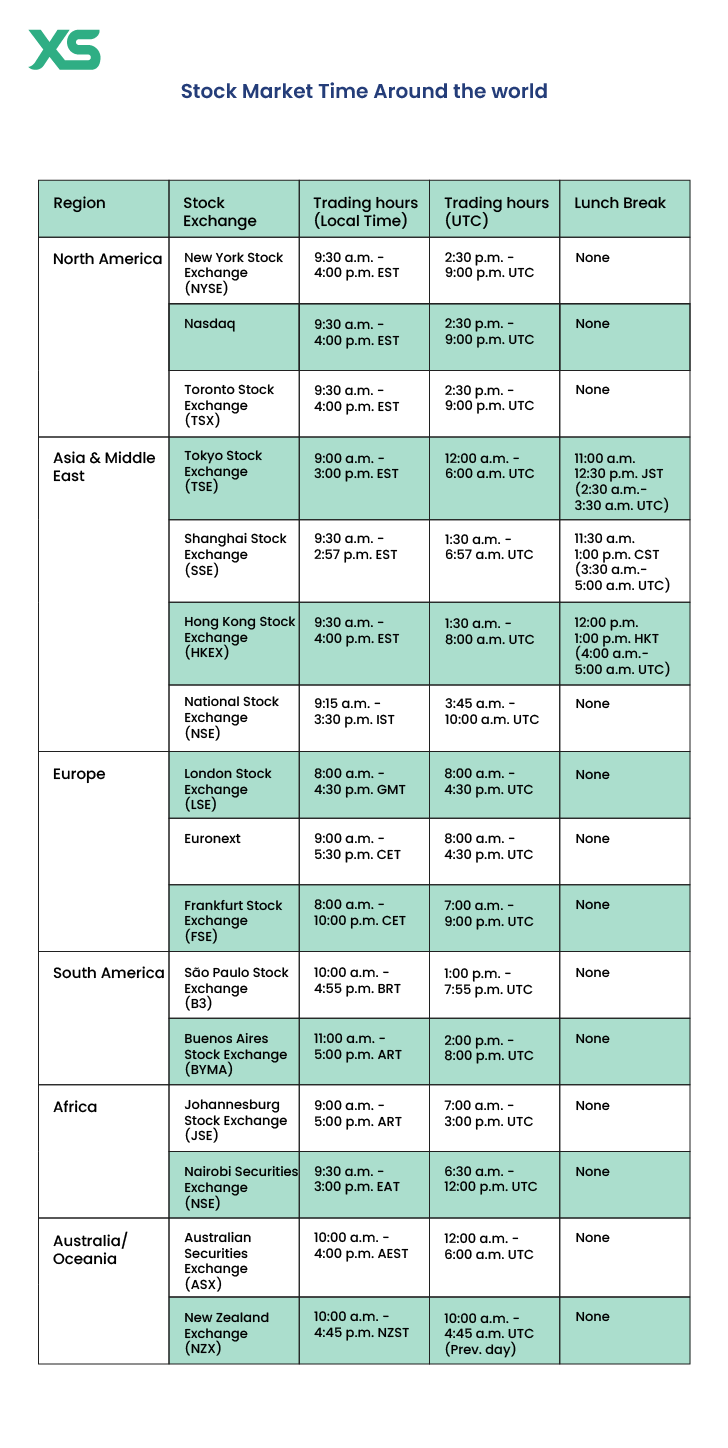
The global nature of financial markets means that “when markets are open” is not a singular answer but a mosaic of overlapping and distinct trading sessions across different time zones. This article will delve into the standard operating hours of major exchanges, explore the nuances of extended trading, examine the impact of holidays, and discuss the underlying reasons why traditional stock markets don’t operate around the clock, while also touching upon the evolving landscape of continuous trading in certain asset classes.
The Core Trading Hours: A Look at Major Global Exchanges
The heart of stock market activity typically occurs during specific, pre-defined daytime hours in each country. These hours are designed to concentrate liquidity, facilitate price discovery, and allow market participants adequate time to process information and execute trades.
North American Giants: NYSE and NASDAQ
In the United States, the two primary stock exchanges, the New York Stock Exchange (NYSE) and the NASDAQ, operate on a synchronized schedule that is arguably the most recognized globally.
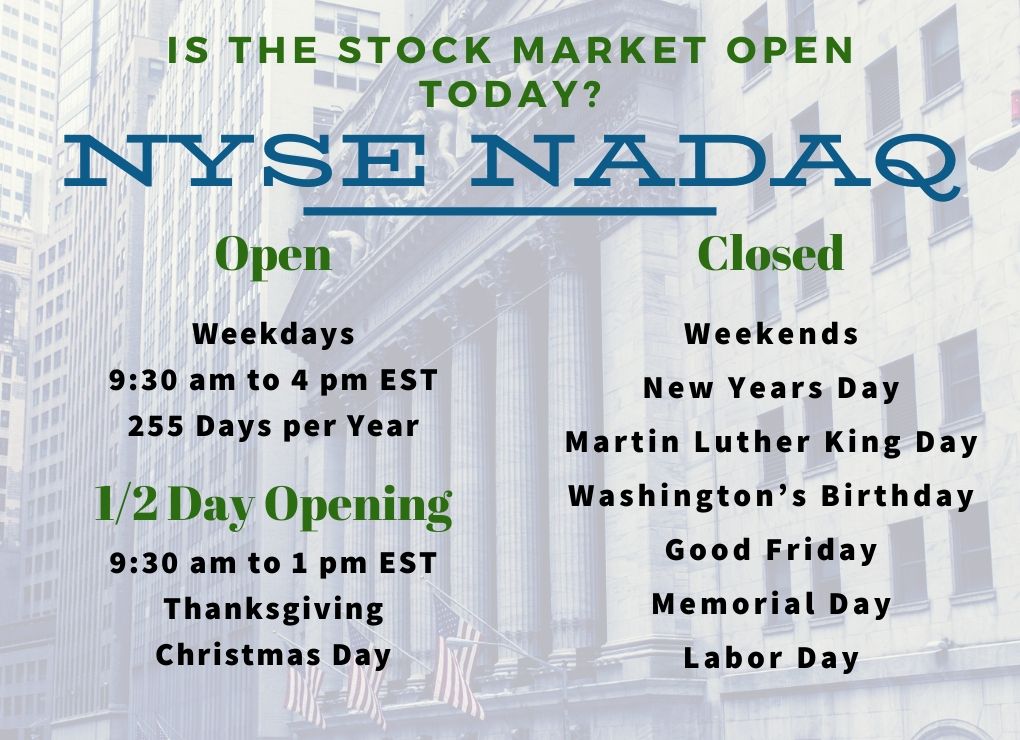
- Standard Trading Hours: Both the NYSE and NASDAQ are open from 9:30 AM to 4:00 PM Eastern Time (ET), Monday through Friday. This seven-and-a-half-hour window is when the vast majority of trading volume and price action occurs. During these hours, investors can buy and sell shares of publicly listed companies through their brokers, with orders being executed in real-time on the exchange floors (for NYSE) or through electronic networks (for NASDAQ). This period is characterized by high liquidity and tight bid-ask spreads, making it generally the most efficient time to trade. The concentrated activity ensures that there are always buyers and sellers, allowing for smoother transactions and more accurate price reflection.
- Significance: These hours are crucial for investors as major economic data releases, company earnings announcements, and significant news often occur outside or just before these hours, setting the tone for the day’s trading. The opening bell is a flurry of activity as pent-up orders from the overnight session are processed, and the closing bell often sees a surge in volume as traders close positions or make last-minute adjustments.
European Powerhouses: London, Frankfurt, Euronext
Europe’s financial landscape is diverse, with several key exchanges influencing global markets. Their hours often overlap with Asian markets in the morning and North American markets in the afternoon, making them a crucial bridge.
- London Stock Exchange (LSE): The LSE is open from 8:00 AM to 4:30 PM Greenwich Mean Time (GMT), Monday through Friday. As one of the oldest and most international exchanges, its trading hours are pivotal for global finance, especially given London’s role as a major financial hub.
- Deutsche Börse (Frankfurt Stock Exchange): Germany’s primary exchange operates from 9:00 AM to 5:30 PM Central European Time (CET). Frankfurt is central to the Eurozone economy, and its trading hours reflect the typical European business day.
- Euronext (Paris, Amsterdam, Brussels, Lisbon): Euronext, a pan-European exchange, generally operates from 9:00 AM to 5:30 PM CET. Its integrated platform allows for seamless trading across multiple key European markets.
- Impact on Investors: European market hours are vital for investors with globally diversified portfolios, particularly those exposed to European equities or currencies. News impacting European companies or economies can lead to significant price movements during these hours, influencing corresponding movements in other global markets as trading sessions overlap.
Asian Markets: Tokyo, Shanghai, Hong Kong
Asian markets kick off the global trading day, often reacting to events that unfolded in North America and Europe the previous day.
- Tokyo Stock Exchange (TSE): The TSE typically has two sessions: an a.m. session from 9:00 AM to 11:30 AM Japan Standard Time (JST) and a p.m. session from 12:30 PM to 3:00 PM JST. This split session structure is common in some Asian markets.
- Shanghai Stock Exchange (SSE) and Shenzhen Stock Exchange (SZSE): Mainland China’s exchanges also operate with a similar split, usually from 9:30 AM to 11:30 AM China Standard Time (CST) and then from 1:00 PM to 3:00 PM CST.
- Hong Kong Stock Exchange (HKEX): HKEX follows a similar two-session model: 9:30 AM to 12:00 PM HKT and 1:00 PM to 4:00 PM HKT.
- Global Implications: Asian market openings often set the tone for the trading day globally. Economic data releases from China, Japan, or other major Asian economies can trigger ripple effects across European and North American markets as they open hours later. For investors with global portfolios, monitoring these early market movements provides valuable insights into potential trends.
Beyond Standard Hours: Understanding Extended Trading Sessions
While the core trading hours define the main activity, modern electronic trading platforms allow for activity outside these conventional windows, known as extended trading sessions. These periods—pre-market and after-hours—offer flexibility but come with distinct characteristics and risks.
Pre-Market Trading: Getting a Head Start
- Definition: Pre-market trading occurs before the official market open, typically starting as early as 4:00 AM ET for NYSE and NASDAQ.
- Purpose: Investors and institutions use this window to react to news released overnight or early in the morning, such as earnings reports, mergers, or significant economic data, before the broader market opens. It allows them to position themselves ahead of the official trading session.
- Characteristics: Pre-market sessions are generally characterized by lower liquidity compared to regular hours. This means fewer buyers and sellers, which can lead to wider bid-ask spreads and potentially greater price volatility. Executing large orders might be challenging, and prices can be less representative of the true market value due to the thin trading volume. Retail investors often have limited access or face higher commissions for pre-market trading through their brokers.
After-Hours Trading: Reacting to Late News
- Definition: After-hours trading takes place after the official market close, usually extending until 8:00 PM ET for U.S. exchanges.
- Purpose: This session allows participants to react to news that breaks after the market closes, such as quarterly earnings announcements often released between 4:00 PM and 5:00 PM ET, or late-breaking corporate or economic news. It provides an immediate opportunity to adjust positions without waiting for the next day’s open.
- Characteristics: Similar to pre-market, after-hours trading typically suffers from lower liquidity and wider spreads. The reduced trading volume can lead to significant price swings on relatively small orders. This environment can be advantageous for experienced traders who can capitalize on volatility but poses higher risks for less experienced investors. It’s crucial for investors to understand that prices during these sessions may not hold once the regular market opens with full liquidity.
The Mechanics of Extended Hours: How They Work
Extended hours trading is primarily facilitated by Electronic Communication Networks (ECNs). These automated systems match buy and sell orders directly, bypassing traditional exchange floors. While major brokers offer access to pre-market and after-hours trading, it’s essential for investors to be aware of the specific rules, order types accepted (often only limit orders), and potential risks associated with these less liquid periods. Financial tools and platforms have made extended hours more accessible, but prudent investors approach them with caution, understanding the trade-offs in liquidity and price stability.
Market Closures and Holidays: What Every Investor Needs to Know
Beyond the daily open and close, stock markets also observe specific days off throughout the year. These closures are not merely calendar events; they have significant implications for financial planning and trading strategies.
Public Holidays and Their Impact
- Scheduled Closures: Stock exchanges around the world observe national public holidays. For instance, in the U.S., markets are closed for holidays like New Year’s Day, Martin Luther King, Jr. Day, Presidents’ Day, Good Friday, Memorial Day, Juneteenth, Independence Day, Labor Day, Thanksgiving Day, and Christmas Day. Similar national holidays are observed in Europe, Asia, and other regions. These dates are typically published well in advance by the exchanges.
- Trading Hiatus: During these closures, no trading occurs on the respective exchanges. This means investors cannot buy or sell stocks listed on those exchanges. Any news or economic data released during a holiday period can lead to significant price gaps when the market reopens, as accumulated sentiment and information are factored into prices all at once.
- Implications for Investors: It’s vital for investors to be aware of these holidays, especially when planning trades or expecting important announcements. Overseas holidays can also affect global markets. For example, a major holiday in China can impact commodity prices worldwide, even if U.S. markets are open. Investors must factor these non-trading days into their financial planning, especially when dealing with settlement dates for transactions.
Early Closures and Special Events
- Half-Day Sessions: Occasionally, markets may have early closures, often observed on the day before or after certain holidays (e.g., the day after Thanksgiving in the U.S., or Christmas Eve). These half-day sessions usually end in the early afternoon, concentrating the day’s trading into a shorter window.
- Unscheduled Closures: While rare, markets can close unexpectedly due to severe weather, national emergencies, or catastrophic events. For example, U.S. markets closed for an extended period after the 9/11 attacks. Such events underscore the importance of staying informed and having contingency plans.
- Understanding the Calendar: Brokers and financial news outlets typically publish comprehensive calendars of market holidays and early closures. Incorporating this information into your investing routine is crucial for effective portfolio management and risk mitigation. Knowing when markets will be closed allows investors to adjust their trading strategies, ensure sufficient liquidity, and avoid being caught off guard by unexpected non-trading days.
The Rationale Behind Fixed Hours: Why Not 24/7?
In an increasingly digitized and always-on world, one might wonder why traditional stock markets maintain fixed operating hours instead of moving to a continuous 24/7 model. The reasons are deeply rooted in the need for an orderly, fair, and efficient trading environment.
Ensuring Liquidity and Orderliness
- Concentrated Volume: Fixed trading hours concentrate buying and selling activity into specific windows. This concentration ensures higher liquidity, meaning there are always enough buyers and sellers to facilitate trades without significantly impacting prices. In a 24/7 market with dispersed activity, liquidity could be thin at certain times, leading to wider bid-ask spreads and increased volatility, making it harder for investors to get fair prices.
- Reduced Volatility: Concentrated liquidity helps reduce erratic price movements. With more participants actively trading, price discovery is more robust, and individual large orders are less likely to disproportionately move the market.
- Maintenance and Updates: Fixed hours provide a necessary downtime for exchanges to perform maintenance, system upgrades, and administrative tasks without disrupting live trading. These behind-the-scenes operations are crucial for ensuring the reliability and security of the trading infrastructure.
Facilitating Price Discovery
- Information Processing: The closed periods allow investors and analysts time to process new information (earnings reports, economic data, geopolitical news) that often comes out overnight or during weekends. This ensures that when markets reopen, prices reflect a more considered consensus, rather than knee-jerk reactions from limited participants at odd hours.
- Level Playing Field: Fixed hours create a more level playing field by giving all participants a defined period to react to news. In a 24/7 market, those with quicker access to information or automated trading systems could gain an unfair advantage, potentially leaving retail investors at a disadvantage.
Human Factor and Operational Efficiency
- Human Endurance: Stock trading, particularly for market makers, brokers, and analysts, is an intense, high-stress activity. Fixed hours are designed with human endurance in mind, preventing burnout and ensuring that professionals are alert and focused during peak trading times.
- Operational Support: Brokerage firms, regulatory bodies, and support staff also operate within typical business hours. Moving to 24/7 trading would necessitate a significant overhaul of these support structures, leading to increased operational costs and complexity. The current system allows for focused operational support during active trading, with downtime for administrative tasks and reconciliation.
The Future of Trading Hours: Evolving Markets and Global Access
While traditional stock markets adhere to fixed hours, the financial landscape is not static. Technological advancements and the rise of new asset classes are challenging conventional models and hinting at a future with greater flexibility.
The Rise of 24/7 Assets: Crypto and Forex
- Cryptocurrencies: Bitcoin, Ethereum, and other cryptocurrencies are perhaps the most prominent examples of assets traded 24 hours a day, seven days a week, on global decentralized exchanges. This continuous trading environment reflects the borderless and always-on nature of the underlying blockchain technology. Investors can buy, sell, and trade crypto at any time, reacting instantaneously to global news or sentiment shifts. This provides unparalleled flexibility but also presents unique challenges related to market volatility and the psychological demands of constant monitoring.
- Forex Market: The foreign exchange (forex) market, where currencies are traded, also operates on a near 24/5 basis, closing only for weekends. As one major financial center closes, another opens, creating a continuous flow of trading activity from Sydney to Tokyo, London, and New York. This continuous operation is essential given the global need for currency exchange at all times.
- Implications: The success of 24/7 trading in these markets demonstrates a demand for continuous access. However, it also highlights the increased vigilance required from investors and the potential for rapid, significant price movements that can occur at any time, making traditional risk management strategies more challenging.
Technological Advancements and Automation
- Algorithmic Trading: The proliferation of algorithmic and high-frequency trading (HFT) means that a significant portion of market activity is automated. These systems don’t adhere to human working hours and can execute trades rapidly whenever markets are open, or even during extended hours.
- Global Connectivity: Technology has vastly improved global connectivity, making it easier for investors in one time zone to access markets in another. This blurs geographical lines and puts pressure on traditional market structures.
- Potential for Extension: While a full 24/7 stock market for all equities might be far off due to the reasons discussed earlier, there could be a gradual extension of trading hours for certain instruments or markets, or an increase in the number of products available for extended trading. Some exchanges are already experimenting with longer trading days or linking up with other regions to offer more continuous access.
Implications for the Global Retail Investor
For the individual investor, the evolving nature of market hours means a need for greater awareness and adaptability.
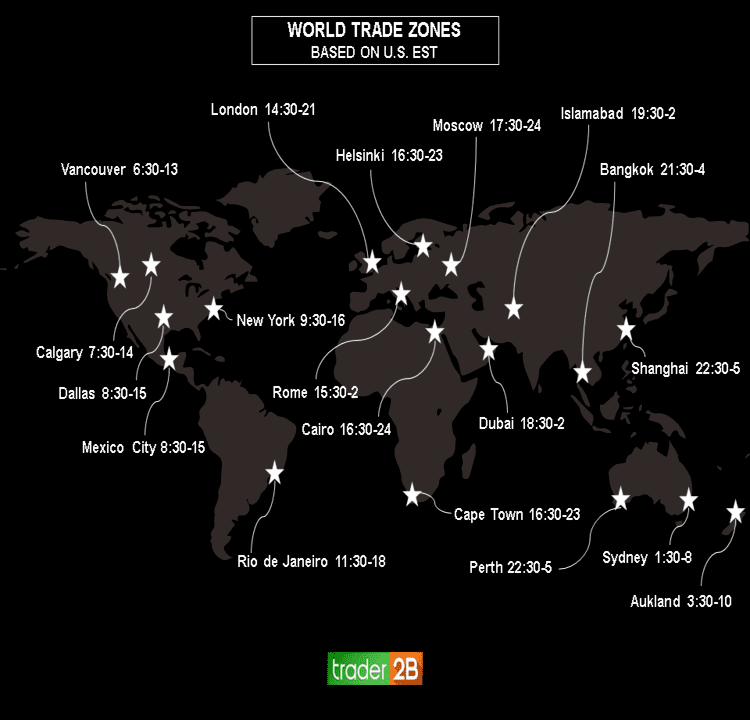
- Time Zone Management: Global investing requires understanding and managing different time zones to effectively monitor investments and execute trades. Financial tools and apps often help in converting times, but the onus is on the investor to stay informed.
- Risk and Opportunity: Extended hours and 24/7 markets offer opportunities for quicker reactions to news and greater flexibility. However, they also expose investors to heightened risks due to lower liquidity, increased volatility, and the psychological demands of constant market monitoring.
- Diversification and Strategy: Whether investing in traditional equities, forex, or cryptocurrencies, understanding the operating hours and their implications is crucial for developing a robust and informed investment strategy. It influences when to execute trades, when to expect volatility, and how to manage risk effectively across a diverse portfolio.
In conclusion, “when stock markets are open” is a multifaceted question with answers that vary significantly across geographies and asset classes. From the rigid 9:30 AM to 4:00 PM ET of the NYSE to the always-on nature of cryptocurrency markets, these timings are not arbitrary but are deeply integrated into the mechanisms that govern market efficiency, fairness, and investor participation. For any financially literate individual, mastering these schedules is an indispensable part of navigating the complex, dynamic world of investing and personal finance.
aViewFromTheCave is a participant in the Amazon Services LLC Associates Program, an affiliate advertising program designed to provide a means for sites to earn advertising fees by advertising and linking to Amazon.com. Amazon, the Amazon logo, AmazonSupply, and the AmazonSupply logo are trademarks of Amazon.com, Inc. or its affiliates. As an Amazon Associate we earn affiliate commissions from qualifying purchases.