
For investors, traders, and anyone with a vested interest in the financial world, understanding the operating hours of stock markets is as fundamental as knowing the value of their portfolio. The perception of a perpetually humming financial machine, processing billions of transactions every second, is often a romanticized one. In reality, stock markets, like any complex infrastructure, have defined operational schedules, periods of rest, and even unexpected shutdowns. Navigating these closures is not merely about curiosity; it’s a critical aspect of effective financial planning, risk management, and strategic investing.
This comprehensive guide delves into the nuances of when stock markets close, exploring the standard schedules, holiday observations, special circumstances, and the profound implications these closures have on trading strategies and investor psychology. We will also touch upon the evolving landscape of trading, where pre-market and after-hours sessions offer glimpses into an extended trading day, and the 24/7 nature of other asset classes continually pushes the boundaries of traditional market operations.
Understanding Standard Stock Market Operating Hours
The foundation of market operations lies in their regular, predictable schedules. While the global financial system may seem interconnected and ceaselessly active, individual stock exchanges adhere to specific daily timeframes.
Weekday Operations: The Core Trading Window
The vast majority of stock exchanges worldwide operate on a Monday-to-Friday schedule. These weekdays represent the core trading window where the bulk of buying and selling activities occur, prices are discovered, and market dynamics play out.
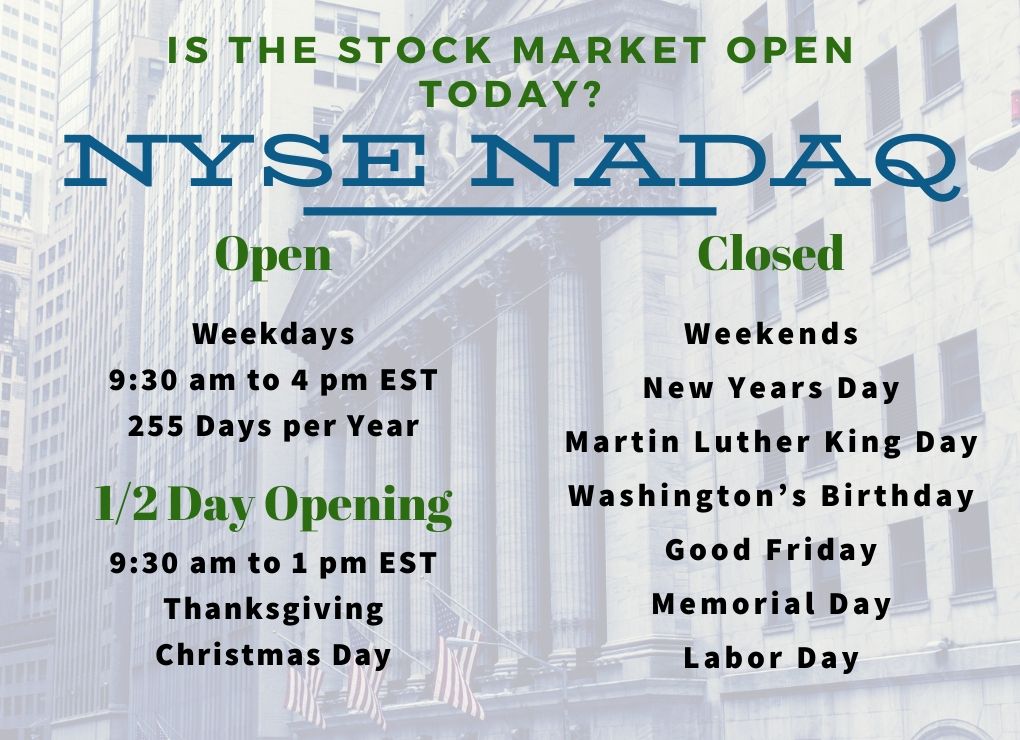
- North America (e.g., NYSE, NASDAQ): Typically, the New York Stock Exchange (NYSE) and NASDAQ open at 9:30 AM Eastern Time (ET) and close at 4:00 PM ET. This 6.5-hour window is often seen as the benchmark for market activity, characterized by high liquidity and intense trading.
- Europe (e.g., London Stock Exchange, Euronext): European exchanges generally follow similar patterns, albeit with variations. The London Stock Exchange (LSE), for instance, operates from 8:00 AM to 4:30 PM Greenwich Mean Time (GMT). Euronext, which covers several major European markets like Paris, Amsterdam, and Brussels, typically runs from 9:00 AM to 5:30 PM Central European Time (CET). These longer trading days often overlap with Asian market closures and North American market openings, facilitating cross-continental trading.
- Asia (e.g., Tokyo Stock Exchange, Shanghai Stock Exchange): Asian markets typically open earlier relative to Western time zones. The Tokyo Stock Exchange (TSE) operates from 9:00 AM to 3:00 PM Japan Standard Time (JST), with a lunch break. The Shanghai Stock Exchange (SSE) also has a similar structure. Their opening hours are critical for setting the tone for the global trading day, reacting to overnight news from the Americas and Europe.
These fixed hours are crucial for maintaining an orderly market, concentrating liquidity, and allowing participants to react to information within a structured framework.
Weekend Shutdowns: A Universal Rule
One of the most universal rules across nearly all major stock markets is their closure during weekends. From Saturday morning until Sunday evening, equity markets globally cease operations. This weekend hiatus serves several vital functions:
- Rest and Recuperation: It provides a necessary break for traders, analysts, and market infrastructure to rest and reset. The intense pace of daily trading is mentally and technologically demanding.
- Information Processing: The weekend allows investors and financial professionals to digest the week’s economic data, corporate earnings, and geopolitical developments without the immediate pressure of real-time trading decisions. This time is often used for in-depth research and strategic planning.
- Risk Management: Closing markets reduces the risk of panic selling or buying based on rapidly unfolding weekend news without the benefit of a full market response or regulatory oversight. While news can still impact sentiment, the immediate financial ramifications are deferred.
Time Zones and Global Market Interconnectivity
While individual markets have distinct operating hours, the global financial system is a 24-hour cycle of overlapping activity. When Asian markets are closing, European markets are often in full swing, and as European markets wind down, North American markets are opening or approaching their peak activity. This staggered schedule means that while no single stock market is open 24/7, some stock market somewhere in the world is typically operating during standard business hours throughout the weekdays.
This interconnectivity allows for continuous price discovery and information flow across different geographical regions, yet it also means investors must be acutely aware of which market is open and active when they wish to trade certain securities or react to global news.
Navigating Market Holidays and Special Closures
Beyond the regular weekend shutdowns, stock markets frequently observe public holidays and, on rare occasions, may close due to unforeseen circumstances. These closures are particularly significant for investors as they represent scheduled or unscheduled interruptions to trading.
Public Holidays: Major Causes of Market Downtime
Public holidays are the most common reason for weekday market closures. The specific holidays vary significantly from country to country, reflecting national traditions, historical events, and religious observances.
- United States: The NYSE and NASDAQ observe federal holidays such as New Year’s Day, Martin Luther King Jr. Day, Presidents’ Day, Good Friday (though not a federal holiday, observed by markets), Memorial Day, Juneteenth National Independence Day, Independence Day, Labor Day, Thanksgiving Day, and Christmas Day. Understanding this calendar is crucial for U.S. investors.
- United Kingdom: The London Stock Exchange observes UK bank holidays, including New Year’s Day, Good Friday, Easter Monday, May Bank Holiday, Spring Bank Holiday, Summer Bank Holiday, Christmas Day, and Boxing Day.
- Asia: Markets in Asia observe their respective national holidays. For example, the Tokyo Stock Exchange closes for holidays like Coming of Age Day, National Foundation Day, and Culture Day. The Shanghai Stock Exchange observes Chinese New Year, Dragon Boat Festival, and National Day.
These holiday closures mean that no trading occurs on these days, and any market orders placed will not be executed until the next trading day. Investors need to plan around these dates, especially if they anticipate significant news or want to execute time-sensitive trades.
Early Closures and Half-Day Trading Sessions
In addition to full-day holidays, some exchanges observe early closures or half-day trading sessions, typically preceding major holidays. For instance, in the U.S., markets might close early on the day before Christmas Eve or the day after Thanksgiving (Black Friday).
These shorter sessions can lead to reduced liquidity and increased volatility, as market participants may be winding down for the holiday period. Traders and investors should be mindful of these abbreviated hours, as they can impact the execution of orders and the overall market sentiment for that day.
Unforeseen Circumstances: Emergency Closures
While rare, stock markets can also close due to extraordinary, unforeseen circumstances. These emergency closures are typically enacted to maintain market integrity, ensure investor protection, or respond to national crises.
- Natural Disasters: Severe weather events like hurricanes or blizzards that prevent staff from reaching exchanges or disrupt infrastructure.
- Technical Failures: Major system glitches or cybersecurity breaches that compromise the functionality or security of the trading platform.
- National Emergencies/Terrorism: Events like the September 11, 2001, terrorist attacks in the U.S. led to a multi-day closure of American markets, aimed at assessing the damage, ensuring public safety, and allowing for a period of national mourning and reflection before reopening in an orderly fashion.
- Extreme Volatility: In very rare instances, markets might be temporarily halted or closed if extreme volatility threatens to destabilize the financial system, though circuit breakers are usually the first line of defense.
These emergency closures underscore the fact that even highly sophisticated financial systems are susceptible to external shocks, and regulators prioritize stability and investor confidence above continuous operation in times of crisis.
The Impact of Market Closures on Investors and Trading Strategies
Market closures are more than just a pause in trading; they have tangible implications for investors, influencing everything from order execution to portfolio value.
Order Execution and Pending Trades
When markets are closed, no new trades are executed. Any market orders placed will typically be held until the market reopens, at which point they will be filled at the prevailing market price. This can be problematic if significant news breaks during the closure, leading to a substantial price difference (a “gap”) between the closing price on the last trading day and the opening price on the next.
- Limit Orders and Stop Orders: These advanced order types offer some protection. A limit order will only execute at a specified price or better, while a stop order becomes a market order once a certain price is hit. However, during closures, even these orders are inactive and are subject to market gaps. If a stock opens significantly below a stop-loss price, the order will execute at the first available price, which could be much lower than the stop-loss threshold.
- Good-Til-Canceled (GTC) Orders: These orders remain active until filled or canceled, but they still only become executable when the market is open.
Market Gaps and Volatility on Reopening
The period of market closure, especially over long weekends or extended holidays, can be a time of significant news dissemination. Economic reports, geopolitical events, corporate announcements, and global market movements can all occur while a specific market is shut down.
When the market reopens, all this pent-up information is suddenly priced in. This often leads to “market gaps,” where a stock’s opening price is substantially different from its previous closing price, either higher or lower. This can result in considerable gains or losses for investors, particularly those holding highly volatile assets or those whose investments are sensitive to overnight news. The immediate aftermath of a reopening can also be characterized by heightened volatility as investors react en masse.
Investment Decisions and Information Lag
For active traders, market closures can create an “information lag.” While they may receive news in real-time, they cannot act on it by trading stocks until the market reopens. This can be particularly frustrating during rapidly developing situations.
Long-term investors are generally less affected by day-to-day fluctuations, but even they must consider how news during a closure might impact their portfolio’s long-term outlook. Strategic adjustments or protective measures need to be planned in advance of known closures.
Beyond Traditional Hours: The Evolving Landscape of Trading
While the concept of closed markets is deeply ingrained in equity trading, the financial landscape is constantly evolving, with some asset classes already operating around the clock and extended trading hours becoming more common.
Pre-Market and After-Hours Trading: Extending the Day
Many major stock exchanges offer pre-market and after-hours trading sessions, effectively extending the traditional 6.5-hour trading day.
- Pre-Market Trading: Typically runs for a few hours before the official market opening (e.g., 4:00 AM to 9:30 AM ET for U.S. markets).
- After-Hours Trading: Extends the trading day for several hours after the official close (e.g., 4:00 PM to 8:00 PM ET for U.S. markets).
These sessions allow investors to react to news released outside of regular hours, such as corporate earnings reports often published after the market closes. However, these sessions are characterized by lower liquidity, wider bid-ask spreads, and increased volatility, making them riskier than regular trading hours. They are primarily utilized by institutional investors and experienced retail traders.
The 24/7 Markets: A Glimpse into the Future?
While equity markets remain largely confined to specific daily windows, other asset classes have embraced 24/7 or near-24/7 trading:
- Foreign Exchange (Forex): The forex market operates 24 hours a day, five days a week, continuously moving across major financial centers from Sydney to Tokyo, London, and New York.
- Cryptocurrencies: Most cryptocurrency exchanges operate truly 24/7, 365 days a year, reflecting the decentralized and digital nature of these assets.
The success and popularity of these continuously operating markets raise questions about the future of traditional stock exchanges. While equities present unique challenges (e.g., corporate actions, settlements), the demand for continuous access and instantaneous reaction to global events could eventually push stock markets towards longer or even non-stop trading, potentially through technological advancements and regulatory reforms.
Global Trading Access: Leveraging International Exchanges
For investors seeking to continuously manage their equity exposure, one strategy involves trading on international exchanges. When the NYSE is closed, the LSE might be open, and when the LSE closes, Asian markets could be active. By having access to different global markets, investors can theoretically maintain a near-24/5 trading capability, although this requires managing currency risks, understanding different market regulations, and potentially dealing with higher transaction costs.
Practical Strategies for Investors During Market Downtime
Understanding when markets are closed is the first step; the next is knowing how to strategically manage your investments during these periods.
Stay Informed: Monitoring Global News and Economic Data
Even when your local market is closed, the world does not stop. Economic reports from other regions, geopolitical developments, and news from companies whose stocks you hold can all emerge. Use market downtime to catch up on financial news, analyze economic indicators, and read expert commentary. This proactive approach helps you anticipate potential market movements when trading resumes.
Review and Rebalance Your Portfolio
Market closures, particularly extended ones, offer an excellent opportunity for deeper portfolio review. Without the immediate pressure of trading, you can objectively assess your asset allocation, evaluate the performance of individual holdings, and determine if your current strategy aligns with your long-term financial goals and risk tolerance. This is an ideal time to research new investment opportunities or consider rebalancing your portfolio.
Automate and Plan Ahead with Advanced Order Types
For predictable closures like holidays, plan your trades in advance. Use limit orders to set specific entry or exit points, ensuring that if the market reopens with a gap, your order won’t execute at an undesirable price. Stop-loss orders can also be set, though be mindful of the gap risk. For less active investors, dollar-cost averaging through automated investments can smooth out market volatility over time, regardless of closures.
Consider Alternative Investment Avenues
While stock markets are closed, other asset classes may still be active. For sophisticated investors, this might mean exploring opportunities in forex, commodities (futures markets typically have longer hours), or cryptocurrencies, depending on their risk appetite and understanding of these markets. For most, however, the focus should remain on their core equity portfolio, using the downtime to reinforce their long-term investment philosophy rather than chasing continuous trading.

Conclusion
The question “when are stock markets closed?” reveals a fundamental aspect of financial markets: their structured and deliberate pauses. These closures, whether due to weekends, public holidays, or unforeseen events, are not merely inconvenient interruptions but integral components of an orderly financial system. They provide time for reflection, consolidate liquidity, and allow for the processing of information without the immediate pressure of real-time trading.
For the savvy investor, understanding these rhythms is paramount. It enables better planning of trades, informed reactions to market-moving news during downtime, and strategic portfolio management. While technology continues to push the boundaries of traditional trading hours, the core principles of patience, diligent research, and thoughtful execution remain timeless. By respecting the closed periods of the market, investors can make more measured decisions, mitigate risks, and ultimately navigate the complex world of finance with greater confidence and success.
aViewFromTheCave is a participant in the Amazon Services LLC Associates Program, an affiliate advertising program designed to provide a means for sites to earn advertising fees by advertising and linking to Amazon.com. Amazon, the Amazon logo, AmazonSupply, and the AmazonSupply logo are trademarks of Amazon.com, Inc. or its affiliates. As an Amazon Associate we earn affiliate commissions from qualifying purchases.