
For many individuals, the annual tax season culminates in a single filing on April 15th. However, for a significant portion of the workforce, particularly those navigating the modern economy’s landscape of freelancing, entrepreneurship, and diverse investment portfolios, tax obligations are a year-round affair. Welcome to the world of quarterly estimated federal taxes – a critical component of the U.S. “pay-as-you-go” tax system designed to ensure that taxpayers with income not subject to withholding pay their share throughout the year.
Understanding these quarterly due dates isn’t just about compliance; it’s about financial planning, avoiding penalties, and maintaining fiscal peace of mind. Missing these deadlines or underpaying can lead to unwelcome interest and penalties from the IRS, turning a manageable financial responsibility into an avoidable burden. This comprehensive guide will demystify quarterly estimated taxes, outlining who needs to pay, the precise deadlines, how to calculate your payments, and strategies to stay on top of your financial obligations.
Understanding Quarterly Estimated Taxes: A Foundation of Fiscal Responsibility
The U.S. tax system operates on a pay-as-you-go principle. This means you’re generally required to pay income tax as you earn or receive income throughout the year, rather than settling your entire bill in one lump sum at tax time. For most wage earners, this is handled automatically through payroll withholding by their employer. But what about income sources where no employer is withholding tax? This is precisely where quarterly estimated taxes come into play.
Who Needs to Pay Estimated Taxes?
The requirement to pay estimated taxes typically applies to individuals who expect to owe at least $1,000 in tax for the year and whose income is not subject to sufficient withholding. This broad category encompasses a diverse group of taxpayers:
-
Self-Employed Individuals: This is perhaps the largest group. Freelancers, independent contractors, sole proprietors, and partners in partnerships are all responsible for paying self-employment taxes (Social Security and Medicare) in addition to income tax through estimated payments.
-
Small Business Owners: If you own an S corporation or LLC and take distributions or have significant business profits, you’ll likely need to pay estimated taxes.
-
Gig Economy Workers: Drivers for ride-sharing apps, delivery service providers, online content creators, and other participants in the gig economy often receive 1099-NEC forms, signifying income without withholding.
-
Individuals with Significant Investment Income: Income from stocks, bonds, mutual funds, or other investments (dividends, interest, capital gains) that isn’t subject to withholding often triggers estimated tax requirements.
-
Recipients of Rental Income: Landlords collecting rent typically don’t have taxes withheld from this income.
-
Retirees with Unwithheld Pension or Annuity Income: While some pensions allow for withholding, others may not, necessitating estimated payments.
-
Those with Other Unwithheld Income: This could include alimony (for agreements finalized before 2019), lottery winnings, prizes, or even income from specific trusts or estates.
It’s crucial to remember that even if you have a W-2 job, you might still need to pay estimated taxes if you have additional income streams that aren’t adequately covered by your employer’s withholding.
What Income Requires Estimated Tax?
Essentially, any income that isn’t subject to adequate tax withholding by an employer should be considered when calculating estimated taxes. This includes, but isn’t limited to:
-
Income from self-employment activities.
-
Interest and dividend income.
-
Capital gains from the sale of assets.
-
Rental income.
-
Royalties.
-
Alimony payments (for divorce or separation agreements executed before January 1, 2019).
-
Gambling winnings (unless subject to specific withholding rules).
-
Income from foreign sources.
The IRS provides Form 1040-ES, Estimated Tax for Individuals, which includes a worksheet to help you determine if you need to pay estimated taxes and how much.
Why Estimated Taxes Exist: The “Pay-as-You-Go” Principle
The U.S. tax system is founded on the principle that taxpayers should pay their income tax liability throughout the year as they earn income. This “pay-as-you-go” approach prevents taxpayers from facing a massive, unmanageable tax bill at the end of the year and provides the government with a steady stream of revenue. For those without traditional employment and corresponding payroll withholding, estimated taxes are the mechanism to fulfill this fundamental obligation, ensuring fairness and stability within the tax system.
The Quarterly Payment Schedule: Marking Your Calendar
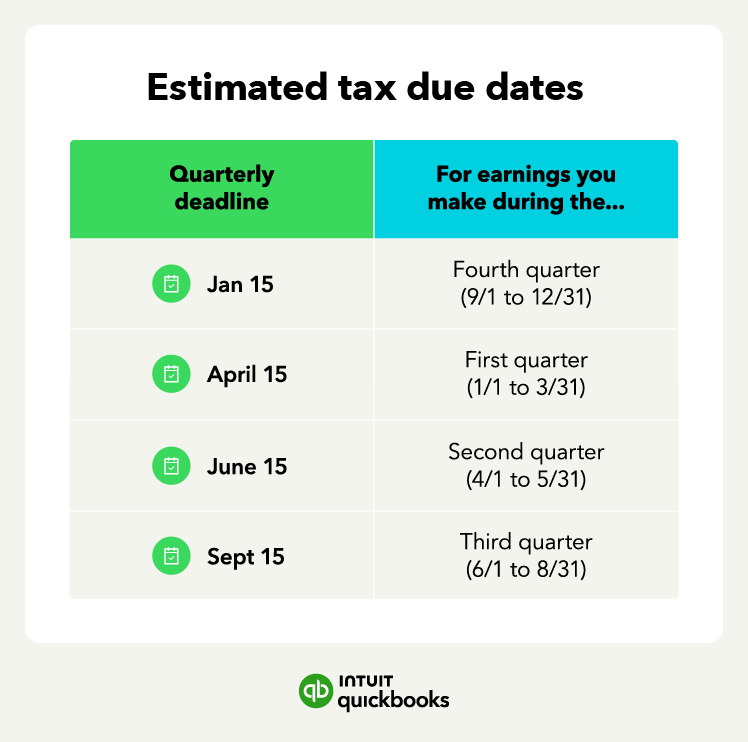
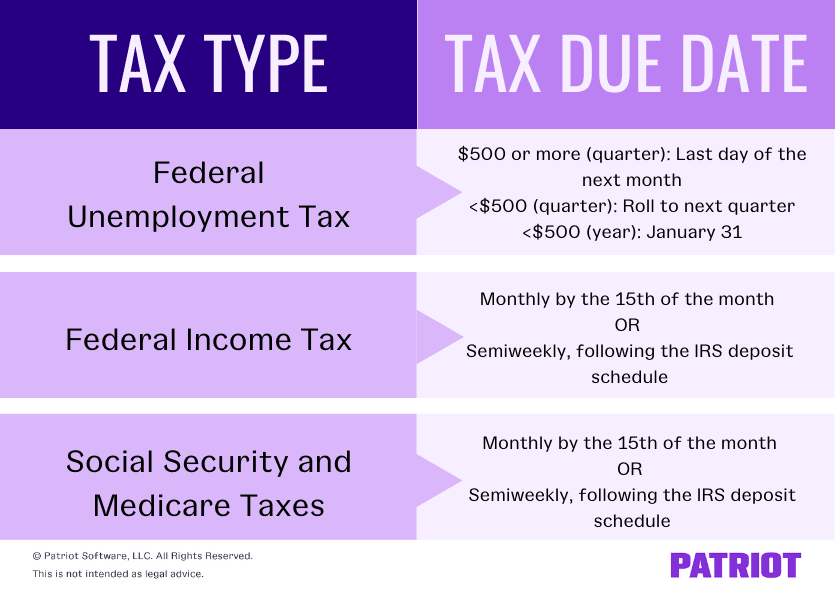
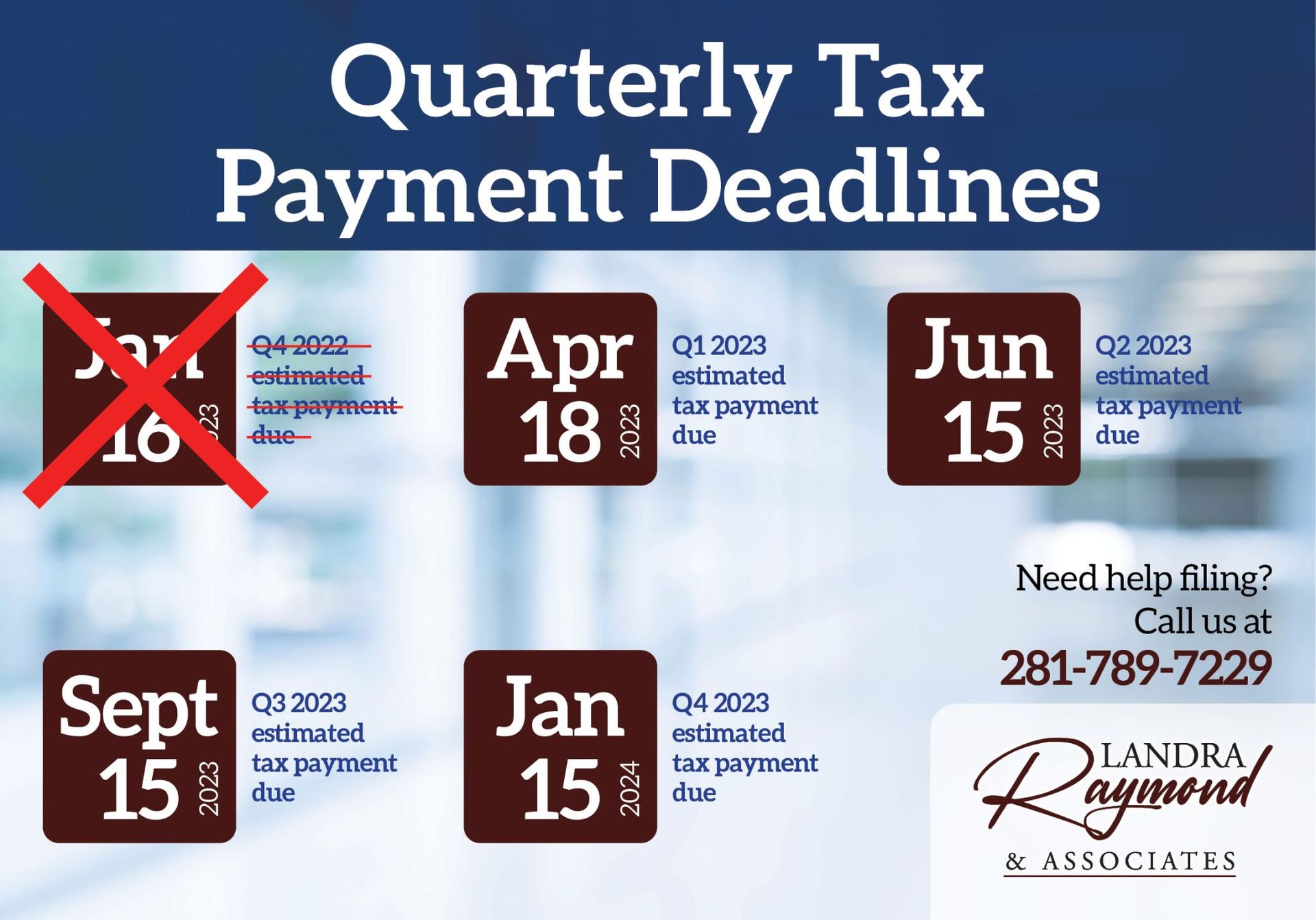
Unlike a single annual deadline, quarterly estimated taxes demand attention four times a year. These deadlines are standard for most taxpayers, though it’s important to be aware of potential adjustments for weekends, holidays, or specific disaster declarations.
Payment Period 1 (January 1 to March 31): Due Date – April 15
This first payment covers income earned during the first three months of the calendar year. It typically coincides with the main individual tax filing deadline for the previous tax year, making April 15th a particularly busy day for many taxpayers and their accountants.
Payment Period 2 (April 1 to May 31): Due Date – June 15
The second payment covers income generated in April and May. It’s important to differentiate this from the first quarter’s income; each payment addresses a specific earning period.
Payment Period 3 (June 1 to August 31): Due Date – September 15
The third payment deadline handles income from June, July, and August. By this point in the year, many self-employed individuals and business owners have a clearer picture of their annual income trajectory.
Payment Period 4 (September 1 to December 31): Due Date – January 15 of Next Year
The final quarterly payment covers income from the last four months of the year. While due in January of the next calendar year, it pertains to the previous tax year’s income. This deadline falls before the main tax filing season begins, allowing taxpayers to square away their estimated tax obligations before preparing their annual return.
Important Calendar Considerations
While these dates are generally fixed, a few exceptions can shift them:
-
Weekends and Holidays: If a due date falls on a weekend or legal holiday, the deadline shifts to the next business day. For example, if April 15th is a Saturday, the deadline moves to Monday, April 17th.
-
Natural Disasters: The IRS may grant extensions or postpone deadlines for taxpayers in areas affected by natural disasters. Always check IRS announcements if you live in a declared disaster zone.
-
State-Specific Rules: While these are federal deadlines, some states also require estimated tax payments, often with similar but not identical schedules. Be sure to check your state’s tax agency for details.
Calculating Your Estimated Tax Payments: A Strategic Approach
Accurately calculating your quarterly payments is paramount to avoiding penalties. The goal is to estimate your total annual income and deductions, then divide that projected tax liability into four equal installments. While this sounds straightforward, it requires foresight and periodic adjustments.
Estimating Your Annual Income
The most challenging part of estimated taxes is projecting income that might fluctuate.
-
Look to Your Prior Year: If your income sources and amounts are relatively consistent, your previous year’s tax return (Form 1040) is an excellent starting point.
-
Current Year Projections: For those with variable income (freelancers, small businesses), you’ll need to project your gross income from all sources for the current year. Consider contracts, anticipated sales, investment returns, and any other income streams.
-
Factor in Deductions and Credits: Don’t forget to subtract anticipated deductions (e.g., self-employment expenses, student loan interest, health savings account contributions) and credits (e.g., child tax credit, education credits) to arrive at your estimated taxable income.
Using Form 1040-ES
The IRS provides Form 1040-ES, Estimated Tax for Individuals, which includes a worksheet specifically designed to help you calculate your estimated tax liability. This worksheet guides you through estimating your adjusted gross income, deductions, credits, and ultimately, your total estimated tax for the year. It then helps you divide this amount by four for your quarterly payments.
Key Deductions and Credits to Consider
Maximizing your legitimate deductions and credits can significantly reduce your estimated tax burden.
-
Self-Employment Tax Deduction: You can deduct one-half of your self-employment taxes.
-
Business Expenses: For self-employed individuals, ordinary and necessary business expenses reduce your taxable income.
-
Traditional IRA/401(k) Contributions: Contributions to these accounts are often tax-deductible.
-
Health Savings Account (HSA) Contributions: These are typically tax-deductible.
-
Education Credits: If you or your dependents are pursuing higher education.
-
Child Tax Credit: For eligible taxpayers with qualifying children.
Keeping meticulous records throughout the year will make it easier to identify and claim all eligible deductions and credits.
The “Safe Harbor” Rules: Avoiding Penalties
To avoid underpayment penalties, you generally need to pay at least 90% of your current year’s tax liability or 100% of your prior year’s tax liability (110% if your prior year’s Adjusted Gross Income was over $150,000 for single filers, or $75,000 for married filing separately). This is known as the “safe harbor” rule. Many taxpayers find it easier to pay 100% (or 110%) of their prior year’s tax to ensure they meet the safe harbor, even if they expect to earn more in the current year. If you project a significant increase in income, you’ll need to adjust your estimated payments accordingly to meet the 90% threshold for the current year.
Methods for Paying Your Estimated Taxes: Convenience and Compliance
Once you’ve calculated your estimated tax, the next step is to make the payment. The IRS offers several convenient ways to do this.
Online Payment Options
-
IRS Direct Pay: This free service allows you to make payments directly from your checking or savings account. It’s user-friendly, requires no registration, and you receive instant confirmation.
-
Electronic Federal Tax Payment System (EFTPS): This is a free service provided by the U.S. Department of the Treasury. It requires enrollment but allows you to schedule payments up to 365 days in advance, view payment history, and receive email confirmations. It’s particularly useful for businesses and those who prefer to plan payments well in advance.
-
Credit/Debit Card or Digital Wallet: You can pay through third-party payment processors, though these services typically charge a processing fee.
Paying by Mail
If you prefer traditional methods, you can mail a check or money order along with a payment voucher from Form 1040-ES. Each quarterly payment has a specific voucher (e.g., Voucher 1 for the April 15th payment). Ensure you use the correct voucher and mail it to the appropriate IRS address listed in the Form 1040-ES instructions for your state.
Paying Through a Tax Professional or Software
Many tax professionals can make estimated tax payments on your behalf. Additionally, various tax software programs offer integrations that allow you to prepare and submit estimated payments directly through their platform, often calculating the amounts for you.
Consequences of Underpayment and Strategies to Avoid Penalties
Failing to pay enough estimated tax throughout the year, or missing deadlines, can result in underpayment penalties. The IRS views timely estimated tax payments as a serious obligation, and penalties serve as a deterrent.
Understanding Underpayment Penalties
The underpayment penalty is essentially interest charged by the IRS on the amount of underpaid tax from the date it should have been paid until the date it is paid. The penalty rate is set quarterly and is generally the federal short-term rate plus 3 percentage points. It can accumulate quickly, adding an unnecessary expense to your tax bill. The penalty applies if you don’t pay at least 90% of your tax liability through withholding, estimated tax payments, or a combination of both.
When Penalties May Be Waived
The IRS may waive the underpayment penalty in certain limited circumstances:
-
Reasonable Cause: If you can show that the underpayment was due to a casualty, disaster, or other unusual circumstances, and it would be inequitable to impose the penalty.
-
Retirement or Disability: If you retired after reaching age 62 or became disabled during the tax year for which estimated payments were due, and the underpayment was due to reasonable cause and not willful neglect.
-
Unexpected Events: The IRS has the discretion to waive penalties in cases of severe illness, death of a family member, or other unforeseen events that made it impossible to make timely payments.
Strategies for Accurate Estimation
Proactive management is the best defense against underpayment penalties:
-
Adjust Estimates Throughout the Year: Your income and deductions might change. Don’t set your estimates in stone at the beginning of the year. Revisit your projections before each quarterly deadline and adjust your payments if your financial situation has significantly changed.
-
Annualizing Income: If your income varies significantly throughout the year (e.g., a seasonal business), you can use the annualized income installment method (Form 2210, Underpayment of Estimated Tax by Individuals, Estates, and Trusts) to calculate your payments. This method allows you to pay less in quarters where your income is lower and more in quarters where it’s higher.
-
Increase Withholding (If Applicable): If you also have a W-2 job, you can increase your payroll withholding to cover any estimated tax shortfall from other income sources. Adjusting your W-4 form with your employer can sometimes be an easier alternative to making separate estimated payments.
-
Overpay Slightly: If you’re unsure about your exact income, consider slightly overpaying your estimated taxes. While you won’t earn interest on the overpayment, you’ll receive it back as a refund, and it guarantees you’ll avoid penalties.
Seeking Professional Guidance
For complex financial situations, or if you’re new to estimated taxes, consulting with a qualified tax professional (such as a CPA or Enrolled Agent) is highly recommended. They can help you accurately project income, identify deductions, calculate payments, and advise on strategies to minimize your tax liability and avoid penalties. Their expertise can save you time, stress, and money in the long run.
Keeping Meticulous Records
Good record-keeping is invaluable. Maintain organized records of all income and expenses, proof of payments, and any communications with the IRS. This documentation is crucial for accurate tax preparation, making adjustments to estimated payments, and successfully responding to any IRS inquiries or audits.
By understanding the “when,” “why,” and “how” of quarterly federal taxes, you can transform a potentially complex obligation into a manageable aspect of your financial life. Adhering to these deadlines and strategically planning your payments ensures compliance, fosters financial stability, and frees you from the worry of unexpected penalties.
aViewFromTheCave is a participant in the Amazon Services LLC Associates Program, an affiliate advertising program designed to provide a means for sites to earn advertising fees by advertising and linking to Amazon.com. Amazon, the Amazon logo, AmazonSupply, and the AmazonSupply logo are trademarks of Amazon.com, Inc. or its affiliates. As an Amazon Associate we earn affiliate commissions from qualifying purchases.