
The housing market has undergone a seismic shift over the past 24 months. After a decade of historically low borrowing costs, the rapid ascent of mortgage rates has left prospective homebuyers, current homeowners, and real estate investors asking a singular, pressing question: When will rates finally drop?
To understand the trajectory of mortgage rates, one must look beyond the local real estate listings and dive into the mechanics of the global economy, central bank policy, and the bond market. While no one possesses a crystal ball, a professional analysis of current economic indicators provides a roadmap for what to expect in the coming quarters.
Understanding the Macroeconomic Drivers of Mortgage Rates
Mortgage rates do not move in a vacuum. They are primarily influenced by the broader economic environment, with the Federal Reserve and the bond market playing the most significant roles. To predict a drop in rates, we must first understand the pressures keeping them elevated.
The Federal Reserve and the Fight Against Inflation
The primary catalyst for the recent spike in mortgage rates has been the Federal Reserve’s aggressive campaign to curb inflation. By raising the federal funds rate, the Fed increases the cost of borrowing across the entire economy. While the Fed does not directly set mortgage rates, its policy decisions influence the 10-year Treasury yield, which serves as the primary benchmark for 30-year fixed-rate mortgages. For rates to drop significantly, the Fed must see sustained evidence that inflation is returning to its 2% target.
The Relationship Between Mortgage-Backed Securities and Yields
Lenders do not typically hold mortgages on their books; they package them into Mortgage-Backed Securities (MBS) and sell them to investors. When inflation is high, the fixed interest payments from these securities become less attractive, causing their prices to fall and yields to rise. As yields rise, mortgage rates follow suit. A “drop” in mortgage rates effectively requires a stabilization in the bond market, where investors feel confident that their long-term purchasing power won’t be eroded by rising prices.
The Impact of the Labor Market
The labor market remains a “sticky” factor in the quest for lower rates. A strong labor market with high wage growth can fuel consumer spending, which in turn keeps inflation high. As long as the unemployment rate remains at historic lows and job creation remains robust, the Federal Reserve is less likely to pivot toward rate cuts, as they fear reigniting inflationary pressures.
Expert Forecasts: The Timeline for 2024 and 2025
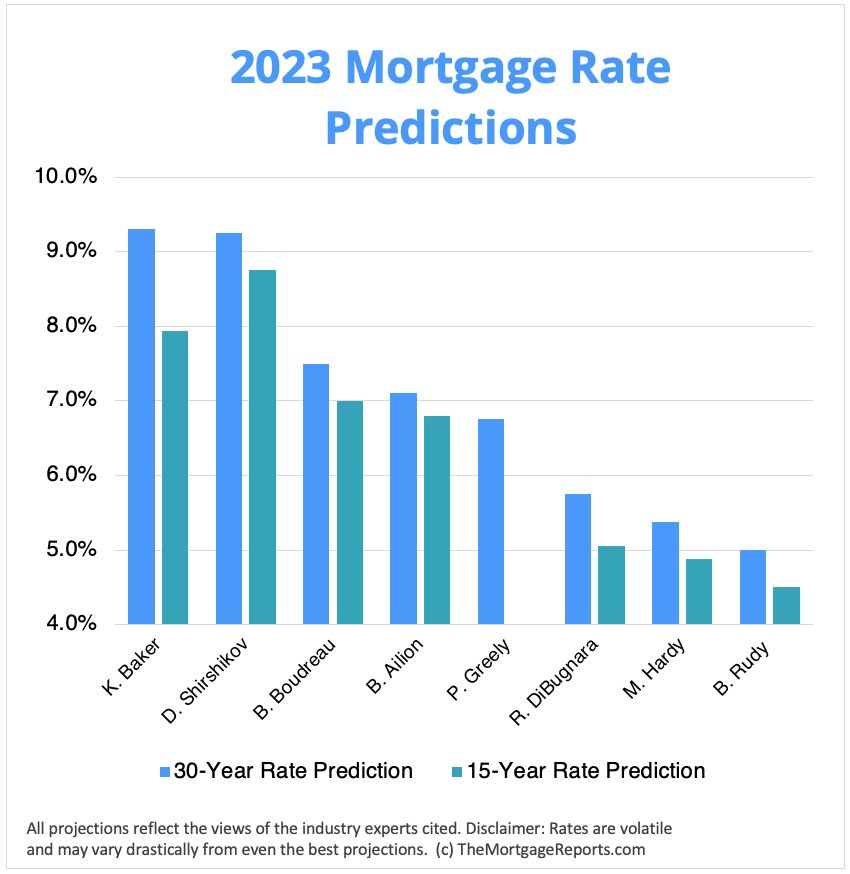
Market analysts and financial institutions have been recalibrating their expectations as economic data proves more resilient than expected. The consensus has shifted from expecting immediate cuts in early 2024 to a more “wait-and-see” approach for the latter half of the year and into 2025.
Short-Term Projections: Late 2024
Most major financial institutions, including Fannie Mae and the Mortgage Bankers Association (MBA), suggest that we may see a modest decline in rates toward the end of 2024. This projection is contingent on the “Goldilocks” scenario: an economy that is cooling enough to lower inflation but not so fast that it enters a deep recession. If the Consumer Price Index (CPI) continues its downward trend, we could see mortgage rates settle in the low 6% or high 5% range by the fourth quarter.
Long-Term Outlook: 2025 and Beyond
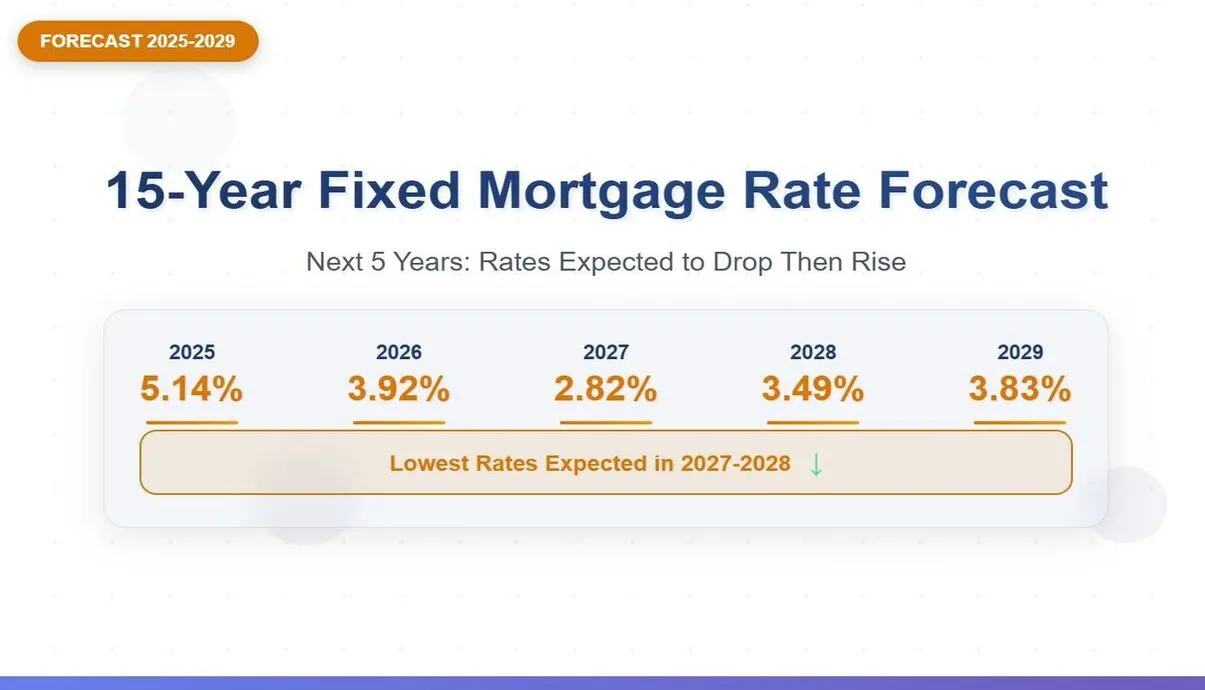
Looking further ahead into 2025, many economists anticipate a more meaningful normalization of rates. As the Federal Reserve eventually begins to unwind its restrictive monetary policy, the spread between the 10-year Treasury yield and mortgage rates—which is currently wider than historical norms due to market volatility—is expected to narrow. This narrowing could provide additional relief to borrowers, potentially bringing rates into a more sustainable 5% range, which many experts consider the “new normal” for the post-pandemic era.
The Concept of the “Neutral Rate”
Financial professionals often discuss the “neutral rate”—the interest rate that neither stimulates nor restricts economic growth. For years, this rate was perceived to be very low. However, structural changes in the economy may have pushed the neutral rate higher. This suggests that while rates will drop from their 7% or 8% peaks, we are unlikely to return to the 2.5% or 3% rates seen in 2020 and 2021.
The Paradox of the Housing Market: Why Rates and Prices Are Decoupling
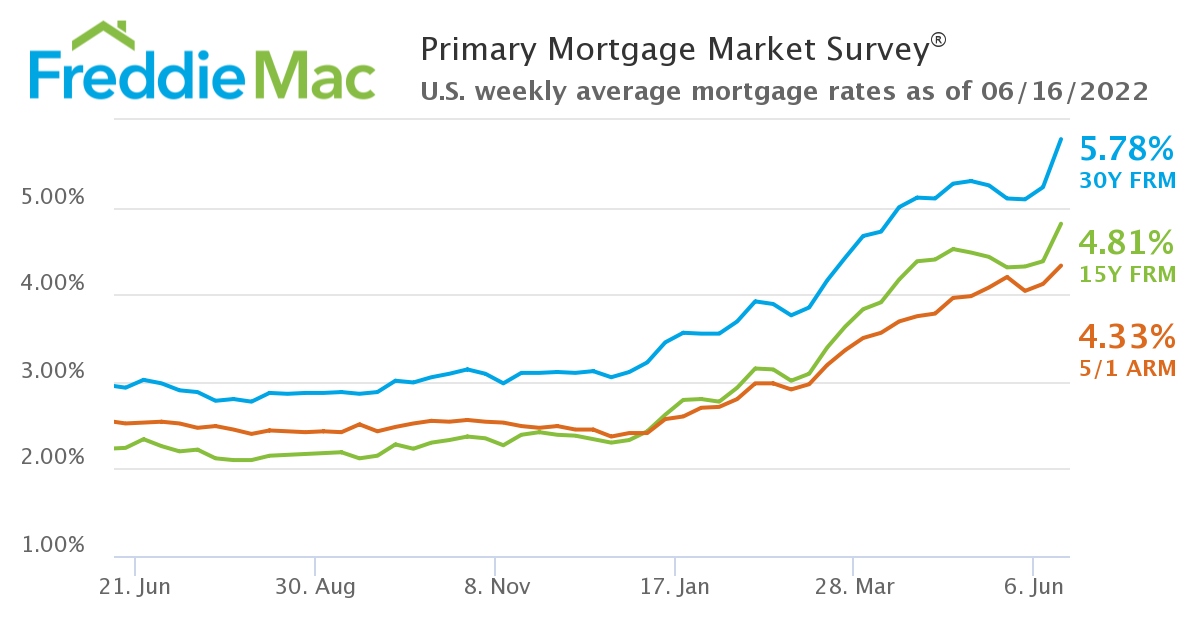
In a traditional economic cycle, rising interest rates lead to falling home prices as buyer demand cools. However, the current market is defying these conventions, creating a unique challenge for those waiting for a “drop” to enter the market.
The “Locked-In” Effect and Inventory Shortages
One reason rates may stay higher for longer is the lack of housing inventory. Millions of homeowners currently hold mortgages with rates below 4%. These individuals are reluctant to sell their homes and trade their low-interest debt for a new mortgage at 7%, a phenomenon known as the “locked-in effect.” This has resulted in a stagnation of supply. Because supply is so low, even diminished demand has been enough to keep home prices stable or even rising in many metropolitan areas.
Demand Sensitivity to Rate Fluctuations
There is a significant amount of “pent-up demand” in the current economy. Financial planners observe that every time mortgage rates dip even by half a percentage point, a surge of buyers enters the market. This immediate increase in competition often drives prices higher, potentially offsetting the savings gained from the lower interest rate. For the consumer, this means that waiting for a rate drop is a double-edged sword: you may get a better monthly payment on the interest side, but you might face a higher principal price and a more competitive bidding environment.
Regional Variance in Market Correction
It is important to note that the “drop” will not be felt equally across all geographies. Markets that saw the most extreme appreciation during the pandemic (such as parts of the Sun Belt) may see more significant price corrections as rates fluctuate, whereas supply-constrained markets in the Northeast or Midwest may remain resilient regardless of interest rate movements.
Strategic Financial Planning for Prospective Homebuyers
While waiting for rates to drop is a common strategy, personal finance experts suggest that “timing the market” is often less effective than “time in the market.” Borrowers should focus on the variables they can control.
The Math of the Buy-Down
For those who need to purchase now, “rate buy-downs” have become a popular financial tool. Borrowers can pay an upfront fee (points) to permanently or temporarily lower their interest rate. In the current market, many sellers are offering “seller concessions” to fund these buy-downs as an alternative to dropping the listing price. This can be a savvy way to secure a 5% or 6% rate in a 7.5% environment.
Refinancing as a Safety Net
The prevailing wisdom among financial advisors today is “Marry the house, date the rate.” If a buyer finds a property that fits their long-term needs and budget, they may choose to purchase at current rates with the intention of refinancing once the market shifts. However, this strategy requires a rigorous analysis of closing costs to ensure that the “break-even point” (the time it takes for the monthly savings to cover the cost of the new loan) makes financial sense.
Strengthening the Credit Profile
The difference between the “headline” mortgage rate and the rate an individual borrower receives is largely determined by their credit score and debt-to-income (DTI) ratio. While waiting for the macro environment to improve, prospective buyers should focus on maximizing their credit score. Moving from a “Good” to an “Excellent” credit tier can often result in a rate reduction that is greater than any drop the Federal Reserve might implement in the short term.
The Long-Term Outlook: Returning to a “Normal” Rate Environment
As we look toward the future, it is vital to contextualize the current environment within historical norms. The ultra-low rates of the 2010s were an anomaly, not the standard.
Historical Context of Mortgage Interest
For much of the 1990s and early 2000s, mortgage rates in the 6% to 8% range were considered healthy and normal. The expectation that rates must drop back to 3% to signify a “good” market may be a psychological hurdle rather than a financial reality. A stabilization of rates in the mid-5% range would likely represent a healthy equilibrium that allows for both sustainable home price growth and manageable borrowing costs.
The Role of Technology and Efficiency in Lending
One factor that may help lower costs for consumers in the coming years is the increasing digitization of the mortgage industry. AI-driven underwriting and automated appraisal tools are reducing the overhead costs for lenders. While these don’t change the base interest rate, they can lead to lower origination fees and more competitive “spreads,” effectively passing savings on to the borrower.
Final Thoughts for the Investor and Homeowner
The expected drop in mortgage rates is a matter of “when,” not “if,” but the “when” is likely further away and the “drop” less dramatic than many hope. Financial success in this environment requires a shift from speculative timing to disciplined budgeting. By monitoring inflation data, Fed signals, and inventory levels, stakeholders can make informed decisions that align with their long-term wealth-building goals, rather than waiting for a return to an era of “free money” that may never return.
aViewFromTheCave is a participant in the Amazon Services LLC Associates Program, an affiliate advertising program designed to provide a means for sites to earn advertising fees by advertising and linking to Amazon.com. Amazon, the Amazon logo, AmazonSupply, and the AmazonSupply logo are trademarks of Amazon.com, Inc. or its affiliates. As an Amazon Associate we earn affiliate commissions from qualifying purchases.