
In the world of finance, timing is often just as critical as the assets you choose to hold. For the modern investor, the question “when are markets open?” is not merely about checking a clock; it is about understanding the rhythmic pulse of global capital. Whether you are a day trader looking for high volatility or a long-term investor monitoring your retirement portfolio, the operational hours of various exchanges dictate liquidity, price discovery, and risk management.
This guide explores the intricate schedule of global financial markets, the nuances of different asset classes, and the strategic importance of market timing in a digital age where the sun never sets on the world of money.
The Global Clock: Key Equity Market Operating Hours
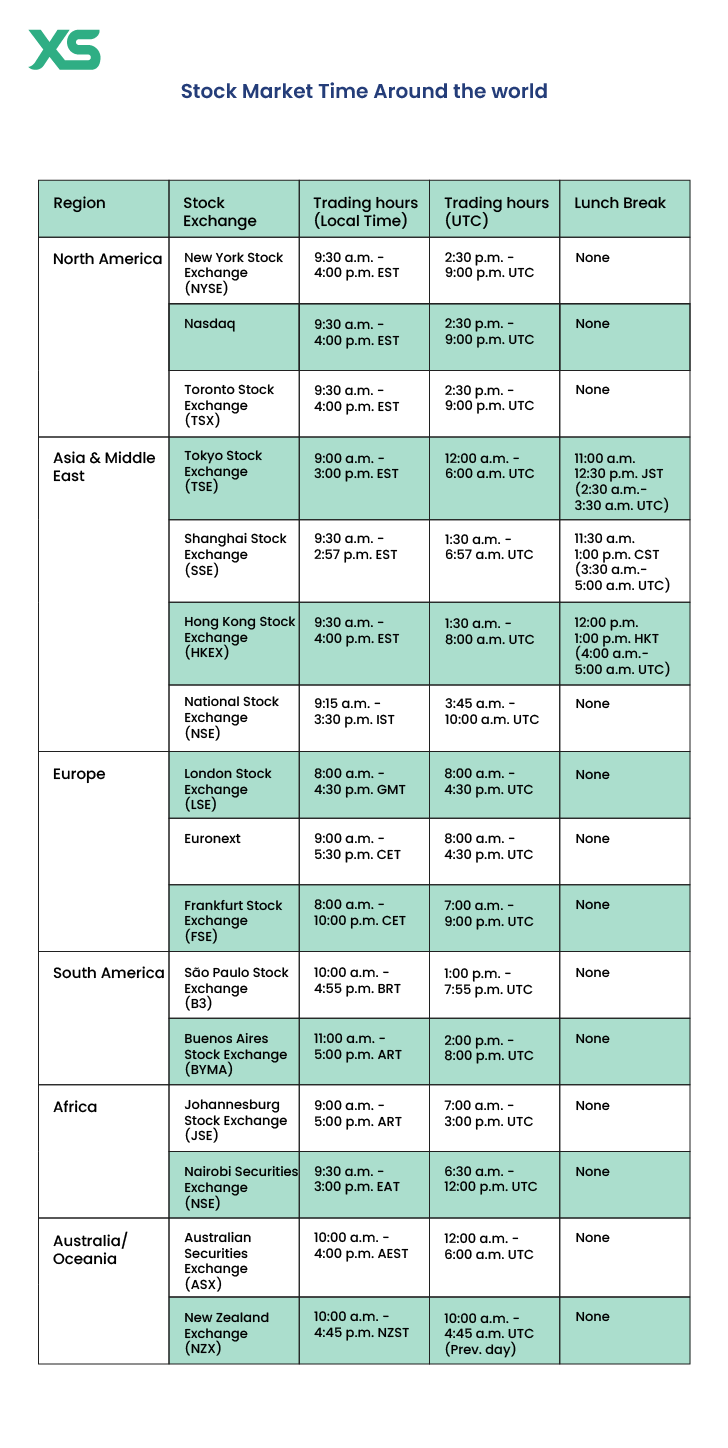
The stock market does not operate as a single, monolithic entity. Instead, it is a network of regional exchanges, each governed by its local time zone and cultural business practices. Understanding these windows is the first step in mastering global finance.
North American Markets (NYSE and NASDAQ)
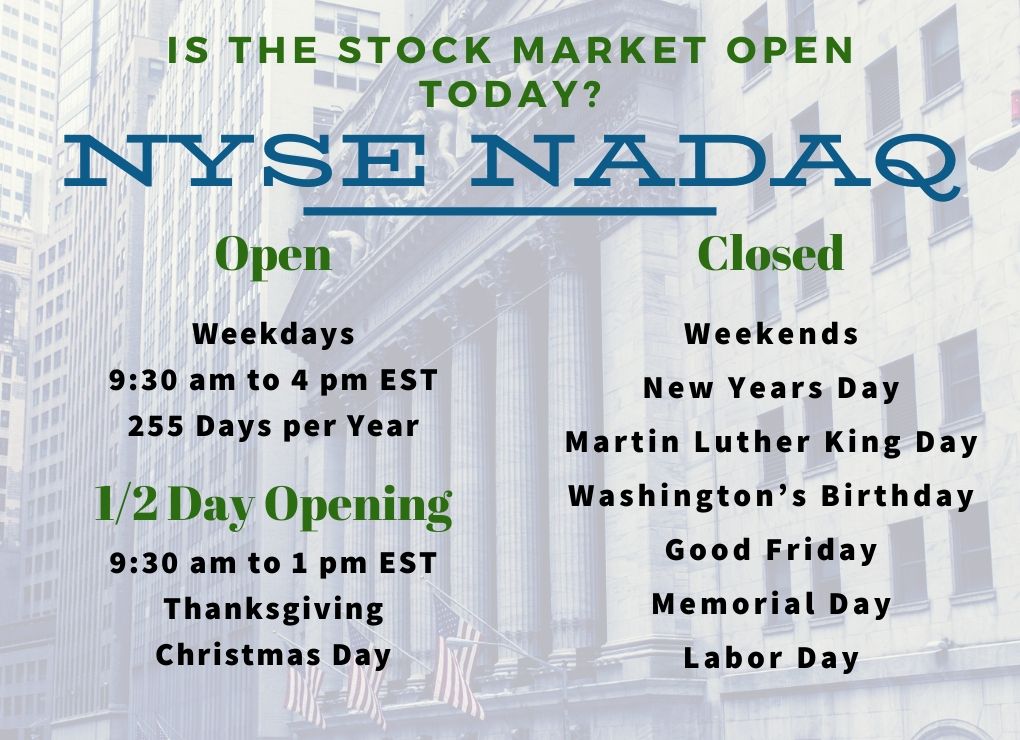
The New York Stock Exchange (NYSE) and the NASDAQ are the two largest exchanges in the world. Their standard operating hours are Monday through Friday, 9:30 AM to 4:00 PM Eastern Time (ET). These hours represent the period of highest liquidity for U.S. equities. The “Opening Bell” at 9:30 AM often sees a surge in volume as the market processes overnight news, while the “Closing Bell” at 4:00 PM marks the final price discovery for the day, used to calculate mutual fund Net Asset Values (NAVs).
European Markets (LSE, Euronext, and DAX)
Europe offers a bridge between the Asian and American sessions. The London Stock Exchange (LSE), one of the oldest and most influential, typically operates from 8:00 AM to 4:30 PM Greenwich Mean Time (GMT). Other major exchanges, such as the Euronext Paris and the Frankfurt Stock Exchange (DAX), operate on similar schedules, usually starting at 9:00 AM and closing at 5:30 PM Central European Time (CET). European markets are unique because their afternoon session overlaps with the U.S. morning session, creating a period of intense global trading activity.
Asian and Pacific Markets (Tokyo, Hong Kong, and Sydney)
The trading day begins in the East. The Tokyo Stock Exchange (TSE) generally operates from 9:00 AM to 3:00 PM Japan Standard Time (JST), notably including a lunch break from 11:30 AM to 12:30 PM—a practice less common in Western markets. The Hong Kong Stock Exchange follows a similar pattern, while the Australian Securities Exchange (ASX) in Sydney opens the global cycle. For Western investors, these markets represent the “overnight” session, where early indicators of global sentiment often emerge.
Beyond Stocks: 24-Hour Markets and Weekend Trading
While equity markets follow rigid schedules, other financial sectors operate under different rules. As the world has become more interconnected, certain asset classes have moved toward a near-continuous trading model.
The Forex Market: The 24/5 Giant
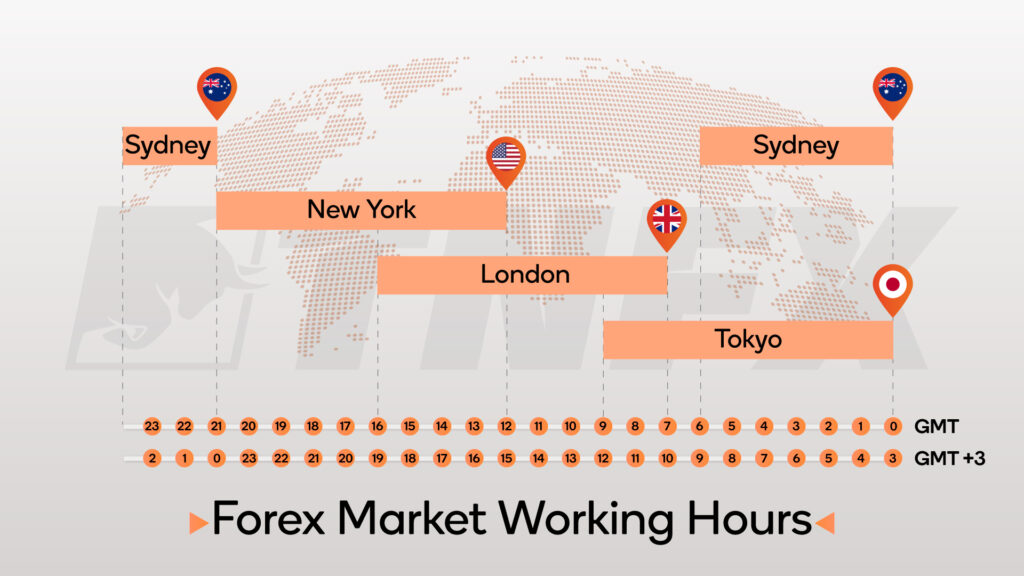
The Foreign Exchange (Forex) market is the largest and most liquid financial market in the world. Unlike stocks, Forex does not have a central physical exchange. Instead, it is a decentralized, over-the-counter (OTC) market. Trading begins on Sunday evening (around 5:00 PM ET) as the Sydney session opens and continues uninterrupted until Friday afternoon (5:00 PM ET). This 24-hour cycle allows institutional and retail traders to react to geopolitical events in real-time, though liquidity varies significantly depending on which major global financial centers are active.
Cryptocurrency: The Market That Never Sleeps
Perhaps the most disruptive development in modern finance is the rise of cryptocurrency. Unlike traditional fiat currencies or stocks, digital assets like Bitcoin and Ethereum trade 24 hours a day, 7 days a week, 365 days a year. There are no opening bells, no closing prices, and no holiday breaks. This constant uptime offers unparalleled access but also presents unique challenges, such as the risk of extreme volatility during “low-volume” hours like weekend nights in the Western hemisphere.
Commodities and Futures
Commodities such as gold, oil, and agricultural products are primarily traded through futures contracts. Exchanges like the Chicago Mercantile Exchange (CME) offer nearly 24-hour trading for futures, typically starting Sunday evening and running through Friday. However, these markets often have “daily halts” or brief settlement periods (usually 60 minutes) where trading is paused to allow for clearing and administrative processing.
Understanding Extended Trading Sessions
The digital transformation of brokerage platforms has democratized access to “Extended-Hours Trading.” This allows individual investors to trade outside the traditional 9:30 AM to 4:00 PM window, though it comes with specific caveats.
Pre-Market Trading: Seizing the Early Edge
In the United States, pre-market trading can begin as early as 4:00 AM ET, though most activity picks up around 8:00 AM ET. Investors use this session to react to overnight news, international market movements, or early-morning economic data (like the Jobs Report). While it offers an early edge, the pre-market is often characterized by lower volume and wider “bid-ask spreads,” meaning it can be more expensive to execute trades.
After-Hours Trading: Reacting to Earnings and News
The after-hours session typically runs from 4:00 PM to 8:00 PM ET. This is arguably the most critical time for fundamental investors, as the majority of publicly traded companies release their quarterly earnings reports shortly after the closing bell. Massive price swings can occur in minutes as algorithms and institutional traders digest financial statements.
The Risks of Low Liquidity and High Volatility
While extended-hours trading provides flexibility, it is not without risk. Because fewer participants are active, a single large order can move the price of a stock significantly more than it would during the regular session. Furthermore, many brokerages only allow “limit orders” during these times to protect investors from executing trades at unfavorable prices. For the average retail investor, extended hours are often better used for observation than heavy execution.
Strategic Timing: When Is the Best Time to Trade?
Knowing when the markets are open is the baseline; knowing when they are most active is where the professional advantage lies. Market participants focus on specific windows where liquidity and volatility intersect to create opportunity.
The Importance of Market Overlaps
The most significant period in the trading day is the “overlap.” This occurs when two major global regions are active simultaneously. The most notable is the London-New York overlap, occurring between 8:00 AM and 12:00 PM ET. During these four hours, the world’s two largest financial hubs are trading, leading to the highest volume of the day. This is often the best time for executing large orders with minimal “slippage.”
Opening Bells and Closing “Power Hours”
The first and last hours of the equity market session are known for their intensity. The “Opening Cross” (the first 30 minutes) is often driven by emotional reactions to news and the execution of accumulated overnight orders. Conversely, the “Power Hour” (the final hour before the close) is characterized by institutional “rebalancing” and day traders closing out their positions. These windows offer the most volatility, which can be a boon for experienced traders but a hazard for the unprepared.
Holidays and Early Closures
Market participants must also account for bank holidays and early closures. In the U.S., the markets are closed for ten federal holidays, including Thanksgiving and Christmas. On the days preceding or following certain holidays (like the day after Thanksgiving), the market often closes early at 1:00 PM ET. During these periods, “thin” markets can lead to erratic price movements, as there are fewer buyers and sellers to stabilize the price.
Optimizing Your Investment Strategy Around Market Hours
Success in personal finance and investing requires an alignment between your strategy and the market’s operational realities.
Tools for Managing Time Zone Differences
For those trading international markets, managing time zones is a logistical hurdle. Professional investors use “Market Clocks” and financial calendars that automatically adjust to their local time. Understanding “Daylight Savings Time” shifts is also crucial, as different countries transition on different dates, which can temporarily shift the overlap windows by an hour.
Aligning Your Lifestyle with Market Volatility
Not every investor needs to be active when the opening bell rings. For “set-and-forget” index fund investors, the specific hour of the day is largely irrelevant. However, for those engaged in active side hustles like swing trading or options writing, it is essential to align your “desk time” with periods of high liquidity. Trying to trade a specific stock during a low-volume mid-day lull can result in poor fills and unnecessary losses.
In conclusion, while the question “when are markets open” has a simple factual answer, its implications run deep into the mechanics of wealth creation. By respecting the global clock, understanding the nuances of asset-specific hours, and recognizing the power of market overlaps, you can better position your capital to take advantage of the world’s financial flow. In the modern economy, the market is always open somewhere; the key is knowing when it is the right time for you to participate.
aViewFromTheCave is a participant in the Amazon Services LLC Associates Program, an affiliate advertising program designed to provide a means for sites to earn advertising fees by advertising and linking to Amazon.com. Amazon, the Amazon logo, AmazonSupply, and the AmazonSupply logo are trademarks of Amazon.com, Inc. or its affiliates. As an Amazon Associate we earn affiliate commissions from qualifying purchases.