
Understanding the precise timing of Advanced Micro Devices (AMD) earnings reports is a crucial element for investors, financial analysts, and market watchers alike. These quarterly disclosures offer a panoramic view into the company’s financial health, operational efficiency, and future prospects, significantly influencing stock valuations and broader market sentiment. For anyone with a stake in the semiconductor industry or the broader technology investment landscape, knowing when and how to analyze these reports is paramount to informed decision-making.
Decoding the Importance of Earnings Reports
An earnings report, also known as a quarterly report or 10-Q (or 10-K for annual), is a financial statement issued by a public company, typically every three months, detailing its financial performance over the preceding quarter. For a company like AMD, these reports provide a critical benchmark for evaluating its progress against competitors, its own historical performance, and analyst expectations.

What is an Earnings Report?
At its core, an earnings report is a comprehensive disclosure document that outlines a company’s revenues, net income, earnings per share (EPS), and various other financial metrics over a specific period. It typically includes:
- Income Statement: Summarizes revenues, expenses, and profit (or loss) over a period.
- Balance Sheet: A snapshot of assets, liabilities, and owner’s equity at a specific point in time.
- Cash Flow Statement: Details how cash is generated and used by the company.
- Management Discussion and Analysis (MD&A): Management’s perspective on the company’s financial condition and results of operations.
- Guidance: Forward-looking statements from management regarding expected future performance, including revenue, gross margin, and operating expenses for the upcoming quarter or year.
These components are meticulously scrutinized by investors to gauge the company’s profitability, liquidity, solvency, and overall operational effectiveness.
Why Q1, Q2, Q3, Q4 Matter
Public companies generally report their financial results on a quarterly cadence, aligning with the calendar year, though some companies operate on a fiscal year that differs from the calendar year. For AMD, like many U.S.-based companies, the fiscal quarters generally align:
- Q1 (First Quarter): Typically covers January 1 to March 31, with results reported in late April or early May.
- Q2 (Second Quarter): Covers April 1 to June 30, with results reported in late July or early August.
- Q3 (Third Quarter): Covers July 1 to September 30, with results reported in late October or early November.
- Q4 (Fourth Quarter): Covers October 1 to December 31, with results reported in late January or early February of the following year. This report often includes the full annual results (10-K).
Each quarter provides a fresh data point in AMD’s ongoing financial narrative. Strong performance in any given quarter can signal robust demand for their processors, GPUs, and data center solutions, while weaker results might indicate competitive pressures, supply chain issues, or broader market headwinds. The sequential (quarter-over-quarter) and annual (year-over-year) comparisons are vital for understanding trends and growth trajectories.
Key Metrics to Watch
When AMD releases its earnings, several key metrics draw immediate attention:
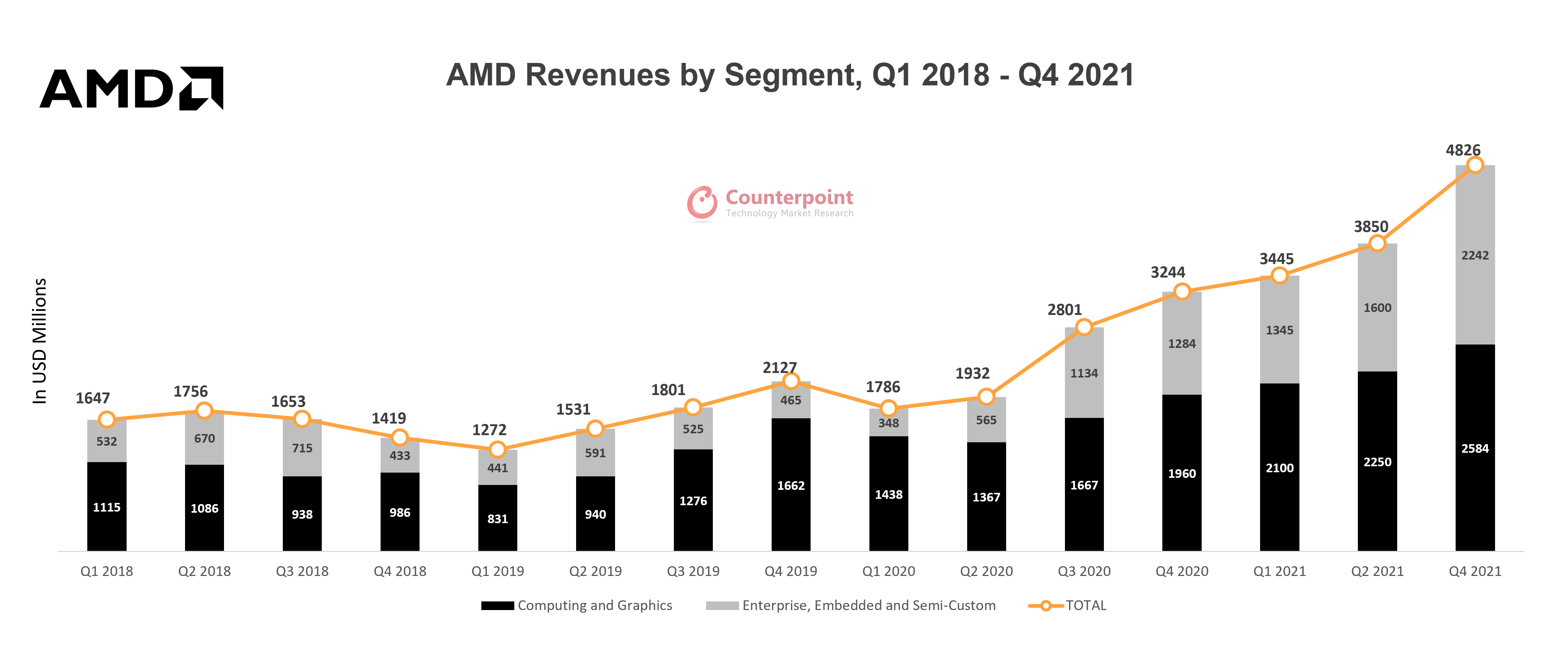
- Revenue: The total amount of money generated from sales of products and services. Investors look for consistent revenue growth, often broken down by segment (e.g., Data Center, Client, Gaming, Embedded).
- Earnings Per Share (EPS): A company’s net profit divided by the number of outstanding common shares. EPS is a widely used indicator of a company’s profitability. Analysts often provide consensus EPS estimates, and the actual EPS “beating” or “missing” these estimates can significantly move the stock price.
- Gross Margin: The percentage of revenue left after subtracting the cost of goods sold. For a chipmaker like AMD, gross margin indicates pricing power and efficiency in manufacturing.
- Operating Income: Revenue minus operating expenses (e.g., R&D, sales, marketing, administrative). This metric shows the profitability of the company’s core operations.
- Net Income: The “bottom line” profit after all expenses, including taxes and interest, have been deducted from revenue.
- Cash Flow from Operations: The cash generated by AMD’s normal business activities. Healthy operating cash flow is essential for funding R&D, capital expenditures, and potential dividends or share buybacks.
- Guidance: Perhaps one of the most impactful elements, guidance provides management’s outlook for the upcoming quarter or fiscal year. Positive guidance can often outweigh a slight miss on past earnings, signaling strong future prospects. Conversely, cautious guidance can sink a stock even after a strong quarter.
Tracking AMD’s Earnings Calendar
For investors, staying abreast of AMD’s earnings release dates is not just about curiosity; it’s about strategic timing for portfolio adjustments, risk management, and market participation. The official announcement dates are generally predictable, falling within a specific window after each quarter closes.
Official Sources for AMD Earnings Dates
The most reliable and official sources for AMD’s earnings schedule are:
- AMD Investor Relations Website: This is the primary destination for all official financial communications. The “Events & Presentations” or “Financial Calendar” section will list confirmed dates for upcoming earnings releases and conference calls.
- SEC Filings: Once filed, the 10-Q (quarterly) and 10-K (annual) reports are publicly available on the U.S. Securities and Exchange Commission (SEC) EDGAR database. While not a forward-looking calendar, these filings confirm past dates and provide the full, unsummarized financial data.
- Major Financial News Outlets and Data Providers: Reputable financial news services (e.g., Bloomberg, Reuters, Wall Street Journal) and financial data platforms (e.g., Yahoo Finance, Google Finance, Investing.com) often consolidate earnings calendars, though it’s always best to cross-reference with the company’s official site.
How to Set Up Earnings Alerts
Given the market’s immediate reaction to earnings news, getting timely notifications is critical.
- Investor Relations Email Alerts: AMD’s investor relations website typically offers an option to sign up for email alerts, which will notify subscribers directly when earnings dates are announced and when reports are released.
- Financial Calendar Tools: Many investing platforms and financial news websites offer customizable earnings calendars where users can add specific companies (like AMD) to receive alerts via email, app notification, or desktop pop-up.
- Brokerage Platforms: Most online brokerage accounts integrate earnings calendars and alerts directly into their platforms, providing seamless access for their clients.
- Calendar Integration: Some tools allow you to export earnings dates directly to your personal digital calendar (e.g., Google Calendar, Outlook Calendar), ensuring you don’t miss an announcement.
Historical Earnings Release Patterns
While specific dates shift slightly year-to-year, AMD’s earnings releases typically adhere to a consistent pattern: roughly 3-4 weeks after the close of each fiscal quarter. For example, Q4 results often land in late January or early February. Observing these historical patterns can help investors anticipate the approximate timing, even before official announcements are made. This predictability allows for strategic planning, such as adjusting positions, hedging, or preparing for potential volatility.
The Impact of AMD Earnings on Investors
The moments surrounding an AMD earnings report are often characterized by heightened market activity. For investors, these periods demand careful consideration and a clear understanding of potential outcomes.
Stock Price Volatility and Market Reaction
Earnings reports are among the most significant catalysts for short-term stock price movements.
- Pre-Earnings Speculation: Leading up to the report, analysts issue estimates for revenue and EPS. Investors often trade based on their expectations relative to these estimates.
- Immediate Reaction: Upon release, if AMD “beats” analyst expectations, its stock price may surge. Conversely, a “miss” can lead to a sharp decline. Guidance for the future is often even more influential than past performance.
- Post-Report Analysis: The subsequent earnings conference call, where management discusses results and answers analyst questions, can further shape market sentiment and extend or reverse initial price movements.
- Increased Trading Volume: Volatility is typically accompanied by a significant increase in trading volume as investors react to the new information.
This volatility presents both opportunities and risks. Speculative traders may seek to profit from these rapid swings, while long-term investors often use these periods to re-evaluate their positions or identify entry/exit points.
Long-Term vs. Short-Term Investor Perspectives
Different types of investors approach earnings reports with varying strategies:
- Short-Term Traders: These individuals might attempt to profit from the immediate price swings, often using options strategies or rapid stock trades. Their focus is on beating or missing estimates and the immediate market reaction.
- Long-Term Investors: These investors typically look beyond the immediate quarter’s results. They analyze the broader trends, management’s strategic vision, market share gains or losses, and the long-term implications of current financial performance. While a quarterly miss might cause a temporary dip, a long-term investor focuses on whether the underlying growth story and competitive advantages remain intact. They use earnings reports to validate or challenge their investment thesis.
For long-term holders of AMD, an earnings report is less about the immediate reaction and more about the trajectory of key segments like data center growth, client CPU market share, and profitability improvements.
Analyzing Guidance and Future Outlook
As previously mentioned, management guidance is often the most critical component of an earnings release. It provides the company’s own projection of future performance, reflecting their internal assessment of market conditions, product pipelines, and operational capabilities.
- Positive Guidance: An optimistic outlook on future revenue, gross margin, and EPS can signal confidence in upcoming product launches, strong demand, or market expansion, often leading to a sustained rally in the stock.
- Cautious Guidance: A more conservative outlook can indicate potential headwinds, increased competition, or delays in product cycles, frequently resulting in downward pressure on the stock, even if the past quarter was strong.
Investors must not only understand the guidance numbers but also the qualitative commentary surrounding them during the earnings call. Management’s tone, their explanation of market dynamics, and their strategic priorities offer crucial context that quantitative figures alone cannot convey.
Decoding AMD’s Financial Health: Beyond the Headlines
While EPS and revenue figures grab immediate headlines, a deeper dive into AMD’s earnings report unveils a more nuanced picture of its financial strength and operational efficacy. A thorough financial analysis goes beyond the top-line numbers.
Revenue Streams and Segment Performance
AMD’s business is diversified across several key segments, each with its own market dynamics and growth drivers:
- Data Center: This segment includes server CPUs (EPYC) and data center GPUs (Instinct). Growth here is critical, driven by cloud computing expansion and AI infrastructure build-outs. High-margin growth in this area is particularly valued by investors.
- Client Segment: Comprising desktop and notebook processors (Ryzen). This segment is more cyclical, heavily influenced by PC market demand and competition from Intel.
- Gaming Segment: Includes Radeon GPUs for PCs and semi-custom chips for gaming consoles (e.g., PlayStation, Xbox). Console demand provides a stable base, while discrete GPU sales are more volatile.
- Embedded Segment: Includes adaptive SoCs (System-on-Chips) and embedded processors for industrial, automotive, and communications applications. This segment offers steady, high-margin revenue and diversifies AMD away from traditional PC markets.
Analyzing the performance of each segment helps investors understand which areas are driving growth, where challenges lie, and how diversified the company’s revenue base truly is. Sustained growth across multiple high-margin segments is a strong indicator of a healthy, diversified business.
Profitability Metrics: Gross Margin, Operating Income, Net Income
Beyond revenue, profitability metrics reveal how efficiently AMD converts its sales into profit.
- Gross Margin: As a chip designer and vendor, AMD’s gross margin reflects its ability to command premium pricing for its leading-edge technology and manage its cost of goods sold. Trends in gross margin are closely watched for signs of pricing pressure or manufacturing efficiencies.
- Operating Income: This figure illustrates the profitability of AMD’s core business activities before interest and taxes. It shows how effectively the company manages its research and development (R&D), sales, general, and administrative (SG&A) expenses relative to its revenue.
- Net Income: The ultimate measure of profitability. Investors track net income and net income margins to assess the company’s overall financial success after all expenses. Consistent growth in net income is a hallmark of a robust and well-managed company.
Cash Flow and Balance Sheet Strength
A company’s cash flow and balance sheet provide insight into its financial stability and ability to fund future growth or weather economic downturns.
- Free Cash Flow (FCF): Operating cash flow minus capital expenditures. FCF is crucial because it represents the cash a company has available to pay down debt, buy back shares, issue dividends, or make acquisitions. Strong and growing FCF is a positive sign for investors.
- Balance Sheet: Investors examine AMD’s assets (like cash, inventory, property, plant, and equipment) against its liabilities (like accounts payable, debt). A strong balance sheet with ample cash reserves and manageable debt levels provides financial flexibility and reduces risk. Key metrics include the current ratio (current assets / current liabilities) and debt-to-equity ratio.
Strategic Considerations for Investing in AMD Around Earnings
Navigating the complexities of earnings season requires a thoughtful, strategic approach, especially for a high-growth, high-volatility stock like AMD.
Risk Management and Diversification
Investing around earnings reports carries inherent risks due to potential price volatility.
- Diversification: No single stock should dominate a portfolio, particularly around earnings. Diversifying across different companies and sectors helps mitigate the impact of a single company’s poor performance.
- Position Sizing: Limiting the percentage of your portfolio allocated to a single position, especially a volatile one, is a fundamental risk management practice.
- Stop-Loss Orders: For shorter-term traders, stop-loss orders can limit potential losses if the stock moves against expectations post-earnings.
The Role of Analyst Consensus
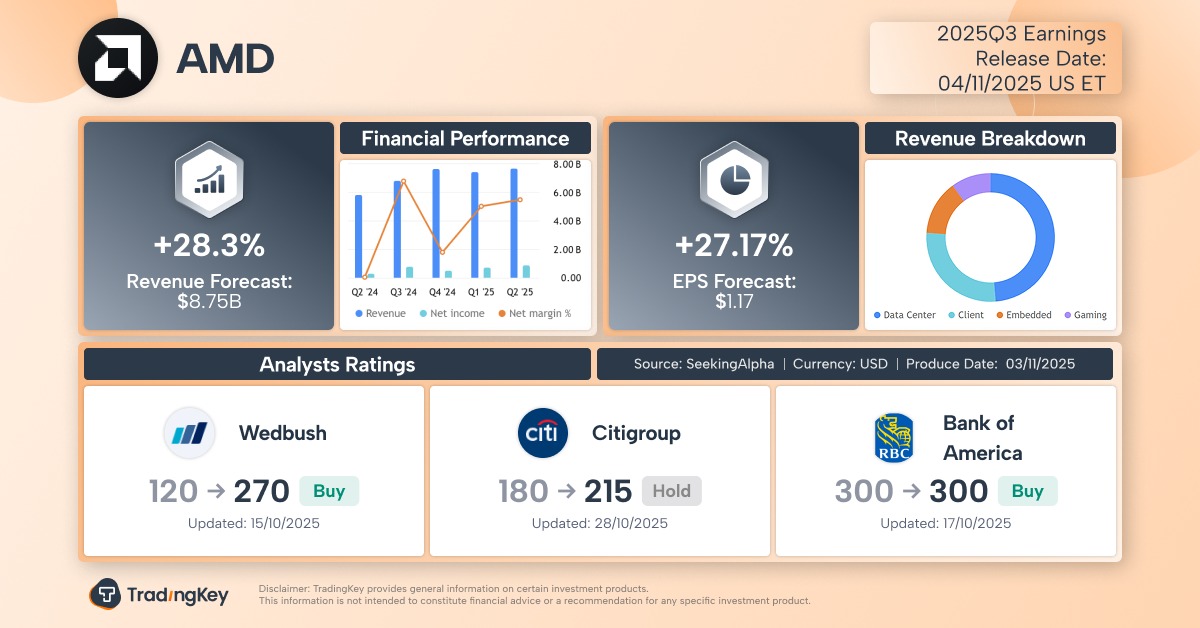
Market analysts play a significant role in setting expectations. They publish research reports and provide consensus estimates for AMD’s revenue, EPS, and other key metrics.
- “Beat or Miss”: A company “beating” or “missing” the analyst consensus is often the primary driver of immediate stock price reaction.
- Rating Changes: Post-earnings, analysts may upgrade or downgrade their ratings (e.g., “Buy,” “Hold,” “Sell”) and adjust price targets, further influencing market perception.
- Interpretation: While consensus estimates are important, investors should understand the range of estimates and the underlying assumptions made by analysts. Divergences can offer insight into different market perspectives.
Post-Earnings Call Analysis
The earnings conference call, which usually follows the release of the written report, is an indispensable resource.
- Management Commentary: Listen for qualitative insights from AMD’s CEO, CFO, and other executives regarding market conditions, competitive landscape, product roadmap, and strategic priorities.
- Q&A Session: Analysts’ questions and management’s answers often reveal details not explicitly stated in the written report, clarifying guidance, addressing concerns, or highlighting emerging opportunities.
- Transcripts and Replays: For those unable to listen live, transcripts and audio replays are typically available on AMD’s investor relations website within a few hours of the call, allowing for detailed review and analysis.
In conclusion, understanding when AMD earnings are released is merely the first step. The true value lies in a thorough analysis of the report’s contents, the context of management’s guidance, and the broader financial implications for the company and its investors. This comprehensive approach empowers investors to make well-informed decisions, positioning them strategically within the dynamic landscape of the semiconductor market.
aViewFromTheCave is a participant in the Amazon Services LLC Associates Program, an affiliate advertising program designed to provide a means for sites to earn advertising fees by advertising and linking to Amazon.com. Amazon, the Amazon logo, AmazonSupply, and the AmazonSupply logo are trademarks of Amazon.com, Inc. or its affiliates. As an Amazon Associate we earn affiliate commissions from qualifying purchases.