
For investors, analysts, and market enthusiasts, few events on the financial calendar carry as much weight as the quarterly earnings release from Amazon.com, Inc. (ticker: AMZN). As a global titan spanning e-commerce, cloud computing, digital advertising, and logistics, Amazon’s financial health serves as a primary barometer for consumer spending, corporate technology investment, and the overall vigor of the modern digital economy. Understanding not just “when” Amazon reports, but what those reports signify, is essential for anyone looking to navigate the complexities of the equity markets.

Deciphering the Amazon Earnings Schedule: When to Expect the Reports
The question of “when amzn earnings” are released is one that arises four times a year, typically following a predictable seasonal pattern. However, the exact date is rarely set in stone months in advance. Amazon, like most large-cap technology companies, usually announces its official earnings date approximately two to three weeks before the actual event.
The Quarterly Cadence
Amazon operates on a standard fiscal year that aligns with the calendar year, ending on December 31. This results in four distinct earnings periods:
-
First Quarter (Q1): Ending March 31. Results are typically released in late April. This report often sets the tone for the year, revealing how the company is transitioning out of the busy holiday season.
-
Second Quarter (Q2): Ending June 30. Results are typically released in late July or early August. This period often highlights the initial impact of “Prime Day,” though the timing of that event can sometimes shift between Q2 and Q3.
-
Third Quarter (Q3): Ending September 30. Results are typically released in late October. This is often the most critical report for setting expectations for the fourth-quarter holiday rush.
-
Fourth Quarter (Q4): Ending December 31. Results are typically released in late January or early February. This is the “big one,” encompassing the holiday shopping season and providing the first look at the full-year performance and the initial guidance for the upcoming year.
Why Timing Can Be Unpredictable
While the windows mentioned above are reliable, the specific day of the week can vary. Historically, Amazon has favored Thursday afternoons, releasing its earnings press release shortly after the closing bell of the Nasdaq (4:00 PM ET), followed by a conference call with analysts at 5:30 PM ET.
Investors monitor these dates closely because the “earnings gap”—the difference between the closing price before the report and the opening price the following morning—can be substantial. Because Amazon is a high-growth company with massive reinvestment strategies, even a slight deviation from analyst expectations can trigger double-digit percentage swings in the share price.
Key Metrics: What Drives the AMZN Stock Price During Earnings
The headline numbers of revenue and earnings per share (EPS) are only the surface of an Amazon earnings report. To understand the true financial health of the company, seasoned investors dive into specific segments and internal metrics that dictate the long-term valuation of the stock.
AWS: The Engine of Profitability
While the retail side of Amazon generates the most revenue, Amazon Web Services (AWS) is the primary driver of operating income. During every earnings call, Wall Street waits with bated breath for two specific numbers regarding AWS: revenue growth percentage and operating margin.
In recent years, the cloud computing landscape has become increasingly competitive, with Microsoft Azure and Google Cloud vying for market share. If AWS shows a deceleration in growth, it often suggests that enterprises are tightening their IT budgets or that competition is eating into Amazon’s dominance. Conversely, a re-acceleration in AWS growth—often driven by new AI workloads—can send the stock soaring, as it confirms Amazon’s high-margin “cash cow” remains healthy.
Retail Margins and Shipping Costs
The “Online Stores” and “Third-Party Seller Services” segments represent the core of Amazon’s consumer-facing business. However, these are traditionally low-margin businesses due to the immense costs associated with fulfillment, shipping, and logistics.
During an earnings release, analysts scrutinize the “Cost of Sales” and “Fulfillment” line items. If Amazon can demonstrate that its regionalization of fulfillment centers is lowering the “cost to serve,” it indicates a more efficient and profitable retail machine. For investors, the goal is to see “operating leverage”—where revenue grows faster than the costs required to generate that revenue.
The Ascendance of Advertising Services
One of the most impressive developments in Amazon’s recent financial history is the explosive growth of its digital advertising business. Amazon Advertising is now a multi-billion-dollar juggernaut that allows sellers and brands to promote products directly within the search results and on product pages.

Advertising is a high-margin business, similar to AWS. In many recent quarters, the growth in advertising revenue has helped offset fluctuations in retail margins. When looking at the “when” of AMZN earnings, checking the growth rate of this segment is vital; it is often the differentiator between a mediocre quarter and a stellar one.
Analyzing the “Beat or Miss”: Beyond the Headline Revenue
When the earnings report drops, news outlets immediately report whether Amazon “beat” or “missed” analyst estimates. While these headlines drive immediate price action, sophisticated investors look deeper into the quality of those numbers.
Operating Income and Free Cash Flow
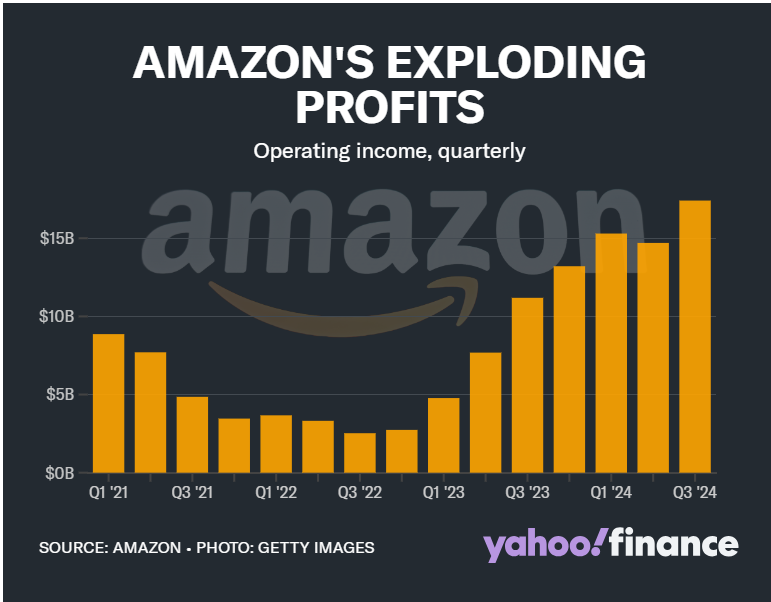
Amazon has a long history of prioritizing long-term cash flow over short-term GAAP (Generally Accepted Accounting Principles) earnings. For years, the company famously reported little to no net income because it was reinvesting every cent into warehouses, data centers, and new ventures like Prime Video.
Today, the focus has shifted toward Free Cash Flow (FCF). FCF is the cash a company generates after accounting for cash outlays to support operations and maintain its capital assets. A positive and growing FCF trend indicates that Amazon can self-fund its growth without needing to take on excessive debt or dilute shareholders. If an earnings report shows a “miss” on EPS but a massive “beat” on Free Cash Flow, the market often reacts positively once the initial dust settles.
Forward-Looking Guidance
In the world of investing, the past is already priced in. What matters most during an earnings call is the future. Amazon provides “guidance” for the upcoming quarter, offering a range for expected revenue and operating income.
If Amazon reports record-breaking profits for the previous quarter but provides a cautious or “weak” outlook for the next quarter, the stock will likely sell off. This is particularly relevant during the Q3 report in October, where Amazon’s guidance for the Q4 holiday season can make or break the stock’s performance for the remainder of the year. Investors look for signs of consumer resilience, inflationary pressures, and management’s confidence in their operational efficiency.
Strategic Considerations for Investors During Earnings Season
Navigating “when amzn earnings” occur requires a strategic approach to risk management. The volatility surrounding the event makes it a high-stakes environment for both short-term traders and long-term holders.
Managing Earnings Volatility
It is not uncommon for AMZN stock to move 5% to 10% in a single session following an earnings announcement. For long-term investors, this volatility is often “noise”—temporary fluctuations that do not change the underlying value of the company. However, for those with a shorter time horizon, these moves can be devastating if they are on the wrong side of the trade.
Many investors use “options implied volatility” to gauge how much the market expects the stock to move. If the “straddle” (a neutral options strategy) is pricing in an 8% move, and the stock only moves 2%, options sellers profit while buyers lose due to “volatility crush.” Understanding these dynamics is crucial for anyone trading around the earnings date.
The Role of Artificial Intelligence in Future Earnings
Currently, the most significant narrative surrounding Amazon is its integration of Generative AI. This impacts two areas: AWS and internal operations. Investors are looking for evidence that Amazon’s “Bedrock” service and its custom AI chips (Trainium and Inferentia) are gaining traction among enterprise clients.
Furthermore, AI is being used to optimize logistics and personalized advertising. During the earnings conference call, the frequency with which management mentions AI—and the specific revenue gains attributed to it—will likely be a primary driver of investor sentiment for the foreseeable future.
Conclusion: The Long-View of Amazon’s Financial Health
While the question of “when amzn earnings” are released is a tactical one, the implications are deeply strategic. Each earnings report is a new chapter in a story of a company that has successfully transitioned from an online bookstore to a global infrastructure provider.
For the disciplined investor, these quarterly updates are an opportunity to re-evaluate the investment thesis. Is AWS still the market leader? Is the retail segment becoming more efficient? Is the advertising business continuing to scale? By focusing on these core pillars—and looking past the immediate post-market volatility—investors can gain a clear picture of Amazon’s trajectory.
Earnings season is a period of high emotion and rapid data processing. By understanding the schedule, the key metrics, and the nuances of forward guidance, you can transform a moment of market stress into a calculated opportunity for financial growth. Whether you are looking for a short-term trade or a long-term position, the Amazon earnings report remains the ultimate scorecard for one of the most influential companies in the world.
aViewFromTheCave is a participant in the Amazon Services LLC Associates Program, an affiliate advertising program designed to provide a means for sites to earn advertising fees by advertising and linking to Amazon.com. Amazon, the Amazon logo, AmazonSupply, and the AmazonSupply logo are trademarks of Amazon.com, Inc. or its affiliates. As an Amazon Associate we earn affiliate commissions from qualifying purchases.