
In an increasingly interconnected world, where communication transcends geographical borders, understanding how to exchange basic contact information in different languages is not just polite — it’s a digital imperative. The simple act of asking for “what’s your phone number?” in Spanish becomes a gateway to international collaboration, personal connection through various apps, and crucial verification processes. This guide delves into the linguistic nuances and practical applications of this essential phrase, framing it within the broader context of technology-driven global communication.
Mastering the Essential Phrase: “What’s Your Phone Number?”
At the heart of any communication exchange lies the ability to request contact information. In Spanish, this seemingly straightforward question carries specific linguistic structures and cultural considerations that can significantly impact clarity and reception.

The Core Question: “¿Cuál es tu número de teléfono?”
The most direct and widely understood way to ask “What’s your phone number?” in Spanish is:
“¿Cuál es tu número de teléfono?”
Let’s break it down:
- ¿Cuál es? (What is?) – This is the interrogative pronoun and verb for “what is.”
- tu (your – informal singular) – This indicates an informal address, suitable for friends, peers, or people younger than you.
- número (number) – Straightforward translation.
- de teléfono (of phone) – The possessive phrase indicating “phone number.”
This phrase is universally understood across Spanish-speaking regions and is the go-to for most informal and semi-formal contexts. It’s concise, clear, and grammatically correct.
Formal vs. Informal Approaches
Just as in English, Spanish employs different levels of formality, particularly when addressing individuals. Choosing the correct pronoun is crucial for demonstrating respect and professionalism.
-
Informal (tu): As seen above, “¿Cuál es tu número de teléfono?” is for situations where you would use “you” informally in English. This includes friends, family, colleagues you know well, or younger individuals. In the context of peer-to-peer app usage or casual digital communication, this is often appropriate.
-
Formal (usted): When addressing someone older, a superior, a new acquaintance in a professional setting, or anyone you wish to show particular respect, you would use the formal “usted” form. The phrase becomes:
“¿Cuál es su número de teléfono?”
Here, su means “your” in the formal singular sense. This is particularly relevant in business communications, customer service interactions, or when setting up international calls for professional purposes.
Understanding this distinction is paramount for effective cross-cultural communication, especially when dealing with client interactions, technical support, or even setting up digital accounts requiring verification through a phone number.
Regional Variations and Preferred Terms
While “número de teléfono” is universally understood, some regions or individuals might use slightly different terms. Being aware of these can enhance your understanding and make you sound more natural.
-
Teléfono móvil / Celular: In many Latin American countries, “celular” is the predominant term for a mobile phone, while in Spain, “teléfono móvil” or simply “móvil” is more common. Thus, you might hear:
- “¿Cuál es tu número de celular?” (Common in Latin America)
- “¿Cuál es tu número de móvil?” (Common in Spain)
These variations specifically refer to mobile phone numbers, which are increasingly the primary form of contact for digital services.
-
Fijo: Less common in the age of mobile dominance, but “número fijo” refers to a landline number. While less relevant for many tech platforms today, it’s good to recognize.
Understanding these regional nuances is important, especially when communicating with someone from a specific country or when interacting with localized apps or services that might use these terms.
Communicating Your Number: Practical Spanish for Sharing
Once you’ve mastered asking for a number, the next step is being able to provide your own clearly and accurately. This involves not only knowing the Spanish words for numbers but also understanding how they are typically formatted and spoken.
Saying Numbers Clearly in Spanish
Spanish numbers are generally straightforward, but clarity is key, especially when relaying critical information like a phone number. Numbers are typically spoken individually or in pairs, rather than in groups of three or four as is sometimes done in English.
- Zero to Nine:
- 0: cero
- 1: uno
- 2: dos
- 3: tres
- 4: cuatro
- 5: cinco
- 6: seis
- 7: siete
- 8: ocho
- 9: nueve
When giving your phone number, you would typically list each digit sequentially. For example, if your number is 555-123-4567, you might say:
“Mi número es cinco, cinco, cinco, uno, dos, tres, cuatro, cinco, seis, siete.”
Formatting and Country Codes
In the digital era, phone numbers are almost always preceded by a country code, especially for international communication via VoIP services, messaging apps, or online account registrations.
-
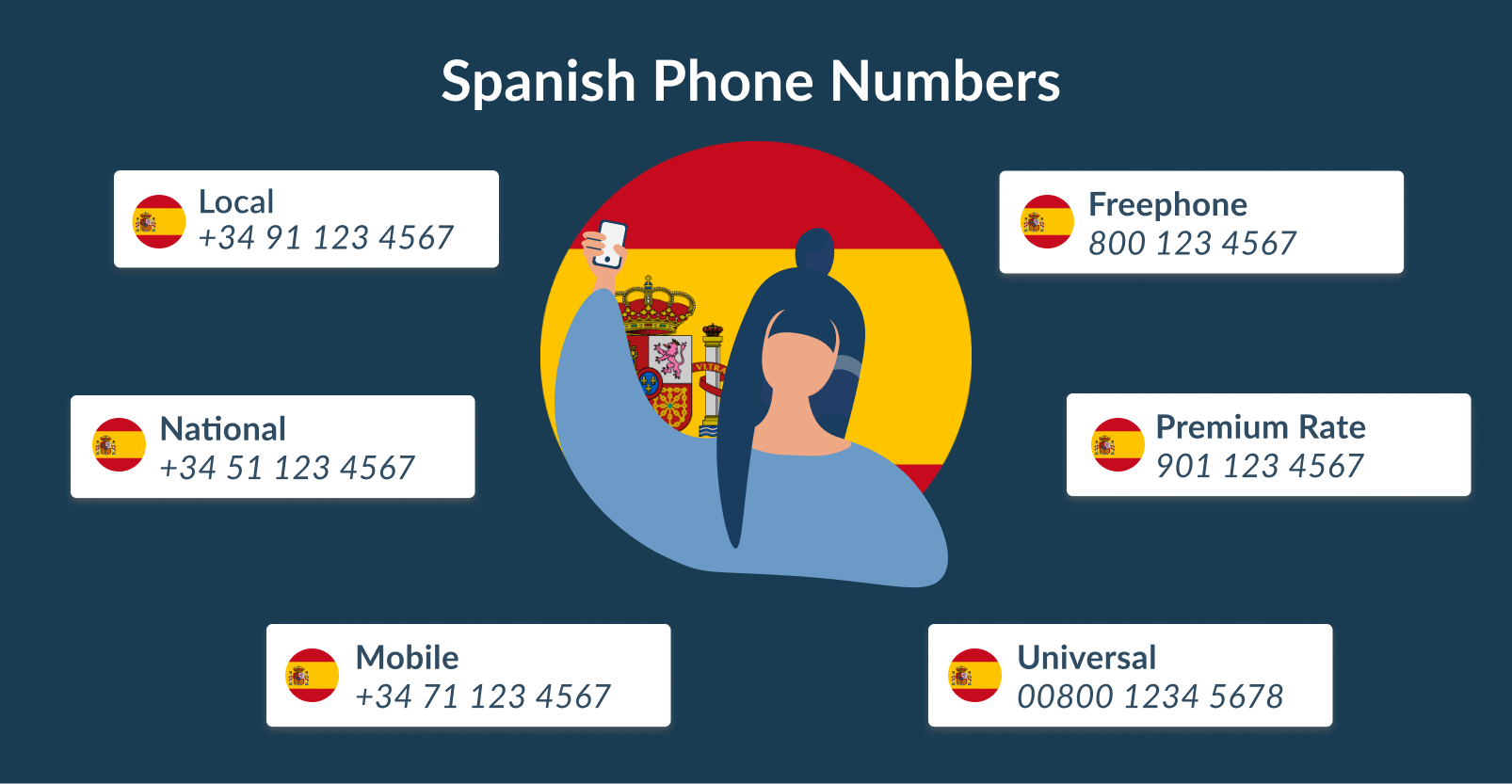
Country Codes: When providing your number for international use, always state your country code first. For instance, the US and Canada use +1, while Spain uses +34, and Mexico uses +52.
“Mi número es +1, cinco, cinco, cinco…”
Or, more formally, “El código de mi país es uno, y mi número es cinco, cinco, cinco…” -
Pauses and Grouping: While individual digits are common, sometimes numbers are grouped for ease of pronunciation and retention. This often follows local conventions for how phone numbers are written. For instance, in Spain, mobile numbers (9 digits) might be grouped in threes (e.g., 6XX XXX XXX). In other regions, groupings might be different.
“Mi número es seis, uno, dos… tres, cuatro, cinco… seis, siete, ocho.”
- “Guion” for Hyphen: If you need to specify a hyphen or dash, the word is “guion” (ghee-ON). However, for phone numbers, it’s usually sufficient to just pause.
Essential Follow-Up Phrases
After asking for or giving a number, a few follow-up phrases can enhance the interaction:
- Para verificar (To verify): “Permítame verificar: ¿Su número es [number]?” (Allow me to verify: Is your number [number]?) – Crucial for accuracy in digital entries or support calls.
- ¿Me lo puedes repetir? (Can you repeat it for me? – informal): If you didn’t catch the number clearly.
- ¿Puedes deletrearlo? (Can you spell it? – informal): Less common for numbers but useful for names or email addresses.
- ¿Te agendo? (Should I add you to my contacts? – informal): A natural follow-up once the number is exchanged.
- Lo guardo/Lo anoto (I’ll save it/I’ll write it down): A polite way to confirm you’ve received the information.
These phrases are not just about politeness; they are practical tools for ensuring data accuracy in a world where a mistyped digit can lead to communication breakdowns or security issues.
The Digital Nexus: Phone Numbers in a Tech-Driven World
In the 21st century, a phone number is far more than just a means to make calls. It’s a digital identifier, a security token, and a critical component of virtually every online interaction. Understanding how to communicate this information in Spanish is therefore a fundamental tech skill.
Phone Numbers for Apps and Online Services
From WhatsApp to banking apps, email verification to social media, a phone number is often the primary credential for creating accounts, recovering passwords, and receiving multi-factor authentication (MFA) codes.
- Account Creation: When registering for an app like Telegram or Signal, you’ll often be prompted for your “número de teléfono móvil” or “número de celular.” Knowing this term is essential for navigating the setup process in Spanish.
- Verification Codes (Códigos de verificación): Many services send SMS codes to your phone for identity verification. If you’re on a call with international support for an online service and they ask you to provide the “código de verificación” that was sent to your “número de móvil,” you’ll need to understand their request.
- Privacy Settings: In apps with privacy controls, you might encounter options like “Quién puede ver mi número de teléfono” (Who can see my phone number). Familiarity with these terms helps users manage their digital footprint effectively.
International Communication and VoIP Services
VoIP (Voice over Internet Protocol) services like Skype, Google Voice, and dedicated international calling apps heavily rely on phone numbers, both for calling traditional lines and for identifying users within their ecosystems.
- Dialing International Numbers: Understanding country codes and local numbering plans in Spanish-speaking countries is crucial for making cost-effective international calls using these services. For example, knowing that Spain’s landlines start with 9 and mobiles with 6 or 7 can prevent misdials.
- WhatsApp and Messaging Apps: WhatsApp is incredibly prevalent in Spanish-speaking countries. Exchanging “números de teléfono” for WhatsApp contact is a daily occurrence, making the phrases discussed earlier indispensable.
- Data Roaming Alternatives: For travelers or those living abroad, using a local “tarjeta SIM” (SIM card) with a new “número de teléfono” is a common strategy to avoid expensive roaming charges, often discussed in Spanish.
Digital Security and Verification
Phone numbers play a pivotal role in digital security infrastructure, acting as a critical layer of identity verification.
- Two-Factor Authentication (2FA) / Multi-Factor Authentication (MFA): Many platforms use 2FA via SMS to prevent unauthorized access. If you’re communicating with a support agent in Spanish, they might ask you to confirm your “número de teléfono” associated with your account for security purposes. Phrases like “¿Este es el número de teléfono que tienes registrado?” (Is this the phone number you have registered?) are common.
- Account Recovery: Should you lose access to an account, a registered phone number is often the lifeline for recovery. Understanding how to communicate this information clearly to a Spanish-speaking support team is vital.
- Privacy Concerns: The ubiquity of phone numbers in digital life also brings privacy concerns. Discussions around “filtración de datos” (data breach) or “protección de datos” (data protection) often revolve around personal identifiers like phone numbers.
Cultural Etiquette and Best Practices
Beyond the linguistic mechanics, the appropriate context and manner of asking for or giving a phone number are important, particularly in a tech-centric world where boundaries can sometimes blur.
When and How to Ask Appropriately
In both digital and face-to-face interactions, timing and context matter.
- Building Rapport: In professional or new social settings, it’s generally best to build a bit of rapport before asking for personal contact information. Directly asking for a “número de teléfono” too early can seem overly forward.
- Purpose-Driven Exchange: Be clear about why you’re asking. For instance, “Me gustaría estar en contacto para [project/event], ¿cuál es tu número de teléfono?” (I’d like to stay in touch for [project/event], what’s your phone number?)
- Digital First: In many informal contexts, especially among younger generations, exchanging social media handles or messaging app IDs (like WhatsApp) might precede or even replace sharing a direct phone number, especially for initial contact. “Agregame en WhatsApp” (Add me on WhatsApp) is a common suggestion.
Pronunciation Tips for Clarity
Spanish pronunciation is generally phonetic, but specific sounds can be tricky for non-native speakers. When relaying numbers, clear articulation is paramount.
- Vowels: Spanish vowels are short and distinct. Practice saying “uno,” “dos,” “tres” with crisp vowels.
- ‘R’ Sounds: While not in the numbers themselves, clear ‘r’ and ‘rr’ sounds in related words (like “número”) help overall clarity.
- Pacing: Speak at a moderate pace, especially when listing digits. Rushing can lead to misunderstanding. Practice saying your phone number slowly and clearly in Spanish until it flows naturally.
Beyond the Basics: Asking for Contact Info in Different Scenarios
While “número de teléfono” is the core, digital interactions often require more context.
- Email Address: “¿Cuál es tu correo electrónico?” (What’s your email address?) – Essential for professional digital communication and account recovery.
- Social Media: “¿Tienes Instagram/LinkedIn/etc.?” or “¿Cómo te encuentro en [platform]?” (Do you have Instagram/LinkedIn/etc.? or How do I find you on [platform]?) – Often a first step for casual digital connections.
- Alternative Contact: If a phone number isn’t available or preferred, “¿Hay alguna otra forma de contactarte?” (Is there another way to contact you?) offers an open-ended alternative.
Mastering the phrase “what’s your phone number in Spanish” extends beyond simple translation. It encompasses an understanding of cultural etiquette, technological applications, and the critical role phone numbers play in our digital lives. By integrating these linguistic and contextual insights, individuals can navigate the complexities of international digital communication with confidence and efficacy, ensuring seamless connections in an ever-shrinking world.
aViewFromTheCave is a participant in the Amazon Services LLC Associates Program, an affiliate advertising program designed to provide a means for sites to earn advertising fees by advertising and linking to Amazon.com. Amazon, the Amazon logo, AmazonSupply, and the AmazonSupply logo are trademarks of Amazon.com, Inc. or its affiliates. As an Amazon Associate we earn affiliate commissions from qualifying purchases.