
In our hyper-connected digital era, the concept of “noise” is often viewed as a nuisance—a signal interference, a distraction in an open-plan office, or the unwanted grain in a low-light digital photograph. However, within the realms of acoustics and signal processing, white noise is a sophisticated tool with a diverse array of technical applications. Far from being merely “static,” white noise is a complex mathematical construct that has paved the way for advancements in sleep technology, digital security, and hardware testing. Understanding what white noise is requires a dive into the physics of sound and the technological innovations that harness its unique properties to improve our digital and physical environments.
Understanding the Signal: The Tech Behind the Static
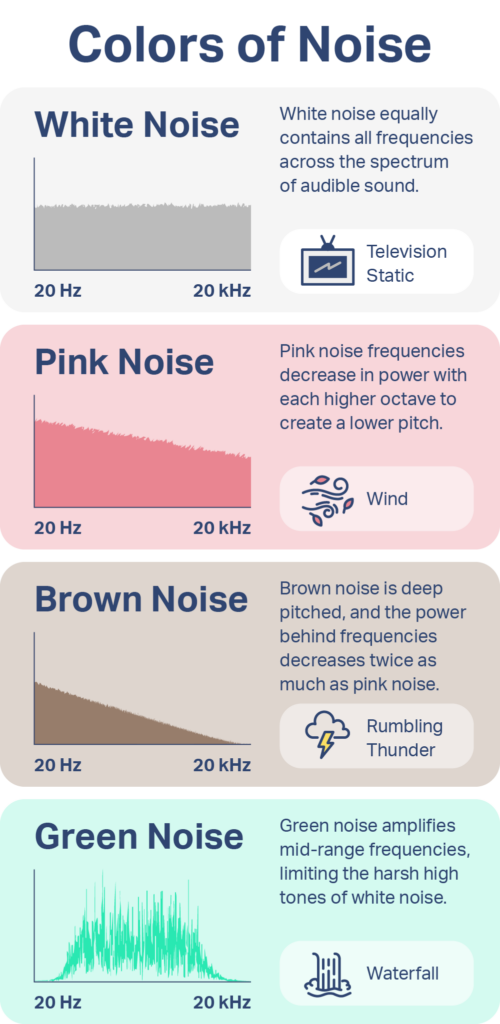
At its most fundamental level, white noise is a random signal having equal intensity at different frequencies, giving it a constant power spectral density. The name is derived from white light, which is a combination of all visible frequencies in the electromagnetic spectrum. Similarly, white noise contains all frequencies across the range of human hearing—roughly 20 hertz to 20,000 hertz—played at the same level of power.
The Spectral Density of Sound
In technical terms, white noise is characterized by its “flat” frequency spectrum. When visualized on a linear frequency scale, the energy is distributed evenly. This means that if you were to isolate any one-hertz band of the signal, it would contain the same amount of power as any other one-hertz band. This uniformity is what gives white noise its characteristic “shh” sound, reminiscent of a television tuned to an unassigned channel or a radio between stations.
From a computational standpoint, generating true white noise requires high-quality random number generators. In digital systems, this is often achieved through pseudo-random number algorithms that ensure no repeating patterns emerge, as any pattern would change the spectral profile and turn the “white” noise into a different “color” of sound.
How White Noise Differs from Pink and Brown Noise
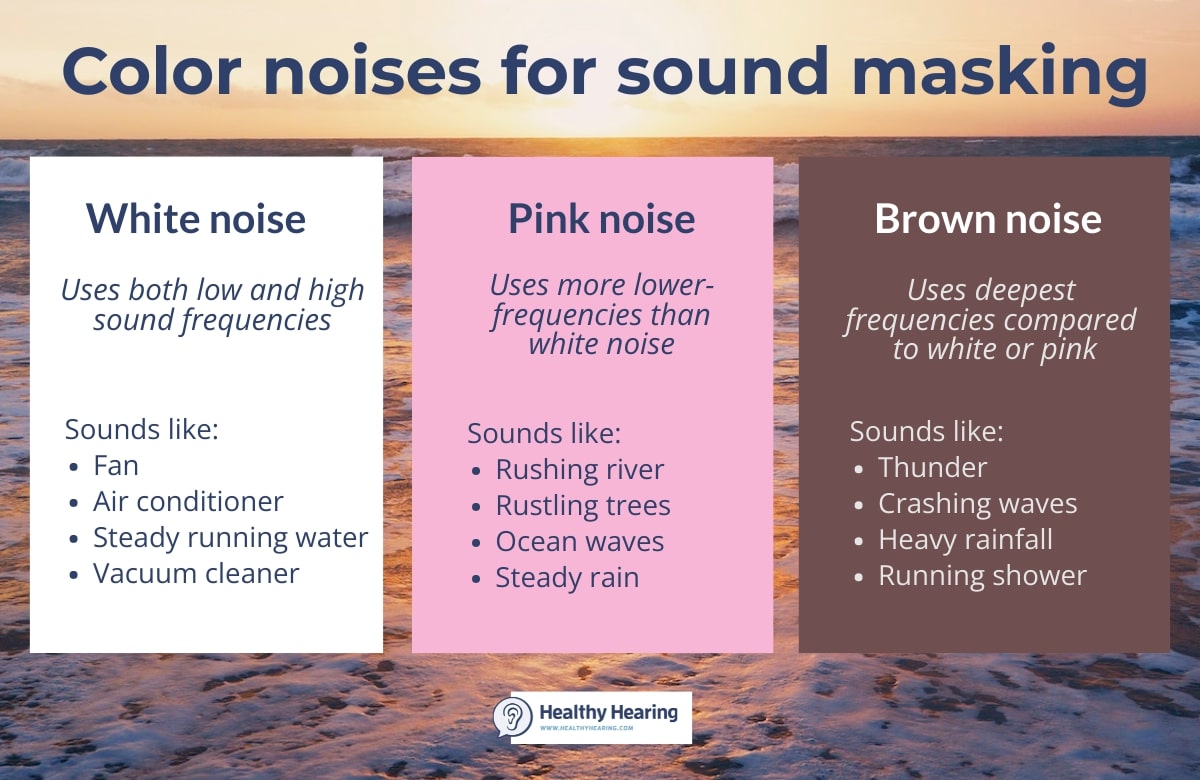
While white noise is the most famous, the tech world frequently utilizes other “colors” of noise, each defined by how their power is distributed across the spectrum.
-
Pink Noise: Unlike white noise, pink noise has equal power per octave. Because human hearing is logarithmic rather than linear, we perceive pink noise as being more balanced or “natural” than white noise, which can sound tinny or sharp at higher frequencies.
-
Brown (or Red) Noise: This signal has much higher energy at lower frequencies. It sounds like a deep roar or a low rumble. In software development and sound design, brown noise is often used to simulate natural environments like heavy rain or distant thunder.
Understanding these distinctions is crucial for developers and engineers who must choose the correct signal for specific hardware calibrations or user experiences.
The Evolution of Sleep Tech and Sound Engineering
One of the most prominent consumer-facing applications of white noise is in the burgeoning “Sleep Tech” industry. As our bedrooms become filled with smart devices, the demand for technology that can mask environmental disruptions has skyrocketed. White noise has transitioned from simple analog fans to sophisticated digital soundscapes powered by advanced algorithms.
Dedicated Noise Machines vs. Digital Apps
The hardware used to produce white noise has evolved significantly. Early white noise machines were mechanical, using a small fan inside an acoustic chamber to create wind-like sounds. Today, the market is dominated by solid-state digital devices and mobile applications.
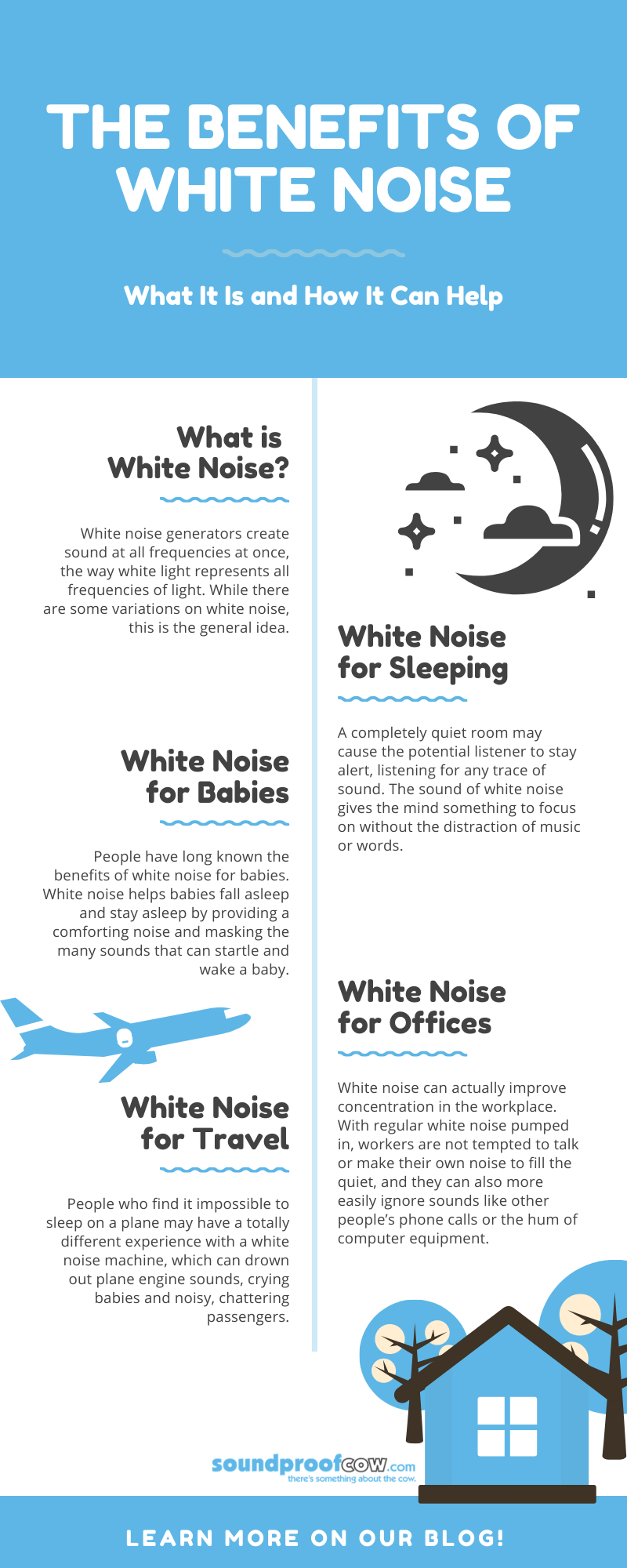
Digital sound machines use Digital Signal Processing (DSP) to create high-fidelity loops or real-time generated signals. The advantage of the digital approach is the ability to manipulate the sound in real-time. For instance, high-end sleep tech devices can analyze ambient room noise and adjust the volume or frequency of the white noise to “mask” a sudden spike in sound, such as a car alarm outside. This process, known as auditory masking, works because the white noise raises the “floor” of ambient sound, making the sudden peak of a disruptive noise less perceptible to the human brain.
The Role of AI in Soundscape Generation
The latest frontier in white noise technology involves Artificial Intelligence (AI) and Machine Learning (ML). Rather than playing a static recording, AI-driven apps (such as Endel or Brain.fm) generate real-time audio streams. These systems take inputs such as the time of day, the user’s heart rate from a wearable device, and even local weather data to synthesize a personalized white noise profile.
These generative algorithms ensure that the sound never repeats, preventing the “loop fatigue” that can occur with low-quality digital recordings. By using AI to vary the spectral density slightly over time, these tools can help synchronize brain waves into states of deep sleep or high focus, a technique known as “entrainment.”
Digital Security and the Practical Application of Masking
Beyond consumer comfort, white noise plays a critical role in digital security and corporate privacy. In an era of high-tech surveillance, protecting sensitive information requires more than just firewalls; it requires physical audio security.
Audio Masking for Privacy and Corporate Security
In corporate environments and government facilities, white noise is used for “Sound Masking.” This involves a series of networked speakers installed in the ceiling that emit a specifically tuned white or pink noise. The goal is to reduce “speech intelligibility.”
When white noise is played at a specific volume, it fills in the gaps between the consonants and vowels of human speech. To a listener a few meters away, the conversation becomes an indistinguishable murmur. This is a vital tool for preventing “shoulder surfing” for audio information and ensuring that sensitive meetings in glass-walled boardrooms remain private. In high-security contexts, white noise generators are often placed on windows to vibrate the glass, defeating laser microphones that attempt to pick up conversations by measuring the minute vibrations of the window pane.
White Noise in Signal Processing and Testing
For hardware engineers and software developers, white noise is the “gold standard” for testing. Because it contains all frequencies, it is used to measure the frequency response of audio equipment like microphones, speakers, and amplifiers.
By pumping white noise through a system and measuring the output, engineers can identify where a device is failing to reproduce certain frequencies. This is essential in the development of everything from high-end studio monitors to the tiny speakers found in smartphones. Furthermore, in the realm of telecommunications, white noise is used to test the limits of data transmission channels, helping engineers determine how much “actual” data can be sent through a signal before the noise floor makes the data unrecoverable.
Optimizing the Digital Workspace: Noise-Canceling and Focus
As the “remote work” and “creator economy” trends continue to grow, the technology used to manage our personal acoustic environments has become a staple of the modern tech stack. White noise is a pillar of this optimization.
Active Noise Cancellation (ANC) Technology
It is important to distinguish white noise from Active Noise Cancellation (ANC), though they are often used in tandem. ANC technology, found in premium headphones like the Sony WH-1000XM5 or Apple AirPods Max, uses microphones to listen to incoming external sound. It then creates an “anti-noise” signal—essentially the inverse of the incoming sound wave—to cancel it out through destructive interference.
However, ANC is most effective against low-frequency, repetitive sounds (like airplane engines). To handle high-frequency, unpredictable sounds (like people talking), many ANC systems layer a subtle “hiss” of white noise or utilize the “transparency mode” to blend the user’s audio with a controlled noise floor. This combination creates a “digital silence” that is otherwise impossible in the physical world.
Software Solutions for Cognitive Performance
Modern productivity software has integrated white noise as a feature to combat “context switching” and digital fatigue. Platforms like Slack, Microsoft Teams, and various “deep work” portals now offer built-in ambient noise players.
The tech logic here is based on the “Stochastic Resonance” theory. In certain contexts, a low level of background white noise can actually enhance the brain’s ability to detect signals (like a complex task or a line of code). By providing a steady, non-distracting stream of data to the auditory cortex, white noise prevents the brain from seeking out more distracting stimuli, such as a notification ping or a distant conversation. This makes it a key tool in the arsenal of software developers and digital creatives who require long periods of uninterrupted focus.
Conclusion
What we colloquially call “white noise” is, in fact, a cornerstone of modern technological design. From the mathematical precision of its frequency distribution to its implementation in the most advanced AI-driven sleep apps and high-level security systems, white noise serves as a bridge between our biological needs and our digital capabilities.
As technology continues to advance, we can expect white noise to become even more integrated into our lives—not as a background sound we ignore, but as a deliberately engineered environment that protects our privacy, tests our hardware, and optimizes our cognitive performance. Whether it is masking the hum of a server room or helping a developer reach a state of flow, the “static” of white noise is one of the most useful signals in the digital world.
aViewFromTheCave is a participant in the Amazon Services LLC Associates Program, an affiliate advertising program designed to provide a means for sites to earn advertising fees by advertising and linking to Amazon.com. Amazon, the Amazon logo, AmazonSupply, and the AmazonSupply logo are trademarks of Amazon.com, Inc. or its affiliates. As an Amazon Associate we earn affiliate commissions from qualifying purchases.