
In the landscape of modern education, a Grade Point Average (GPA) is more than just a reflection of academic performance; it is a critical financial asset. As tuition costs continue to climb, students and parents are increasingly viewing high school transcripts through the lens of a return on investment (ROI). Among the various metrics used by admissions officers and scholarship committees, the “weighted GPA” stands out as a high-leverage tool. While a standard GPA measures raw performance, a weighted GPA measures performance relative to difficulty, often acting as the gatekeeper to significant financial aid and elite career trajectories.
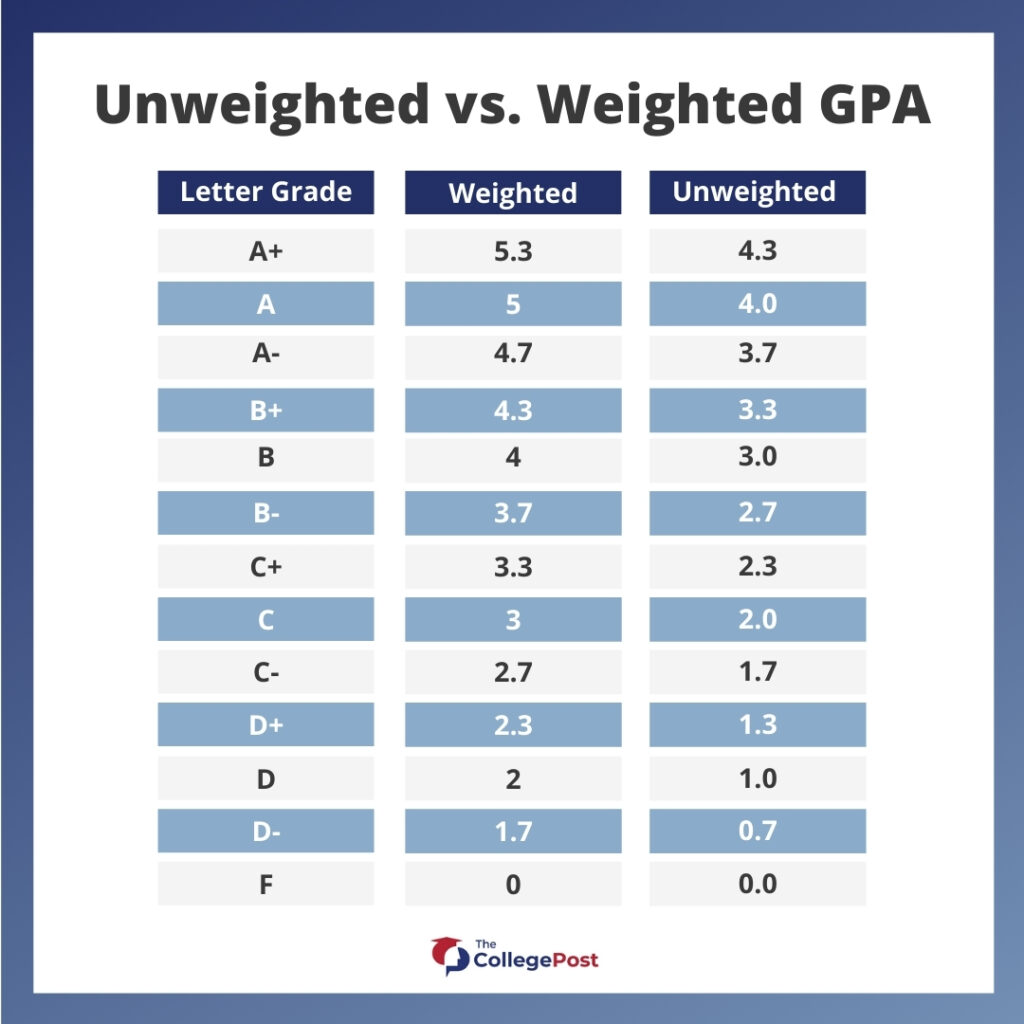
To understand the financial implications of a weighted GPA, one must first view it as a specialized valuation of a student’s academic portfolio. This article explores how weighted GPAs are calculated, their direct impact on reducing the cost of higher education, and why they serve as a primary indicator of future economic success in high-stakes industries.
Understanding the Weighted GPA: A Metric for Academic and Financial Strategy
At its core, a GPA is a numerical representation of a student’s academic record. However, not all credits are created equal. In the world of personal finance, we understand that a high-risk investment should yield a higher return; similarly, in education, a high-rigor course is designed to yield a higher “value” on a transcript.
The Difference Between Unweighted and Weighted Scales
An unweighted GPA is calculated on a standard 4.0 scale. Regardless of whether a student takes an “Introduction to Art” class or “AP Physics,” an ‘A’ is worth 4.0 points. While this provides a baseline of consistency, it fails to reward the student who takes on a more challenging workload.
The weighted GPA corrects this by using a 5.0 scale (or sometimes higher). In this system, Honors, Advanced Placement (AP), and International Baccalaureate (IB) courses are assigned “quality points.” An ‘A’ in a standard class remains a 4.0, but an ‘A’ in an AP class is elevated to a 5.0. From a strategic standpoint, this allows a student to maintain a competitive edge even if they earn a ‘B’ in a difficult course, as that ‘B’ would be weighted as a 4.0—the equivalent of an ‘A’ in a standard track.
How Rigor Translates to Value
For students looking to maximize their “academic equity,” the weighted GPA is the primary metric of rigor. Colleges and scholarship donors use this number to determine if a student has “beaten the market.” A student with a 4.2 weighted GPA is often viewed as more valuable than a student with a 4.0 unweighted GPA who took the path of least resistance. In the competitive “market” of university admissions, rigor is the currency that buys access to limited spots and high-value financial packages.
The Direct Impact on Higher Education Costs
The most immediate financial benefit of a high weighted GPA is its influence on merit-based scholarships. Unlike need-based aid, which is determined by a family’s financial standing, merit-based aid is an earned discount on the “sticker price” of college tuition.
Merit-Based Scholarships and the 5.0 Scale
Many institutional scholarships have strict GPA cutoffs. For example, a university might offer a “Presidential Scholarship” that covers 100% of tuition for students with a weighted GPA of 4.2 or higher. For a private university charging $50,000 a year, that 0.2 difference in GPA is worth $200,000 over four years.
Furthermore, many state-funded programs—such as the HOPE Scholarship in Georgia or the Bright Futures Scholarship in Florida—rely heavily on weighted metrics to distribute funds. By strategically selecting honors and AP courses, students can effectively “earn” their way into a debt-free education. In this context, the effort put into raising a weighted GPA provides a higher hourly “wage” than any part-time job a high school student could hold.
Institutional Aid vs. Federal Funding
While federal funding (like Pell Grants) focuses on the “floor” of financial need, institutional aid focuses on the “ceiling” of academic potential. Elite universities use weighted GPAs to identify students who are likely to succeed in a rigorous environment. Because these institutions often have multi-billion-dollar endowments, they are willing to provide significant “price breaks” to attract top-tier talent. A weighted GPA is the primary signal that a student is worth that institutional investment.

Strategic Academic Planning as a Financial Hedge
Approaching a weighted GPA with a “Money” mindset involves more than just studying hard; it requires strategic planning. Just as an investor diversifies a portfolio, a student must balance their course load to maximize their GPA without risking burnout or a catastrophic grade drop.
AP and IB Courses: Reducing Tuition Through Credit Transfers
One of the most tangible financial benefits of the weighted GPA system is the ability to earn college credit while still in high school. Most colleges grant credit for AP exam scores of 3, 4, or 5.
Consider the math: A single three-credit college course at a mid-tier university costs approximately $1,500 to $3,000. An AP exam costs roughly $98. If a student takes five AP courses and passes the exams, they could enter college with 15 credits already completed—essentially an entire semester. This doesn’t just lower the total tuition bill; it allows the student to enter the workforce six months earlier, adding to their lifetime earning potential. The weighted GPA is the incentive that drives students toward these cost-saving opportunities.
The “Quality Points” System and Your Bottom Line
When calculating the ROI of a specific course, students should look at the “Quality Points.” If a student is choosing between an elective that offers no weighting and a weighted honors course, the honors course is almost always the better financial move. Even if the student earns a slightly lower grade, the “weight” protects the cumulative average, ensuring they remain eligible for the highest tiers of financial aid.
Long-Term Economic Outcomes: Beyond the Classroom
The influence of a weighted GPA does not end at graduation. It acts as a catalyst for a chain reaction that affects a student’s economic standing for decades.
University Prestige and Starting Salaries
There is a documented correlation between the “prestige” of an undergraduate institution and the starting salaries of its graduates, particularly in fields like finance, engineering, and law. Since weighted GPAs are a prerequisite for admission into “Public Ivies” and Ivy League schools, they serve as the first step toward high-earning career paths.
A student who uses their weighted GPA to gain admission into a top-ten engineering program may see a starting salary $20,000 to $30,000 higher than a student from a lower-ranked program. Over a 40-year career, this “prestige premium”—unlocked initially by a high school weighted GPA—can amount to millions of dollars in additional earnings.
The GPA as a Filter in High-Finance and Consulting Recruitment
For students entering the world of “Big Money”—investment banking, management consulting, or Silicon Valley tech—the GPA remains a relevant metric even after college. Many of these firms use a 3.5 or 3.7 GPA as a hard “filter” for resumes.
The discipline required to maintain a high weighted GPA in high school often translates into the academic habits necessary to maintain a high GPA in college. In this sense, the weighted GPA is a foundational asset. it builds the “academic credit score” that allows individuals to qualify for the most lucrative positions in the global economy.

Conclusion
In the modern economy, information is power, and the weighted GPA is one of the most powerful pieces of information a young adult can possess. It is not merely a pedagogical tool for teachers; it is a financial instrument for students.
By understanding the mechanics of the 5.0 scale, students can strategically position themselves to capture thousands of dollars in merit-based aid, save on tuition through credit transfers, and gain access to elite institutions that command higher salaries. In the final analysis, a weighted GPA is one of the most reliable indicators of a student’s ability to manage “academic capital,” making it an essential component of any long-term financial plan. Investing time into understanding and improving this number is, quite literally, one of the most profitable decisions a student can make.
aViewFromTheCave is a participant in the Amazon Services LLC Associates Program, an affiliate advertising program designed to provide a means for sites to earn advertising fees by advertising and linking to Amazon.com. Amazon, the Amazon logo, AmazonSupply, and the AmazonSupply logo are trademarks of Amazon.com, Inc. or its affiliates. As an Amazon Associate we earn affiliate commissions from qualifying purchases.