
In the global theater of finance, the concept of “strength” is often misunderstood. To the casual observer, the United States Dollar (USD) is the undisputed king because of its ubiquity in international trade, its status as the world’s primary reserve currency, and its presence in almost every major transaction from oil to high-tech commodities. However, when we ask which currency is the “strongest” from a purely nominal exchange rate perspective, the answer is far more nuanced.
Strength, in the context of foreign exchange (Forex), refers to the purchasing power of a single unit of a specific currency when compared against a baseline—usually the US Dollar. While the Greenback is the most powerful currency in terms of influence, it is far from the most valuable in terms of unit price. Understanding the landscape of the world’s strongest currencies requires a deep dive into fiscal policy, geopolitical stability, and the commodity markets that back these high-value notes.
The Gulf Powerhouse: Why Middle Eastern Currencies Dominate the Rankings
If you look at a list of the world’s highest-valued currencies, the top spots are consistently held by nations in the Middle East. This is not a coincidence; it is a direct result of vast hydrocarbon reserves and a specific macroeconomic strategy: the fixed exchange rate peg.
The Kuwaiti Dinar (KWD)
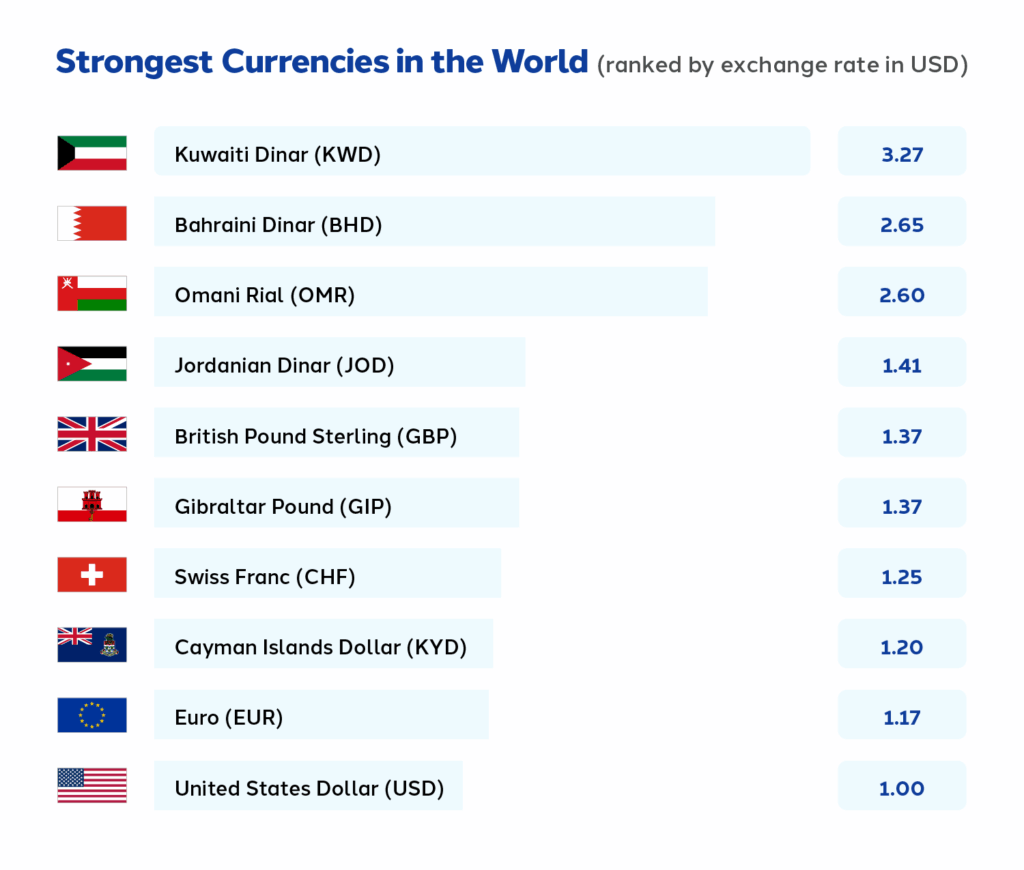
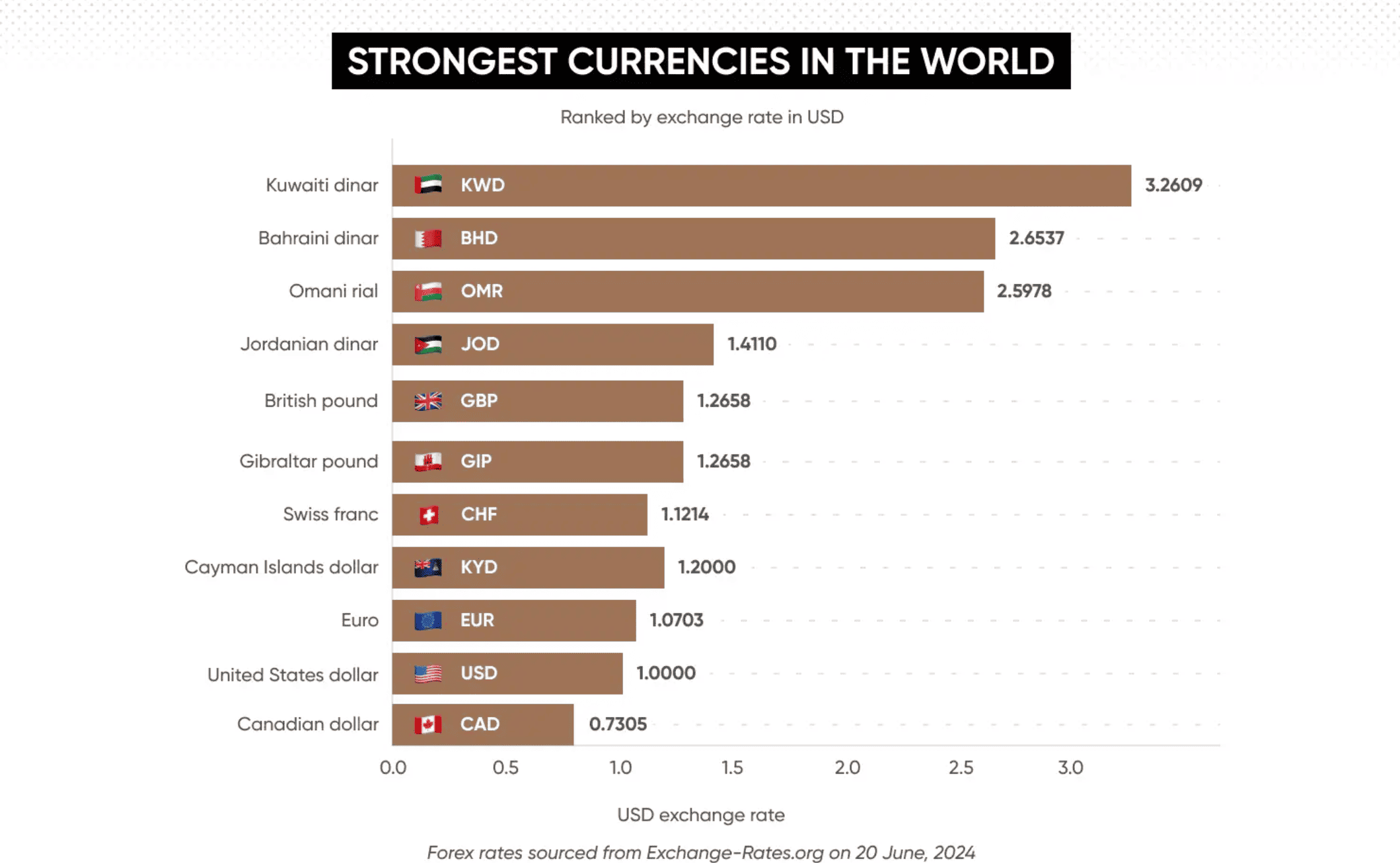
The Kuwaiti Dinar holds the title of the world’s strongest currency. For years, a single KWD has consistently commanded more than $3.20 USD. The primary driver behind this staggering valuation is Kuwait’s massive oil exports. As one of the world’s leading oil producers, Kuwait generates a massive trade surplus. Rather than letting the currency float freely and potentially face high volatility, the Kuwaiti government maintains a fixed exchange rate against a weighted basket of international currencies. This stability, combined with the sheer volume of wealth flowing into the country from petroleum, ensures that the Dinar remains at the top of the pyramid.
The Bahraini Dinar (BHD) and Omani Rial (OMR)
Following closely behind Kuwait are Bahrain and Oman. The Bahraini Dinar is pegged to the US Dollar at a rate that typically places its value at roughly $2.65. Bahrain’s economy, while diversified into banking and tourism, remains heavily supported by energy exports. Similarly, the Omani Rial is valued significantly higher than the dollar, often exceeding $2.60 per Rial. Oman has maintained a disciplined monetary policy for decades, using its oil wealth to back a currency that provides immense purchasing power for its citizens when buying imported goods.
The Role of Oil and Pegged Exchange Rates
The dominance of these currencies highlights a critical lesson in business finance: a high nominal value is often a policy choice. By pegging their currencies at a high rate, these nations reduce the cost of imports, which is vital for desert economies that rely on foreign goods for everything from food to technology. However, this strength is a double-edged sword; it makes their non-oil exports incredibly expensive on the global market, which is why these nations are often “single-commodity” economies working hard to diversify through sovereign wealth funds.
Major Global Currencies and Their Economic Stability
While the Gulf currencies hold the title for highest nominal value, they are not the most liquid or the most important for global investors. To find the “strongest” currencies in terms of reliability and global trust, we must look toward Europe and the Americas.
The Swiss Franc (CHF): The Ultimate Safe Haven
The Swiss Franc is widely regarded as the most stable currency in the world. Unlike the pegged currencies of the Middle East, the Franc’s strength comes from Switzerland’s history of political neutrality, a robust banking sector, and conservative fiscal policies. During times of global economic turmoil, investors flock to the Franc. This “safe haven” status often causes the currency to appreciate, sometimes to the chagrin of the Swiss National Bank (SNB), which occasionally intervenes to prevent the Franc from becoming so strong that it hurts Swiss exporters. It is one of the few currencies in the world that is still significantly backed by gold reserves, adding a layer of intrinsic security that few others can match.
The British Pound (GBP) and the Euro (EUR)
The British Pound Sterling is one of the oldest currencies still in use and consistently ranks among the top five most valuable. Despite the volatility introduced by Brexit and shifts in UK monetary policy, the Pound remains a heavyweight in the Forex market. Similarly, the Euro, which serves as the official currency for 20 of the 27 European Union member states, represents one of the world’s largest economic blocs. While the Euro’s value usually hovers slightly above the US Dollar, its strength lies in the collective GDP of its member nations and its role as the second most held reserve currency globally.
The US Dollar (USD): The World’s Reserve King
It is a common misconception that the US Dollar is the most “valuable” currency unit. While it sits at the “1.00” baseline for most comparisons, its true strength is its utility. Over 80% of global trade is conducted in dollars, and it makes up the lion’s share of foreign exchange reserves held by central banks. The USD is strong because of the “petrodollar” system and the sheer size of the US economy. In the world of personal finance and investing, the dollar is the yardstick by which all other assets—stocks, gold, and real estate—are measured.
Factors That Determine Currency Strength
What makes one currency worth three times as much as another? It isn’t just luck or tradition; it is a combination of measurable economic factors that dictate the demand for a nation’s money.
Interest Rates and Central Bank Policy
Central banks, such as the Federal Reserve in the US or the European Central Bank, play the most significant role in currency valuation. When a country raises interest rates, it offers higher returns to lenders, attracting foreign capital. As investors buy up the local currency to invest in those high-interest bonds, the demand—and thus the price—of the currency rises. This is why “hawkish” central bank policies usually lead to a stronger currency, while “dovish” policies (lowering rates) tend to weaken it.
Economic Growth and Trade Balances
A country with a booming economy and a surplus of exports will naturally have a stronger currency. When a nation exports more than it imports, foreign buyers must purchase the local currency to pay for those goods, driving up demand. Conversely, countries with high trade deficits often see their currencies weaken as they constantly sell their own currency to buy foreign goods. This balance of payments is a fundamental indicator for any serious investor looking at currency markets.
Geopolitical Stability and Inflation
Inflation is the silent killer of currency strength. When a country experiences high inflation, the purchasing power of its money erodes, and its value relative to other currencies drops. This is why the Swiss Franc is so highly valued; Switzerland has historically maintained some of the lowest inflation rates in the world. Political stability is equally important. Investors avoid currencies from nations with civil unrest, inconsistent legal frameworks, or high levels of debt, as the risk of sudden devaluation or default is too high.
Investing and Financial Strategy in a Multi-Currency World
For the individual interested in personal finance and online income, the relative strength of currencies isn’t just an academic exercise—it is a tool for wealth preservation and growth.
Diversification Through Forex
Holding all of your assets in a single currency exposes you to “home country bias” and the specific risks of that nation’s economy. Sophisticated investors often diversify their cash holdings by keeping a portion of their portfolio in strong, stable currencies like the Swiss Franc or the Singapore Dollar. This acts as a hedge against the devaluation of their primary currency. In the age of digital banking, opening multi-currency accounts has become simpler, allowing individuals to hold “hard” currencies as a form of insurance.
Hedging Against Local Inflation
For those living in regions with volatile local currencies, earning an income in a “strong” currency (like USD, EUR, or GBP) is one of the most effective side hustles or career strategies. The rise of remote work has enabled professionals worldwide to participate in the global economy, getting paid in high-value currencies while living in areas with lower costs of living. This “geo-arbitrage” is a direct application of understanding currency strength to maximize personal net worth.
The Future of Strong Currencies in a Digital Age
The landscape is shifting with the rise of digital assets and Central Bank Digital Currencies (CBDCs). While traditional fiat currencies like the Kuwaiti Dinar and the US Dollar currently dominate, the next decade may see a shift in how “strength” is defined. We are entering an era where transparency, transaction speed, and digital security may become just as important as oil reserves or gold backings.
Understanding which currency is the strongest requires looking past the nominal numbers. It involves analyzing the economic engines that power these nations and the central bank policies that protect them. Whether it is the oil-backed might of the Kuwaiti Dinar or the safe-haven reliability of the Swiss Franc, currency strength remains a primary indicator of a nation’s place in the global economic hierarchy. For the savvy investor, staying informed on these shifts is not just about understanding the news—it is about protecting and growing capital in an increasingly interconnected world.
aViewFromTheCave is a participant in the Amazon Services LLC Associates Program, an affiliate advertising program designed to provide a means for sites to earn advertising fees by advertising and linking to Amazon.com. Amazon, the Amazon logo, AmazonSupply, and the AmazonSupply logo are trademarks of Amazon.com, Inc. or its affiliates. As an Amazon Associate we earn affiliate commissions from qualifying purchases.