
The stock market is an intricate, often bewildering, barometer of economic health and future expectations. When its major indices — like the S&P 500, Dow Jones Industrial Average, or Nasdaq Composite — begin a sustained descent, it triggers widespread anxiety among investors, retirees, and even those with only tangential exposure to financial markets. The question “What’s the stock market going down?” isn’t merely a query about current events; it’s a fundamental demand for understanding the forces at play, their implications, and how one might navigate such tumultuous periods.
Market downturns are not monolithic events; they are complex phenomena driven by a confluence of economic, geopolitical, and psychological factors. Far from being random occurrences, these declines are often predictable consequences of underlying pressures building within the global economy. Understanding the mechanics behind these movements, identifying the key catalysts, and appreciating the historical context are crucial steps for any investor seeking to build resilience and make informed decisions, rather than succumb to panic. This article delves into the various facets of market declines, offering a professional and insightful exploration into why the stock market goes down, what it means, and how intelligent investors can respond.
Deciphering Market Declines: Corrections, Bear Markets, and Crashes
When the stock market “goes down,” it’s essential to distinguish between different types of declines, as their severity, duration, and underlying causes can vary significantly. Not all drops are created equal, and understanding the nuances can help investors maintain perspective.
The Nuance of a Market Correction
A market correction is typically defined as a decline of 10% to 20% from a recent peak in a major market index. Corrections are a relatively common and, some might argue, healthy part of the market cycle. They serve to “correct” overvalued assets, shake out speculative excesses, and bring valuations back in line with economic fundamentals. Historically, corrections tend to be shorter-lived than bear markets, often resolving within a few months. While unsettling, they can provide opportunities for long-term investors to acquire quality assets at more reasonable prices. They reflect a natural ebb and flow, where investor optimism, after pushing prices up, takes a temporary pause or retreat. Often, the triggers for corrections can be minor economic data points, a shift in sentiment, or sector-specific concerns that don’t escalate into broader economic distress.
Entering Bear Territory
A bear market is a more severe and prolonged downturn, characterized by a sustained decline of 20% or more from recent highs. Unlike corrections, bear markets are often accompanied by widespread pessimism, economic slowdowns, or even recessions. They tend to last longer, sometimes for a year or more, and can be more psychologically challenging for investors due to the deeper and more persistent losses. Bear markets are often driven by fundamental economic deterioration: rising unemployment, falling corporate profits, tight credit conditions, or significant geopolitical shocks. The defining feature is not just the percentage drop, but the prevailing negative sentiment that feeds into a downward spiral, making recovery seem distant and uncertain to many participants.
Distinguishing a Market Crash
A market crash is a sudden, dramatic, and often unexpected decline in stock prices over a very short period—sometimes a single day or a few days. While a crash technically falls within the definition of a bear market (since it’s a 20%+ drop), its defining characteristic is its speed and magnitude. Examples include Black Monday in 1987 or the early days of the COVID-19 pandemic sell-off in March 2020. Crashes are often triggered by a specific, high-impact event (a financial crisis, a global pandemic, a sudden policy change) that sparks widespread panic selling. While devastating in the short term, historical data shows that markets tend to recover from crashes, sometimes quite rapidly, as the initial shock wears off and underlying economic activity resumes. However, the emotional impact and the speed with which wealth can erode make crashes particularly frightening events.
Economic Headwinds and Catalysts for Downturns
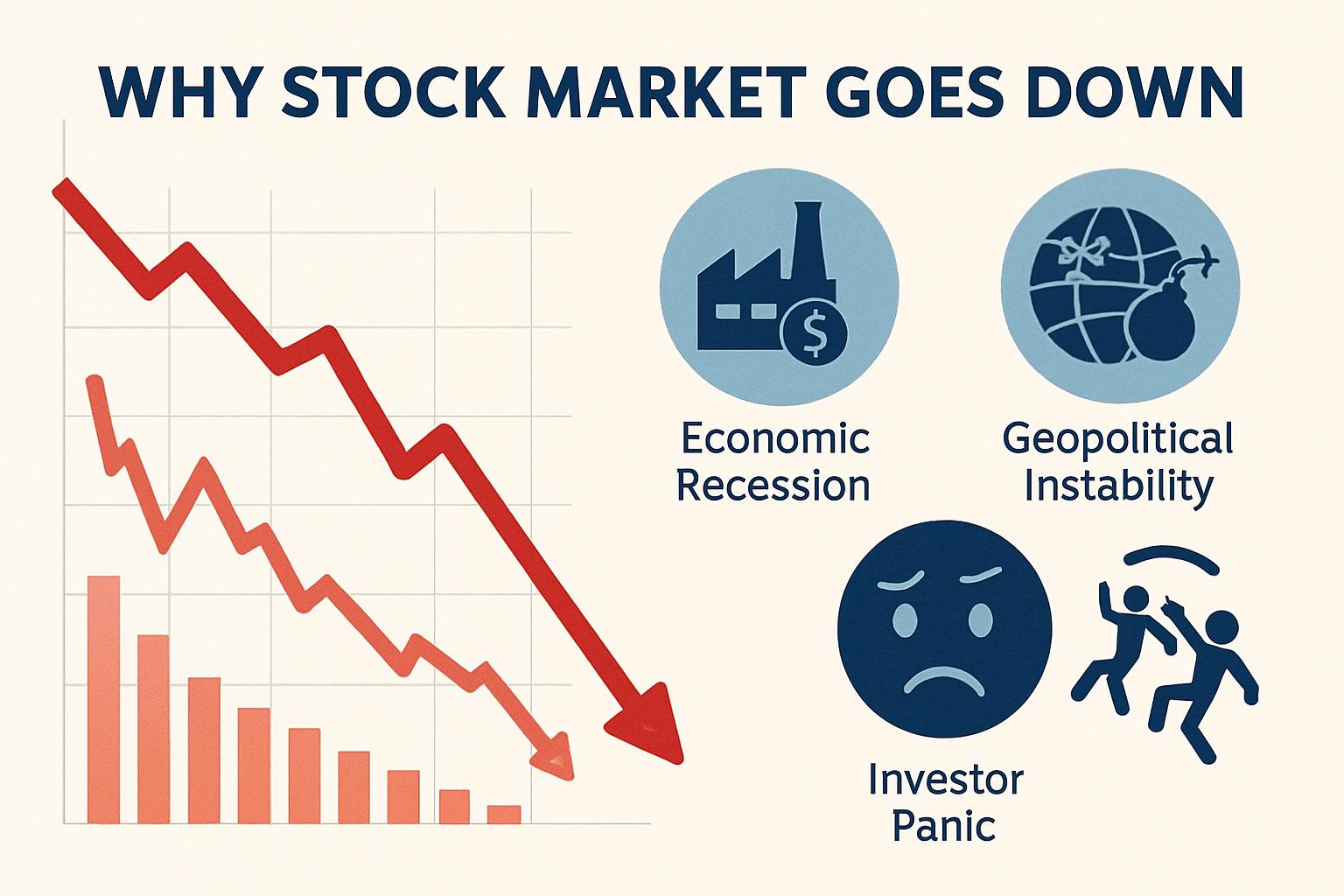
The fundamental reasons for a stock market decline are almost always rooted in a deterioration of economic conditions, a shift in monetary policy, or significant geopolitical events that erode investor confidence and corporate profitability.
Inflationary Pressures and Interest Rate Hikes
One of the most potent catalysts for a market downturn is persistent inflation. When the cost of goods and services rises significantly, it erodes purchasing power for consumers and increases operational costs for businesses, squeezing profit margins. Central banks, like the U.S. Federal Reserve, typically respond to high inflation by raising interest rates. Higher interest rates make borrowing more expensive for companies and individuals, slowing economic activity. For businesses, increased borrowing costs can deter investment and expansion. For consumers, higher rates on mortgages, car loans, and credit cards reduce disposable income. Moreover, higher interest rates make fixed-income investments (like bonds) more attractive relative to stocks, causing a shift in investment capital away from equities. Discounting future corporate earnings at a higher rate also reduces the present value of a company’s stock, directly impacting valuations.
Geopolitical Instability and Global Uncertainty
Major geopolitical events can send shockwaves through global markets. Wars, significant political unrest, trade disputes between major economic powers, or even widespread social instability can create immense uncertainty, impacting supply chains, commodity prices, and international trade. For instance, an oil shock caused by conflict in a major producing region can drive up energy costs globally, impacting industries and consumers alike. Trade wars can lead to tariffs, making goods more expensive and hindering global economic growth. Such events introduce unpredictable risks that are difficult for businesses to plan for and for investors to quantify, leading to a flight to safety (e.g., government bonds, gold) and a sell-off in riskier assets like stocks.
Corporate Earnings and Economic Slowdown
Ultimately, stock prices are intrinsically linked to the earnings and future growth prospects of companies. When economic growth slows or enters a recession, corporate earnings typically decline. Consumers spend less, businesses reduce investment, and overall demand softens. Lower earnings directly translate to lower stock valuations, as a company’s worth is fundamentally tied to its ability to generate profits. Analysts downgrade earnings forecasts, and investors, anticipating weaker performance, sell shares. A significant slowdown in economic activity can also lead to job losses, further dampening consumer confidence and creating a negative feedback loop that accelerates the market’s decline.
Supply Chain Disruptions and Commodity Shocks
Modern global economies are highly interconnected, making them vulnerable to supply chain disruptions. Events like pandemics, natural disasters, or geopolitical conflicts can break links in the global production and distribution network, leading to shortages and increased costs for raw materials and components. This can paralyze production, delay product launches, and significantly increase operational expenses for businesses. Simultaneously, commodity shocks—sudden, sharp increases in the prices of essential raw materials like oil, natural gas, or agricultural products—can have a widespread impact. They increase input costs for manufacturers, raise transportation expenses, and directly impact consumer prices, contributing to inflation and squeezing profit margins across various sectors. These shocks often translate to lower corporate earnings and, consequently, lower stock valuations.
The Emotional Rollercoaster of Investor Behavior
While economic fundamentals provide the bedrock for market movements, the psychology of investors often amplifies and accelerates declines. Human emotions, particularly fear and greed, play a significant role in market volatility.
The Fear Factor and Panic Selling
In a declining market, fear can quickly become contagious. As prices fall, initial concerns can escalate into panic, leading investors to sell their holdings indiscriminately, often at a loss, simply to stem further declines. This “herd mentality” can create a self-fulfilling prophecy: increased selling pressure drives prices down further, which in turn fuels more panic, creating a downward spiral. The desire to avoid further losses (loss aversion) often overrides rational decision-making, leading individuals to abandon their long-term investment strategies. This phenomenon is particularly pronounced during market crashes, where the speed of the decline leaves little time for careful consideration.
Cognitive Biases in Volatile Markets
Investors are susceptible to various cognitive biases that can impair judgment during market downturns. Anchoring bias causes investors to fixate on previous higher prices, making it difficult to accept current lower valuations and leading to holding onto losing positions for too long. Loss aversion, as mentioned, dictates that the pain of a loss is psychologically more powerful than the pleasure of an equivalent gain, prompting premature selling. Confirmation bias leads investors to seek out information that confirms their existing pessimistic views, reinforcing their fear and potentially leading to irrational decisions. Understanding these biases is the first step in mitigating their impact on investment choices during volatile periods.
From Euphoria to Despair: The Market Cycle of Psychology
The stock market often cycles through distinct emotional phases. During bull markets, optimism can morph into euphoria and irrational exuberance, where investors chase increasingly speculative assets. As the market peaks and begins to turn, initial denial gives way to fear, then desperation, and finally capitulation and despair during the trough of a bear market. Smart investors recognize this psychological cycle and aim to act counter-cyclically – being cautious during periods of excessive euphoria and courageous when others are gripped by fear. Understanding where the collective market psychology stands can provide valuable insight, though acting against the tide requires significant discipline and a robust long-term perspective.
Strategic Responses for the Prudent Investor
Navigating a declining stock market requires discipline, a clear strategy, and a long-term perspective. Panic selling is rarely the optimal approach; instead, thoughtful reevaluation and strategic adjustments can position investors for future recovery.
Rebalancing Your Portfolio and Risk Assessment
A market downturn is an opportune time to re-evaluate your portfolio’s asset allocation against your current risk tolerance and financial goals. If your portfolio has become overweight in certain asset classes due to prior growth, a downturn might bring it out of balance. Rebalancing involves selling assets that have grown disproportionately and buying those that have underperformed (and are now cheaper), bringing your portfolio back to its target allocation. This systematic approach forces investors to “buy low and sell high” to some extent. It’s also crucial to reassess your personal risk tolerance; if the downturn has made you realize your existing portfolio is too aggressive, now is the time to consider a more conservative allocation.
The Power of Dollar-Cost Averaging
Dollar-cost averaging is a strategy where an investor invests a fixed amount of money at regular intervals, regardless of the asset’s price. When prices are high, your fixed investment buys fewer shares; when prices are low (during a downturn), it buys more shares. Over time, this strategy helps to average out the purchase price and reduces the risk associated with trying to time the market. During a bear market, dollar-cost averaging can be particularly powerful, as it allows investors to accumulate more shares at lower prices, which can significantly boost returns when the market eventually recovers. It removes emotion from the investment process and promotes consistent, disciplined saving.
Diversification Beyond Equities
While diversification within equities (across different sectors, geographies, and company sizes) is fundamental, a declining stock market highlights the importance of diversifying beyond equities. Including asset classes such as bonds, real estate, commodities, or even alternative investments can help cushion the impact of a stock market downturn. Different asset classes perform differently under various economic conditions; for example, high-quality government bonds often perform well when stocks are falling, acting as a “safe haven.” A truly diversified portfolio is designed to mitigate risk by ensuring that not all your investments are moving in lockstep, offering a smoother ride through market cycles.
Identifying Value Amidst the Turmoil
Market downturns, despite their challenges, present significant opportunities for long-term investors. When the market is broadly selling off, quality companies with strong fundamentals and solid balance sheets often get unfairly punished alongside weaker ones. This creates a chance to acquire shares of excellent businesses at discounted prices. Value investors specifically look for these opportunities, conducting thorough research to identify undervalued assets that have been oversold due to market fear, rather than a deterioration in their intrinsic value. This requires patience, conviction, and a willingness to go against the prevailing pessimistic sentiment.
Maintaining Liquidity and Emergency Funds
During times of economic uncertainty and market volatility, having adequate liquidity is paramount. A robust emergency fund—typically 3 to 6 months’ worth of living expenses in a readily accessible, low-risk account—prevents you from being forced to sell investments at a loss to cover unexpected expenses. Furthermore, maintaining some cash reserves can provide “dry powder” to take advantage of investment opportunities that arise during market declines. It allows investors to make rational decisions without the pressure of needing to liquidate assets prematurely, safeguarding both their financial stability and their long-term investment strategy.
A Long-Term View: Resilience and Recovery
Despite the immediate concerns and anxieties that market declines induce, a fundamental understanding of market history reveals a powerful truth: markets are resilient and tend to recover. Maintaining a long-term perspective is perhaps the most crucial strategy for navigating inevitable periods of volatility.
Historical Precedent of Market Recoveries
History is replete with examples of devastating market crashes and prolonged bear markets that were ultimately followed by robust recoveries and new all-time highs. From the Great Depression to the dot-com bubble burst, the 2008 financial crisis, and the COVID-19 pandemic sell-off, markets have demonstrated an incredible capacity to rebound. While each downturn has unique characteristics and triggers, the underlying engine of human innovation, economic adaptation, and corporate growth eventually prevails. Investors who stayed invested or continued to invest through these periods were ultimately rewarded. This historical perspective serves as a powerful antidote to short-term panic and reinforces the notion that market downturns are temporary, even if their duration is unpredictable.
Innovation and Economic Adaptation
One of the driving forces behind market recovery is the inherent human capacity for innovation and economic adaptation. Businesses constantly evolve, develop new technologies, create new markets, and find more efficient ways to operate. Even during severe economic contractions, entrepreneurial spirit persists, leading to the creation of new industries and the reinvention of existing ones. Governments and central banks also adapt, implementing policies to stabilize economies and foster growth. This continuous cycle of innovation and adaptation ensures that economies do not remain stagnant; they rebuild, grow, and drive corporate earnings higher over the long run, eventually pulling stock markets with them.
Focusing on Fundamental Value, Not Short-Term Noise
In an era of instant information and 24/7 news cycles, it’s easy to get caught up in the daily fluctuations and short-term narratives that dominate financial media. However, successful long-term investing hinges on focusing on the fundamental value of assets—the underlying health, profitability, and growth prospects of the companies you own. Short-term market movements are often driven by sentiment, speculation, and news headlines; these are “noise” that can distract from the true economic reality. By understanding why a company is valuable and having conviction in its long-term potential, investors can tune out the short-term volatility and remain committed to their strategy, recognizing that market price and intrinsic value can diverge significantly in the short run.
In conclusion, when the stock market goes down, it’s a signal to pause, understand, and strategically respond, rather than react impulsively. While the immediate sensation can be daunting, a disciplined approach rooted in understanding economic drivers, managing emotional biases, diversifying prudently, and maintaining a steadfast long-term perspective positions investors not merely to survive market downturns, but to potentially thrive in their aftermath. The financial landscape is cyclical, and periods of decline are not merely obstacles but intrinsic, and often necessary, components of the journey toward long-term wealth creation.
aViewFromTheCave is a participant in the Amazon Services LLC Associates Program, an affiliate advertising program designed to provide a means for sites to earn advertising fees by advertising and linking to Amazon.com. Amazon, the Amazon logo, AmazonSupply, and the AmazonSupply logo are trademarks of Amazon.com, Inc. or its affiliates. As an Amazon Associate we earn affiliate commissions from qualifying purchases.