
In the world of personal finance and investing, the question “What’s the stock market doing?” is perhaps the most frequently asked, yet the most complex to answer. At any given moment, the market is a chaotic symphony of millions of individual decisions, global economic shifts, and psychological triggers. For the modern investor, understanding the “what” and the “why” behind market movements is the difference between making impulsive mistakes and building sustainable wealth.
To understand what the stock market is doing today, we must look beyond the daily fluctuations of the green and red tickers. We must analyze the macroeconomic foundations, the shifts in sectoral dominance, and the underlying investor sentiment that dictates the flow of capital. This article provides a deep dive into the mechanics of the current market, offering professional insights for those looking to master their financial future.
The Macroeconomic Engine: What Drives Market Direction?
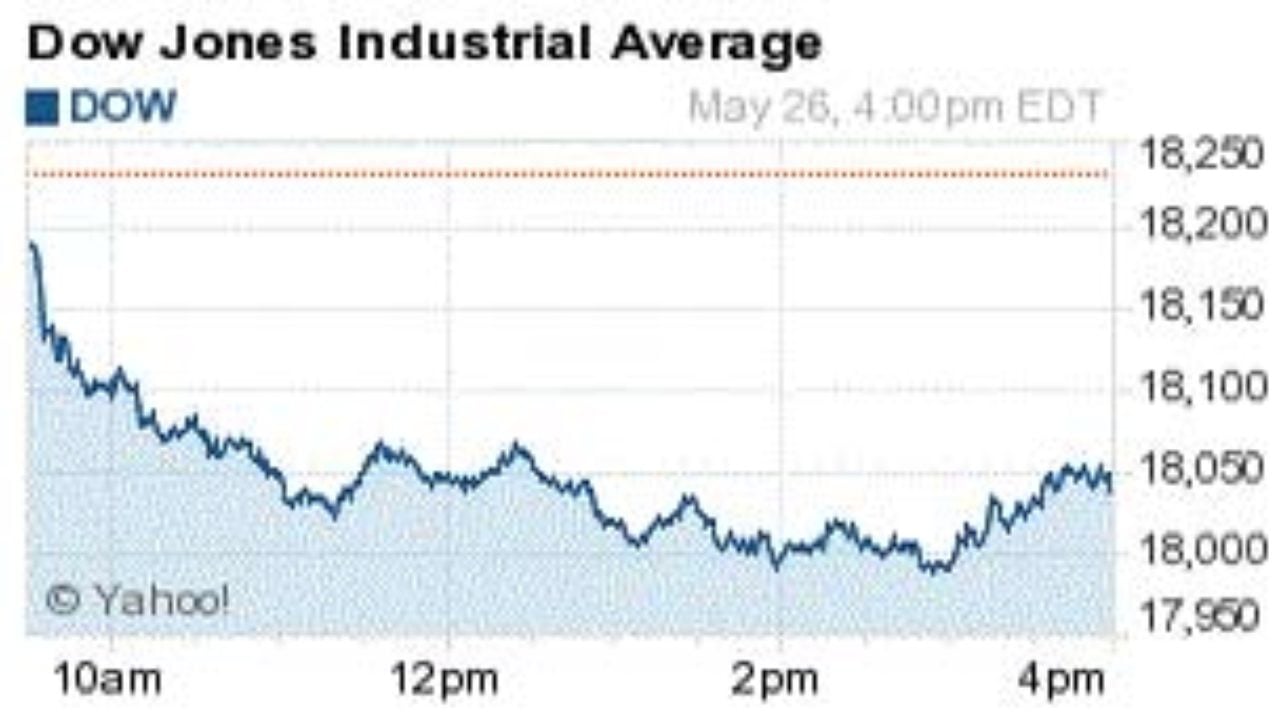
When people ask what the market is doing, they are often reacting to the volatility of the major indices like the S&P 500, the Dow Jones Industrial Average, or the Nasdaq Composite. However, these indices are merely the scoreboard; the actual game is being played in the realm of macroeconomics.
The Influence of Central Banks and Interest Rates
The single most powerful force in the financial markets today is the policy direction of the Federal Reserve and other global central banks. Interest rates are the “gravity” of the stock market. When rates are low, capital is cheap, encouraging businesses to borrow and expand, which typically sends stock prices higher. Conversely, when the Fed raises rates to combat inflation, the “gravity” increases.
Currently, the market is in a period of recalibration. Investors are hyper-focused on “terminal rates”—the point at which the Fed stops hiking. Every piece of data, from employment reports to Consumer Price Index (CPI) releases, is scrutinized to predict whether the central bank will pivot toward lower rates or maintain a “higher for longer” stance.
Inflation and Corporate Earnings
The stock market is essentially a forward-looking discounting mechanism for corporate earnings. If inflation remains sticky, it increases the cost of goods sold and labor, which can squeeze profit margins. What the market is “doing” right now is attempting to price in the resilience of corporate America. Are companies able to pass costs on to consumers, or are we seeing a “margin compression”? Investors are currently rewarding companies with “pricing power”—those that can maintain profitability despite an inflationary environment.
The Yield Curve and Recessionary Fears
One cannot discuss the current state of the market without mentioning the bond market, specifically the yield curve. Traditionally, an inverted yield curve (where short-term debt pays more than long-term debt) has been a harbinger of a recession. The stock market is currently navigating this tension: the fear of a looming economic slowdown versus the hope of a “soft landing.” This tug-of-war is why we see periods of intense volatility followed by unexpected rallies.
Sector Rotations and the New Era of Growth
To understand what the market is doing, one must look under the hood. The market is not a monolith; it is a collection of sectors that perform differently based on the economic cycle.
The Resurgence of Value and Quality
For much of the last decade, high-growth, speculative companies dominated the headlines. However, as the cost of capital has risen, the market has shifted its focus toward “Quality.” This means investors are looking for companies with strong balance sheets, consistent cash flow, and low debt-to-equity ratios. We are seeing a rotation out of “growth at any price” and into “value”—sectors like energy, healthcare, and consumer staples that provide essential services and reliable dividends.
Technology as a Productivity Play
While “Tech” is often viewed as a single entity, the market is currently differentiating between speculative tech and “Big Tech” with massive cash reserves. The current market narrative is heavily influenced by Artificial Intelligence (AI) and its potential to drive productivity. However, from a financial perspective, the market is asking: “Who is actually monetizing this?” Stocks that can demonstrate tangible revenue growth from AI integration are leading the market, while those purely riding the hype are beginning to see their valuations questioned.
The Return of Fixed Income
For years, “TINA” (There Is No Alternative to stocks) ruled the investment world because bond yields were near zero. Today, the market is doing something it hasn’t done in over a decade: offering legitimate competition to stocks. With high-yield savings accounts and Treasury bonds offering 4-5% returns, the “equity risk premium” has shrunk. This means the stock market must work harder to attract capital, leading to more disciplined valuations and a focus on dividend-paying stocks that can compete with bond yields.
Investor Psychology and Market Sentiment
Market movements are as much about human emotion as they are about spreadsheets. Understanding “what the market is doing” requires an analysis of the Fear and Greed Index and the prevailing sentiment.
Navigating the “Wall of Worry”
There is an old adage that “bull markets climb a wall of worry.” This means that even when news headlines are negative—geopolitical tensions, political instability, or economic forecasts—the market can still move higher if those risks are already “priced in.” Currently, the market is navigating a complex geopolitical landscape. Investors are learning to decouple short-term political noise from long-term economic fundamentals.
The Role of Retail Investors and Liquidity
The democratization of trading through apps has changed the market’s DNA. Retail sentiment can now trigger massive “short squeezes” or rapid sell-offs in specific “meme” stocks. Furthermore, liquidity—the amount of cash sloshing around the system—remains a key driver. Even as the Fed attempts to tighten liquidity (Quantitative Tightening), there is still a significant amount of “dry powder” (cash on the sidelines) waiting to enter the market on dips.
Volatility as the New Normal
The VIX, often called the “fear gauge,” measures the market’s expectation of 30-day volatility. In the current environment, the market is experiencing “volatility clusters.” This isn’t necessarily a sign of a crash, but rather a sign of rapid price discovery in an uncertain world. Sophisticated investors are no longer viewing volatility as a threat, but as an opportunity to rebalance their portfolios at more attractive entry points.
Strategies for the Modern Financial Landscape
Understanding what the stock market is doing is useless unless it informs your personal financial strategy. In a landscape defined by higher interest rates and moderate growth, the “set it and forget it” mentality of the 2010s may need an upgrade.
The Power of Dollar-Cost Averaging (DCA)
Because the market is currently characterized by “sideways” movements and sudden spikes, timing the market is a fool’s errand. The most successful investors are utilizing Dollar-Cost Averaging—investing a fixed amount of money at regular intervals regardless of the price. This strategy lowers the average cost per share over time and removes the emotional burden of trying to “catch the bottom.”
Diversification Beyond the S&P 500
While the S&P 500 is the gold standard for many, its heavy weighting in a few mega-cap tech stocks means it may not be as diversified as people think. A professional approach to the current market involves looking at international markets, mid-cap stocks, and alternative assets like Real Estate Investment Trusts (REITs) or commodities. Diversification is the only “free lunch” in finance, and in a volatile market, it is your primary defense mechanism.
Reassessing Risk Tolerance
Many investors discovered their true risk tolerance during the recent market corrections. If “what the market is doing” keeps you awake at night, your asset allocation is likely too aggressive. The current environment is a perfect time to audit your portfolio. This involves ensuring you have an emergency fund in high-yield cash equivalents so that you are never forced to sell your stocks during a market downturn to cover living expenses.
Conclusion: Perspective in an Evolving Market
So, what is the stock market doing? It is evolving. It is transitioning from an era of “easy money” and record-low interest rates into a more disciplined, value-oriented, and macro-driven environment. While the daily noise can be overwhelming, the fundamental truth of the stock market remains: it is a mechanism for transferring wealth from the impatient to the patient.
The market is currently testing the resolve of investors, rewarding those who focus on high-quality assets and punishing those who chase speculative bubbles. By understanding the influence of central banks, the shift in sectoral importance, and the psychological traps of volatility, you can move from being a passive observer to an informed participant. The stock market will always be “doing” something—the key is to ensure that what you are doing is aligned with your long-term financial goals and a disciplined investment philosophy.
aViewFromTheCave is a participant in the Amazon Services LLC Associates Program, an affiliate advertising program designed to provide a means for sites to earn advertising fees by advertising and linking to Amazon.com. Amazon, the Amazon logo, AmazonSupply, and the AmazonSupply logo are trademarks of Amazon.com, Inc. or its affiliates. As an Amazon Associate we earn affiliate commissions from qualifying purchases.