
In the modern financial landscape, most of our transactions happen behind the scenes. Whether it is a direct deposit from an employer, an automated monthly mortgage payment, or a peer-to-peer transfer via a digital wallet, money moves through a sophisticated network of electronic highways. At the center of this movement lies a critical nine-digit identifier: the routing number.
Despite its ubiquity, many consumers only encounter the routing number when prompted by a form or a payroll department. Understanding what this number represents, how it functions, and how to find it is more than just a matter of clerical accuracy; it is a fundamental aspect of managing personal finance and ensuring the security of your capital. This guide provides a deep dive into the mechanics of routing numbers, their history, and their vital role in the global economy.
Decoding the Nine Digits: What is a Routing Number?
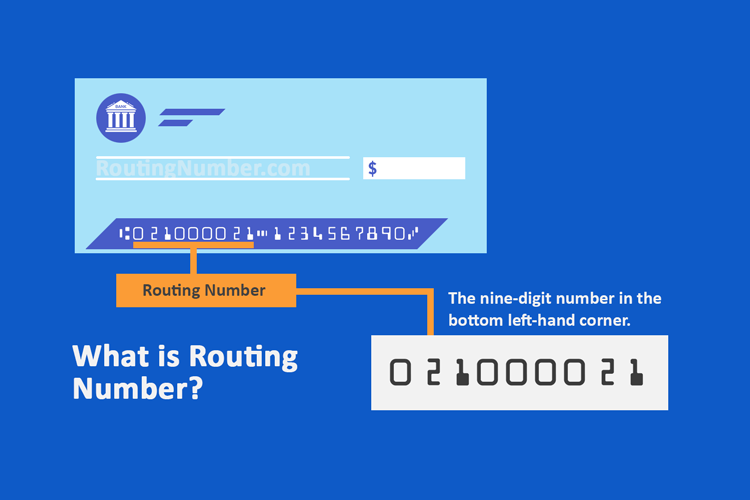
At its simplest, a routing number—often referred to as an ABA Routing Transit Number (RTN)—is a nine-digit code used to identify a specific financial institution within the United States. If your account number is your “name” within a bank, the routing number is the “postal code” that tells the financial system exactly which building to deliver the money to.
The History of the ABA Routing Transit Number
The routing number system was orchestrated by the American Bankers Association (ABA) in 1910. Originally designed to make the processing of paper checks more efficient, the system aimed to eliminate confusion between banks with similar names or those located in the same geographic region. In the early 20th century, check clearing was a manual, labor-intensive process. By assigning a unique numerical identifier to every bank, the ABA created a standardized language that significantly reduced errors and expedited the movement of funds across state lines.
How the Numbers Are Structured
A routing number isn’t just a random string of digits; it follows a strict formula designed for machine readability and error checking. The nine digits are broken down into three distinct segments:
- The First Four Digits: These represent the Federal Reserve routing symbol. Specifically, the first two digits identify which of the 12 Federal Reserve districts the bank is located in, while the following two indicate the specific Federal Reserve check processing center.
- The Next Four Digits: These identify the specific financial institution itself. Each bank or credit union is assigned a unique identifier within its district.
- The Ninth Digit: Known as the “check digit,” this is a mathematical verification tool. Using a complex algorithm (the Modulus 10 checksum), computers can verify that the previous eight digits were entered correctly. If a user mistypes a single number, the check digit will likely fail the calculation, preventing the transaction from being processed to a non-existent destination.
Why Routing Numbers Matter in Modern Personal Finance
In the era of digital-first banking, the routing number remains the backbone of the Automated Clearing House (ACH) network and the Fedwire system. Without it, the seamless integration of our financial lives would grind to a halt.
Facilitating Direct Deposits and Automatic Payments
The most common use for a routing number is the setup of direct deposits. When you start a new job, your employer requires your routing and account numbers to link their payroll software to your bank. This ensures that on payday, the funds move directly from the corporate coffers into your personal checking or savings account.
Similarly, “pull” transactions, such as automated bill payments for utilities or insurance, rely on the routing number. By providing this number to a service provider, you are essentially giving them a map to your bank’s front door, allowing them to request a specific amount of money from your account on a recurring basis.
Wire Transfers vs. ACH Transfers: The Routing Number’s Role
It is a common misconception that a bank has only one routing number. In reality, many larger institutions utilize different routing numbers for different types of transactions.
- ACH Routing Numbers: Used for electronic transfers that take 1–3 business days, such as payroll, social security benefits, and bill pay.
- Wire Routing Numbers: Used for domestic wire transfers, which are typically processed in real-time or within the same business day. Because wire transfers are handled through a different Federal Reserve system (Fedwire), using the ACH routing number for a wire transfer can result in the transaction being rejected or delayed.
Where to Find Your Routing Number Quickly
In the heat of a financial transaction, you need to know exactly where to look to find this information. Fortunately, there are several reliable methods to locate your bank’s routing number.

Locating the Number on a Paper Check
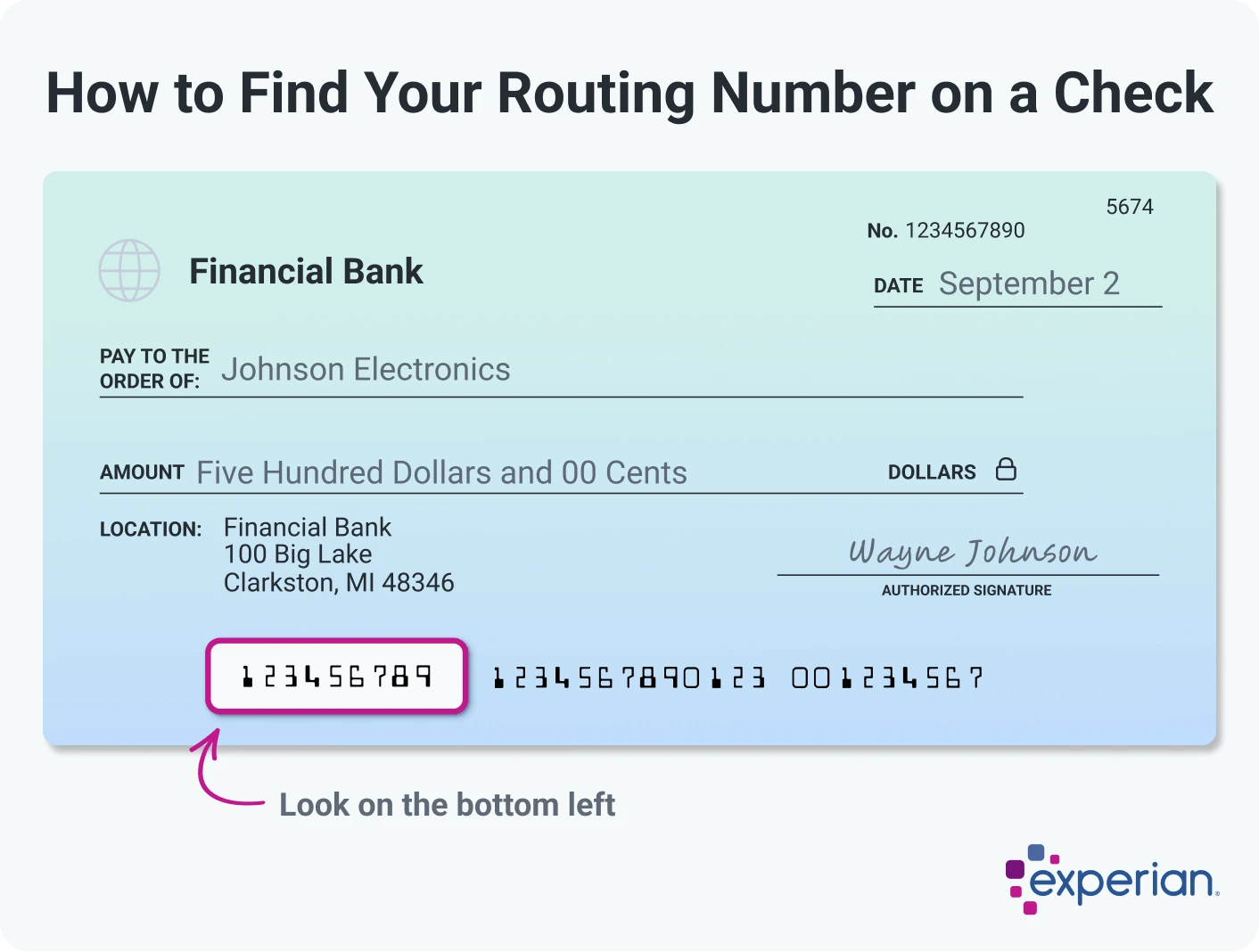
The most traditional way to find a routing number is by looking at a physical check. If you look at the bottom-left corner of a check, you will see a string of numbers printed in a specialized font (known as MICR, or Magnetic Ink Character Recognition).
- The first set of nine digits on the far left is the routing number.
- The second set of digits (usually in the middle) is your specific account number.
- The third, shorter set of digits is the check number.
Digital Banking: Apps and Online Portals
As paper checks become less common, most consumers find their routing numbers via mobile apps or online banking portals. After logging in, this information is typically found under “Account Details,” “Direct Deposit Information,” or by clicking on a specific account and looking for “Settings.” Most modern apps even provide a “Copy” button specifically for the routing number to help users avoid manual entry errors.
The American Bankers Association (ABA) Look-up Tool
If you are unsure of your bank’s routing number and do not have access to your account at the moment, the ABA maintains an official online look-up tool. By entering the official name of the financial institution and the state where the account was opened, you can verify the correct routing number. However, be cautious with large national banks, as they may have different routing numbers based on the state where you originally opened the account.
Routing Numbers vs. Account Numbers: Knowing the Difference
One of the most frequent errors in personal finance is the confusion between the routing number and the account number. Understanding the distinction is vital for both functional banking and digital security.
The “Address” vs. the “Specific Room”
To use an analogy, if the banking system is a giant hotel, the routing number is the street address of the building. It tells the delivery driver (the Federal Reserve) which building to go to. The account number, on the other hand, is the specific room number. You need both to ensure the package (your money) reaches the correct person.
The routing number is public information. You can find the routing number for “Bank of America” or “Chase” with a simple Google search. The account number, however, is private and unique to you. It is the key to your specific financial “room.”
Security Implications of Sharing Routing Numbers
Because routing numbers are technically public, sharing one is not a security risk in isolation. Every company you pay by check sees your routing number. However, when paired with your account number, a bad actor has the two primary components needed to initiate an unauthorized ACH withdrawal.
This is why “Money” professionals emphasize the importance of monitoring your statements. While the routing number identifies the bank, the combination of the two numbers should be treated with the same care as a credit card number. Always ensure you are on a secure, encrypted website before entering these details for online payments.
Common Questions and Troubleshooting
As banks merge and technology evolves, the “static” nature of routing numbers can sometimes change, leading to confusion for long-time account holders.
Do Routing Numbers Ever Change?
Yes, routing numbers can change, typically as the result of a bank merger or acquisition. When a larger bank buys a smaller regional bank, they eventually consolidate their routing systems. Usually, the bank will allow a “grace period” of several months or even years where both the old and new routing numbers work. However, eventually, you will be required to update your direct deposit and automated billing info to the new number to avoid transaction failures.
Can One Bank Have Multiple Routing Numbers?
Large national banks almost always have multiple routing numbers. This is often a legacy of past acquisitions or a way to manage geographic volume. For example, a customer who opened an account in New York will likely have a different routing number than a customer who opened an account with the same bank in California. Always verify the routing number associated with the specific branch or region where your account was established.
What Happens if I Use the Wrong Routing Number?
If you enter the wrong routing number on a form, one of two things usually happens. If the “check digit” (the ninth digit) doesn’t match the algorithm, the system will immediately flag the number as invalid. If the number is valid but belongs to the wrong bank, the transaction will be sent to that bank, where it will be rejected because they have no record of your account number. While your money is generally safe, these errors can cause significant delays in receiving paychecks or result in “returned item” fees from billers.
In conclusion, while the routing number may seem like a dry piece of financial data, it is a masterpiece of logistical engineering. It bridges the gap between local brick-and-mortar branches and the global digital economy. By mastering the “where” and “why” of this nine-digit code, you empower yourself to navigate the world of personal finance with greater confidence and precision.
aViewFromTheCave is a participant in the Amazon Services LLC Associates Program, an affiliate advertising program designed to provide a means for sites to earn advertising fees by advertising and linking to Amazon.com. Amazon, the Amazon logo, AmazonSupply, and the AmazonSupply logo are trademarks of Amazon.com, Inc. or its affiliates. As an Amazon Associate we earn affiliate commissions from qualifying purchases.