
The seemingly simple question “What’s the product in math?” delves into a fundamental concept that underpins a vast array of technological applications. While often introduced in early education as the result of multiplication, the “product” in mathematics is far more than just a number. In the realm of technology, understanding and manipulating mathematical products is crucial for everything from the algorithms that power artificial intelligence to the encryption that secures our digital lives. This article will explore the multifaceted role of the mathematical product within the tech industry, highlighting its significance in computation, data analysis, and the very infrastructure of our digital world.

The Ubiquitous Product: Multiplication and Its Digital Manifestations
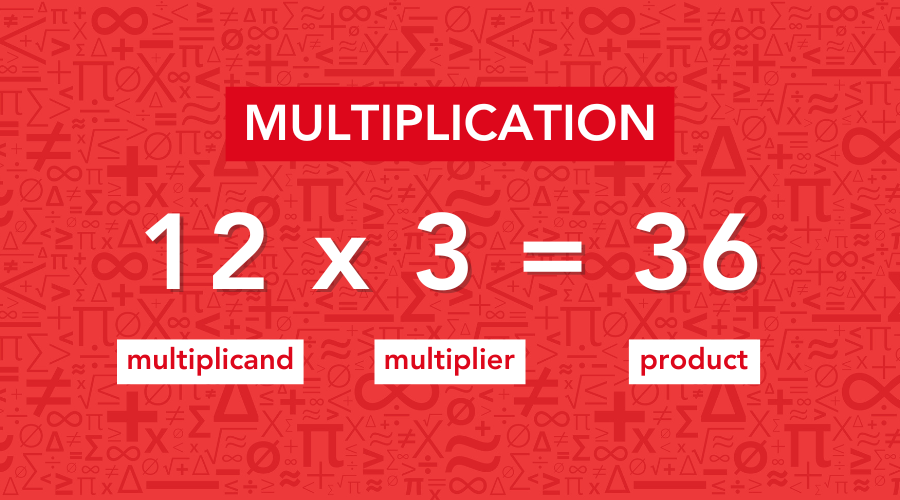
At its core, the mathematical product is the outcome of multiplication. This operation, when translated into the digital domain, becomes the bedrock of virtually all computation. Processors, the brains of our devices, perform billions of multiplications per second, executing instructions that are fundamentally built upon this elementary arithmetic.
Binary Operations and the Essence of Computation
Computers operate using binary code, a system of 0s and 1s. Every piece of data, every instruction, is ultimately represented in this binary form. When these bits are manipulated, multiplications are often involved. For instance, in logic gates that form the basis of digital circuits, Boolean operations can be represented using arithmetic operations. While not always direct multiplication in the decimal sense, the underlying principles of combining values according to specific rules are analogous to the distributive and associative properties that govern multiplication.
Consider the process of adding two binary numbers. This is often achieved through algorithms that, at a lower level, involve AND and XOR operations, which can be conceptually linked to multiplication and addition. As computations become more complex, such as in graphics rendering, signal processing, or scientific simulations, the number of multiplications required escalates exponentially. Each pixel’s color, each sound wave’s frequency, each particle’s trajectory is calculated through intricate sequences of arithmetic, where the product plays a starring role.
The Role of Floating-Point Arithmetic
In modern computing, particularly in areas like scientific computing, machine learning, and high-performance simulations, floating-point arithmetic is paramount. Floating-point numbers represent real numbers with a fractional component, allowing for greater precision than integers. The product of two floating-point numbers is a fundamental operation performed by dedicated floating-point units (FPUs) within processors.
The accuracy and speed of these floating-point multiplications directly impact the performance and reliability of sophisticated software. Errors in floating-point products can accumulate over vast numbers of operations, leading to significant inaccuracies in results. This is why significant research and development efforts are dedicated to optimizing floating-point multiplication algorithms and ensuring hardware efficiency in handling them. From predicting weather patterns to simulating the behavior of molecules, the accurate calculation of floating-point products is indispensable.
Beyond Simple Multiplication: Advanced Product Concepts in Tech
The concept of a “product” in mathematics extends far beyond the simple result of multiplying two numbers. In various advanced mathematical fields that are foundational to technology, the term “product” takes on more abstract and powerful meanings.
Vector and Matrix Products: The Language of Data and Transformations
In fields like linear algebra, vector products (dot product and cross product) and matrix products are fundamental. These operations are the workhorses of many advanced technological applications.
The Dot Product: Unveiling Relationships and Projections
The dot product of two vectors, a scalar value, provides insight into the relationship between those vectors. It’s used extensively in:
- Machine Learning: Calculating similarity between data points, determining weights in neural networks, and performing feature extraction. For example, in recommender systems, the dot product can measure the similarity between user preferences and item characteristics.
- Computer Graphics: Calculating lighting effects, determining the angle between surfaces, and projecting objects onto screens. The dot product helps determine how much light reflects off a surface.
- Physics Simulations: Calculating work done by a force, which involves the dot product of force and displacement vectors.
The Matrix Product: Transformations and Systems of Equations
Matrix multiplication is even more pervasive. A matrix product allows us to combine transformations and solve systems of linear equations. This is critical for:
- 3D Graphics: Rendering complex scenes involves numerous matrix multiplications to transform and project 3D models into 2D images. Each transformation (translation, rotation, scaling) is represented by a matrix, and these are multiplied to achieve the final view.
- Robotics: Kinematic and dynamic calculations for robot arm movements rely heavily on matrix products to determine the position and orientation of different parts of the robot.
- Data Science: Solving large systems of linear equations, a common task in statistical modeling and optimization, is efficiently performed using matrix operations. The product of matrices can represent complex relationships between variables in a dataset.
- Signal Processing: Operations like Fourier transforms, crucial for audio and image compression, are deeply rooted in matrix operations.
The Cartesian Product: Building Complex Data Structures
In set theory, the Cartesian product of two sets is a set of all ordered pairs. While this might sound abstract, it’s the conceptual foundation for building complex data structures in programming. When you create a data structure that combines multiple pieces of information, like a record or an object with different properties, you are, in essence, forming a Cartesian product of the sets of possible values for each property.
For instance, if you have a set of possible colors (e.g., {“red”, “blue”}) and a set of possible sizes (e.g., {“small”, “large”}), their Cartesian product would be {(“red”, “small”), (“red”, “large”), (“blue”, “small”), (“blue”, “large”)}. This simple concept underpins how we define and manage structured data in databases and software applications.
The Product as a Tool for Security and Innovation
The mathematical product, in its various forms, is not just about calculation; it’s also a powerful tool for innovation and security in the tech landscape.
Cryptography and the Power of Prime Products
The security of our digital communications, online transactions, and sensitive data relies heavily on cryptographic algorithms. Many of these algorithms, particularly asymmetric cryptography like RSA, are based on the mathematical difficulty of certain operations. A cornerstone of RSA is the difficulty of factoring large numbers into their prime products.
The RSA algorithm works by selecting two large prime numbers and multiplying them to create a public modulus. Encryption uses this modulus, while decryption uses the original prime factors. The security of the system relies on the fact that it is computationally infeasible to find the original prime factors given only the large composite number (the product). Thus, the mathematical product of primes is the very foundation of much of our modern digital security infrastructure.
The Product in Algorithmic Optimization
In the competitive world of technology, efficiency is paramount. Algorithmic optimization, which aims to improve the speed and resource usage of software, often involves analyzing and refining operations that produce mathematical products.
- Algorithm Complexity: When analyzing the time complexity of an algorithm (e.g., Big O notation), we often encounter expressions that involve products of variables. Understanding how these products scale with input size helps developers choose the most efficient algorithms.
- Numerical Optimization: Techniques like gradient descent, widely used in machine learning for training models, involve calculating products of gradients and learning rates to update model parameters. The efficiency of these product calculations directly impacts the training time of AI models.
Conclusion: The Enduring Significance of the Mathematical Product in Tech
From the fundamental operations performed by every processor to the complex cryptographic systems that protect our data, the mathematical product is an indispensable concept in the technology sector. It is the elementary building block of computation, the language of data manipulation and transformation, and a critical component of our digital security. As technology continues to evolve, pushing the boundaries of what’s possible, our understanding and skillful application of mathematical products will remain at the forefront of innovation, driving advancements in artificial intelligence, data science, and beyond. The seemingly simple question, “What’s the product in math?” reveals a profound truth: it is the engine that powers much of our digital world.
aViewFromTheCave is a participant in the Amazon Services LLC Associates Program, an affiliate advertising program designed to provide a means for sites to earn advertising fees by advertising and linking to Amazon.com. Amazon, the Amazon logo, AmazonSupply, and the AmazonSupply logo are trademarks of Amazon.com, Inc. or its affiliates. As an Amazon Associate we earn affiliate commissions from qualifying purchases.