
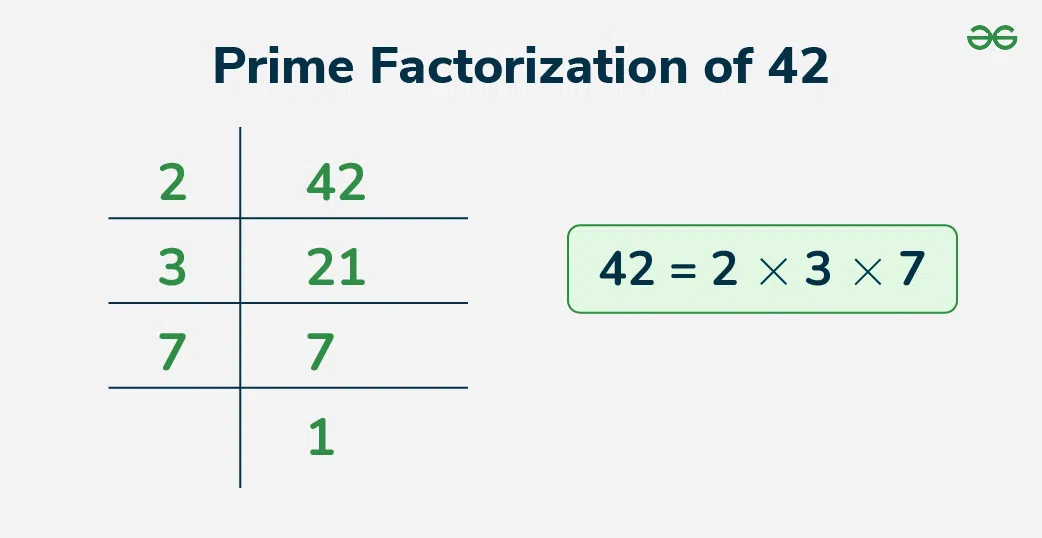
At first glance, the question “What’s the prime factorization of 42?” might seem like a trivial exercise from an elementary mathematics textbook. The answer, a straightforward 2 × 3 × 7, is quickly derived through simple division. However, to confine this concept to the realm of basic arithmetic would be to overlook one of the most profoundly impactful and computationally challenging principles underpinning modern technology. From the impenetrable fortresses of digital security to the intricate algorithms driving our software, the science of prime factorization, especially with significantly larger numbers, is not just a mathematical curiosity but a cornerstone of the digital age.
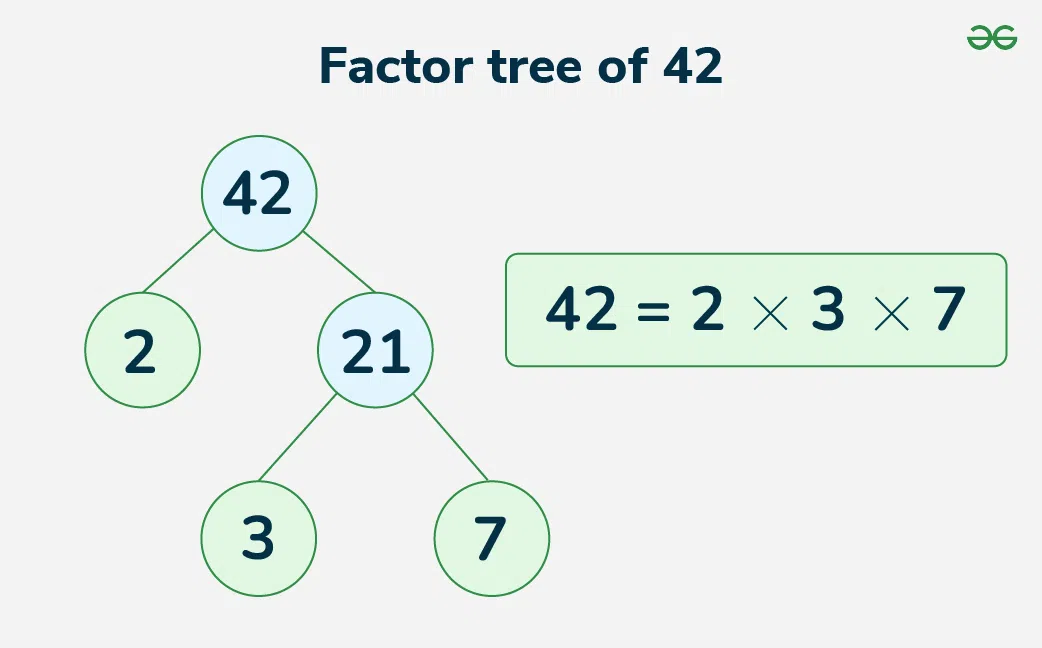
This article delves into the technological significance of prime factorization, illustrating how a seemingly simple number theory concept becomes a linchpin for secure communication, advanced computation, and the very architecture of our interconnected world. We will explore its critical role in cybersecurity, the algorithms developed to tackle its computational complexities, its broader applications in computing, and the futuristic threats and promises posed by emerging technologies like quantum computing.
The Foundational Role of Prime Numbers in Digital Security
The security protocols that protect our online transactions, personal data, and national secrets owe their robustness, in large part, to the peculiar nature of prime numbers and the inherent difficulty of factoring their products. While factoring 42 is trivial, factoring a product of two primes, each hundreds of digits long, is a computational nightmare, even for the most powerful supercomputers. This “computational intractability” forms the bedrock of modern public-key cryptography.
The Unbreakable Backbone: RSA Encryption and Prime Factorization
The most ubiquitous example of prime factorization’s application in digital security is the RSA (Rivest–Shamir–Adleman) encryption algorithm. RSA is an asymmetric cryptographic system, meaning it uses a pair of keys: a public key for encryption and a private key for decryption. Its security hinges entirely on the practical difficulty of factoring the product of two large prime numbers.
Here’s a simplified breakdown of how it leverages prime factorization:
- Key Generation: An RSA key pair begins with selecting two very large, distinct prime numbers,
pandq. These primes are kept secret. - Modulus Calculation: The product of these two primes,
n = p * q, is computed. Thisnis a crucial part of both the public and private keys. - Public Key Derivation: The public key is derived from
nand another number,e(the public exponent). Anyone can knownande. - Private Key Derivation: The private key is derived from
p,q, ande. Crucially, to calculate the private key from the public key, one would need to factornback intopandq.
The genius of RSA lies in this asymmetry. It’s easy to multiply two large primes to get n, but it’s incredibly difficult to reverse the process—to find p and q given only n. This mathematical asymmetry allows someone to encrypt a message using the public key (which contains n), but only the holder of the private key (who knows p and q) can decrypt it. Breaking RSA would mean finding an efficient way to factor extremely large numbers, a challenge that has eluded mathematicians and computer scientists for decades.
The Enigma of Large Primes: Computational Challenges and Cryptographic Strength
The strength of RSA and similar cryptographic systems directly correlates with the size of the prime numbers p and q used. Modern implementations typically use primes that are hundreds of digits long, resulting in an n that is 2048 or 4096 bits in length. Factoring such a number through brute-force methods (trial division) would take longer than the age of the universe, even with the combined power of all existing computers.
The computational challenge of finding these large primes is also significant. While there are probabilistic primality tests (like the Miller-Rabin test) that can efficiently determine if a large number is likely prime with a very high degree of certainty, definitively proving primality for such immense numbers requires specialized algorithms. Furthermore, the search for new and unique large primes is an ongoing endeavor, as these are critical resources for generating secure cryptographic keys. The cryptographic community constantly monitors advancements in factoring algorithms, setting ever-larger key sizes to stay ahead of potential breakthroughs. The perceived “unbreakability” of current public-key cryptography is thus a direct testament to the computational hardness of prime factorization.
Algorithms and Computational Efficiency: Deconstructing Numbers in the Digital Age
While the security of RSA relies on the difficulty of prime factorization, the field of computer science is also deeply invested in developing algorithms that can perform factorization as efficiently as possible, especially for numbers within computationally feasible ranges. Understanding these algorithms is crucial for evaluating cryptographic strength, for academic research, and for various applications in number theory and computational mathematics.
From Brute Force to Sophisticated Sieves: Factoring Algorithms
The journey of factoring algorithms began with elementary methods and evolved into highly sophisticated techniques:
- Trial Division: The simplest method involves dividing the target number
Nby every prime number starting from 2 up to the square root ofN. For 42, this is quick: 42 ÷ 2 = 21, 21 ÷ 3 = 7, and 7 is prime. For larger numbers, this becomes prohibitively slow. Its time complexity grows exponentially with the number of digits. - Pollard’s Rho Algorithm: This is a probabilistic algorithm much faster than trial division for numbers with relatively small prime factors. It uses a cycle-finding algorithm to detect repeated values in a sequence generated by a pseudo-random function modulo
N. While effective for numbers with factors up to about 15-20 digits, it still struggles with very large prime factors. - Quadratic Sieve (QS): This is one of the most efficient algorithms for factoring numbers up to about 100-120 digits. It works by finding smooth numbers (numbers whose prime factors are all small) in a sequence related to the number being factored. It then combines these smooth numbers to find congruences of squares, which can reveal factors of
N. - General Number Field Sieve (GNFS): This is currently the most efficient algorithm known for factoring very large integers (over 100 digits). It is highly complex, involving advanced number theory and algebraic techniques. GNFS has been used to set world records for factoring large RSA challenge numbers, demonstrating its power but also highlighting the immense computational resources required. Its superiority over other algorithms increases as the size of the number to be factored grows.
Each of these algorithms represents a significant advance in computational number theory, pushing the boundaries of what’s possible in factoring. They illustrate how computer scientists combine pure mathematical insights with algorithmic cleverness to tackle problems of immense complexity.
The Quest for Speed: Optimization in Prime Factorization Software
The development of factoring algorithms is inseparable from the quest for computational efficiency. Software engineers and high-performance computing specialists play a crucial role in optimizing the implementation of these algorithms:
- Parallel Computing: Factoring algorithms, especially GNFS, are highly amenable to parallelization. Different parts of the sieving process or matrix operations can be distributed across thousands of CPUs or GPUs, allowing for significant speedups. Distributed computing projects, where volunteers lend their idle computer power, have been instrumental in factoring large challenge numbers.
- Hardware Acceleration: Specialized hardware, such as FPGAs (Field-Programmable Gate Arrays) or custom ASICs (Application-Specific Integrated Circuits), can be designed to accelerate specific, computationally intensive steps of factoring algorithms.
- Memory Management and Data Structures: Efficient memory usage and optimized data structures are paramount, especially when dealing with the vast amounts of data generated during the sieving and matrix stages of advanced algorithms.
- Algorithmic Refinements: Continuous research focuses on improving existing algorithms, discovering new shortcuts, or finding more efficient ways to execute sub-routines, further enhancing performance.

These optimizations are not just academic exercises; they directly impact the perceived security of cryptographic standards. Every improvement in factoring efficiency means that cryptographic key lengths must increase to maintain the same level of security, leading to a constant arms race between cryptographers and cryptanalysts.
Beyond Cryptography: Prime Factors in Computing and Data Science
While cryptography is arguably the most critical application of prime factorization in technology, the underlying principles of number theory, including primes, extend into various other domains within computing and data science. These applications often leverage the unique properties of prime numbers rather than the factoring problem directly, but they stem from the same foundational mathematical understanding.
Data Integrity and Hashing: A Deeper Dive into Number Theory Applications
Prime numbers play a subtle but significant role in several areas related to data handling and integrity:
- Hashing Functions: Many hashing functions, which map arbitrary-sized data to a fixed-size value (a hash), incorporate modular arithmetic with large prime numbers. The use of primes helps distribute hash values more evenly, reducing collisions (where different inputs produce the same hash) and improving the efficiency of data structures like hash tables. Good hashing is fundamental to databases, caches, and indexing systems.
- Error Correction Codes: While not directly using prime factorization, many error correction codes, which detect and correct errors in data transmission or storage, are based on finite fields (Galois fields) whose sizes are prime numbers or powers of prime numbers. These codes are critical for reliable communication across noisy channels, from deep-space probes to mobile phone networks.
- Random Number Generation: Some pseudo-random number generators utilize prime numbers in their algorithms to ensure long periods and good statistical properties of the generated sequences, which are vital for simulations, statistical sampling, and even cryptographic nonce generation.
These applications demonstrate that the properties of prime numbers, beyond just the difficulty of factorization, are invaluable tools in the digital engineer’s toolkit for building robust and efficient systems.
The Future of Factoring: Quantum Computing’s Threat and Promise
The landscape of computational difficulty, and therefore cryptographic security, is poised for a revolutionary shift with the advent of quantum computing. This emerging technology presents both an existential threat to current public-key cryptography and a promise for entirely new computational capabilities.
- Shor’s Algorithm: In 1994, mathematician Peter Shor developed a quantum algorithm that could efficiently factor large numbers. Unlike classical algorithms that face exponential increases in time complexity, Shor’s algorithm could theoretically factor numbers in polynomial time. If sufficiently powerful quantum computers become a reality, they could break RSA and other public-key encryption schemes in a matter of hours or even minutes, rendering vast swathes of current digital security infrastructure obsolete. This looming threat has spurred intense research into “post-quantum cryptography” – new cryptographic algorithms designed to be resistant even to quantum attacks.
- Quantum Computing’s Promise: Beyond the threat, quantum computing could also unlock unprecedented capabilities. For instance, it might enable the development of new, more secure cryptographic methods or vastly accelerate the discovery of new materials by simulating molecular structures with unprecedented accuracy. The ability to perform complex calculations, including potentially very large-scale prime factorization (for research, not necessarily security exploitation), could open doors to scientific discovery that are currently beyond our reach.
The question “what’s the prime factorization of 42?” will always have the same simple answer. However, the question of “what’s the future of prime factorization for numbers orders of magnitude larger?” is a dynamic and critical area of technological development, with profound implications for how we secure our digital lives and expand the frontiers of computation.
Learning and Implementing Prime Factorization: A Tech Skillset
For technologists, understanding prime factorization isn’t just about abstract mathematics; it offers practical insights into algorithms, data security, and computational thinking. Engaging with this concept can be a valuable exercise for developers, security professionals, and anyone interested in the foundational principles of computing.
Practical Applications for Developers: Implementing Factoring Algorithms
Developers often encounter scenarios where a basic understanding or implementation of number theory concepts is beneficial:
- Educational Tools: Building small-scale prime factorization tools or visualizers can be an excellent way to learn about algorithms, recursion, and optimization in programming languages like Python or JavaScript.
- Security Simulations: Implementing simplified versions of cryptographic algorithms (like a mini-RSA) can provide a hands-on understanding of their vulnerabilities and the importance of key size.
- Problem Solving: In competitive programming or specific niche applications, the ability to efficiently find prime factors or work with prime numbers can be crucial for optimizing solutions.
- Performance Benchmarking: Experimenting with different factoring algorithms can offer practical lessons in algorithm efficiency, Big O notation, and the impact of computational complexity on real-world performance.
Such exercises not only reinforce mathematical understanding but also build stronger programming skills, especially in areas like numerical computation and algorithm design.
Educational Value and Computational Thinking
Beyond direct application, grappling with prime factorization and its associated algorithms fosters computational thinking—a critical skillset in the tech world. Computational thinking involves breaking down complex problems, recognizing patterns, abstracting concepts, and designing algorithms.
- Problem Decomposition: Factoring a large number requires breaking it down into smaller, manageable sub-problems.
- Algorithmic Design: Developing or understanding factoring algorithms trains one to think systematically about steps, conditions, and efficiency.
- Abstraction: Generalizing from “factoring 42” to “factoring any number” involves abstraction.
- Pattern Recognition: Identifying prime numbers and understanding their distribution involves recognizing mathematical patterns.
These are the same mental processes applied daily by software engineers, data scientists, and AI researchers. Therefore, the seemingly simple query about 42’s prime factors serves as an accessible entry point into the complex, fascinating, and critically important world where mathematics meets cutting-edge technology.
In conclusion, “what’s the prime factorization of 42?” is far more than a simple arithmetic question. Its answer, 2 × 3 × 7, provides a gateway to understanding the intricate architecture of our digital lives. From the secure transactions powered by RSA encryption to the sophisticated algorithms striving to break or optimize computational barriers, prime factorization stands as a testament to the profound and often hidden influence of fundamental mathematical concepts on the ever-evolving landscape of technology. As we look towards an era of quantum computing, the ongoing challenge of prime factorization will continue to shape our digital future, defining the very limits of what is computationally possible and secure.
aViewFromTheCave is a participant in the Amazon Services LLC Associates Program, an affiliate advertising program designed to provide a means for sites to earn advertising fees by advertising and linking to Amazon.com. Amazon, the Amazon logo, AmazonSupply, and the AmazonSupply logo are trademarks of Amazon.com, Inc. or its affiliates. As an Amazon Associate we earn affiliate commissions from qualifying purchases.