
For many retail investors and institutional fund managers alike, the question “What is the price of Google stock?” is more than a simple inquiry into a ticker symbol’s daily fluctuation. It is a query into the health of the digital economy, the progress of artificial intelligence, and the stability of one of the world’s most dominant business moats. Since its initial public offering in 2004, Google—now operating under the parent company Alphabet Inc.—has transitioned from a niche search engine into a global conglomerate with a market capitalization that consistently hovers in the trillions.
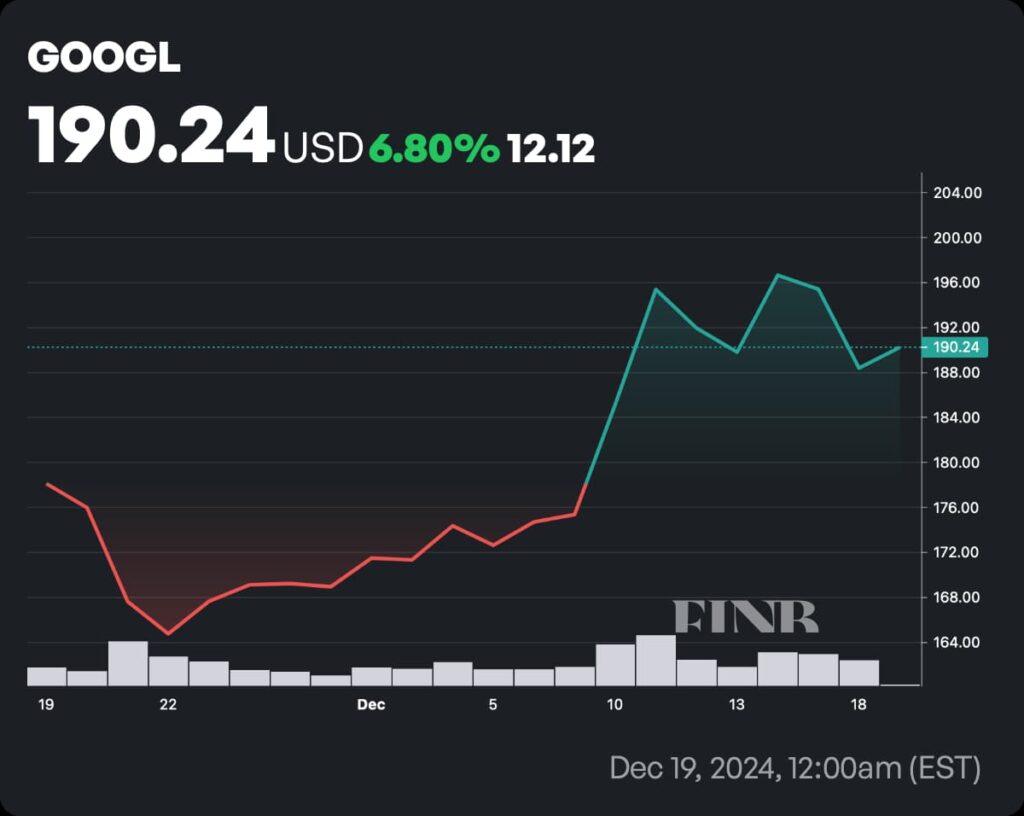
Understanding the price of Alphabet stock requires a multifaceted approach. It is not merely a number on a screen; it is a reflection of the company’s advertising dominance, its aggressive expansion into cloud computing, and its strategic pivot toward generative AI. To truly grasp what determines the price of this tech giant, an investor must look beyond the daily percentage changes and analyze the underlying financial engines that drive the organization.
Understanding the Structure: GOOGL vs. GOOG
When an investor looks up the price of Google stock, they are immediately met with two distinct ticker symbols: GOOGL and GOOG. For the novice investor, this can be a point of confusion, yet the distinction is vital for understanding shareholder rights and market liquidity.
Class A Shares (GOOGL)
Class A shares, traded under the ticker GOOGL, are the traditional common stocks that provide investors with voting rights. Specifically, one share of GOOGL equals one vote. These shares are typically preferred by long-term investors who wish to have a theoretical, if symbolic, voice in the company’s corporate governance. Because of these voting rights, Class A shares occasionally trade at a slight premium compared to Class C shares, although the price gap is usually negligible.
Class C Shares (GOOG)
Class C shares, traded under the ticker GOOG, carry no voting rights. These shares were created during a stock split in 2014 as a way for the company’s founders, Larry Page and Sergey Brin, to retain control over the company’s direction while still allowing for the issuance of equity for employee compensation and acquisitions. Despite the lack of voting power, GOOG shares track the company’s economic performance identically to GOOGL shares. For the average retail investor, the choice between the two often comes down to personal preference or very slight differences in liquidity.
Class B Shares
It is also worth noting the existence of Class B shares. These are not traded on public exchanges and are held primarily by the founders and insiders. Each Class B share carries ten votes, ensuring that the original visionaries of Google maintain a majority of the voting power, regardless of how much public stock is issued. This structure is a critical factor in Alphabet’s valuation, as it protects the company from hostile takeovers but also limits the influence of activist investors.
The Financial Engines Driving the Stock Price
The price of Alphabet stock is fundamentally tied to its ability to generate massive amounts of cash. While the company has diversified significantly over the last decade, its core revenue streams remain the primary catalysts for stock price movement.
The Advertising Fortress
The backbone of Google’s valuation is its advertising ecosystem. Search remains the most valuable real estate on the internet. Unlike social media advertising, which relies on interruptive marketing, Google Search captures “intent.” When a user types a query into Google, they are often signaling an immediate need or desire to purchase. This makes Google’s ad inventory incredibly resilient, even during economic downturns.
YouTube, another pillar of the ad business, has evolved into the world’s second-largest search engine. Its transition into the “Shorts” format to compete with TikTok and its dominance in the “Connected TV” (CTV) space have provided new avenues for growth. When Alphabet reports its quarterly earnings, the market reacts most sharply to the growth rates of Search and YouTube, as these fund all other corporate endeavors.
Google Cloud’s Path to Profitability
For years, Google Cloud was a loss-leading venture, heavily subsidized by the advertising wing. However, in recent years, the segment has reached a tipping point of profitability. As businesses migrate their infrastructure to the cloud, Google has positioned itself as the third major player alongside Amazon Web Services (AWS) and Microsoft Azure. The stock price often reflects the market’s optimism about Google Cloud’s margins. As the division scales, its contribution to the bottom line becomes more significant, justifying a higher price-to-earnings (P/E) multiple for the stock.
The “Other Bets” Segment
Alphabet also invests in “Other Bets,” which include moonshot projects like Waymo (autonomous driving) and Verily (life sciences). While these segments currently operate at a loss, they represent the “lottery tickets” in Alphabet’s portfolio. A breakthrough in Waymo’s commercialization, for instance, could add hundreds of billions of dollars to the company’s valuation, providing a long-term upside that is often “priced in” by forward-looking investors.
Valuation Metrics and Market Sentiment
To determine if the current price of Google stock is “fair,” investors look at historical valuation metrics and compare them to the broader market and industry peers.
Price-to-Earnings (P/E) Ratio
Historically, Google has traded at a P/E ratio that reflects its growth status. However, compared to other members of the “Magnificent Seven” (such as Microsoft, Apple, and Nvidia), Google often trades at a more modest valuation. This is sometimes referred to as the “Google Discount,” caused by concerns over regulatory scrutiny and the competitive threat of AI. For value-oriented investors, a lower P/E ratio relative to earnings growth (the PEG ratio) often suggests that the stock is undervalued relative to its cash-generating power.
Share Buybacks and Dividends
A significant driver of the stock price in the modern era is Alphabet’s capital allocation strategy. For years, the company sat on a mountain of cash. Recently, management has become more aggressive in returning that capital to shareholders. Massive share buyback programs reduce the total number of shares outstanding, which increases earnings per share (EPS) and, by extension, the stock price. Furthermore, the introduction of a quarterly dividend has signaled a new era of maturity for the company, attracting a broader class of institutional investors who prioritize income alongside growth.
The Impact of Stock Splits
In 2022, Alphabet executed a 20-for-1 stock split. Before the split, the price of a single share was over $2,000, making it difficult for small-scale retail investors to purchase whole shares. By bringing the price down to a more “accessible” level—around $100 to $150 depending on market conditions—the company increased liquidity and made the stock more attractive for inclusion in price-weighted indices like the Dow Jones Industrial Average. While a split does not change the fundamental value of the company, the increased demand from retail investors often provides a psychological boost to the share price.
Risks and Headwinds: What Could Depress the Price?
No investment is without risk, and several factors could weigh down Alphabet’s stock price regardless of its current financial strength.
Regulatory and Antitrust Challenges
The primary shadow over Google’s stock price is the persistent threat of antitrust litigation. Governments in the U.S. and the European Union have repeatedly scrutinized Google’s dominance in search and digital advertising. Potential outcomes, such as forced divestitures or changes to default search engine agreements, create uncertainty. Markets dislike uncertainty, and these legal battles often act as a “valuation ceiling” for the stock.
The AI Arms Race
While Google was a pioneer in AI research, the rise of OpenAI’s ChatGPT and Microsoft’s integration of AI into Bing has challenged Google’s perceived invincibility. If users begin to migrate from traditional search queries to generative AI conversations, Google’s traditional ad model could be disrupted. The stock price fluctuates based on how well the market perceives Google’s response to this threat. The successful rollout of Gemini and other AI-integrated products is essential for maintaining investor confidence in the company’s long-term relevance.
Macroeconomic Sensitivity
Despite its dominance, Google is not immune to the broader economy. High-interest-rate environments often lead to a “risk-off” sentiment, where investors move away from tech stocks and into safer assets like bonds. Additionally, if businesses cut their marketing budgets due to a recession, Google’s ad revenue growth will inevitably slow, leading to a contraction in the stock price.
Conclusion: Evaluating the Price of Google Stock
When asking “What’s the price of Google stock,” an investor is looking at a snapshot of a complex, global entity. The price reflects a balance between the company’s unrivaled cash flow from search, its burgeoning cloud business, and the speculative value of its AI future.
For the disciplined investor, the current price is a starting point for deeper analysis. Is the market currently underestimating the company’s ability to navigate the AI transition? Is the regulatory risk already “priced in”? By examining Alphabet’s diverse share classes, its financial drivers, and its strategic hurdles, one can move beyond the ticker symbol and understand the true value of owning a piece of the world’s information gatekeeper. Whether the price is $100 or $200, the underlying question remains the same: can Alphabet continue to innovate at a scale that justifies its place at the pinnacle of the global market?
aViewFromTheCave is a participant in the Amazon Services LLC Associates Program, an affiliate advertising program designed to provide a means for sites to earn advertising fees by advertising and linking to Amazon.com. Amazon, the Amazon logo, AmazonSupply, and the AmazonSupply logo are trademarks of Amazon.com, Inc. or its affiliates. As an Amazon Associate we earn affiliate commissions from qualifying purchases.