
The automotive industry is a titan of technological innovation, a testament to human ingenuity and our relentless pursuit of progress. From the earliest, sputtering contraptions to the sleek, AI-driven vehicles of today, cars have consistently pushed the boundaries of what’s possible. When we delve into the history of this transformative technology, a fundamental question arises: what truly constitutes the “oldest car in the world”? Is it the first vehicle to possess rudimentary locomotion, or is it a more refined ancestor of the automobiles we know and rely on today? This exploration delves into the technological lineage of the automobile, tracing its genesis through key inventions and pivotal moments that shaped its very definition.

The Dawn of Self-Propelled Vehicles: Precursors to the Automobile
The journey towards the modern car is not a single, linear invention but rather a complex tapestry woven from numerous threads of technological advancement. Before the concept of a “car” as we understand it emerged, several precursors laid the groundwork, experimenting with the fundamental principle of self-propulsion. These early forays, though primitive by today’s standards, were revolutionary in their time, demonstrating a bold leap in engineering ambition.
Steam-Powered Ambitions: Cugnot’s Fardier à Vapeur
To pinpoint the earliest contender for the title of “oldest car,” we must turn our gaze to the 18th century and the innovative, albeit somewhat cumbersome, creations of Nicolas-Joseph Cugnot. In 1769, this French military engineer designed and built what is widely acknowledged as the first self-propelled mechanical vehicle: the fardier à vapeur (steam dray). This colossal machine, powered by a steam engine, was intended for the French army to haul heavy artillery.
Design and Functionality of Cugnot’s Steam Dray
Cugnot’s fardier à vapeur was a far cry from the compact, wheeled conveyances we associate with cars. It weighed an astonishing 2.5 tons and stood over 13 feet long. The steam boiler was mounted at the front, directly above the single front wheel, which also served as the steering mechanism. The engine was a two-cylinder, V-twin design, producing enough power to move the vehicle at a glacial pace, estimated to be around 2.5 miles per hour. The boiler required frequent stops for refueling with water and coal, making it impractical for anything beyond short, arduous journeys. Despite its limitations, it was a groundbreaking achievement, proving that a vehicle could be propelled without the need for animal power. Historical accounts suggest it was challenging to steer and prone to tipping over, leading to what is often cited as the first recorded automobile accident.
Early Electrical Explorations: The Unsung Pioneers
While steam dominated early propulsion experiments, the concept of electric power also began to flicker in the minds of inventors during the same era. Though less documented and often overshadowed by steam, these early electrical experiments were crucial in demonstrating the potential of an alternative power source.
The Voltaic Pile and its Immediate Impact
The invention of the voltaic pile by Alessandro Volta in 1800 provided a nascent form of portable electrical energy. This discovery, a series of alternating copper and zinc discs separated by brine-soaked cloth, laid the foundation for understanding electricity as a usable power source. In the decades that followed, various inventors in Europe and America experimented with electric motors and batteries, attempting to harness this newfound power for locomotion. While these early electric vehicles were often more akin to electric carts or carriages, they represented a significant technological step, exploring a cleaner and potentially more efficient means of self-propulsion than steam. Figures like Robert Anderson, who is credited with developing an early electric carriage in Scotland in the 1830s, and Thomas Davenport, an American inventor who built a small electric locomotive in 1835, are key, albeit often overlooked, figures in this narrative.
The Birth of the Internal Combustion Engine and the Modern Automobile
The true genesis of the “car” as we recognize it – an automobile powered by an internal combustion engine – arrived in the latter half of the 19th century. This period witnessed a confluence of scientific discovery and engineering prowess that would irrevocably alter transportation and society. The development of efficient internal combustion engines was the critical technological leap that paved the way for the vehicles that would eventually populate our roads.
Benz and Daimler: The Fathers of the Horseless Carriage
When the question of the “oldest car” arises, the names Carl Benz and Gottlieb Daimler are almost invariably at the forefront. Both German engineers independently developed and patented their versions of the gasoline-powered automobile around the same time, marking a pivotal moment in technological history.
Carl Benz’s Patent-Motorwagen: The First True Automobile
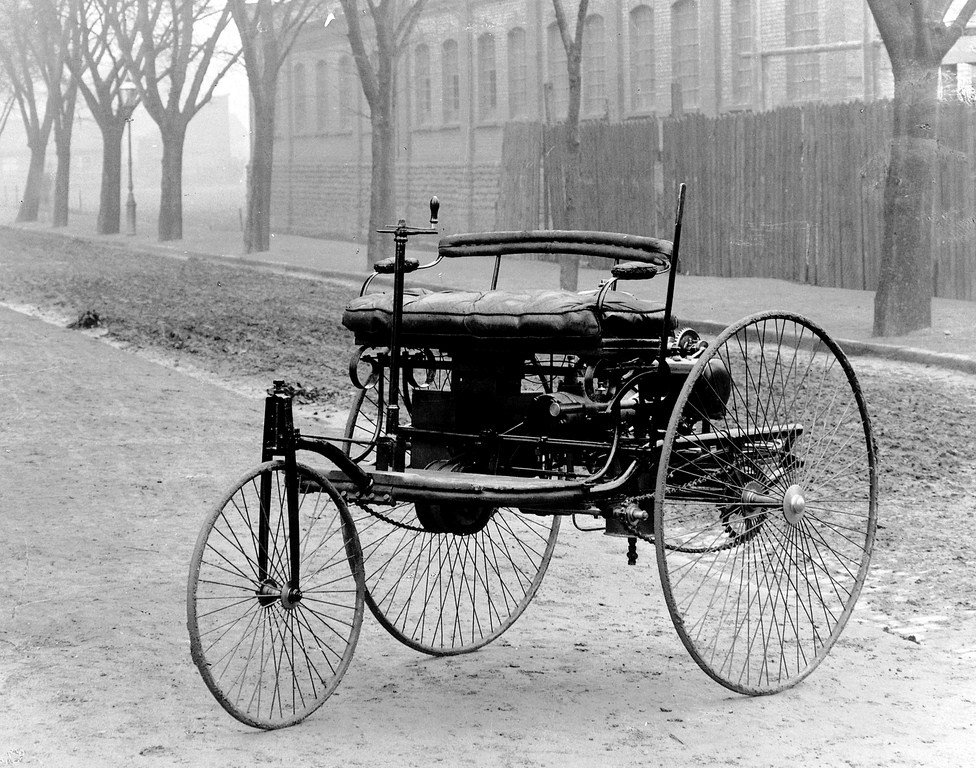
Carl Benz is widely credited with building the first automobile designed from the ground up as a self-propelled vehicle, rather than an adaptation of an existing horse-drawn carriage. In 1886, he received a patent for his Patent-Motorwagen Nummer 1. This three-wheeled vehicle was powered by a single-cylinder, four-stroke gasoline engine. The engine was mounted at the rear, and steering was controlled by a tiller. The vehicle was a significant engineering feat, incorporating a specialized chassis and a fuel system, unlike earlier, experimental attempts. Benz’s vision was to create a practical, reliable means of transportation, and his Patent-Motorwagen embodied this ambition. The legendary long-distance journey undertaken by his wife, Bertha Benz, in 1888, proved the vehicle’s viability and significantly boosted public perception, acting as a crucial, albeit informal, marketing campaign for this groundbreaking technology.
Gottlieb Daimler’s Contribution: A Parallel Development
Concurrently, Gottlieb Daimler, working with Wilhelm Maybach, was also pioneering the internal combustion engine and its application to vehicles. In 1886, the same year Benz patented his Motorwagen, Daimler fitted a gasoline engine to a stagecoach, creating what could be considered the first four-wheeled automobile. Daimler’s focus was initially on developing a high-speed gasoline engine, which he famously demonstrated in a wooden boat in 1886. His subsequent adaptation to a carriage further solidified the potential of this new power source. While Benz’s Patent-Motorwagen is often cited as the “first automobile” due to its purpose-built design, Daimler’s work was equally instrumental in the rapid development and adoption of gasoline-powered vehicles. The parallel and independent innovations of Benz and Daimler underscore the fertile ground of technological exploration in the late 19th century.
The Internal Combustion Engine: The Technological Heartbeat
The internal combustion engine (ICE) was the technological linchpin that enabled the practical automobile. Its development was a complex process involving numerous inventors and incremental improvements over decades. The four-stroke cycle, often referred to as the Otto cycle, named after Nikolaus Otto, who significantly improved upon earlier designs in 1876, became the standard for most gasoline engines.
Evolution of Engine Technology: From Conception to Refinement
Early ICE designs were often crude and inefficient. However, the relentless pursuit of power, reliability, and fuel economy drove rapid advancements. Key technological milestones included the development of reliable ignition systems (spark plugs), efficient fuel delivery mechanisms (carburetors, and later fuel injection), and robust cooling systems. The transition from early, experimental engines to the refined powerplants found in Benz and Daimler’s vehicles represented a significant leap in engineering. These engines were not merely concepts; they were becoming practical, albeit rudimentary, machines capable of sustained operation. This continuous refinement of the ICE was fundamental to the automobile’s evolution from a curiosity to a transformative mode of transport.
Defining “The Oldest Car”: A Technological Perspective
The question of “what’s the oldest car in the world” hinges on how we define “car” from a technological standpoint. Is it the first instance of self-propelled locomotion, or does it require a certain level of mechanical sophistication and a design intended for personal transport? Examining the historical context and the technological leaps involved helps us arrive at a nuanced understanding.
The Case for Cugnot: The Pioneer of Self-Propelled Locomotion
If the criterion is simply the first successful attempt at self-propelled locomotion, then Nicolas-Joseph Cugnot’s fardier à vapeur of 1769 unequivocally holds the title. It demonstrated that a machine could move under its own power, a concept that was utterly alien and revolutionary at the time. Its purpose, to move heavy loads without animal power, was a clear objective, and it achieved that objective, however imperfectly. While it lacked many characteristics we associate with cars – steering, speed, comfort – its technological innovation in harnessing mechanical power for movement is undeniable. It represents the very first flicker of the idea that would eventually lead to the automobile.
The Benz Patent-Motorwagen: The Ancestor of the Modern Automobile
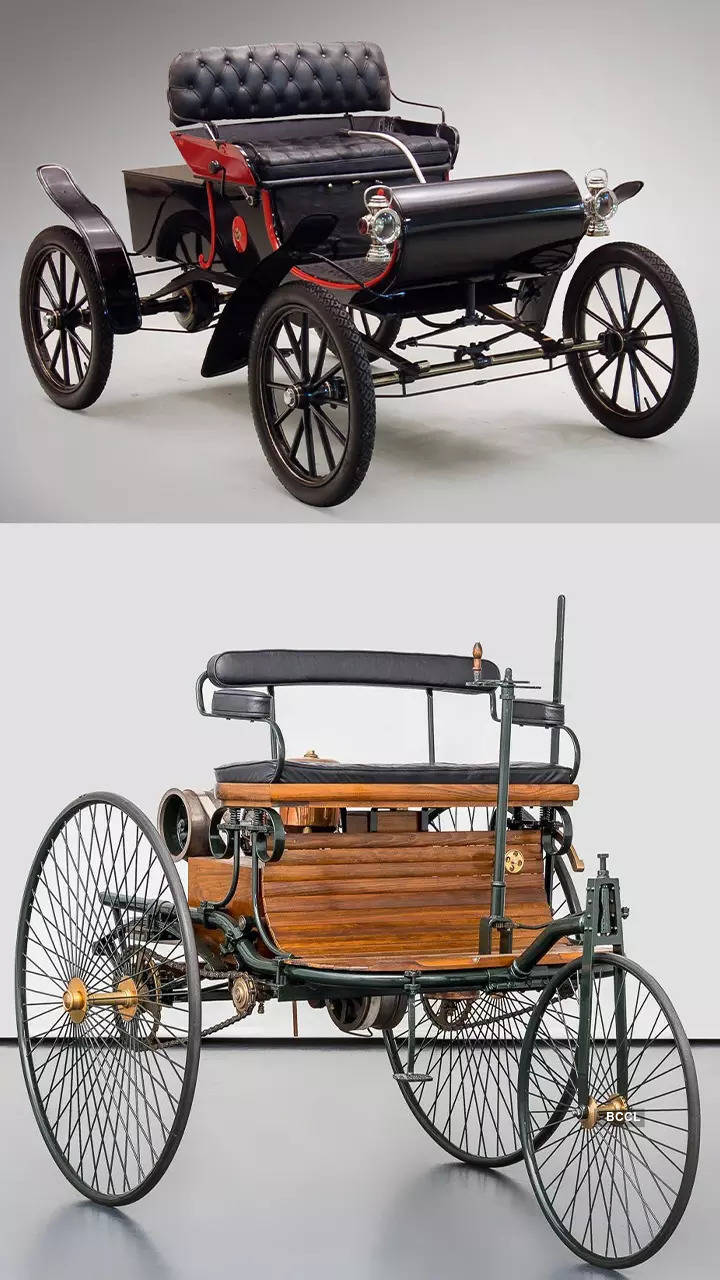
However, if we define “car” as a vehicle designed for personal transport, powered by an internal combustion engine, and exhibiting a degree of mechanical integration intended for road use, then Carl Benz’s Patent-Motorwagen Nummer 1 of 1886 emerges as the most fitting answer. This vehicle was conceived and built as an automobile. It had a chassis designed for its specific purpose, an engine integrated into the overall design, and a rudimentary steering system. It was the direct ancestor of the cars we drive today, embodying the core technological principles that would define the automotive industry for over a century.
The Technological Continuum: A Legacy of Innovation
Ultimately, identifying a single “oldest car” can be a simplification of a rich and complex technological evolution. Cugnot’s steam-powered behemoth was a crucial precursor, a bold experiment that proved the possibility of mechanical propulsion. The subsequent development of the internal combustion engine by pioneers like Benz and Daimler, and the engineering that went into creating their automobiles, marked the true birth of the modern car. Each invention, each refinement, built upon the successes and failures of those who came before. The “oldest car” is not just a single artifact but a testament to a continuous technological journey, a testament to humanity’s enduring drive to innovate and move forward. The legacy of these early innovators continues to shape the technological landscape of transportation, inspiring the next generation of automotive advancements.
aViewFromTheCave is a participant in the Amazon Services LLC Associates Program, an affiliate advertising program designed to provide a means for sites to earn advertising fees by advertising and linking to Amazon.com. Amazon, the Amazon logo, AmazonSupply, and the AmazonSupply logo are trademarks of Amazon.com, Inc. or its affiliates. As an Amazon Associate we earn affiliate commissions from qualifying purchases.