
Understanding the life expectancy of a mosquito might seem like a niche biological inquiry, but in the realm of modern technology, this fundamental data point is a critical component in developing advanced solutions for public health, pest control, and environmental management. Far from being a mere biological trivia, the lifespan of these ubiquitous insects directly informs the algorithms of AI-driven predictive models, the deployment strategies for smart traps, the design of targeted drone-based interventions, and even the cutting-edge genetic engineering techniques aimed at reducing mosquito populations. By leveraging insights into how long a mosquito lives, technology can be meticulously engineered to disrupt their life cycle, forecast disease outbreaks, and protect human populations more effectively than ever before.
The Biological Baseline: Data for Technological Intervention
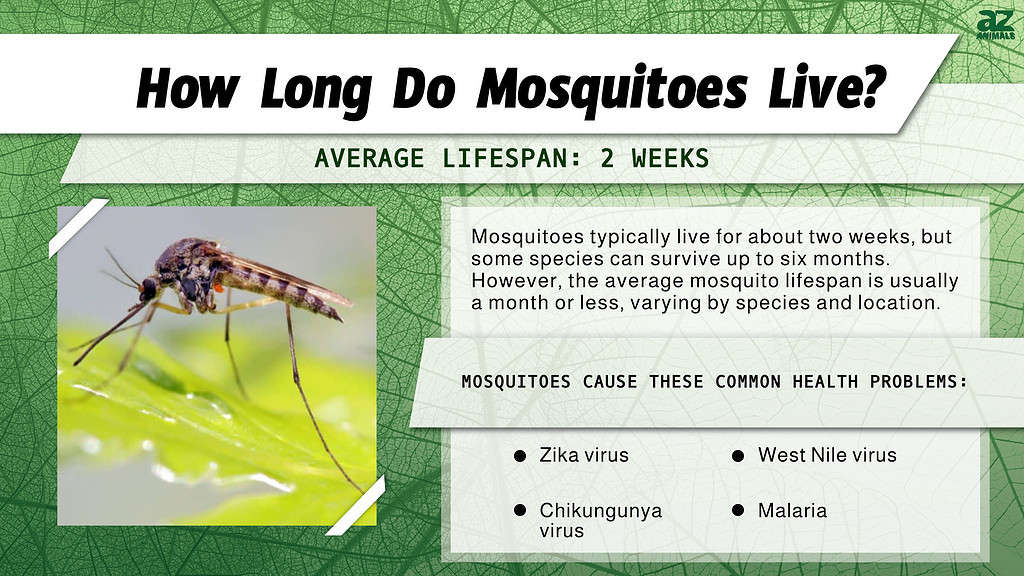
Before technology can strategize, it needs data. The life expectancy of a mosquito provides a foundational dataset that dictates the parameters for almost every technological intervention. On average, most mosquito species, particularly the females responsible for biting and disease transmission, live for about 2 to 4 weeks under optimal conditions. Males, which do not bite, typically have a much shorter lifespan, often just a few days. However, this average is highly variable and depends on a complex interplay of environmental, biological, and anthropogenic factors.
Factors Influencing Longevity: Environmental Sensors and Data Models
A mosquito’s lifespan is not a fixed number but a dynamic range influenced by several key factors, each of which can be monitored, modeled, and even manipulated through technological means.
- Temperature and Humidity: These are perhaps the most critical environmental determinants. Warmer temperatures generally accelerate mosquito development and metabolism, often leading to shorter adult lifespans but quicker reproductive cycles. Conversely, very cold temperatures can induce diapause (a state of arrested development) or lead to death. High humidity is crucial for survival, as mosquitos are prone to desiccation. Advanced sensor networks, integrated with IoT devices, continuously collect hyper-local temperature and humidity data, feeding it into predictive models that forecast mosquito population surges or declines, thus informing the optimal timing for interventions like insecticide application or the release of sterile insects.
- Access to Food and Water: Female mosquitos require blood meals for egg development, and both sexes need nectar for energy. Limited access to these resources directly impacts their longevity. Water bodies, crucial for larval development, also determine their initial survival. Satellite imagery, combined with GIS software, can map potential breeding sites, while smart traps can monitor feeding patterns, providing critical data for resource management algorithms.
- Predators and Pathogens: Natural predators (fish, birds, other insects) and pathogens (viruses, bacteria, fungi) can significantly reduce mosquito populations and lifespans. Bio-surveillance technologies and environmental DNA (eDNA) sampling are emerging tools to track predator populations and pathogen prevalence, allowing for more holistic ecological modeling within integrated pest management software.
- Human Intervention: Insecticides, larvicides, and habitat modification directly impact mosquito survival. The efficacy of these interventions is heavily dependent on understanding the mosquito’s life cycle stages and their respective vulnerabilities, data points crucial for optimizing drone spray patterns or developing precise chemical dispersal gadgets.
Species-Specific Variations: Tailoring Tech for Targeted Threats
Not all mosquitos are created equal. Different species exhibit distinct life expectancies and behaviors, demanding tailored technological responses.
- Aedes aegypti (transmitter of dengue, Zika, chikungunya): These typically have shorter adult lifespans, often around 2 weeks, but are highly adaptable to urban environments and bite during the day. Their specific life cycle data informs the design of indoor mosquito traps (e.g., smart ovitraps) and targeted urban larvicide campaigns using micro-drones.
- Anopheles gambiae (primary vector for malaria): With lifespans often extending to 3-4 weeks, Anopheles mosquitos have a longer window for transmitting pathogens. This extended longevity is a key parameter in developing long-lasting insecticide-treated bed nets, spatial repellent technologies, and genetic modification strategies aimed at reducing their reproductive capacity over a longer temporal scale.
- Culex pipiens (transmitters of West Nile virus, Japanese encephalitis): These tend to have moderate lifespans, around 2-3 weeks, and are common in temperate regions. Their life cycle data influences the deployment of community-wide larvicide programs and public health warning systems that predict peak transmission periods based on environmental factors.
Understanding these species-specific nuances is paramount for developing effective, species-targeted technological solutions rather than blanket approaches, maximizing resource efficiency and minimizing environmental impact.
AI & Data Analytics: Predicting and Tracking Mosquito Populations
The precise knowledge of mosquito life expectancy, combined with environmental data, fuels the most sophisticated AI and machine learning algorithms designed to combat mosquito-borne diseases. Technology is moving beyond reactive measures to proactive prediction and prevention.
Predictive Modeling for Outbreaks: AI-Driven Early Warning Systems
Knowing a mosquito’s expected lifespan allows epidemiologists and public health officials to model the potential window for disease transmission. AI-powered platforms ingest vast quantities of data: historical disease incidence, climate patterns, land use changes, and, crucially, mosquito life cycle parameters.
- Vectorial Capacity Calculations: The life expectancy of a mosquito directly influences its “vectorial capacity”—its ability to transmit pathogens. AI models can simulate different scenarios based on varying lifespans, temperature fluctuations, and human population density to predict when and where an outbreak is most likely to occur. This allows for the pre-positioning of medical supplies, the activation of public awareness campaigns, and the targeted deployment of control measures.
- Real-time Risk Mapping: GIS-based software integrates satellite data on water bodies and vegetation with ground-level sensor data on mosquito activity and microclimates. Machine learning algorithms analyze these inputs, along with mosquito life expectancy data, to generate real-time risk maps, highlighting areas with heightened potential for mosquito breeding and disease transmission. This spatial intelligence guides everything from localized fogging operations to community-level interventions.
Smart Traps and Sensor Networks: Granular Data Collection
The digital transformation of entomology relies heavily on smart traps and sensor networks that gather granular data on mosquito populations, activity, and even individual mosquito characteristics.

- Automated Identification and Counting: Next-generation smart traps use acoustic sensors, optical recognition, and even AI vision systems to identify mosquito species and count them automatically. This eliminates manual labor and provides continuous, real-time data on population dynamics. By monitoring daily catch rates and correlating them with life cycle stage, researchers can refine estimates of local mosquito longevity.
- Environmental Monitoring: These networks include sensors for temperature, humidity, light, and CO2 levels—all factors influencing mosquito behavior and lifespan. The aggregated data is wirelessly transmitted to central databases, where cloud-based analytics platforms process it. Understanding how these environmental variables correlate with observed mosquito lifespans allows for more accurate predictions of population booms or busts.
- Genomic Sequencing and Life Cycle Manipulation: Biotechnology leverages mosquito life expectancy in groundbreaking ways. CRISPR-Cas9 and other gene-editing tools are being explored to introduce “gene drives” that could either shorten mosquito lifespans, render them sterile, or make them resistant to pathogens. Understanding the natural life cycle is fundamental to designing robust gene drive systems that can propagate effectively through a population. Lab-on-a-chip technologies are also being developed for rapid field sequencing, allowing for real-time monitoring of genetic changes and assessing the impact on longevity.
Advanced Pest Control Technologies Informed by Longevity
The practical application of mosquito life expectancy data translates into highly efficient and targeted pest control technologies. The goal is to interrupt the mosquito’s life cycle at its most vulnerable points, and knowing precisely how long each stage lasts is crucial for optimal timing and resource allocation.
Drone-Based Surveillance and Larvicide Application: Precision Interventions
Drones are revolutionizing mosquito control by offering unparalleled precision and reach, all guided by data on mosquito life cycles.
- Aerial Mapping of Breeding Sites: Drones equipped with high-resolution cameras and multispectral sensors can rapidly survey large, often inaccessible areas to identify potential breeding grounds (stagnant water bodies, tire piles, ephemeral pools). This data, combined with knowledge of larval development times (which are part of the overall mosquito life cycle), allows for targeted treatment before adults emerge.
- Precision Larvicide Delivery: Once breeding sites are identified, drones can precisely apply larvicides. Knowing the typical larval lifespan for a specific species in a given environment allows controllers to calculate the optimal timing and dosage to ensure maximum efficacy without overtreating or missing the critical developmental window. Software platforms manage drone flight paths, payload release, and treatment schedules, all based on a robust understanding of mosquito biology.
Digital Public Health Platforms: Integrated Data for Action
The aggregation and analysis of diverse datasets—epidemiological, environmental, and entomological (including life expectancy)—are converging in digital public health platforms.
- Integrated Vector Management (IVM) Dashboards: These dashboards provide public health officials with a holistic view of mosquito-borne disease risk. They combine data from smart traps, weather stations, hospital admissions, and historical mosquito life cycle trends to present actionable insights. For example, if AI predicts an extended mosquito lifespan due to favorable conditions, the dashboard might recommend activating a community outreach program alongside increased adulticide spraying.
- Mobile Apps for Citizen Science and Reporting: Public-facing apps empower citizens to report mosquito breeding sites or bites. This crowdsourced data, when integrated with professional surveillance data and life expectancy models, helps fill gaps in coverage and provides real-time ground truth for public health responses, optimizing resource deployment for vector control teams.
Software for Resource Allocation in Control Programs: Optimized Strategies
Effective mosquito control is a logistical challenge, and specialized software is essential for optimizing resource allocation based on biological realities.
- Dynamic Spraying Schedules: Software uses predictive models (informed by mosquito life expectancy, local weather forecasts, and population density) to generate dynamic spraying schedules. Instead of fixed, calendar-based treatments, resources are deployed when and where they will have the greatest impact, targeting adult mosquitos during their peak activity periods within their estimated lifespan.
- Sterile Insect Technique (SIT) Planning: SIT involves releasing large numbers of sterile male mosquitos to mate with wild females, thereby reducing the population. The success of SIT is highly dependent on the sterile males living long enough to find and mate with wild females. Software models simulate release strategies, calculating the optimal number of sterile males to release, their release points, and frequency, all based on the known average lifespan of the target mosquito species and its mating behavior.
The Future of Mosquito Management: A Tech-Driven Ecosystem
The future of mosquito management is undoubtedly intertwined with technological advancements, where understanding the mosquito’s life expectancy remains a cornerstone for innovation. This integrated ecosystem will see a fusion of biology and technology, leading to smarter, more efficient, and ecologically sound control strategies.
Integrated Vector Management Systems: Holistic Digital Solutions
The trend is towards comprehensive, integrated systems that combine various technological approaches. Imagine a central AI platform that not only forecasts mosquito populations and disease risk but also autonomously deploys drones for surveillance and larvicide, manages smart trap networks, and coordinates community engagement efforts—all in real-time. Such systems will continuously learn from new data, including subtle shifts in mosquito life expectancy due to climate change or evolving resistance patterns, adapting strategies on the fly.

Personalized Mosquito Defense Tech: Empowering Individuals
On a personal level, technology will offer more sophisticated defense mechanisms. Apps could integrate local mosquito life expectancy data with personal schedules and GPS location to provide personalized risk assessments and recommendations for protective measures. Wearable gadgets might evolve beyond simple repellents, utilizing ultrasonic frequencies or even localized thermal deterrents, optimized by an understanding of mosquito sensory perception and expected lifespan in different environments.
Ultimately, the humble question “What’s the life expectancy of a mosquito?” unlocks a universe of technological possibilities, driving advancements that are essential for safeguarding public health and improving quality of life across the globe. By digitizing, analyzing, and applying this biological insight, we are building a formidable tech arsenal against one of humanity’s most persistent and deadliest foes.
aViewFromTheCave is a participant in the Amazon Services LLC Associates Program, an affiliate advertising program designed to provide a means for sites to earn advertising fees by advertising and linking to Amazon.com. Amazon, the Amazon logo, AmazonSupply, and the AmazonSupply logo are trademarks of Amazon.com, Inc. or its affiliates. As an Amazon Associate we earn affiliate commissions from qualifying purchases.