
The rumble of heavy machinery, the dust kicked up on a new build site, and the relentless ticking of project deadlines – these are the hallmarks of the construction industry. For decades, maintaining the vast and complex fleet of equipment essential to this industry has been a monumental challenge, often characterized by reactive repairs, costly downtimes, and unpredictable operational expenses. However, a profound technological shift is underway, driven by the Internet of Things (IoT), that is fundamentally transforming how construction equipment is managed and maintained. This isn’t merely an incremental improvement; it’s a paradigm shift towards proactive, data-driven, and highly efficient maintenance strategies, promising to redefine the longevity, performance, and cost-effectiveness of these vital assets.

IoT refers to the network of physical objects embedded with sensors, software, and other technologies for the purpose of connecting and exchanging data with other devices and systems over the internet. In the context of construction equipment, this means everything from excavators and cranes to bulldozers and loaders can be equipped with intelligent sensors that collect and transmit a wealth of operational data in real-time. This flood of information, once harnessed and analyzed, provides unprecedented visibility into the health, performance, and utilization of every piece of machinery, paving the way for revolutionary changes in maintenance practices.
Revolutionizing Equipment Monitoring and Data Collection
One of the most immediate and impactful contributions of IoT to construction equipment maintenance is its ability to provide granular, real-time data collection that was previously impossible or prohibitively expensive. This constant stream of information transforms guesswork into informed decision-making.
Real-time Telematics and Location Tracking
IoT-enabled telematics systems offer a live pulse on equipment location and operational status. GPS trackers integrated with IoT sensors allow managers to know the exact whereabouts of every asset, a critical feature for large, sprawling construction sites or managing equipment across multiple projects. This capability not only enhances security, deterring theft and unauthorized use, but also significantly improves logistical planning. Fleet managers can optimize routes, identify underutilized assets, and ensure that the right equipment is precisely where it needs to be, when it needs to be there. Furthermore, knowing if an asset is operating, idling, or stationary provides fundamental data points for understanding utilization rates and identifying potential bottlenecks.
Granular Performance Data Acquisition
Beyond mere location, IoT sensors delve deep into the operational mechanics of construction machinery. They continuously monitor critical parameters such as engine hours, fuel consumption, RPMs, hydraulic pressure, fluid levels (oil, coolant), battery voltage, and even stress levels on structural components. This level of detail offers an unparalleled understanding of how equipment is performing under various conditions. For instance, by tracking fuel consumption against workload, managers can identify inefficient operating practices or detect early signs of engine trouble that might be leading to excessive fuel burn. Monitoring idle time allows companies to address habits that waste fuel and put unnecessary wear on engines. This rich dataset forms the foundation for all subsequent analytical and predictive maintenance efforts.
Environmental and Operational Condition Monitoring
Construction equipment operates in some of the most challenging environments on earth, exposed to extreme temperatures, dust, vibration, and heavy loads. IoT sensors are crucial in monitoring these environmental and operational conditions that directly impact equipment longevity and safety. Vibration sensors can detect unusual patterns that might indicate loose components, bearing wear, or alignment issues long before they lead to catastrophic failure. Temperature sensors keep an eye on engine and hydraulic system temperatures, preventing overheating. Pressure sensors monitor hydraulic lines and tires, ensuring optimal operating conditions and preventing blowouts. This holistic view of both internal mechanics and external stressors allows for a more comprehensive approach to equipment health management.
Shifting from Reactive to Predictive Maintenance Paradigms
Perhaps the most transformative impact of IoT is its role in enabling a fundamental shift from traditional reactive or time-based maintenance to highly efficient predictive and condition-based strategies. This evolution dramatically reduces downtime, extends asset life, and optimizes maintenance costs.
Predictive Analytics and Anomaly Detection
The sheer volume of data collected by IoT sensors is fed into sophisticated analytics platforms, often powered by Artificial Intelligence (AI) and Machine Learning (ML) algorithms. These algorithms learn the normal operating patterns of each piece of equipment. When a sensor reading deviates from these learned patterns – indicating an “anomaly” – the system flags it as a potential precursor to a fault. For example, a slight, consistent increase in engine vibration or a gradual rise in hydraulic fluid temperature might go unnoticed by human operators but will be immediately detected by an AI system. This allows maintenance teams to predict potential failures days, weeks, or even months in advance. The beauty of predictive analytics lies in its ability to identify not just that something is wrong, but often what is wrong and when it’s likely to fail, enabling highly targeted interventions.
Proactive Scheduling and Resource Optimization
With the ability to predict failures, construction companies can transition from emergency repairs to planned, proactive maintenance. Instead of pulling an excavator off a critical path at an unexpected moment due to a sudden breakdown, maintenance can be scheduled during planned downtime or between shifts. This dramatically reduces costly disruptions to project schedules. Furthermore, knowing which part is likely to fail allows for just-in-time procurement of spare parts, reducing inventory holding costs and ensuring that necessary components are available when needed. Service technicians can be dispatched with the right tools and parts, optimizing their time and efficiency.
Condition-Based Maintenance (CBM)
Condition-Based Maintenance is a direct outcome of IoT’s data collection capabilities. Instead of performing maintenance on a rigid, time-based schedule (e.g., changing oil every 500 hours), CBM dictates that maintenance is performed only when the equipment’s condition indicates it’s necessary. If IoT sensors show that the oil quality is still good after 500 hours, it can be safely extended. Conversely, if harsh operating conditions degrade the oil faster than expected, it can be changed earlier, preventing damage. This approach maximizes the useful life of components and fluids, reduces unnecessary maintenance tasks, and significantly lowers operational costs by optimizing resource utilization and extending maintenance intervals where appropriate.
Enhancing Operational Efficiency and Safety
Beyond maintenance, IoT has a profound impact on the day-to-day operational efficiency and safety standards of construction sites, contributing to a safer and more productive work environment.
Optimized Fuel Consumption and Emissions Reduction
Fuel is a major operational expense for construction companies. IoT solutions provide invaluable insights into fuel consumption patterns. By analyzing data on idle times, engine load, speed, and operational efficiency, companies can identify drivers of excessive fuel use. Telematics can highlight inefficient routes or operator behaviors that lead to higher consumption. Implementing driver behavior monitoring and coaching based on this data can lead to significant reductions in fuel spend. Furthermore, by ensuring engines operate at peak efficiency and reducing unnecessary idling, IoT contributes to lower carbon emissions, aligning with growing environmental regulations and sustainability goals.
Improved Safety Protocols and Operator Behavior Monitoring
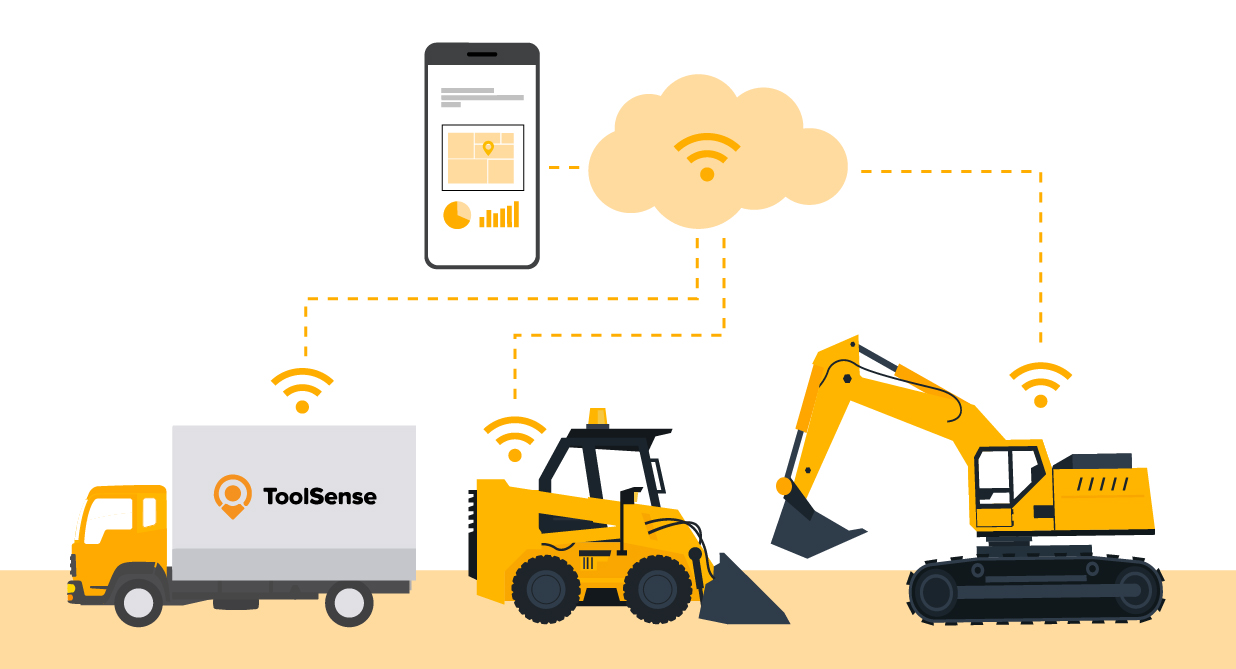
Safety is paramount on a construction site. IoT plays a crucial role in enhancing worker and equipment safety. Sensors can monitor operator behavior, detecting harsh braking, rapid acceleration, speeding, or unauthorized operation, which can be indicators of unsafe practices. Geofencing capabilities can restrict equipment operation to designated safe zones, issuing alerts if an asset moves into a hazardous area. Fatigue detection systems can monitor operator alertness, triggering alarms if an operator shows signs of drowsiness. Furthermore, IoT can integrate with proximity sensors and collision avoidance systems, providing real-time alerts to operators about potential obstacles or other machinery, drastically reducing the risk of accidents on busy sites.
Remote Diagnostics and Troubleshooting
When an issue does arise, IoT significantly speeds up the diagnostic and troubleshooting process. Instead of waiting for a technician to physically arrive on-site and manually diagnose a problem, IoT systems can transmit error codes and detailed operational data remotely to a service center. Technicians can often pinpoint the issue and even begin to formulate a repair plan or order parts before even stepping foot on the site. In some cases, minor software updates or resets can be performed remotely. This capability drastically reduces mean time to repair (MTTR), minimizes technician travel time, and ensures that when a technician does arrive, they are well-prepared to address the problem efficiently.
The Broader Ecosystem: Integration and Future Trends
The impact of IoT extends beyond individual equipment pieces, fostering a more interconnected and intelligent construction ecosystem. Its true power is unleashed through integration and the adoption of cutting-edge supporting technologies.
Integration with ERP and CMMS Systems
For IoT data to deliver its full potential, it must integrate seamlessly with existing enterprise resource planning (ERP) and computerized maintenance management systems (CMMS). This integration creates a single source of truth for asset management, maintenance scheduling, parts inventory, and financial reporting. When sensor data automatically updates maintenance logs in a CMMS, it streamlines workflows, reduces manual data entry errors, and provides a holistic view of equipment performance and costs across the entire organization. This allows for more accurate budgeting, better capital expenditure planning, and improved overall business intelligence.
Digital Twins and Augmented Reality (AR) for Maintenance
Looking ahead, advanced applications like Digital Twins are set to revolutionize maintenance even further. A digital twin is a virtual replica of a physical asset, continuously updated with real-time data from its IoT sensors. This digital counterpart can be used to simulate different operational scenarios, predict future performance, and identify potential issues without affecting the physical equipment. Combined with Augmented Reality (AR), technicians can overlay digital twin data onto the physical machine they are working on, providing step-by-step repair instructions, highlighting problem areas, or displaying schematics directly in their field of view. This promises to simplify complex repairs, reduce training time, and improve diagnostic accuracy.
Edge Computing and 5G Connectivity
The increasing volume of data generated by IoT devices necessitates advancements in network infrastructure and processing capabilities. Edge computing allows data to be processed closer to its source (the equipment itself or a local gateway) rather than sending all of it to a centralized cloud. This reduces latency, conserves bandwidth, and enables faster decision-making for time-sensitive applications. The rollout of 5G networks, with their ultra-low latency and high bandwidth, will further accelerate the adoption of real-time IoT applications, enabling more sophisticated sensor deployments, reliable video streaming from equipment, and instantaneous communication between machines and control centers.
Challenges and Considerations in IoT Adoption
While the benefits of IoT in construction equipment maintenance are compelling, adoption is not without its challenges. Companies must navigate several considerations to successfully implement these transformative technologies.
Data Security and Privacy Concerns
The sheer volume of data being collected and transmitted by IoT devices raises significant concerns about cybersecurity. Operational data, proprietary information, and even location data could be vulnerable to breaches if not adequately protected. Robust encryption, secure network architectures, and stringent access controls are essential to safeguard this sensitive information and prevent malicious attacks or unauthorized access. Furthermore, data privacy regulations must be adhered to, particularly concerning any data that could be linked to individuals or proprietary business operations.
Interoperability and Standardization
The IoT landscape is highly fragmented, with numerous manufacturers producing devices and platforms that often lack seamless interoperability. Integrating sensors from different vendors with a unified analytics platform can be complex and costly. The absence of universal standards can create vendor lock-in and hinder the ability to scale IoT solutions across diverse fleets. Industry efforts towards standardization and the adoption of open protocols will be crucial to overcoming these integration hurdles.
Initial Investment and ROI Justification
Implementing an IoT solution involves significant upfront costs, including sensors, gateways, connectivity subscriptions, software platforms, and integration services. For many companies, justifying this initial investment requires a clear understanding of the potential return on investment (ROI). Demonstrating tangible benefits such as reduced downtime, extended equipment life, lower maintenance costs, and improved fuel efficiency is vital for securing executive buy-in and successful deployment. A phased implementation, starting with a pilot program, can help prove value before a full-scale rollout.
Skill Gap and Training
The transition to an IoT-driven maintenance strategy demands new skill sets from the workforce. Technicians need to be proficient in data interpretation, utilizing diagnostic software, and working with complex integrated systems rather than purely mechanical repairs. Data analysts are required to derive actionable insights from the collected data. Companies must invest in comprehensive training programs to upskill their existing workforce and consider hiring new talent with expertise in data science, IoT management, and predictive analytics.

Conclusion
The impact of IoT on maintaining construction equipment is nothing short of revolutionary. By providing unprecedented visibility into equipment performance, health, and utilization, IoT is empowering the construction industry to move beyond reactive repairs to a proactive, data-driven maintenance paradigm. This shift translates into substantial benefits: significantly reduced downtime, extended asset lifespan, optimized operational efficiency, enhanced safety protocols, and considerable cost savings in fuel and maintenance.
While challenges related to data security, interoperability, initial investment, and workforce training remain, the transformative potential of IoT is undeniable. As the technology matures and becomes more accessible, smart, connected construction equipment will become the norm, not the exception. The future of construction maintenance is intelligent, predictive, and inherently more efficient, powered by the ubiquitous presence of the Internet of Things, ushering in an era of smarter, safer, and more sustainable construction operations.
aViewFromTheCave is a participant in the Amazon Services LLC Associates Program, an affiliate advertising program designed to provide a means for sites to earn advertising fees by advertising and linking to Amazon.com. Amazon, the Amazon logo, AmazonSupply, and the AmazonSupply logo are trademarks of Amazon.com, Inc. or its affiliates. As an Amazon Associate we earn affiliate commissions from qualifying purchases.