
In the dynamic world of electric vehicles (EVs), Tesla has consistently pushed the boundaries of performance, often challenging — and surpassing — traditional internal combustion engine (ICE) supercars. The question, “What’s the fastest Tesla?” isn’t merely about top speed; it delves into a complex interplay of acceleration, engineering prowess, and cutting-edge battery technology. For many, a Tesla isn’t just a car; it’s a high-tech gadget on wheels, a testament to what’s possible when silicon meets asphalt. Identifying the absolute fastest requires dissecting specifications, understanding performance metrics, and appreciating the innovative spirit that defines Elon Musk’s automotive venture. This exploration dives deep into the technology that underpins Tesla’s incredible speed, evaluating its current champions and peering into the horizon for what promises to be even more exhilarating.
The Quest for Speed: Understanding Tesla’s Performance Metrics
When discussing automotive speed, particularly concerning electric vehicles, it’s crucial to define what “fastest” truly means. For many enthusiasts, raw acceleration is the most impactful metric, defining the visceral thrill of being pinned back in your seat. Tesla, with its instantly available electric torque, has redefined what rapid acceleration feels like, often leaving much more powerful ICE cars in its dust off the line. However, top speed, sustained performance, and even track lap times also contribute to the overall definition of “fast.”
Acceleration vs. Top Speed: A Critical Distinction
The most commonly cited metric for EV performance is the 0-60 mph (0-97 km/h) sprint time. This figure highlights the advantage of electric motors, which deliver maximum torque from a standstill, eliminating the need for gear changes or engine spool-up associated with gasoline engines. Tesla has perfected this, utilizing sophisticated power electronics and advanced motor designs to achieve hypercar-level acceleration. The quarter-mile time is another critical benchmark, offering a better indication of a vehicle’s sustained acceleration capabilities beyond the initial launch.
Top speed, on the other hand, represents the maximum velocity a vehicle can achieve. While impressive on paper, it’s less frequently experienced in real-world driving. Achieving high top speeds in an EV presents unique engineering challenges, primarily related to aerodynamic drag, thermal management of the battery and motors, and the efficiency of power delivery at sustained high RPMs. Tesla’s focus has historically leaned heavily into acceleration, but its latest performance models demonstrate a significant improvement in top speed as well, making them formidable contenders across the board.
Factors Influencing Tesla’s Speed
Several synergistic factors contribute to Tesla’s remarkable speed. At the heart of it is the electric powertrain, consisting of powerful electric motors (often dual or tri-motor setups for all-wheel drive and enhanced performance), a high-voltage battery pack, and advanced power electronics. The instantaneous torque delivery characteristic of electric motors is a game-changer, providing immediate thrust without the lag of traditional engines.
Beyond the powertrain, the battery pack plays a crucial role not just in range but also in performance. A high-discharge-rate battery is essential to deliver the immense power required for blistering acceleration. Tesla’s continuous innovation in battery chemistry and thermal management ensures that its packs can supply sustained power without overheating, crucial for both repeated sprints and prolonged high-speed driving.
Software optimization is another unsung hero. Features like “Cheetah Stance” (which lowers the front suspension for better aerodynamics and grip during launch), “Track Mode” (which optimizes power delivery, cooling, and braking for circuit driving), and precise launch control systems all contribute to maximizing performance. Furthermore, the vehicle’s overall design, including its aerodynamic efficiency and lightweight materials, minimizes drag and inertia, allowing the electric motors to propel the car even more effectively. Each element is meticulously engineered to work in harmony, unlocking speeds previously unimaginable for a production sedan or SUV.
Unveiling the Contenders: Tesla’s Performance Lineup
Tesla’s lineup boasts several vehicles capable of astonishing speeds, but two models, in particular, stand out as the reigning champions of velocity, with a third on the horizon promising to redefine hypercar performance. These vehicles are not merely quick; they represent a convergence of advanced battery technology, innovative motor design, and sophisticated software control.
Tesla Model S Plaid: The Reigning King
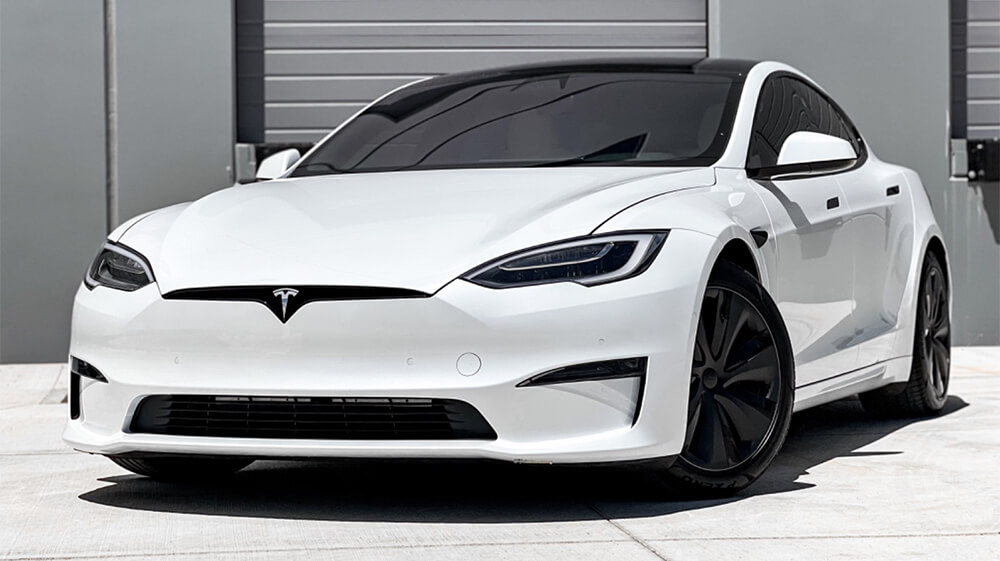
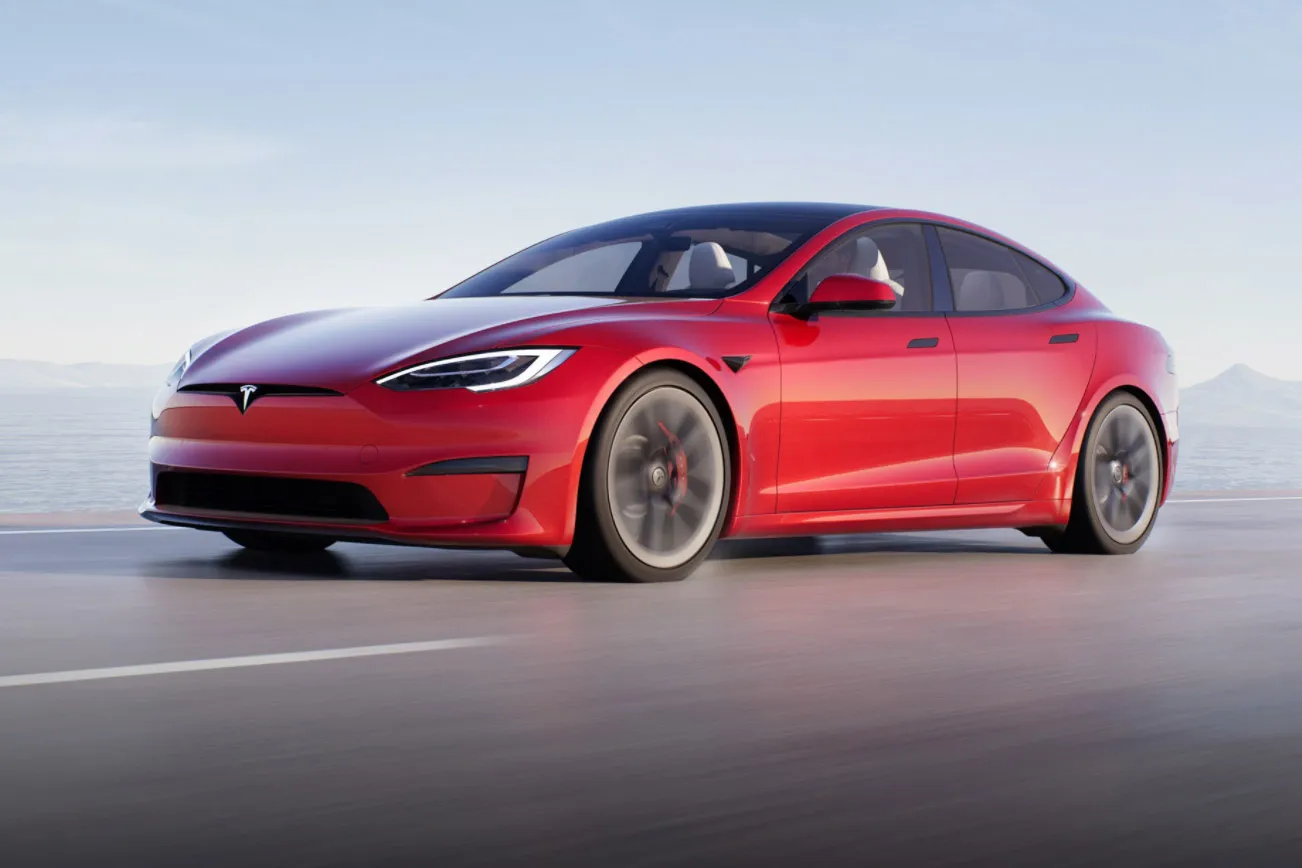
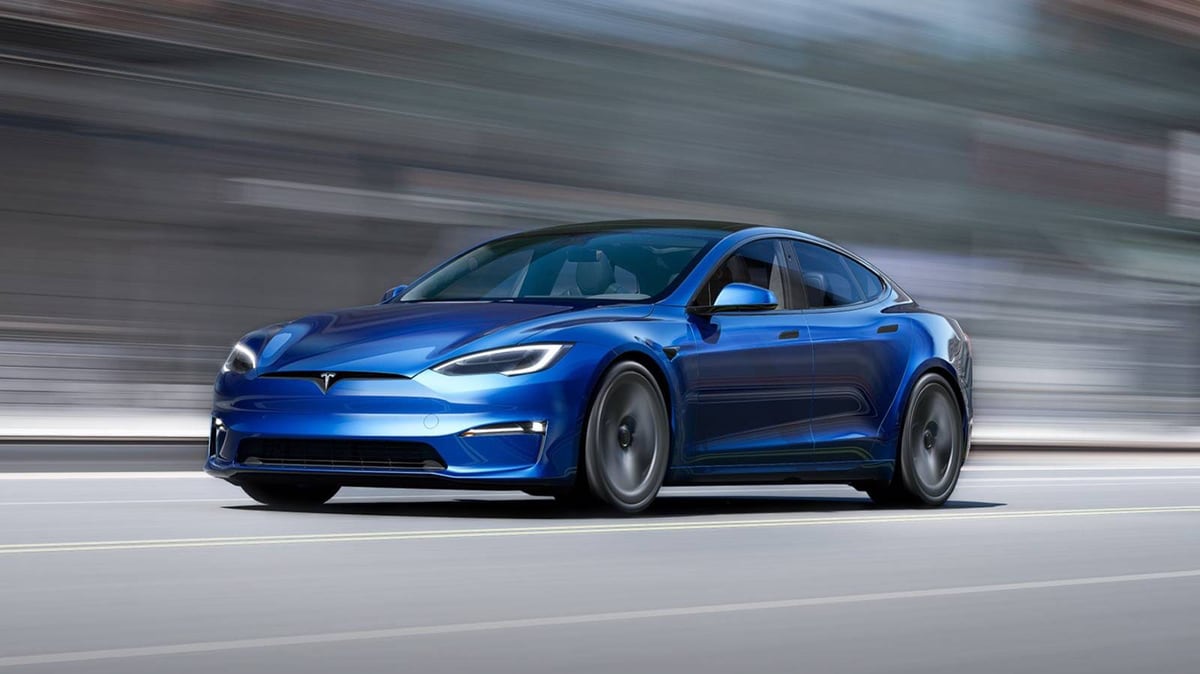
When asked “What’s the fastest Tesla?” the immediate answer for current production vehicles is undeniably the Tesla Model S Plaid. Launched in 2021, the Model S Plaid shattered expectations, not just for an EV, but for any production car. It is equipped with a tri-motor all-wheel-drive system, generating an astounding 1,020 horsepower.
Its performance figures are staggering:
- 0-60 mph: An incredible 1.99 seconds (with rollout subtracted, making it the first production car to break the 2-second barrier).
- Quarter Mile: Achieved in 9.23 seconds at 155 mph.
- Top Speed: Electronically limited to 200 mph (322 km/h) with the proper wheels and tires, though higher speeds have been demonstrated on test tracks.
Beyond raw numbers, the Model S Plaid features advanced thermal architecture to sustain performance runs, a carbon-sleeved rotor design in its motors for higher RPMs and efficiency, and adaptive air suspension with “Cheetah Stance” for optimal launch dynamics. It’s a luxury sedan that can out-accelerate nearly any supercar on the planet, offering a unique blend of practicality and extreme performance.
Tesla Model X Plaid: SUV Speed Redefined
Not to be outdone in the utility segment, the Tesla Model X Plaid brings the same tri-motor powertrain and 1,020 horsepower to the SUV form factor. This makes it the fastest accelerating SUV in the world, an impressive feat considering its size and weight. While the SUV’s higher center of gravity and increased frontal area mean it can’t quite match the Model S Plaid’s acceleration or top speed, its performance is still utterly mind-boggling for its class.
Key performance figures for the Model X Plaid include:
- 0-60 mph: A blistering 2.5 seconds.
- Quarter Mile: Achieved in 9.9 seconds.
- Top Speed: 163 mph (262 km/h).
The Model X Plaid maintains all the practicality of an SUV, offering seating for up to seven people, Falcon Wing doors, and substantial cargo space, all while delivering acceleration that rivals dedicated sports cars. It perfectly embodies Tesla’s philosophy of making high performance accessible across different vehicle types.
Tesla Roadster (Next Gen): The Future of Hyperspeed
While not yet in production, the next-generation Tesla Roadster is arguably the future answer to “What’s the fastest Tesla?” Unveiled as a concept, its projected specifications are nothing short of revolutionary, aiming to redefine the hypercar segment entirely.
Tesla claims these projected figures for the new Roadster:
- 0-60 mph: 1.9 seconds (or less, with a rumored “SpaceX package” that could include cold air thrusters, potentially reducing this to 1.1 seconds).
- Quarter Mile: 8.8 seconds.
- Top Speed: Over 250 mph (400 km/h).
- Range: A staggering 620 miles (1,000 km) on a single charge.
These numbers, if realized, would make the Roadster the fastest production car in the world by a significant margin. The vehicle is expected to feature a unique three-motor setup (one front, two rear), all-wheel drive, and a massive 200 kWh battery pack. Its impact, when it finally arrives, is expected to be profound, further solidifying Tesla’s reputation not just for electric vehicles, but for absolute technological dominance in automotive performance.
The Technology Behind the Velocity
Tesla’s ability to create vehicles with such prodigious speed is not merely a matter of strapping a big battery to powerful motors. It’s a holistic engineering approach that integrates advanced electrical systems, intelligent software, and meticulous design. The synergy of these components is what truly differentiates Tesla’s performance from its competitors and allows it to achieve such groundbreaking figures.
Electric Powertrain Advantage: Instant Torque and AWD
The fundamental advantage of an electric vehicle’s powertrain lies in the nature of electric motors themselves. Unlike internal combustion engines, which need to rev up to their optimal power band, electric motors deliver maximum torque from 0 RPM. This means that as soon as the accelerator pedal is pressed, the full force of the motors is available, resulting in instant and relentless acceleration. Tesla harnesses this inherent characteristic with multiple highly efficient, high-revving motors. The Model S and Model X Plaid, with their tri-motor setup (one in the front, two in the rear), provide a robust all-wheel-drive system that optimizes traction. This distributed power delivery, combined with precise electronic control, allows the car to put down over 1,000 horsepower effectively without wheel spin, maximizing grip and launch efficiency. The carbon-sleeved rotors in the Plaid motors allow them to spin at incredibly high RPMs (up to 20,000 rpm), contributing to sustained high power output.
Battery Innovation: Power Delivery and Thermal Management
The battery pack in a high-performance EV is not just about capacity; it’s crucially about power output and thermal management. To deliver over 1,000 horsepower instantly, the battery must be capable of discharging an enormous amount of energy in a very short time. Tesla’s battery technology, from its cell chemistry to its pack design, is engineered for high discharge rates and sustained performance. Equally important is the sophisticated thermal management system. High power demands generate significant heat within the battery cells and motors. An effective liquid cooling system ensures that these components operate within optimal temperature ranges, preventing performance degradation due to overheating. This allows Tesla performance models to execute repeated high-speed runs or extended track sessions without significant power derating, a common limitation in less advanced EVs.
Software Optimization: Cheetah Stance, Track Mode, Launch Control
Software is as critical as hardware in Tesla’s performance equation. The vehicle’s software acts as the conductor, orchestrating the immense power of the motors and battery. Features like Launch Control precisely manage power delivery to each wheel, optimizing traction for the quickest possible start. For the Model S Plaid, the innovative “Cheetah Stance” dynamically adjusts the adaptive air suspension, lowering the front of the vehicle to improve aerodynamics and shift weight to the rear for enhanced grip during launch, visibly mimicking a cheetah preparing to sprint.
Furthermore, Track Mode (available on Plaid models) transforms the car’s driving dynamics for circuit use. It optimizes power distribution, stiffens the suspension, enhances regenerative braking, adjusts stability control thresholds, and most critically, dedicates more power to the cooling systems for the battery and motors. This allows the car to sustain peak performance longer on a track, demonstrating Tesla’s commitment to not just straight-line speed but also comprehensive performance. Regular over-the-air (OTA) updates continuously refine and enhance these software features, often improving performance metrics without any hardware changes.
Aerodynamics and Lightweight Design
While instantaneous power is key, minimizing resistance is equally vital for achieving high speeds. Tesla engineers pay meticulous attention to aerodynamics, sculpting their vehicles to cut through the air with minimal drag. The Model S Plaid, for instance, boasts an extremely low drag coefficient, which is crucial for achieving its 200 mph top speed. Every curve, every line, and even the flush door handles contribute to its slipperiness.
Additionally, lightweight design principles are applied where possible. While batteries add significant weight, Tesla uses materials and structural designs that aim to counteract this effect, improving the power-to-weight ratio. For example, the carbon-sleeved rotors in the Plaid motors are lighter than traditional copper windings, reducing rotational inertia and allowing for faster acceleration and higher revs. The combination of sleek aerodynamics and thoughtful weight management ensures that every horsepower generated is used as efficiently as possible to propel the vehicle forward at astonishing velocities.
Beyond Raw Speed: The Driving Experience and Future Innovations
While the quest for the fastest Tesla often focuses on objective numbers like 0-60 mph times and top speed, the actual driving experience encompasses much more. It’s about how that speed is delivered, the control the driver feels, and the overall integration of technology. Tesla’s approach extends beyond mere brute force, aiming for a refined, yet exhilarating, performance experience that is also remarkably safe and increasingly sustainable.
Performance in the Real World: Track vs. Street
The phenomenal acceleration of a Tesla Plaid is undeniable on a drag strip, making it a king of straight-line sprints. However, its performance also translates impressively to real-world driving scenarios. The instantaneous torque makes merging onto highways effortless and overtaking swift and safe. On twisty roads, the low center of gravity afforded by the underfloor battery pack contributes to excellent handling and minimal body roll, giving the driver confidence despite the car’s weight.
With “Track Mode” and its dedicated cooling systems, the Model S Plaid has demonstrated its capability on road courses, not just drag strips. While it may not match purpose-built supercars in ultimate track dynamics, its ability to sustain repeated high-performance laps without significant thermal throttling is a testament to its engineering. This means owners can enjoy the car’s extreme performance not just in short bursts but also in more demanding environments, bridging the gap between a daily driver and a performance machine. The intuitive controls and advanced driver-assistance systems also make managing such immense power surprisingly approachable for a wide range of drivers.
Safety and Control Systems
With great power comes great responsibility, and Tesla integrates a comprehensive suite of safety and control systems to manage the immense speeds its vehicles can achieve. Advanced traction control and stability control systems work continuously, often imperceptibly, to keep the vehicle stable and on its intended path, especially under hard acceleration or aggressive cornering. The all-wheel-drive system provides superior grip in varying conditions, further enhancing safety.
Tesla’s braking systems, often featuring larger calipers and rotors on performance models, are designed to bring these heavy, powerful vehicles to a halt quickly and efficiently. Regenerative braking also plays a significant role, not only recovering energy but also assisting in deceleration, reducing wear on traditional brake components. Furthermore, Tesla’s leading suite of active safety features, including collision avoidance, automatic emergency braking, and Autopilot/Full Self-Driving capabilities, provide an additional layer of security, ensuring that while the car is incredibly fast, it is also incredibly safe. The structural integrity of Tesla’s vehicles, often achieving top safety ratings, underscores this commitment.
What’s Next for Tesla Speed?
The relentless pursuit of speed and efficiency is a hallmark of Tesla. Looking ahead, several areas are ripe for further innovation. Continued advancements in battery technology, such as the new 4680 cells, promise higher energy density, faster charging, and potentially even higher discharge rates, unlocking further performance gains. More efficient and powerful electric motors, perhaps using new materials or designs, could further enhance power-to-weight ratios.
Software will continue to play a pivotal role, with over-the-air updates potentially bringing new performance modes, improved thermal management algorithms, and even more sophisticated launch control systems. Aerodynamic improvements, possibly incorporating active aero elements or more radical design choices, could push top speeds even higher. And, of course, the long-awaited arrival of the next-generation Roadster, with its potential “SpaceX package,” stands as a beacon for what Tesla believes is possible in terms of ultimate automotive speed, integrating rocket thruster technology into a street-legal car. This continuous innovation cycle ensures that the answer to “What’s the fastest Tesla?” is a question that will always evolve, pushing the boundaries of what electric vehicles can achieve.
In conclusion, the title of “fastest Tesla” currently belongs to the Model S Plaid, a testament to the brand’s ability to blend luxury, technology, and groundbreaking performance. However, with the promise of the next-generation Roadster on the horizon, Tesla is clearly not done redefining speed. Through relentless innovation in powertrain, battery, software, and design, Tesla continues to set new benchmarks, proving that electric vehicles are not just the future of sustainable transportation but also the future of blistering automotive performance.
aViewFromTheCave is a participant in the Amazon Services LLC Associates Program, an affiliate advertising program designed to provide a means for sites to earn advertising fees by advertising and linking to Amazon.com. Amazon, the Amazon logo, AmazonSupply, and the AmazonSupply logo are trademarks of Amazon.com, Inc. or its affiliates. As an Amazon Associate we earn affiliate commissions from qualifying purchases.