
In the fast-paced world of global finance, few phrases are as ubiquitous as “What’s the Dow doing?” or “What’s the Dow Jones today?” Whether you are a seasoned institutional investor or someone just beginning to explore the world of personal finance, the Dow Jones Industrial Average (DJIA) serves as a vital barometer for the health of the American economy and, by extension, the global financial landscape. While the number itself changes by the second during trading hours, the significance of those fluctuations carries profound implications for retirement accounts, corporate strategy, and consumer confidence.

To understand what the Dow Jones is “today” requires more than just looking at a flashing green or red number on a screen. It requires an understanding of the index’s composition, the economic forces driving its movement, and how to interpret those movements within the context of a long-term investment strategy.
Decoding the Dow Jones Industrial Average (DJIA)
Before diving into the daily fluctuations, it is essential to understand exactly what we are measuring. The Dow Jones Industrial Average is one of the oldest and most watched stock market indices in the world. Founded by Charles Dow and Edward Jones in 1896, it originally tracked only 12 industrial companies. Today, it has evolved into a curated list of 30 “blue-chip” companies listed on the New York Stock Exchange (NYSE) and the NASDAQ.
What is the DJIA?
The Dow is often referred to as a “pulse” of the market because it consists of 30 large-cap, publicly owned companies based in the United States. These aren’t just any companies; they are industry leaders like Apple, Microsoft, Coca-Cola, and Goldman Sachs. Because these companies represent a cross-section of the U.S. economy—spanning tech, healthcare, finance, and consumer goods—their collective performance is seen as a proxy for the general health of the American corporate world.
How the Dow is Calculated: The Price-Weighted Index
Unlike the S&P 500 or the Nasdaq Composite, which are market-capitalization-weighted, the Dow is a price-weighted index. This means that companies with higher stock prices have a greater influence on the index’s daily movement than companies with lower stock prices. For example, a $1 move in a stock trading at $200 has the same impact on the Dow as a $1 move in a stock trading at $50, even if the $50 stock’s company is technically larger in terms of total market value. This unique calculation method is why financial analysts often look at the “Dow Divisor”—a figure used to maintain the index’s continuity despite stock splits or changes in the index components.
Why 30 Stocks Represent the Market
Critics often argue that 30 stocks cannot possibly represent the thousands of companies trading in the U.S. However, the Dow’s selection committee chooses companies that are leaders in their respective fields and possess a history of sustained growth. By focusing on these titans, the Dow offers a snapshot of the “establishment” of the business world. When you ask what the Dow is today, you are essentially asking how the leaders of the global economy are performing in the current environment.
Factors Influencing the Dow’s Daily Performance
When you check the Dow today and see a significant gain or loss, it is rarely the result of a single event. Rather, it is the culmination of various economic, political, and corporate factors that influence investor sentiment.
Economic Indicators: Inflation and Interest Rates
One of the primary drivers of the Dow’s daily movement is the release of economic data. Investors keep a close eye on reports regarding the Consumer Price Index (CPI), which measures inflation, and employment data. Perhaps the most significant influence comes from the Federal Reserve. When the Fed signals a change in interest rates, the Dow reacts instantly. Higher interest rates generally make borrowing more expensive for companies, which can cool down growth and lead to a dip in stock prices. Conversely, a “dovish” stance from the Fed often sends the Dow climbing as investors anticipate cheaper capital and higher consumer spending.
Corporate Earnings Reports
“Earnings season” is a critical period for the Dow. Every quarter, the 30 companies within the index release their financial results. Because these companies are so large, a “beat” or a “miss” by even one of them—such as a major tech giant or a global retailer—can swing the entire index. If a company like Apple reports record iPhone sales, it doesn’t just lift Apple’s stock; it boosts investor confidence in the entire tech sector and the broader consumer economy, pushing the Dow higher.
Geopolitical Events and Global Sentiment
The Dow does not exist in a vacuum. In our interconnected world, a conflict in the Middle East, a trade dispute between the U.S. and China, or a major policy shift in Europe can create volatility. Professional investors often react to “uncertainty” by moving money out of equities and into safer assets like gold or bonds. Therefore, the “Dow today” is often a reflection of how the world perceives global stability and the future of international trade.
Interpreting “What’s the Dow Jones Today” for Individual Investors

For the average person, the daily noise of the stock market can be overwhelming. Seeing the Dow drop 500 points in a single afternoon can cause anxiety, but it is crucial to interpret these numbers with a balanced perspective.
Daily Fluctuation vs. Long-Term Trends
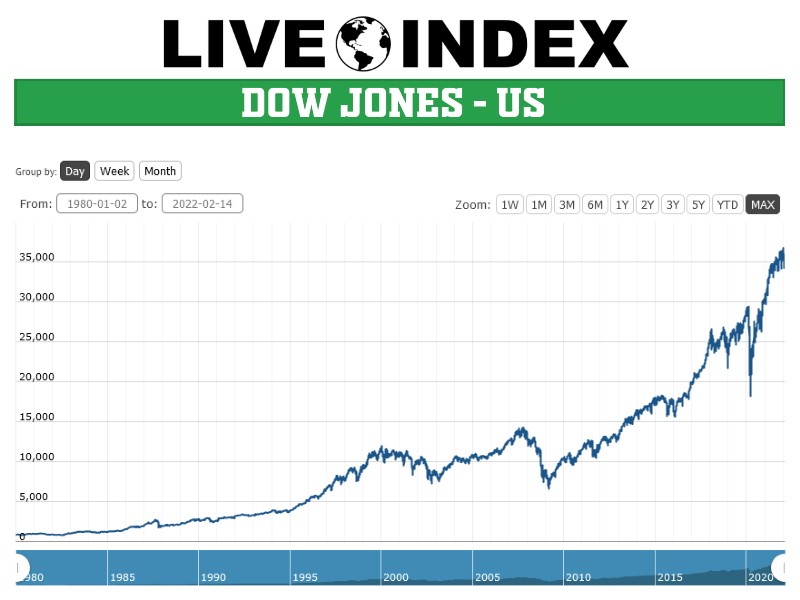
A single day’s movement in the Dow is rarely a reason to change your entire financial plan. Markets are inherently volatile; they breathe in and out. For a long-term investor, a “down” day for the Dow might simply be a natural correction after a period of rapid growth. History has shown that while the Dow experiences sharp declines during recessions or crises, its long-term trajectory over decades has been consistently upward.
The Psychology of Market Volatility
Financial success is often as much about psychology as it is about math. When the Dow is “up,” investors feel a sense of FOMO (Fear Of Missing Out) and may buy at peaks. When the Dow is “down,” fear takes over, leading many to sell at a loss. Understanding that the Dow’s daily movements are often driven by short-term sentiment rather than long-term value can help individual investors stay disciplined and avoid making emotional decisions with their money.
Dow vs. S&P 500: Which One Matters More to You?
While the Dow is the most famous index, many financial advisors suggest that the S&P 500 is a better reflection of a diversified portfolio because it includes 500 companies and uses market-cap weighting. If your personal portfolio is diversified across many sectors, you might find that your returns align more closely with the S&P 500 even if the Dow is making the headlines. Tracking both allows for a more nuanced understanding of where the “big money” is moving.
Modern Tools for Tracking the Dow in Real-Time
In the digital age, you no longer have to wait for the evening news to see how the market performed. Technology has democratized financial data, allowing anyone with a smartphone to track the Dow in real-time.
Financial News Platforms and Apps
From Yahoo Finance and Bloomberg to specialized apps like CNBC or Morningstar, there are endless resources for tracking the Dow. These platforms provide not just the number, but “heat maps” showing which of the 30 stocks are performing best and worst. This level of detail helps investors understand the “why” behind the “what.”
Technical Analysis Basics for Daily Tracking
For those interested in a deeper dive, technical analysis tools allow you to look at “candlestick charts” and moving averages of the Dow. Some traders look for “support and resistance” levels to predict where the Dow might head in the short term. While this is more common for active traders than for long-term “buy and hold” investors, understanding the basics of these charts can provide insight into market momentum.
Setting Up Price Alerts and Notifications
Most brokerage apps (like Vanguard, Fidelity, or Robinhood) allow users to set alerts. You can receive a notification if the Dow drops or gains a certain percentage. This is a double-edged sword: while it keeps you informed, it can also tempt you into checking your balance too frequently, which often leads to unnecessary stress.
Building a Resilient Portfolio Beyond Daily Headlines
Ultimately, the answer to “What’s the Dow Jones today?” should be treated as a single data point in a much larger financial journey. Building wealth requires a strategy that survives the Dow’s bad days and capitalizes on its good ones.
Diversification Strategies
While the Dow represents 30 great companies, a healthy financial plan involves diversification beyond just large-cap U.S. stocks. This includes exposure to small-cap stocks, international markets, bonds, and perhaps real estate. Diversification ensures that even if a sector within the Dow (like energy or banking) takes a hit, your overall net worth remains protected.
The Role of Blue-Chip Stocks
Investing in the Dow itself is possible through Exchange-Traded Funds (ETFs) like the SPDR Dow Jones Industrial Average ETF Trust (ticker symbol: DIA). This allows investors to own a piece of all 30 companies in the index. These “blue-chip” stocks are often preferred by conservative investors because they frequently pay dividends, providing a steady stream of income even when the stock price is stagnant.
Long-term Wealth Accumulation
The Dow Jones is a testament to the power of compound interest and human innovation. Since its inception, the index has climbed from double digits to over 30,000 points. The most successful investors aren’t those who react to what the Dow does today, but those who understand that “time in the market” is more important than “timing the market.” By consistently contributing to retirement accounts and maintaining a diversified portfolio, you can turn the daily volatility of the Dow into a vehicle for long-term financial freedom.
In conclusion, “What’s the Dow Jones today?” is a question that opens the door to a deeper understanding of the economy. It is a snapshot of current events, investor psychology, and corporate health. By looking past the immediate number and focusing on the underlying factors and long-term trends, you can navigate the financial markets with confidence and clarity.
aViewFromTheCave is a participant in the Amazon Services LLC Associates Program, an affiliate advertising program designed to provide a means for sites to earn advertising fees by advertising and linking to Amazon.com. Amazon, the Amazon logo, AmazonSupply, and the AmazonSupply logo are trademarks of Amazon.com, Inc. or its affiliates. As an Amazon Associate we earn affiliate commissions from qualifying purchases.