
The question “What’s the Dow Jones doing?” is perhaps the most frequently asked query in the world of finance. Whether it is whispered in the halls of investment banks or checked nervously on a smartphone during a lunch break, the Dow Jones Industrial Average (DJIA) remains the primary pulse-check for the American economy. However, understanding what the Dow is “doing” requires more than just looking at a red or green number on a screen. It involves deciphering the complex interplay of interest rates, corporate earnings, and global geopolitical shifts.

In this deep dive, we explore the mechanics of the Dow, the factors currently driving its momentum, and how individual investors should interpret its movements to build long-term wealth.
Decoding the Dow: Understanding the Mechanics of the Blue-Chip Index
Before we can analyze its current performance, we must understand what the Dow Jones Industrial Average actually represents. Founded in 1896 by Charles Dow and Edward Jones, it is one of the oldest and most watched indices in the world. Unlike the S&P 500, which tracks 500 companies based on market capitalization, the Dow is a “price-weighted” index of 30 “blue-chip” companies.
The Price-Weighted Paradox
The Dow’s unique structure means that companies with higher stock prices have a greater influence on the index’s movement than those with lower prices, regardless of their actual market value. For instance, a $1 move in a high-priced stock like UnitedHealth Group (UNH) has the same impact on the Dow as a $1 move in a lower-priced stock like Coca-Cola (KO), even though their total market caps differ significantly. This quirk often leads critics to suggest the Dow is an antiquated metric, yet it remains the most cited indicator of “the market” in mainstream media because the companies it tracks are the pillars of the American industrial and consumer landscape.
The Composition of the “Thirty”
The 30 companies that make up the Dow are intended to represent the broad health of the U.S. economy. These include giants across various sectors: technology (Microsoft, Apple), healthcare (Amgen, Johnson & Johnson), financials (Goldman Sachs, JPMorgan Chase), and consumer goods (Walmart, Home Depot). Because these companies are established leaders with massive global footprints, when the Dow “does something,” it is usually a signal of how the world’s largest corporations are navigating the current economic climate.
Why the Dow Matters to the Average Investor
Even if you don’t own individual stocks in the Dow, its performance likely affects your 401(k), your retirement savings, and your general cost of living. Because these 30 companies are so deeply integrated into the global supply chain, their collective health serves as a leading indicator for employment trends, consumer spending power, and corporate investment.
Current Market Drivers: Why the Dow is Moving Now
When investors ask what the Dow is doing today, they are really asking about the macroeconomic forces acting upon these 30 industrial titans. In the current financial landscape, three primary drivers are dictating the index’s trajectory.
Monetary Policy and the Federal Reserve
The most significant factor influencing the Dow today is the Federal Reserve’s stance on interest rates. When the Fed raises rates to combat inflation, it increases the cost of borrowing for corporations. For capital-intensive companies in the Dow—such as Boeing or Caterpillar—higher rates can squeeze profit margins. Conversely, when the Dow rallies on news of potential rate cuts, it is because investors anticipate cheaper capital and a more robust environment for business expansion. The index often acts as a see-saw, reacting violently to every speech or data point released by the central bank.
Inflation and Consumer Resilience
As a collection of companies that sell everything from iPhones to Big Macs, the Dow is a direct reflection of inflation’s impact on the consumer. If the Consumer Price Index (CPI) comes in higher than expected, the Dow may dip as investors fear that consumers will pull back on discretionary spending. However, many Dow components are “price makers”—companies with enough brand loyalty and market share to pass increased costs onto consumers. Tracking the Dow allows us to see whether these corporate giants are successfully maintaining their margins or if the weight of inflation is beginning to crack the foundation of the “blue-chip” economy.
Corporate Earnings and Forward Guidance
Every quarter, the 30 members of the Dow report their earnings. This “earnings season” is when the Dow’s movements become most volatile. It isn’t just about whether a company made a profit in the last three months; it’s about their “guidance”—their prediction for the future. If Microsoft forecasts a surge in AI-driven cloud revenue, or if Walmart notes a shift in consumer behavior toward value-oriented shopping, the Dow will react. These reports provide the raw data that tells us what the index is “doing” beneath the surface of the daily price fluctuations.
Interpreting the Signals: What the Dow Tells Individual Investors
Viewing the Dow Jones through the lens of a daily “win” or “loss” is a mistake for the serious investor. Instead, one should look at the index as a signaling mechanism for broader financial trends.
Market Sentiment vs. Fundamentals
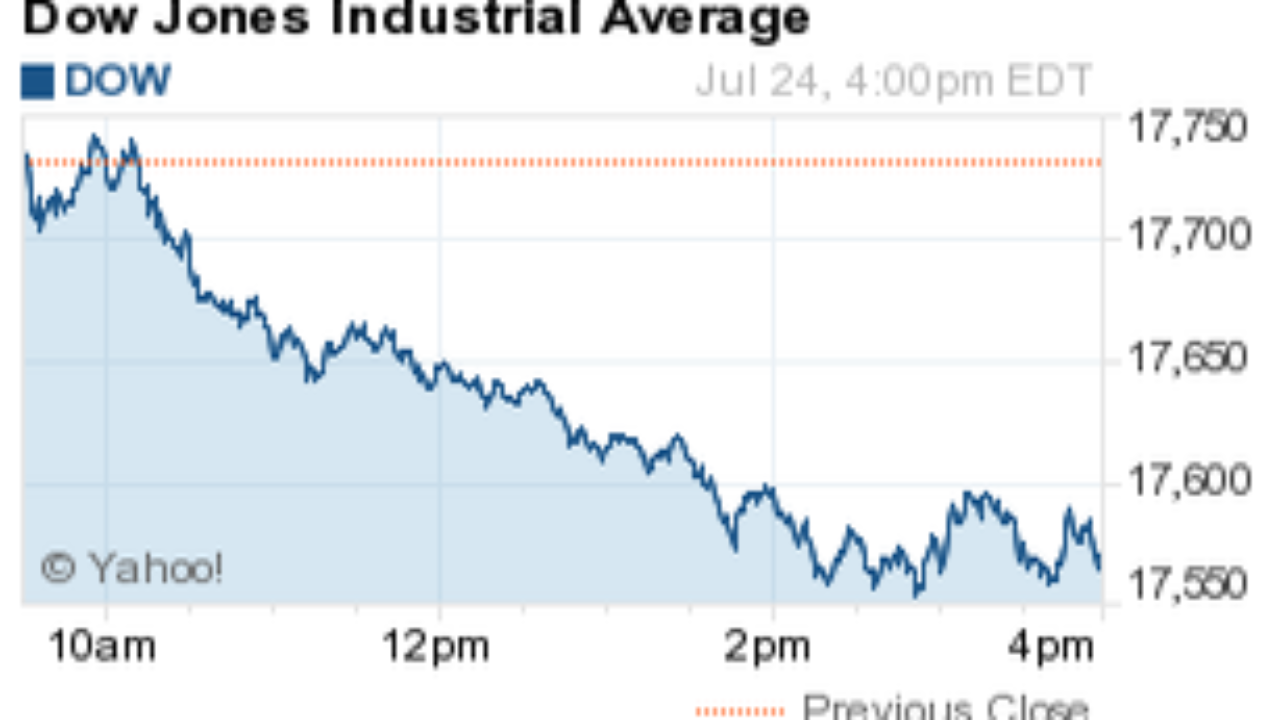
The Dow often experiences “noise”—short-term fluctuations driven by fear, greed, or algorithmic trading. On a day where the Dow drops 500 points, it might not be because the underlying companies became less valuable, but because of a “risk-off” sentiment in the global markets. Understanding the difference between a fundamental shift in the economy and a temporary emotional reaction is key to maintaining a successful investment strategy. The Dow is excellent at reflecting the “mood” of Wall Street, which is often disconnected from the “reality” of Main Street.
The Role of Volatility
In recent years, the “swing” of the Dow has increased. A 1% move used to be a major event; now, it is common. This volatility is a symptom of high-frequency trading and the instant dissemination of news. For the money-conscious individual, the Dow’s volatility should not be a cause for panic but an opportunity for perspective. High volatility often signals that the market is at a crossroads, trying to price in conflicting information about the future of the economy.
Divergence from the Nasdaq
Often, you will see the Dow doing one thing while the tech-heavy Nasdaq does another. This divergence is a crucial signal of “sector rotation.” When the Dow outperforms the Nasdaq, it typically means investors are moving money out of high-growth, risky tech stocks and into stable, dividend-paying “value” stocks. This “flight to safety” is a classic maneuver during times of economic uncertainty. Monitoring what the Dow is doing relative to other indices tells you where the “smart money” is flowing.
Investing Strategies in a Shifting Market
If you are following the Dow Jones to improve your personal financial position, simply watching the numbers isn’t enough. You must apply that information to a coherent investment strategy.
Index Funds and ETFs
For most individuals, the best way to capitalize on the Dow’s long-term growth is through an Exchange-Traded Fund (ETF) that tracks the index, such as the SPDR Dow Jones Industrial Average ETF Trust (DIA). By owning the “Diamonds,” as they are known, you gain exposure to all 30 companies in a single, liquid asset. This is a “passive” money strategy that bets on the continued resilience of the American corporate elite.
The Importance of Diversification
While the Dow is a great indicator, it is only 30 companies. A robust financial plan should not rely on the Dow alone. Because the index lacks exposure to small-cap companies and is light on certain high-growth sectors, it should be used as one component of a diversified portfolio. What the Dow is “doing” might not reflect what is happening in emerging markets or the crypto space, both of which may have a place in a modern investment strategy.
Dollar-Cost Averaging Through the Dips
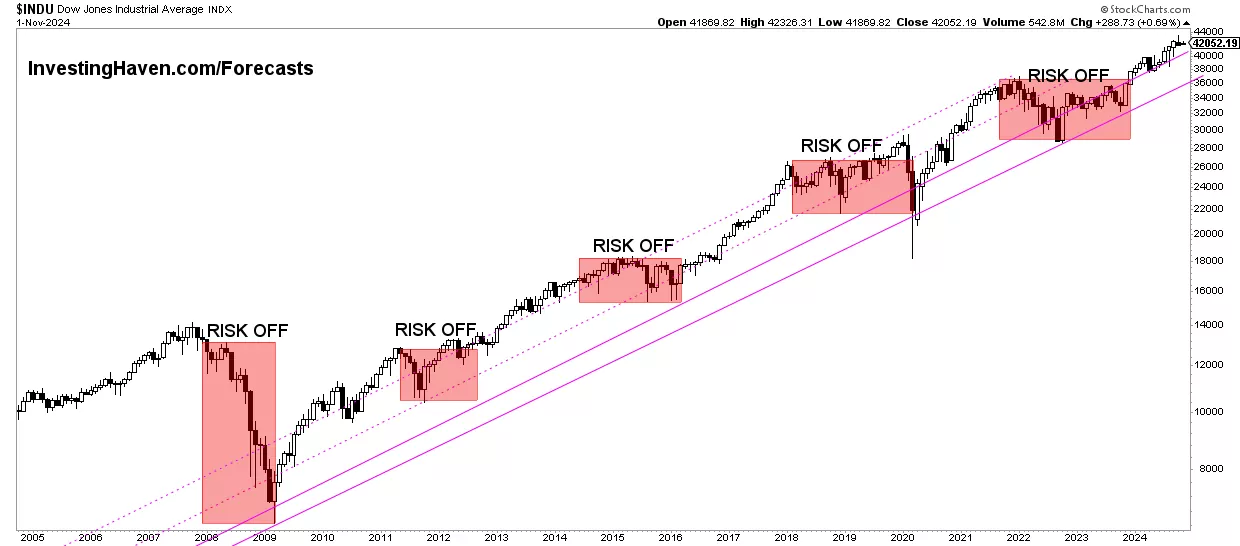
When the question “What’s the Dow doing?” is met with the answer “It’s crashing,” the instinctive reaction is to sell. However, history shows that the Dow has an upward bias over decades. By employing “dollar-cost averaging”—investing a fixed amount of money at regular intervals regardless of the index’s price—investors can turn the Dow’s downward movements into an advantage, buying more shares when prices are low and fewer when they are high.
Conclusion: The Perpetual Pulse of Progress
The Dow Jones Industrial Average is more than just a list of stocks; it is a narrative of human enterprise. When we ask what the Dow is doing, we are inquiring about the state of global commerce, the health of our retirement accounts, and the stability of the financial system.
While the index will inevitably face days of red ink and periods of stagnation, its long-term trajectory has historically been a testament to corporate innovation and economic endurance. By understanding the mechanics behind the numbers, the drivers of market movement, and the psychological signals the index sends, investors can move beyond the “noise” of the daily ticker and make informed, strategic decisions for their financial future. The next time you see the Dow on the news, remember: it isn’t just a number—it’s the story of the 30 engines driving the global economy.
aViewFromTheCave is a participant in the Amazon Services LLC Associates Program, an affiliate advertising program designed to provide a means for sites to earn advertising fees by advertising and linking to Amazon.com. Amazon, the Amazon logo, AmazonSupply, and the AmazonSupply logo are trademarks of Amazon.com, Inc. or its affiliates. As an Amazon Associate we earn affiliate commissions from qualifying purchases.