
For over a century, the phrase “What’s the Dow doing?” has served as the universal shorthand for “How is the economy performing?” Whether it is shouted across a trading floor, whispered in a boardroom, or checked frantically on a smartphone during a lunch break, the Dow Jones Industrial Average (DJIA) remains the most recognizable barometer of financial health in the world. However, understanding what the Dow is “doing” requires more than just looking at a green or red number on a screen. It requires an exploration of market mechanics, investor psychology, and the shifting tides of the global economy.
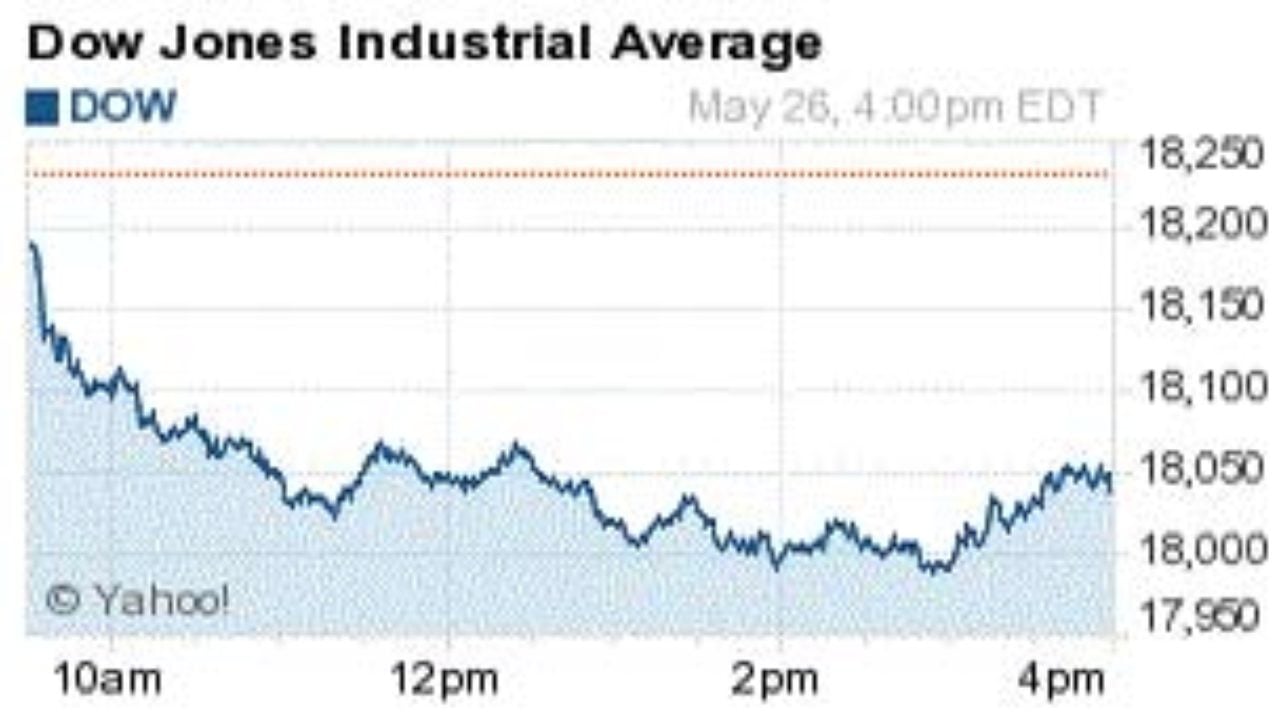
To truly grasp the movement of the Dow, one must look beneath the surface of the points gained or lost. In this deep dive, we explore the internal machinery of the index, the external forces that drive its volatility, and what its current trajectory means for your personal investment strategy.
The Mechanics of the Dow: More Than Just a Number
The Dow Jones Industrial Average is not a simple average of stock prices, nor is it a reflection of the entire stock market. It is a curated slice of American industry. Founded by Charles Dow in 1896, the index originally consisted of just 12 companies, mostly in the industrial sector. Today, it tracks 30 “blue-chip” companies that are leaders in their respective industries. Understanding the mechanics of how these thirty giants are measured is essential to interpreting the index’s daily fluctuations.
The Price-Weighted Methodology
Unlike the S&P 500 or the Nasdaq, which are market-capitalization-weighted, the Dow is a price-weighted index. This means that companies with higher share prices exert a greater influence on the index’s movement than those with lower share prices, regardless of the company’s actual size or total market value.
For example, if a company trading at $200 per share gains 1%, it will push the Dow higher than a company trading at $50 per share gaining 1%. This quirk often leads to criticism from mathematical purists, but it remains the foundational logic of the DJIA. To maintain consistency when stocks split or companies are swapped in and out, the “Dow Divisor” is used—a constantly adjusted numerical value that ensures historical continuity despite changes in the underlying stock prices.
The “Blue Chip” Elite: Who Makes the Cut?
The Dow is often seen as a proxy for the “Establishment.” To be included in the Dow, a company must have an excellent reputation, demonstrate sustained growth, and be of interest to a large number of investors. The selection is not governed by a rigid formula but by a committee at S&P Dow Jones Indices.
Current constituents range from tech giants like Microsoft and Apple to healthcare leaders like UnitedHealth Group and consumer staples like Coca-Cola. When you ask what the Dow is doing, you are essentially asking how the thirty most powerful pillars of the American corporate landscape are faring. Because these companies have global footprints, the Dow is as much a reflection of international trade and global demand as it is of domestic stability.
Deciphering Today’s Movements: The Drivers of Volatility
When the Dow swings 500 points in a single session, it is rarely a random occurrence. Usually, the index is reacting to a cocktail of macroeconomic data and shifting expectations regarding the future. To understand today’s market action, one must identify the primary catalysts that trigger buying and selling pressure across the thirty constituents.
Interest Rates and Federal Reserve Policy
In the modern financial era, perhaps no factor influences the Dow more than the Federal Reserve’s monetary policy. When the Fed raises interest rates to combat inflation, borrowing costs for corporations increase, and future earnings are discounted at a higher rate. This typically puts downward pressure on the Dow.
Conversely, when the Fed signals a “pivot” toward lowering rates, the Dow often rallies. Investors watch the Federal Open Market Committee (FOMC) meetings with eagle eyes, parsing every word of the Chairman’s statement for clues. If the Dow is “flat” or “choppy,” it is often because the market is in a “wait-and-see” mode ahead of critical economic data like the Consumer Price Index (CPI) or employment reports.
Corporate Earnings and Macroeconomic Indicators
The Dow moves on fundamentals. Every quarter, the thirty companies in the index report their earnings. Because these companies are so large, their performance often serves as a bellwether for their entire sector. If Caterpillar reports a slowdown in machinery orders, it signals a potential cooling in the construction and manufacturing sectors. If American Express reports record consumer spending, it suggests the American middle class is still resilient.
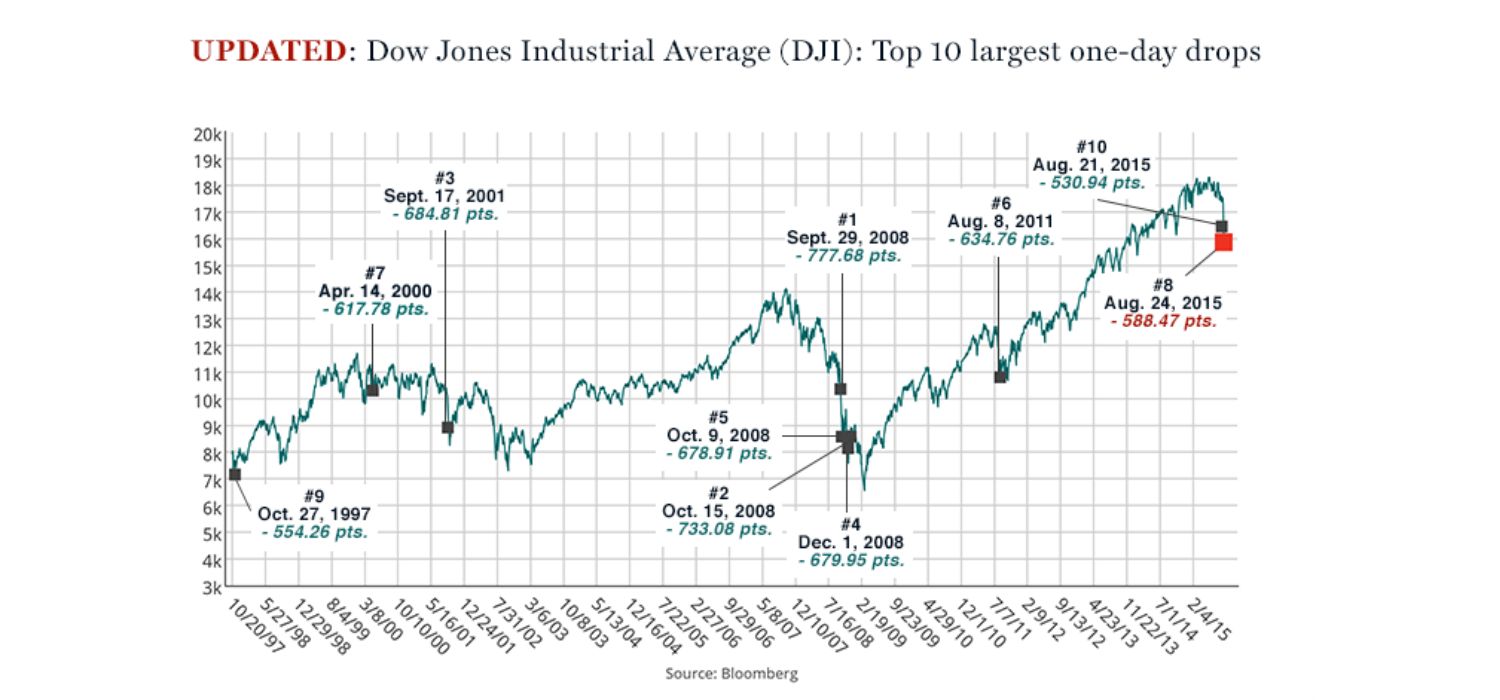
Beyond individual earnings, the Dow reacts to “macro” events: geopolitical tensions, trade agreements, and supply chain disruptions. Because the Dow is concentrated in just thirty stocks, a significant move in just one or two components—such as a major pharmaceutical setback for Amgen or a massive software release from Salesforce—can single-handedly pull the entire index into the red or green.
Is the Dow Still Relevant in the Modern Era?
Critics often argue that the Dow is an antiquated relic. They point to its narrow scope and its price-weighted methodology as reasons why it should be ignored in favor of broader indices. However, the Dow persists as the primary psychological anchor for the investing public.
Dow vs. S&P 500: A Comparison of Scope
The S&P 500 tracks 500 of the largest U.S. companies and is generally considered a better representation of the total market’s health. However, the Dow and the S&P 500 are highly correlated. Over long periods, they tend to move in the same direction.
The Dow’s relevance lies in its selectivity. By focusing on thirty massive, dividend-paying companies, it often shows more resilience during market downturns than the tech-heavy Nasdaq. During periods of “value rotation,” where investors flee risky growth stocks for stable “value” stocks, the Dow frequently outperforms its peers. It represents the “old guard” of the economy—companies that have weathered world wars, depressions, and pandemics.
The Psychological Impact on Retail Investors
For the average person, the Dow is the “Market.” When the evening news reports on the state of the economy, they lead with the Dow. This creates a feedback loop: when the Dow hits a new milestone (like 30,000 or 40,000), it generates positive “wealth effect” sentiment, encouraging consumers to spend more.
If the Dow experiences a “flash crash” or a sustained bear market, it can trigger widespread panic even if an individual’s personal portfolio is diversified into other assets. Understanding what the Dow is doing is therefore crucial for understanding investor sentiment. Even if it isn’t the most mathematically perfect index, it is the one that moves the needle of public confidence.
Strategies for the Individual Investor
Knowing what the Dow is doing is one thing; knowing what to do about it is another. For the individual investor, the daily noise of the index can be a distraction from long-term goals. However, by analyzing the Dow’s trends, one can make more informed decisions about asset allocation and risk management.
Long-term Trends vs. Daily Noise
The most important lesson regarding the Dow is the power of time. Historically, despite crashes in 1929, 1987, 2008, and 2020, the Dow has a long-term upward trajectory. For an investor, a 2% drop in the Dow in a single day is “noise.” A 20% drop over several months is a “trend.”
Successful investors use Dow fluctuations as a guide for rebalancing. When the Dow is hitting record highs and valuations look stretched, it may be time to trim some gains. When the Dow is “doing” poorly and headlines are fearful, it often presents a “buy the dip” opportunity for those with a multi-decade time horizon. The key is to avoid emotional reactions to the daily point swings and focus on the underlying health of the blue-chip companies.

Diversification Beyond the Thirty
While the Dow provides a great snapshot, a sound financial strategy requires looking beyond these thirty companies. Because the Dow is light on small-cap stocks and emerging industries, an investor who only follows the Dow might miss out on the high-growth potential of the broader market.
Using the Dow as a “core” component of a portfolio—perhaps through a low-cost DJIA Tracking ETF—is a popular strategy. This provides exposure to stable, dividend-paying giants. However, supplementing this with international stocks, bonds, and mid-cap companies ensures that your financial future isn’t entirely dependent on the fortunes of just thirty corporations.
In conclusion, when you ask “what’s the Dow doing,” you are looking at a complex interplay of corporate performance, government policy, and human emotion. It remains a vital tool for anyone navigating the world of money. By understanding its quirks, its drivers, and its limitations, you can look past the flashing numbers and gain a clearer vision of where the economy—and your wealth—is headed.
aViewFromTheCave is a participant in the Amazon Services LLC Associates Program, an affiliate advertising program designed to provide a means for sites to earn advertising fees by advertising and linking to Amazon.com. Amazon, the Amazon logo, AmazonSupply, and the AmazonSupply logo are trademarks of Amazon.com, Inc. or its affiliates. As an Amazon Associate we earn affiliate commissions from qualifying purchases.